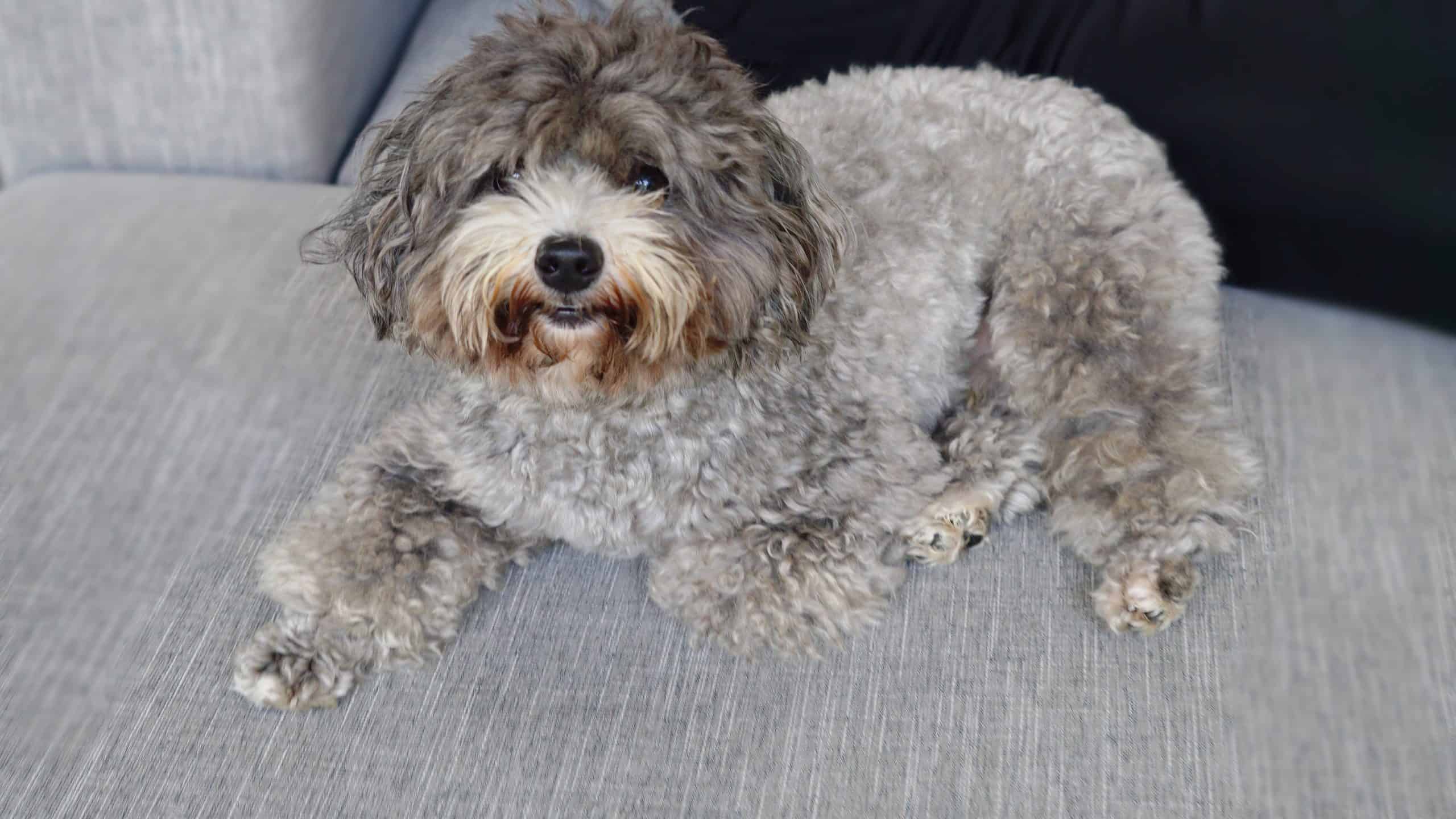

There are no official, specific metrics or parameters that universally define a teacup dog breed. The term teacup dog is not an official breed classification or a standardized size recognized by major kennel clubs like the American Kennel Club (AKC). Instead, it is a marketing term used by breeders to describe a dog that is an extra-small version of an already small or toy breed. Teacup dogs do not typically weigh over five pounds and are often less than 12 inches tall. Although teacup dogs shed, the amount varies significantly by breed, and many popular teacup breeds are known for being low-to-no-shedders. Continue reading to discover 12 teacup dogs that don’t shed or shed lightly.
1. Teacup Chihuahua
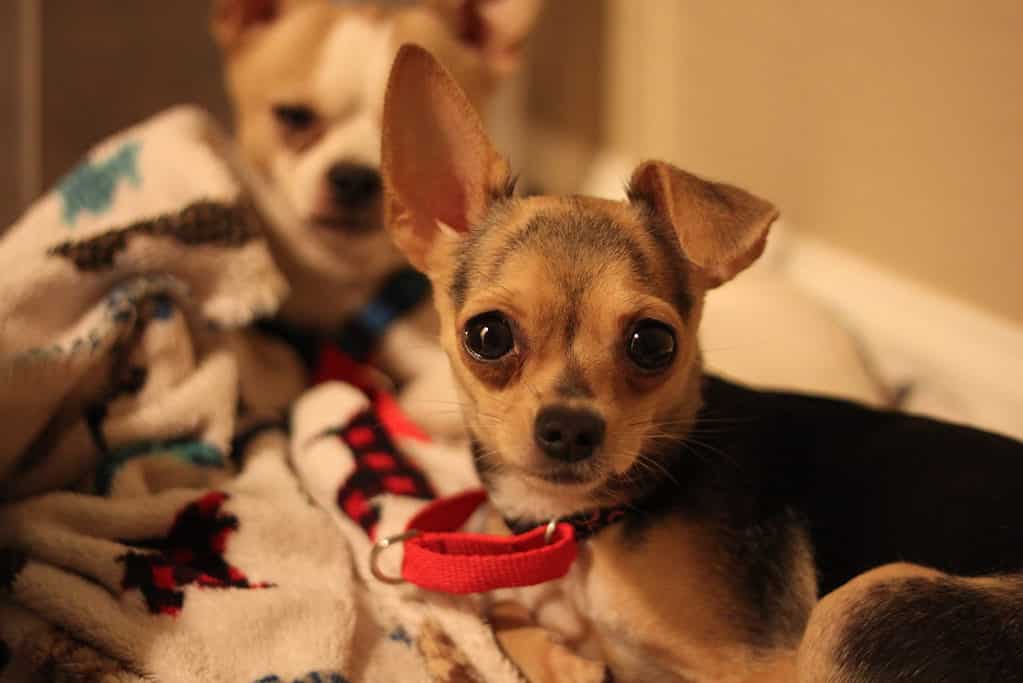
Created by breeding some of the smallest Chihuahua breeds in a standard litter, the teacup chihuahua was bred to not shed.
©Rebekah Zemansky/Shutterstock.com
Some of the cutest cuddly teacup dogs in the market today, teacup Chihuahuas are affectionate and suitable for apartment living. Their mainstream popularity in the pet world means they are likely to be costlier than other teacup dogs, but the best part is that they do not shed.
Teacup Chihuahuas typically weigh less than three pounds and stand at no more than six inches at the shoulder. Created by breeding some of the smallest Chihuahuas in a standard litter, the teacup Chihuahua is bred for its tiny size, not for being non-shedding. They do shed, though the amount may be minimal, especially in short-haired varieties. Although much smaller than regular Chihuahuas, the teacup Chihuahua has the same bubbly personality this breed is known for.
2. Brussels Griffon
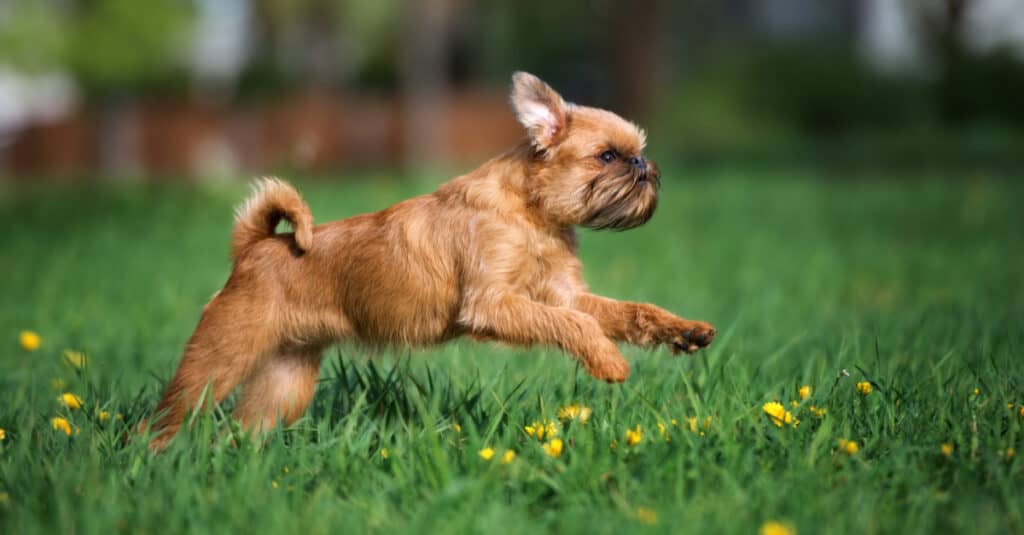
A Brussels Griffon typically weighs between 8 and 10 pounds and stands 7 to 10 inches tall.
©otsphoto/Shutterstock.com
Compared to most dogs on our list, this active, non-shedding dog is actually streetwise and smart. Strikingly, it has human-like features such as almond-shaped eyes, eyelashes, a beard, and a mustache. This dog would require you to meet its needs before it meets yours, in the sense that you have to keep up with its boundless energy and the fact that it gets easily distracted during training. Once they are properly trained, they are loyal and protective for life.
The Brussels Griffon comes in four color varieties. They can be red, black, belge (black and reddish brown), or black and tan. The nature of their coat varies as well. They come in smooth coats similar to that of a pug, or in rough coats like that of a schnauzer.
3. Teacup Poodle
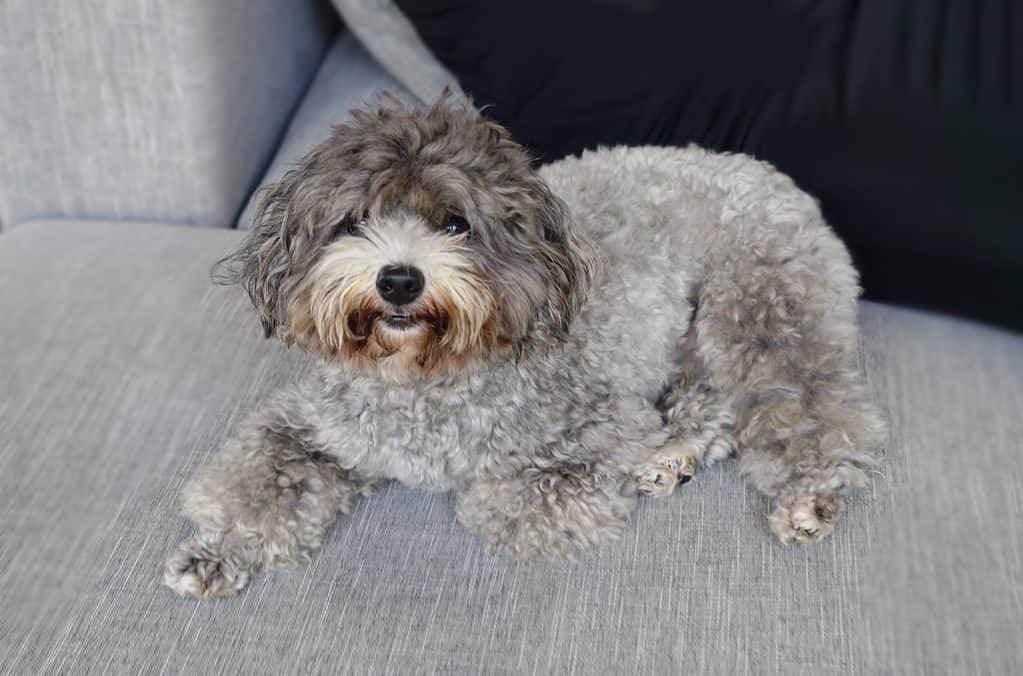
Beyond their advantageous non-shedding feature, teacup poodles are prized for their intelligence and love for water.
©Tran Thu Hang/Shutterstock.com
Teacup poodles hardly shed because this dog’s body is a mass of tightly curled hair. Beyond their advantageous non-shedding feature, they are prized for their intelligence and love for water. If you want a dog that is easy to train, can learn the simplest tricks, and carry out tasks without shedding all over the place, the teacup poodle is your best bet.
This dog breed does need some extra grooming and care due to the unique nature of its non-shedding hair, which grows continuously. This feature not only requires regular brushing, but it also requires routine grooming.
4. Teacup Shih Tzu
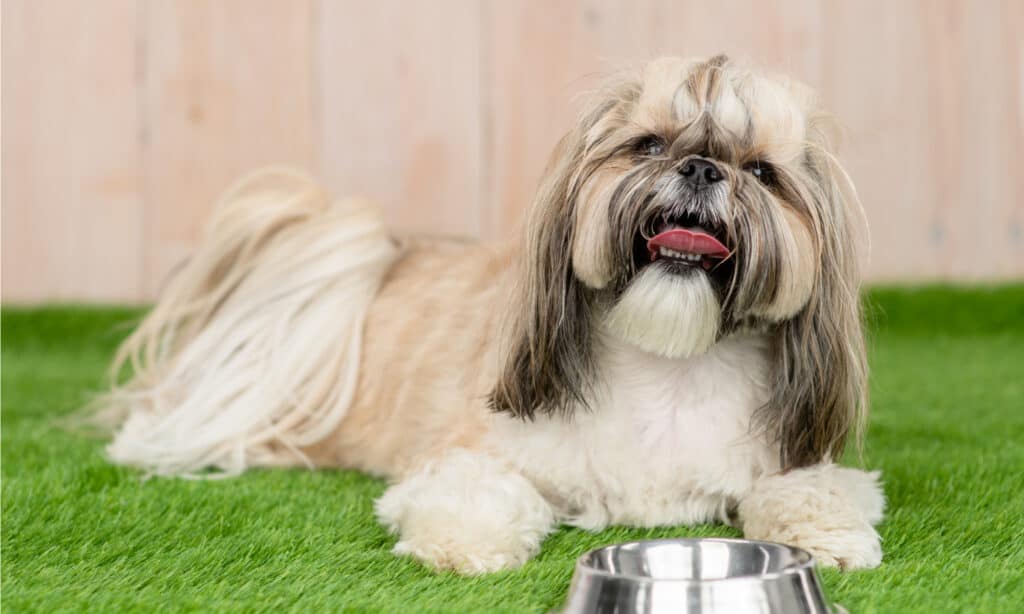
The Shih Tzu is a perfect pet for first-time owners and families with children.
©Ermolaev Alexander/Shutterstock.com
Originally a Chinese breed, teacup Shih Tzus are known for their fluffy appearance and outgoing personalities. They are considered perfect pets for first-time owners, families with kids, and senior citizens.
Their name translates as little lion, but you don’t have to worry about this petite pooch tearing anyone to shreds. Teacup Shih Tzus typically weigh under 8 pounds and stand around 5 to 7 inches tall. This is significantly smaller than the standard Shih Tzu, which weighs 9 to 16 pounds and is between 8 and 11 inches tall. These little furballs shed very little, as their hair often gets trapped in their long coat, but they do need regular brushing and grooming.
5. Teacup Pekingese
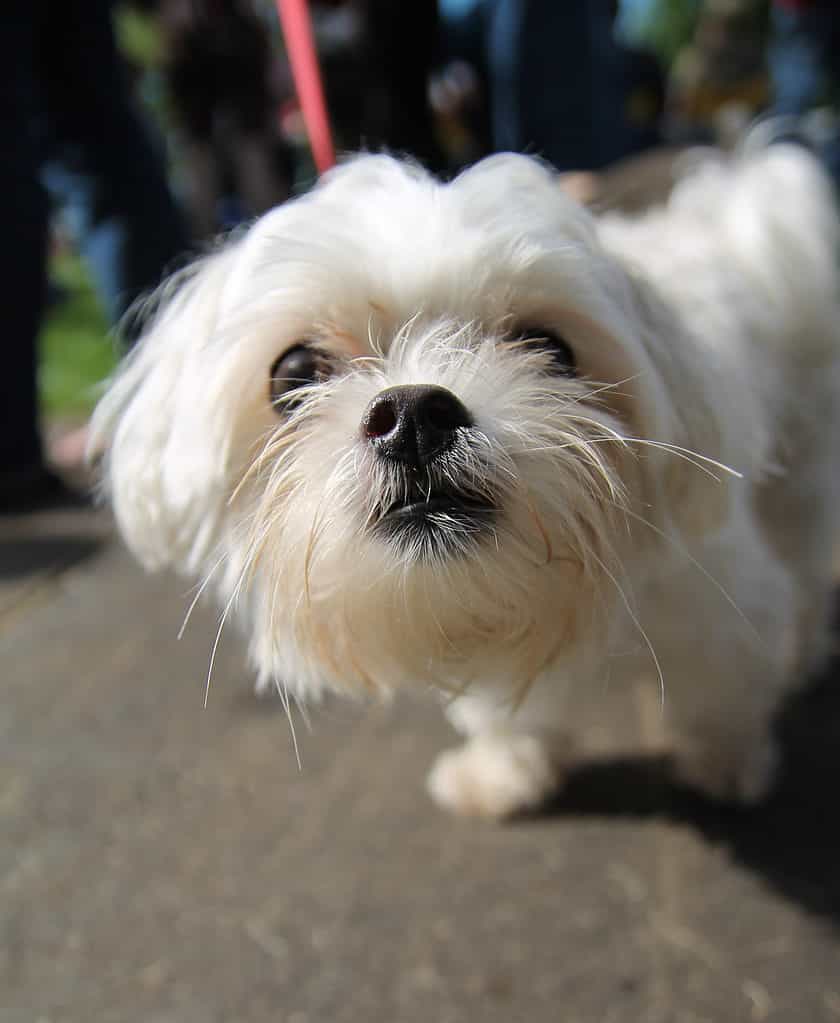
Teacup Pekingese can be tricky to train due to their stubborn temperaments.
©Annette Shaff/Shutterstock.com
Nicknamed the princess dog, the Pekingese originated in ancient China, where it served the nobility as a lapdog. Unlike the poodle or Shih Tzu, this teacup breed can be tricky to train due to its stubborn temperament. Teacup Pekingese typically do not weigh over 5 pounds.
Pekingese dogs require extensive grooming for their luxurious, long, double coat, which grows continuously and needs to be brushed daily or several times a week to prevent matting. They do shed, but regular grooming can help manage loose hair.
6. Bichon Frise
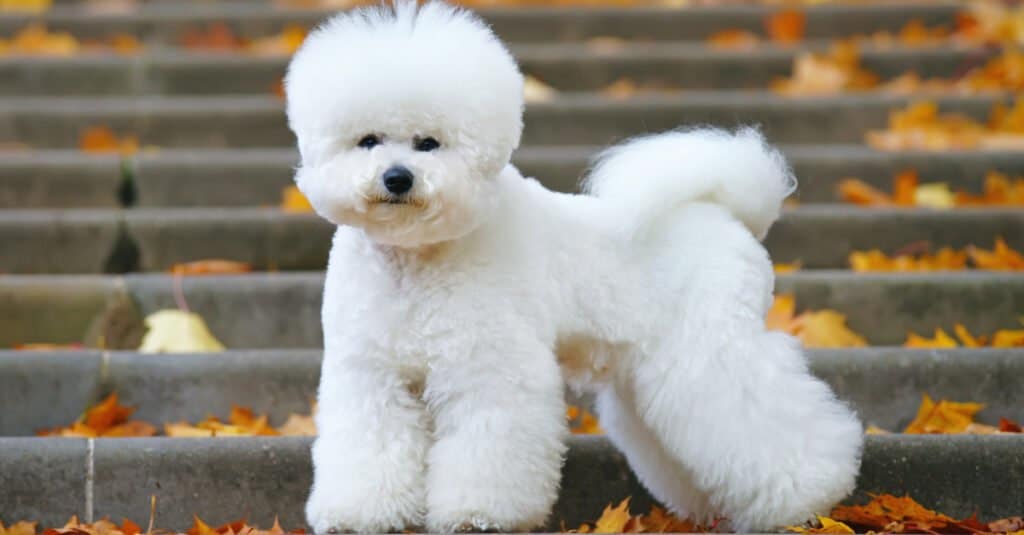
The Bichon Frise is known for being a good companion breed.
©Eudyptula/Shutterstock.com
This breed is not considered a true conventional teacup dog by the American Kennel Club. Yet, the Bichon Frise has quickly become a big favorite of teacup dog owners in the U.S. The average Bichon Frise is 9.5 to 11.5 inches tall and weighs between 12 and 18 pounds. However, the teacup variety is smaller.
These dogs are warm and friendly, and have lovely fluffy white fur, which sheds very little and can be groomed in the most creative ways.. All you need to do is to provide them with care and affection, and you have their lifetime loyalty.
7. Teacup Yorkshire
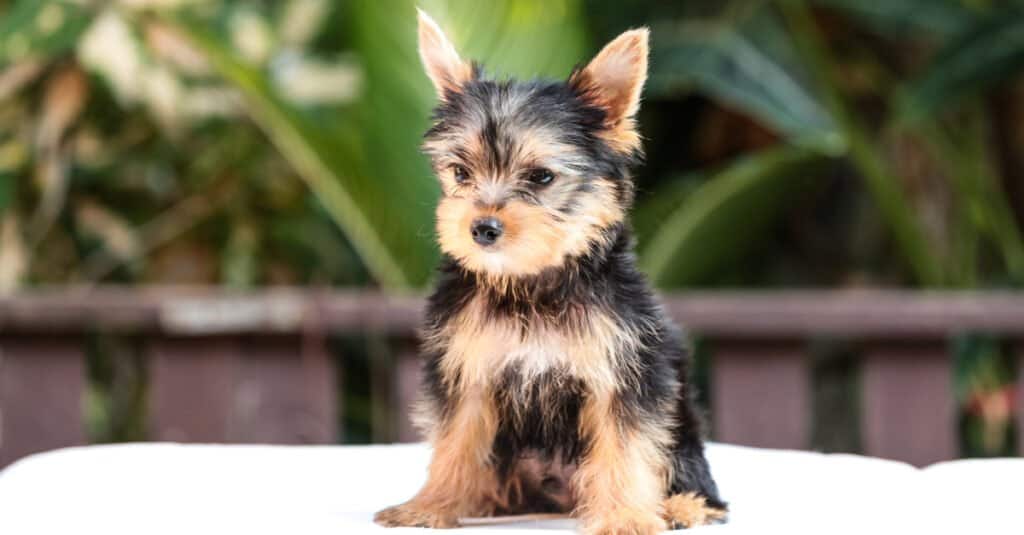
Teacup breeds such as Yorkies tend to have shorter lifespans.
©DOPTOON/Shutterstock.com
Yorkshire terriers need regular brushing to keep their hair from becoming matted, but other than that, these dogs barely shed despite their long locks. You also need to trim their locks regularly to keep the hair from poking the dog’s eyes. A teacup Yorkie typically weighs
between 2 and 4 pounds and stands under 7 inches tall at the shoulder. These dogs are a very small variation of the standard Yorkshire terrier, which itself is a toy breed.
Teacup Yorkies can be in the habit of barking excessively, but this is something a professional dog trainer may be able to eliminate, especially when the dogs are young and have not developed the habit.
8. Teacup Schnauzer
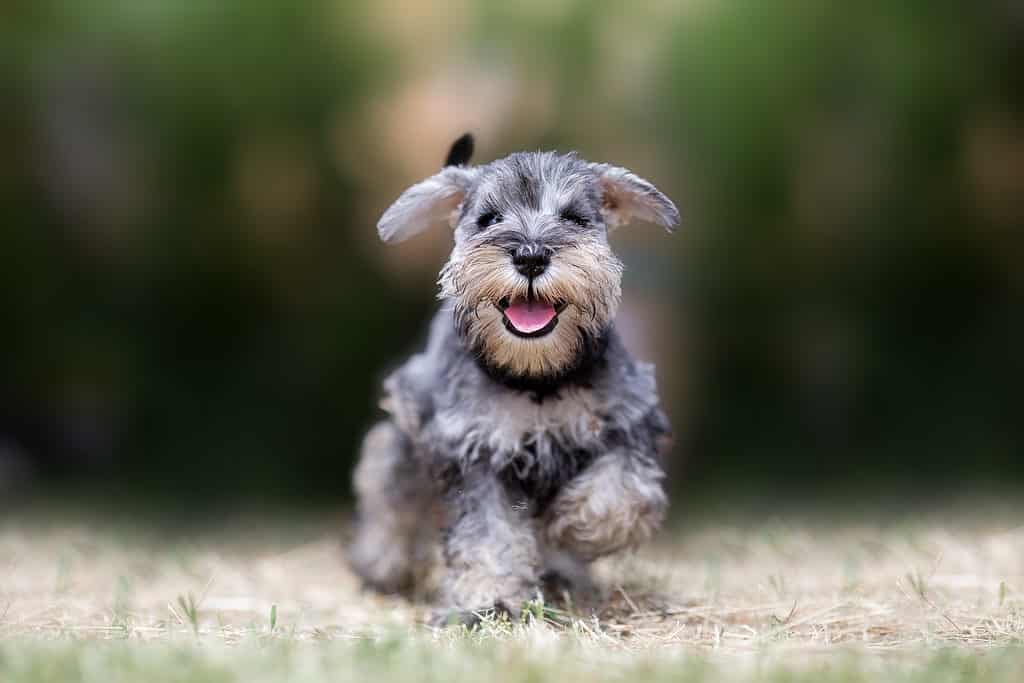
Schnauzers were originally bred for farming purposes, and their hybrid ancestors are just as active and efficient.
©Lunja/Shutterstock.com
If you are looking for a dog that will act as a mini-vigilante as well as a companion, you might consider a tecup schnauzer. Schnauzers were originally bred for farming purposes, and their hybrid ancestors are just as active and efficient. Teacup schnauzers are naturally extroverted and outgoing, and can alert you to the unwelcome presence of intruders. This breed sheds very little and is relatively easy to groom with regular maintenance.
The average height for a miniature schnauzer is 12–14 inches at the shoulder, and the average weight is 10–20 pounds.
9. Chinese Crested Dog
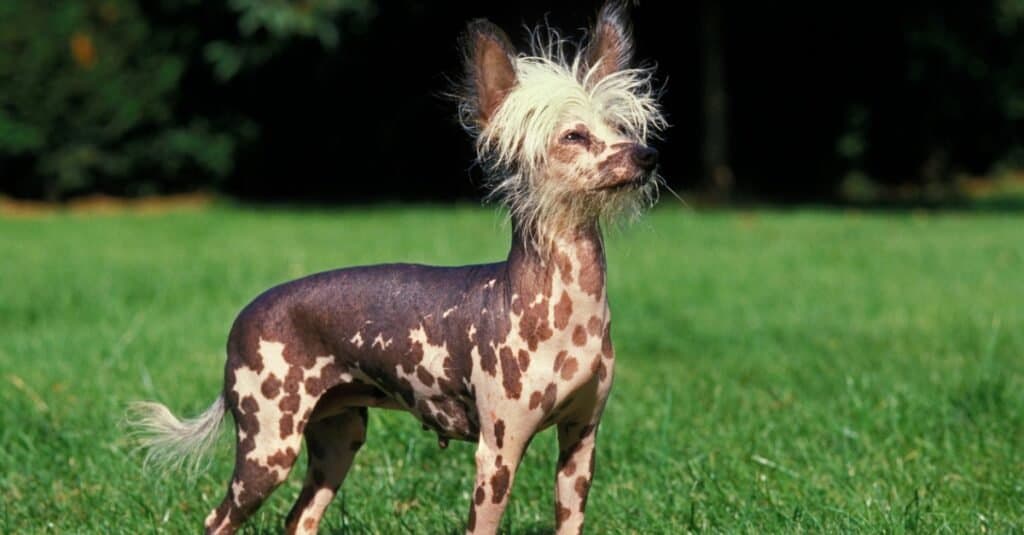
With a hairless dog like the Chinese crested dog, you won’t have to worry about shedding.
©iStock.com/slowmotiongli
The Chinese crested is a hairless dog breed that doesn’t shed. Of course, having no hair at all comes with some complications of its own, such as skin conditions. A Chinese crested is considered a small toy breed, typically standing 11 to 13 inches high and weighing 8 to 12 pounds. The teacup Chinese crested is significantly smaller.
This breed makes a perfect companion pet because it is friendly and finds it very easy to adapt to new environments and people. Chinese Crested Dogs are attentive, playful, and devoted to their humans.
10. West Highland Terrier
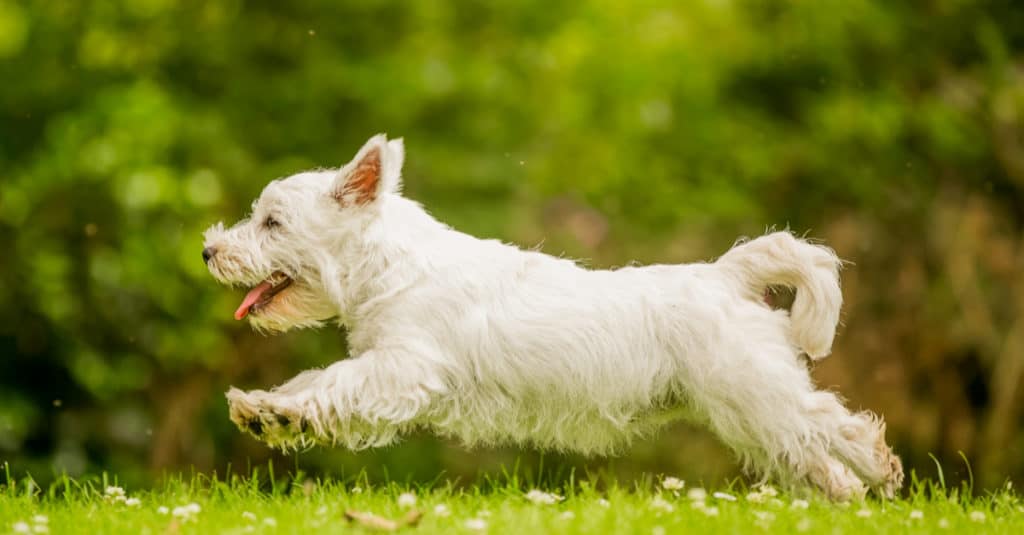
West Highland Terriers are active, energetic, and easy to train.
©Ian McGlasham/Shutterstock.com
The West Highland Terrier is perhaps one of the friendliest teacup dogs of all time. These dogs are friendly to strangers, kids, and even other dogs. Their animated nature is super endearing. Since they are naturally active, they require ample space for recreation. A standard Westie weighs 15–20 pounds and stands 10–11 inches tall. While some breeders may advertise teacup Westies, this is not an officially recognized size. Westies do shed, but regular grooming can help manage loose hair. They are also easy to train because of their high intelligence.