
Many people know that some animals have more than two eyes, but the variety and function of these extra eyes might surprise you. From reptiles with a hidden “third eye” that senses light, to insects and arachnids covered in multiple tiny lenses, nature has equipped creatures with unique visual systems to help them survive.
Extra eyes can serve many purposes: detecting changes in light, spotting predators from above, navigating in the dark, or enhancing depth perception. For some species, these additional eyes are simple light-sensitive organs, while in others they function almost like a second set of true eyes.
This post was updated on September 28, 2025 to clarify the uses of Komoda dragons’ third eye, the harmlessness of jumping spiders, hunting style of ogre-faced spiders, the function of parietal eyes in several animals, and anatomical eye description of the four-eyed fish.
1. Komodo Dragon
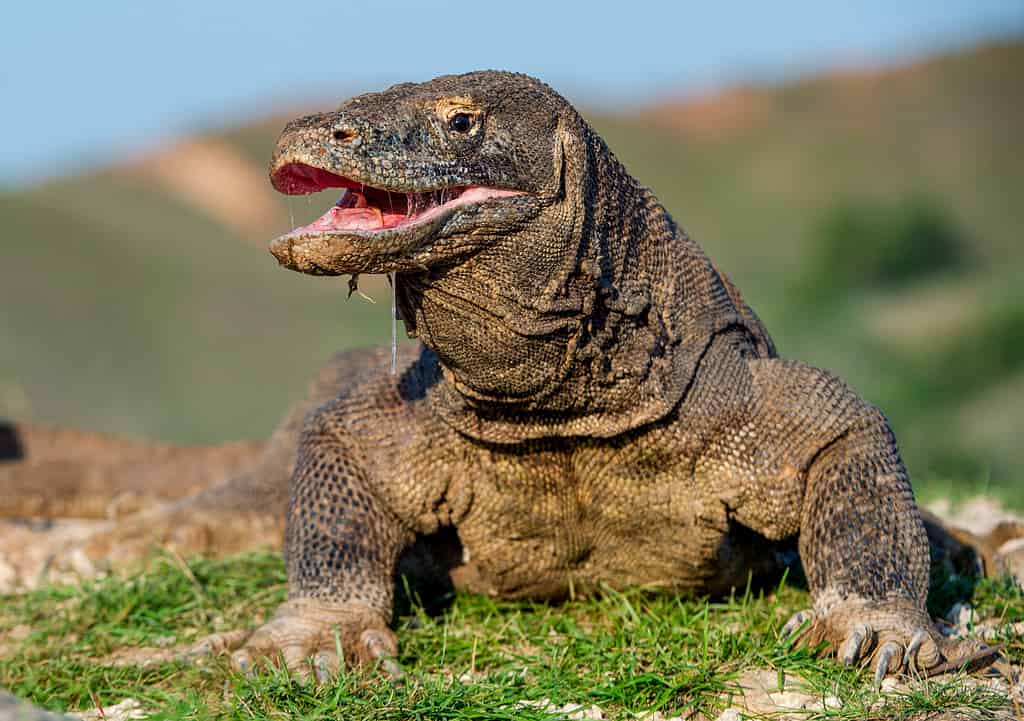
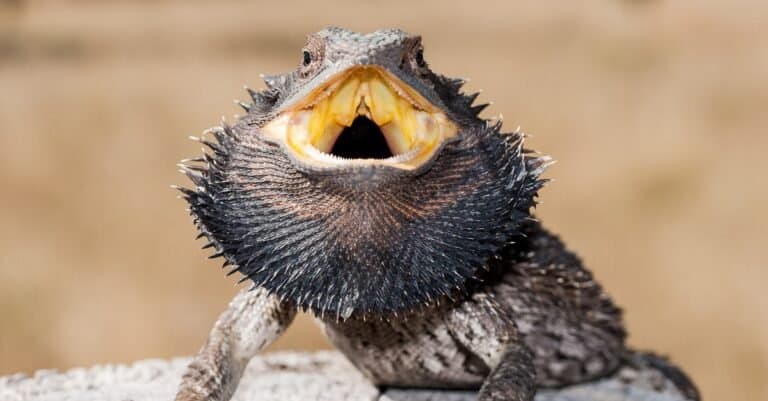
Komodo dragons are the world’s largest lizards.
©USO/ via Getty Images
Did you know that the Komodo dragon is the biggest lizard alive? They can grow nearly 10 feet long and can reach 150 pounds! Looking at a Komodo dragon, you can see two distinct eyes like you would on most creatures.
These unique lizards have a parietal (third) eye. It’s a light-sensitive organ mainly for circadian rhythm regulation, hormone production, and detecting light/dark, not vision in the usual sense.
2. Iguana
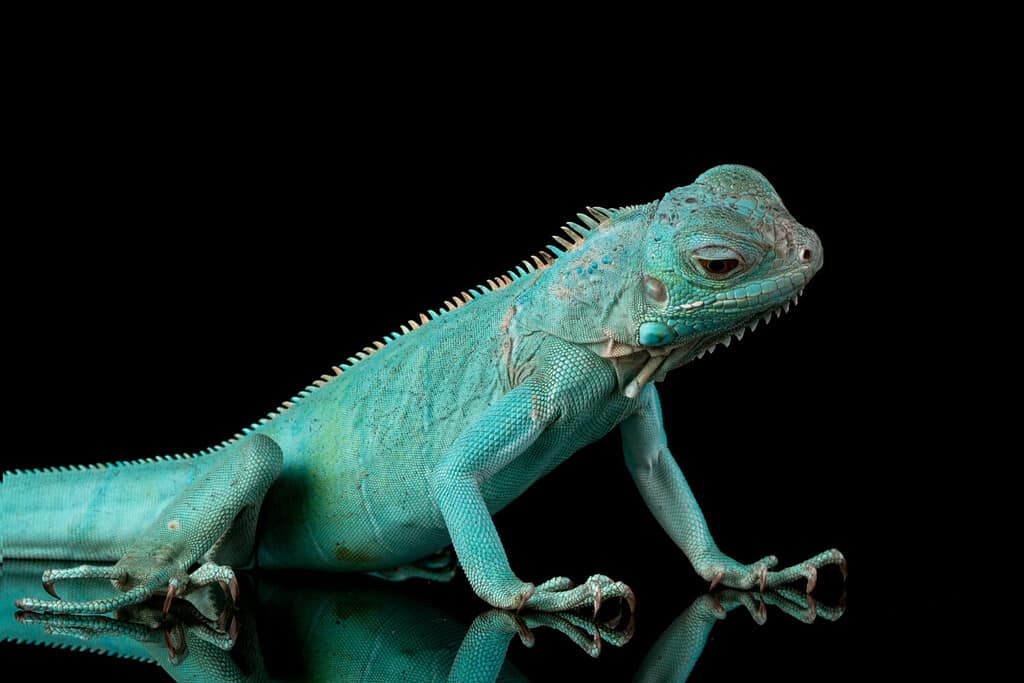
There are 35 species of iguana.
©Kurit afshen/Shutterstock.com
Like the Komodo dragon and numerous other reptiles, the iguana possesses a parietal eye. This eye is less noticeable than normal eyes but is able to be identified upon careful inspection. It plays a similar role in iguanas as it does in Komoda dragons.
The third eye of the iguana is oriented upward and detects light as well. This aids in its ability to recognize when a predator is approaching from overhead.
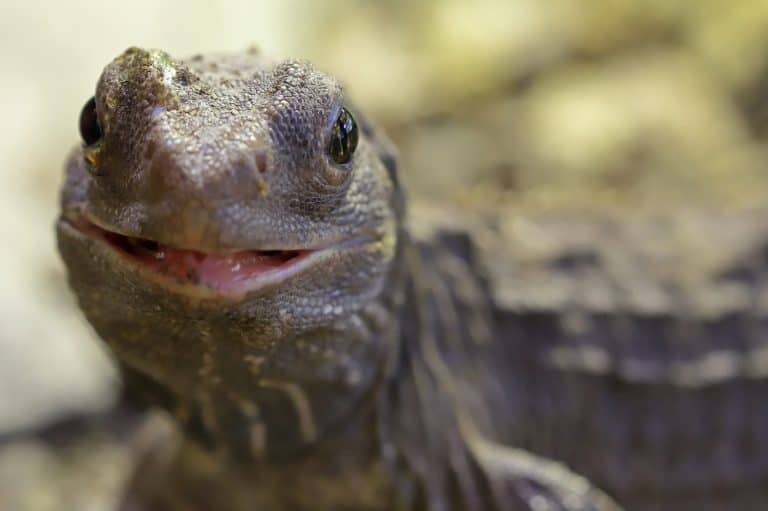
3. Tuatara
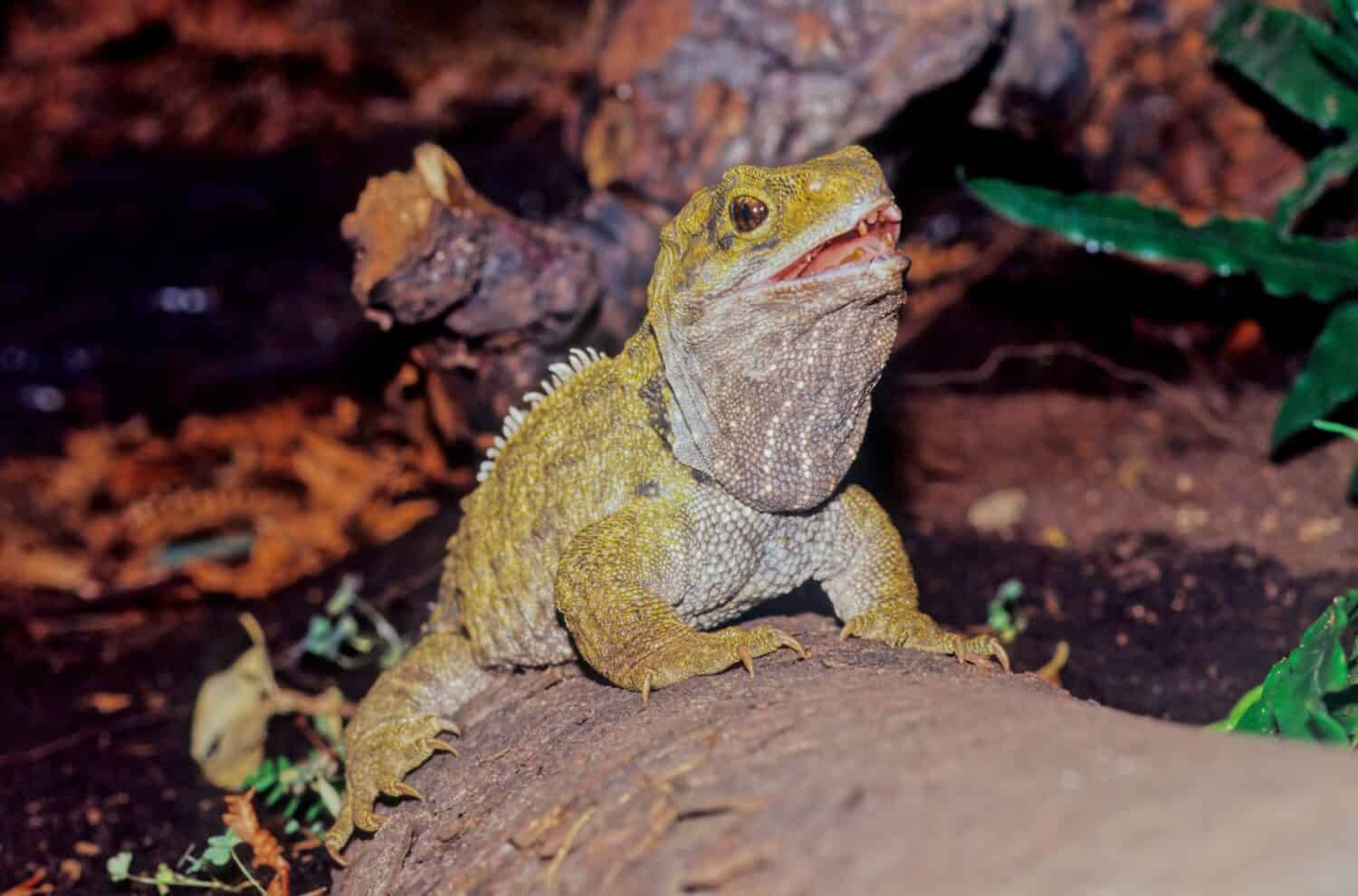
A tuatara named Henry (not pictured) is over 150 years old.
©Roberto Dani/Shutterstock.com
Yet another animal with more than two eyes is the tuatara. Although a reptile, the tuatara isn’t categorized as a lizard. The endemic tuatara lives in the coastal seas of New Zealand. Although it is a distinct reptile from lizards and snakes, this critter is related to both.
The parietal eye on the tuatara is similar to that of an iguana. It’s on the top of their head and can be used to scope out predators. Unlike with other reptiles, the third eye of the tuatara contains a lens, retina, and other eye components. It detects light/dark and movement, helping with circadian rhythm and thermoregulation. Tuatara’s parietal eye is visible in hatchlings but becomes covered with scales and pigment as they age.
4. Lamprey
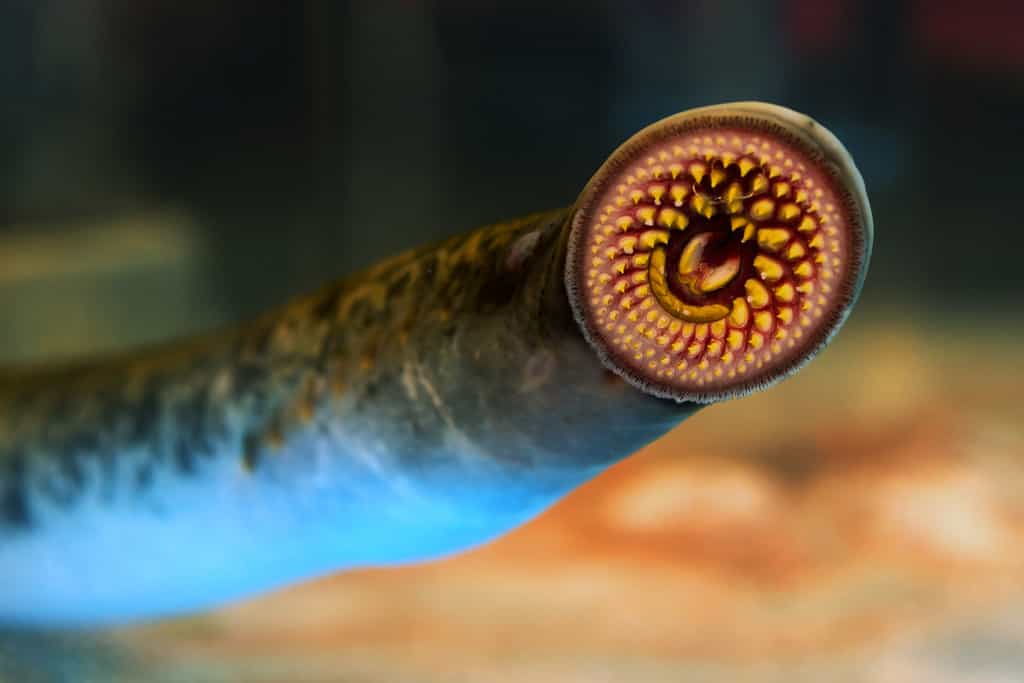
Lampreys are invasive to the Great Lakes.
©Gena Melendrez/Shutterstock.com
If you’ve never seen a lamprey before, they’re quite creepy-looking creatures. Although they aren’t actually eels, they are occasionally referred to as lamprey eels. Roughly 38 species are still alive today, and five have already gone extinct. This animal lives in freshwater and coastal environments.
It is distinguished by a funnel-shaped mouth lined with teeth. These slippery serpent-looking animals have two functional lateral eyes plus a pineal eye (light-sensing). The “parapineal” organ is not a visible external eye. This extra detection helps safeguard the lamprey.
5. Triops
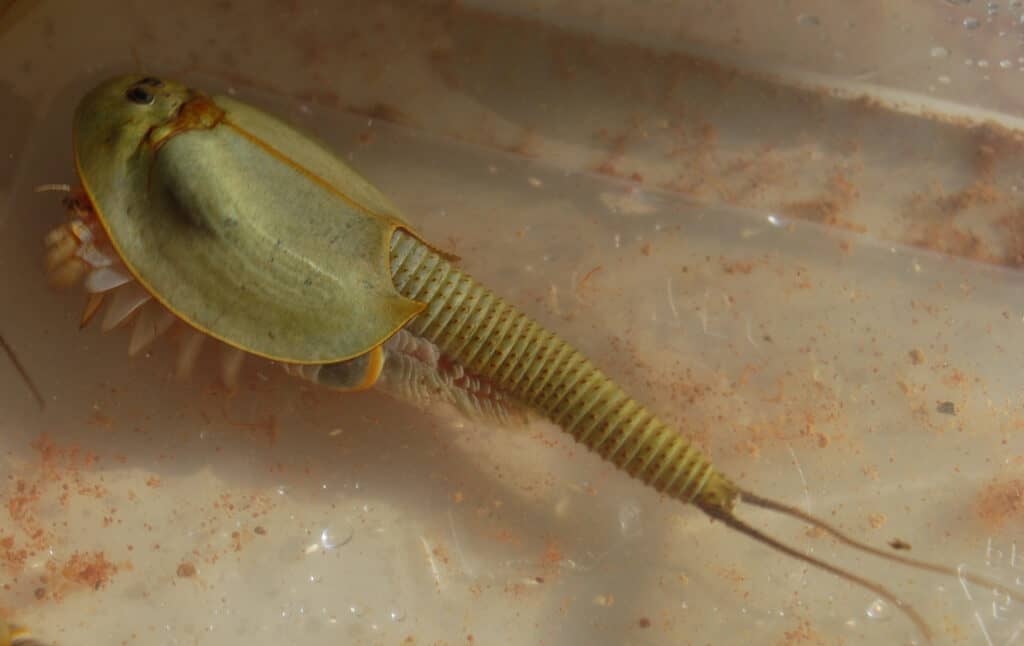
A common Triops is the dinosaur shrimp.
©Louise Barnes/Shutterstock.com
With a name like Triops, can you guess how many eyes this animal has? If you said three, you’ve earned yourself a gold star! Its name is derived from the Greek word for “three eyes.” Crustaceans make up every species of the Triops genus.
You can find them all throughout the world, some are household pets, and others are kept in decorative pools. The third is a naupliar eye, or simple eye; it is facing up and situated between the two visible eyes. Unlike the other two, this third eye is largely concealed and is capable of detecting light.
6. Four-Eyed Fish
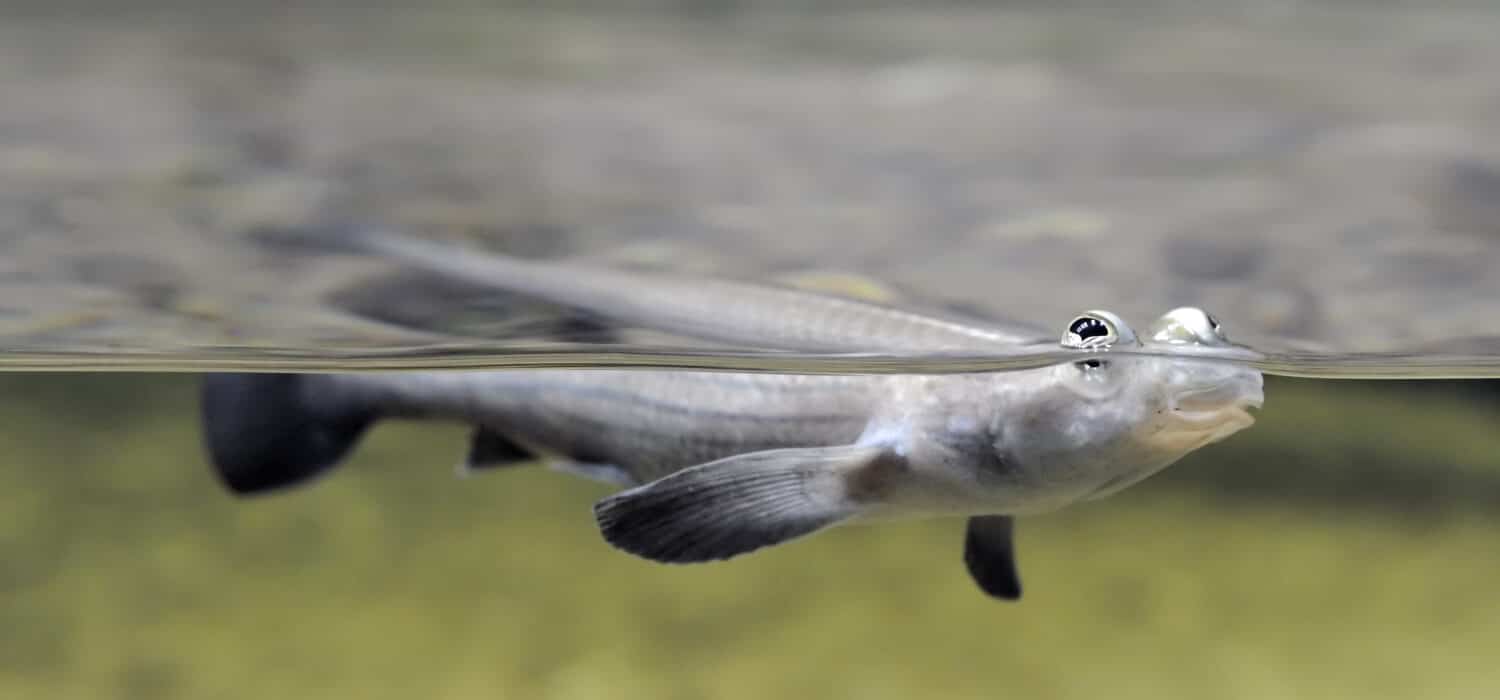
Four-eyed fish can see above and below the water at the same time.
©gallimaufry/Shutterstock.com
The genus Anableps, which belongs to the Anablepidae family, is more well-known as the “four-eyed fish.” Despite their name, they don’t actually have four eyes. They have two eyes, each divided horizontally with two pupils, allowing simultaneous vision above and below the water.
The four-eyed fish is impressive. It’s known to survive in extremely shallow water, and their eyes help them stay safe in this vulnerable environment.
7. Bees
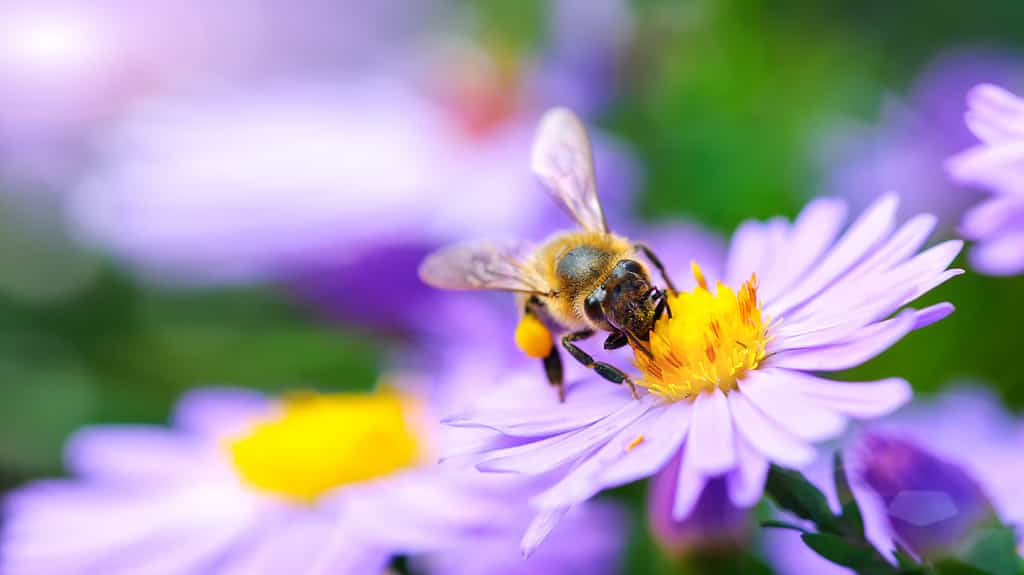
Wasps and flies also have five eyes.
©miroslavmisiura/iStock via Getty Images
Because they help with pollination, bees are very well-liked. Because these fuzzy fliers are quite small, it can be hard to see all five of their eyes! These eyes are positioned in a triangle-like pattern.
While these eyes cannot discern images, they detect light intensity, which aids in predator avoidance.
8. Praying Mantis
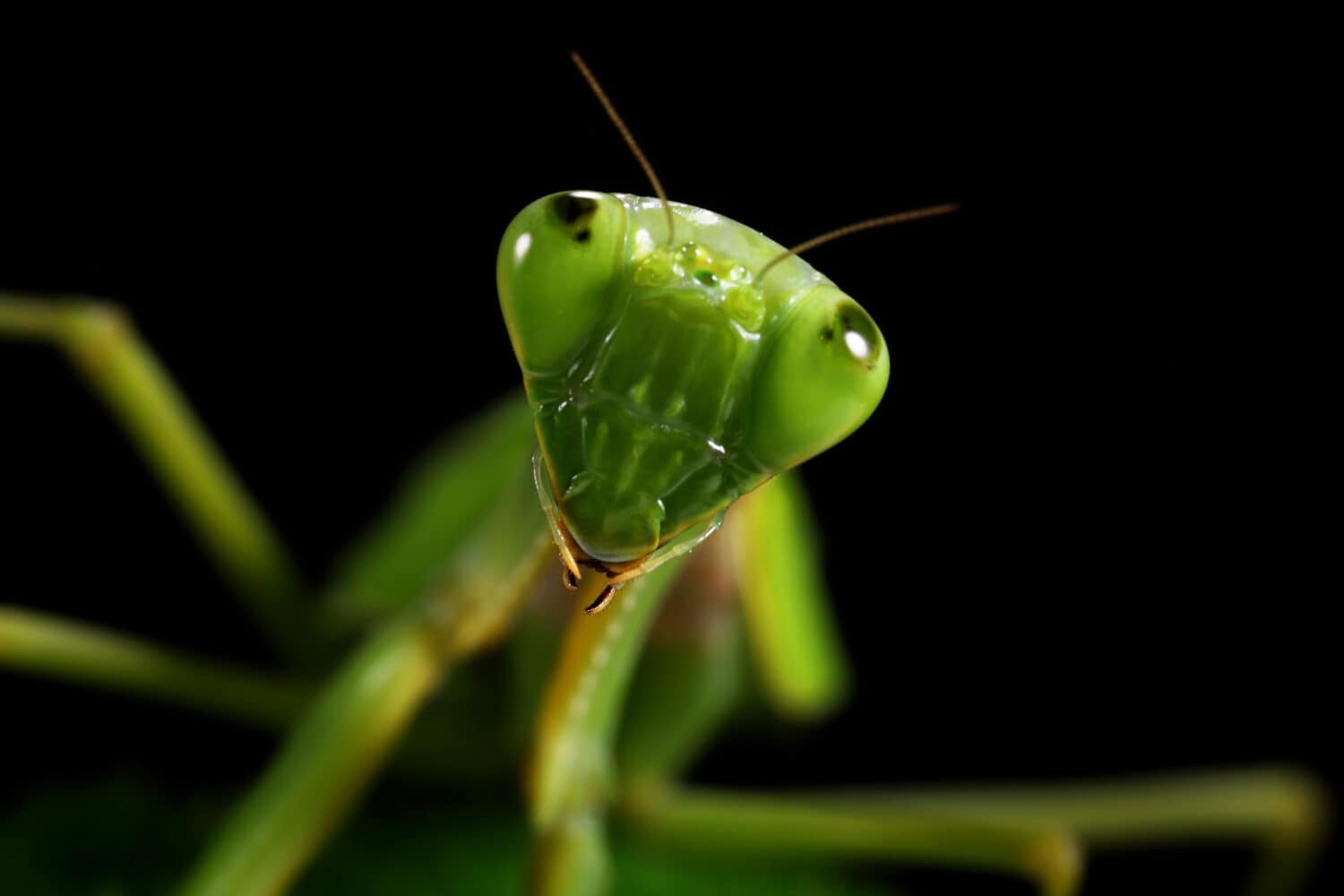
Some legends say that when a praying mantis looks at you, you’ll soon get sick.
©Lauren Suryanata/Shutterstock.com
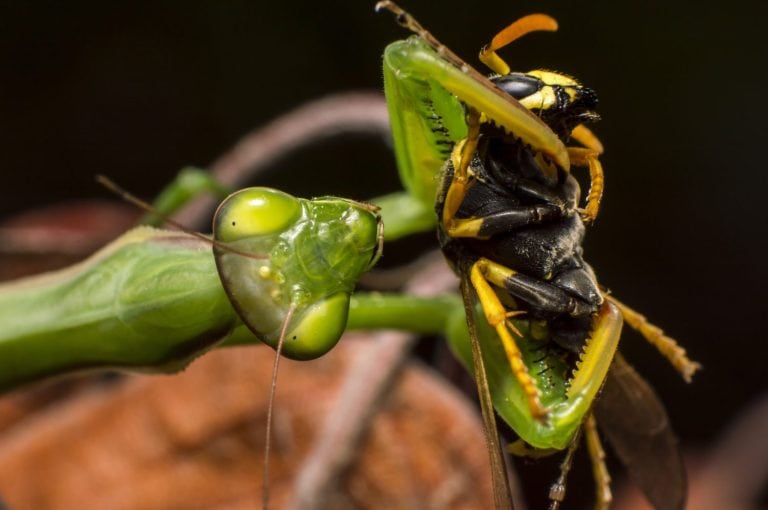
There’s a lot to take in when looking at a praying mantis. They’re quite unique creatures and can easily captivate anyone! Although some people keep them as pets, in nature, you will find praying mantises in temperate and tropical environments.
These creatures got their name due to the folding arms that look like a religious figure praying. Like most animals, this one has two compound eyes. There are three more smaller eyes surrounding them that can detect light. In total, praying mantises have five eyes!
9. Starfish
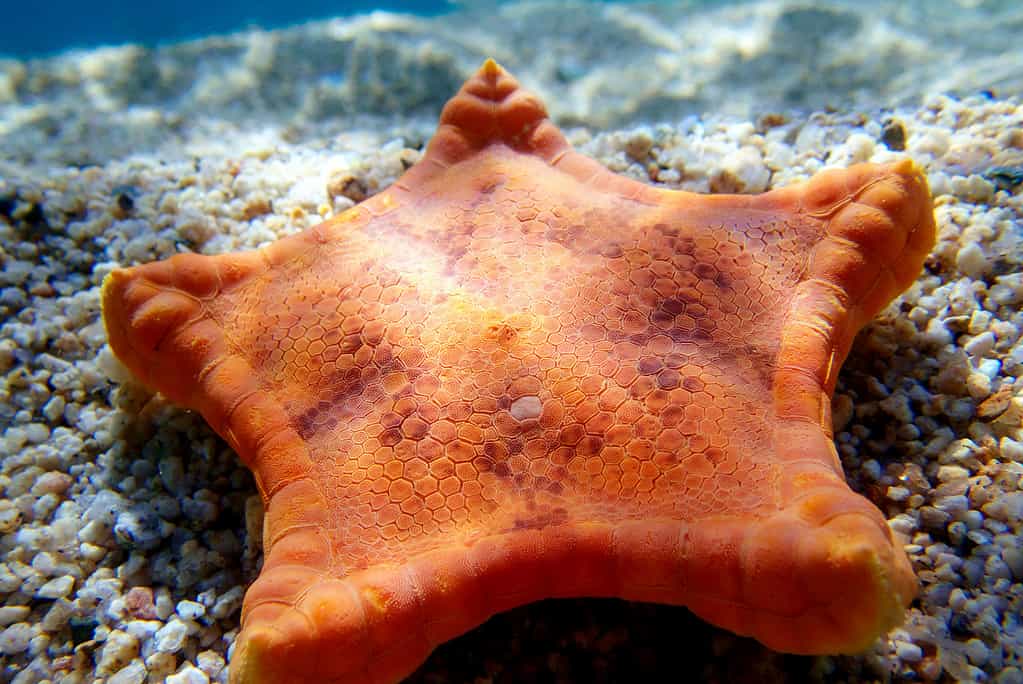
Starfish don’t have a brain!
©vojce/ via Getty Images
There are about 1,900 species of starfish, and they may be found in all oceans, no matter the water temperature. In fact, starfish can live as far as 20,000 feet below the surface.
They have an eyespot at the tip of each arm, meaning a 5-armed starfish has 5, but some species with more arms (up to 40) have many more. These eyespots are very simple and detect light/dark and large shapes. These unique eye spots help starfish locate food and evade predators.
10. Opabinia
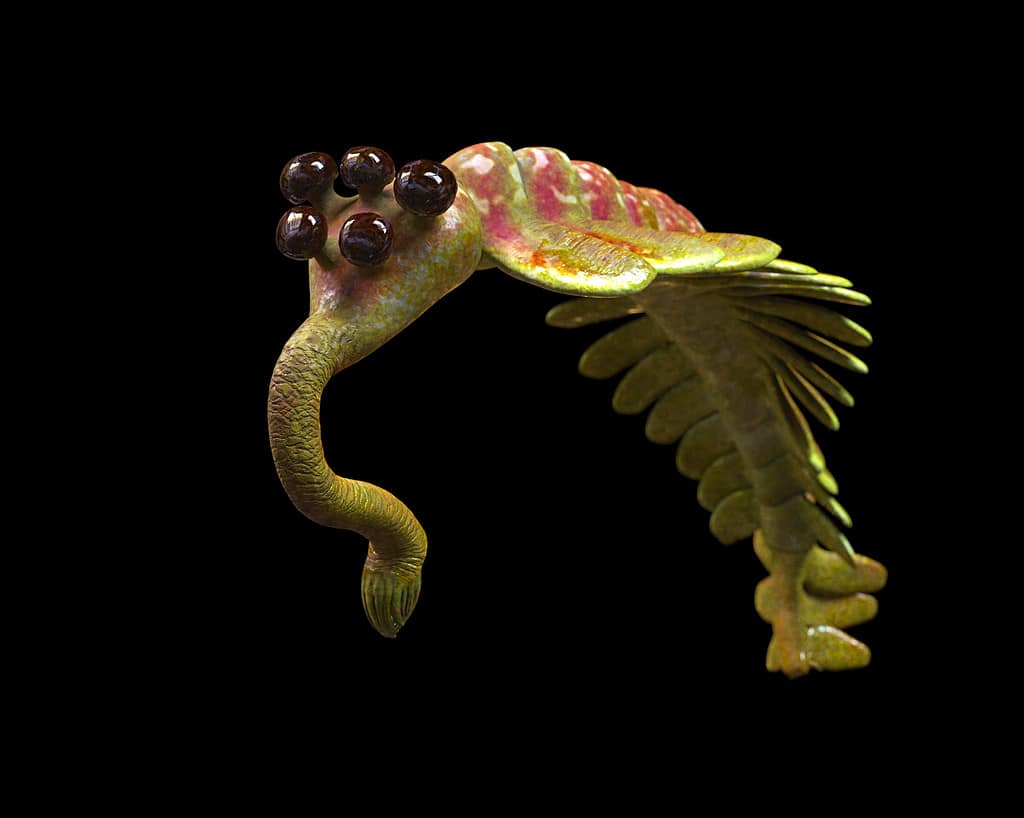
Opabinia‘s flexible trunk had a hand-like grabber.
©dottedhippo/iStock via Getty Images
Despite being extinct, the Opabinia still qualifies for this list because of how many eyes it had. The Opabinia was an arthropod that lived for over 500 million years. In 1911, Charles Doolittle Walcott made the discovery.
According to evidence from fossils, Opabinia had five eyes. These unique-looking creatures had all stalked eyes. They were pretty obvious, as they jutted out from their faces. Opabinia also had a strange tail and a delicate body.
11. Jumping Spider
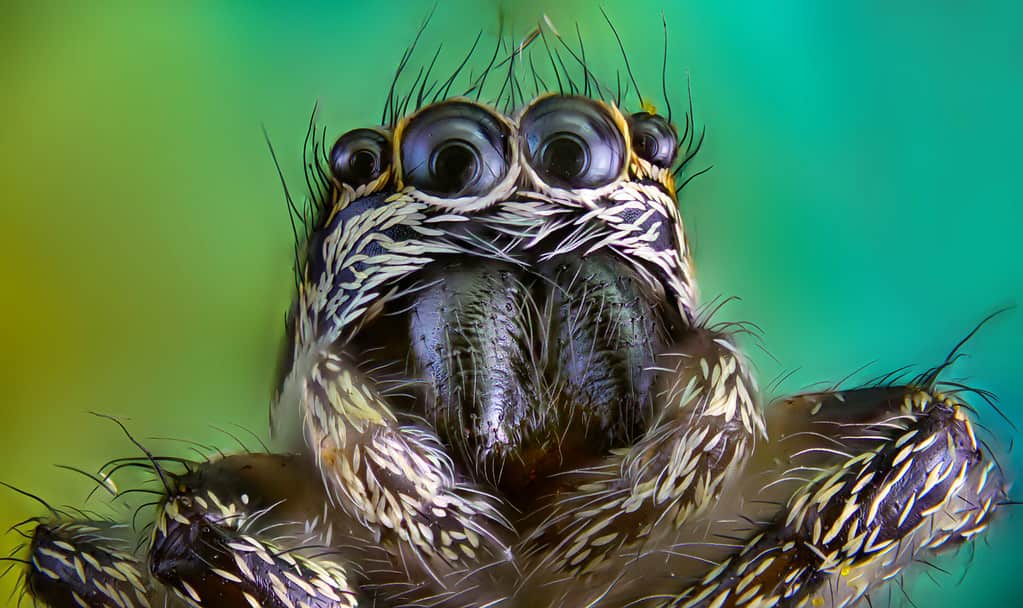
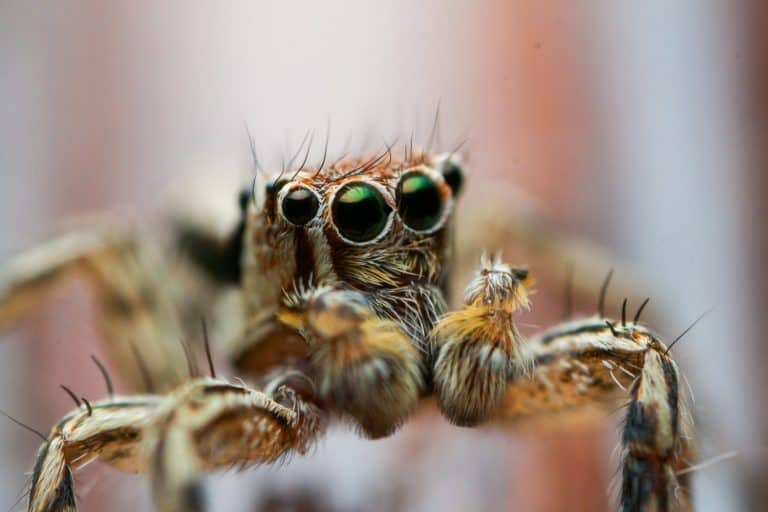
Jumping spiders have venom to subdue prey, but it’s harmless to people.
Spiders are one of the most obvious animals with more than two eyes. Arachnids frequently have eight eyes, and jumping spiders are no exception. The two main eyes function and move like ordinary visual organs.
The remaining six eyes don’t move like the main anterior median eyes, but they do function in motion detection. These eyes work as a team to provide the jumping spider with superb vision.
12. Ogre-faced Spider
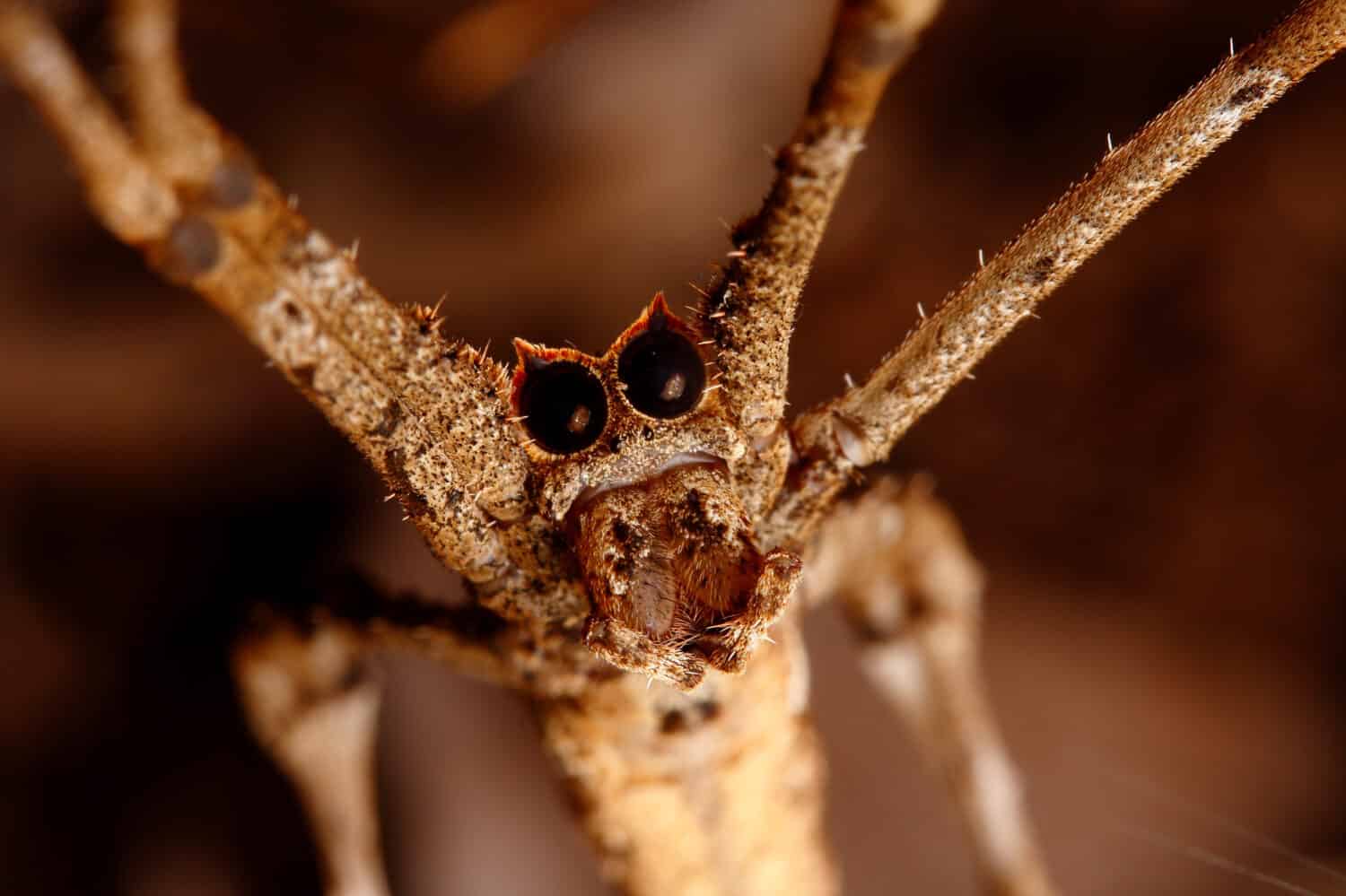
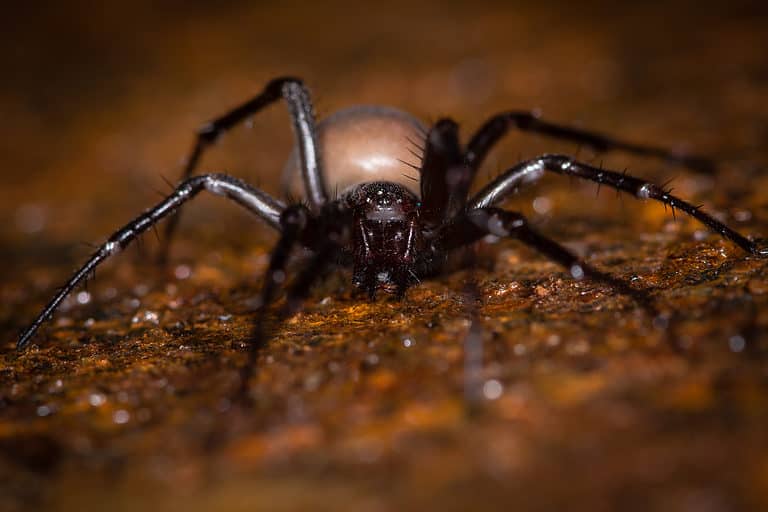
Despite its name, this spider looks nothing like the famous ogre Shrek.
©Ondrej Michalek/Shutterstock.com
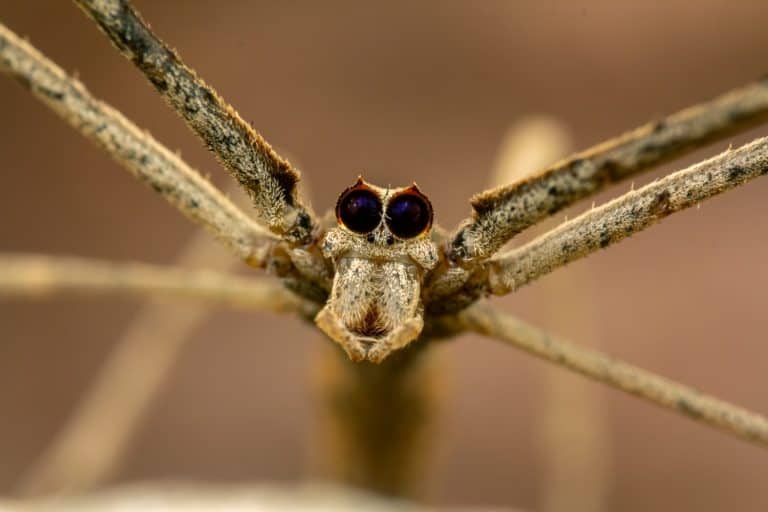
Next, we have a creature that is politely named the “ogre-faced spider.” This spider is well known for its hunting method; they construct a special net-web, which they throw over prey.
The ogre-faced spider initially appears to be a two-eyed arachnid. However, there are six more hidden in plain sight! All eight of their eyes allow ogre-faced spiders to see exceptionally well in the dark.
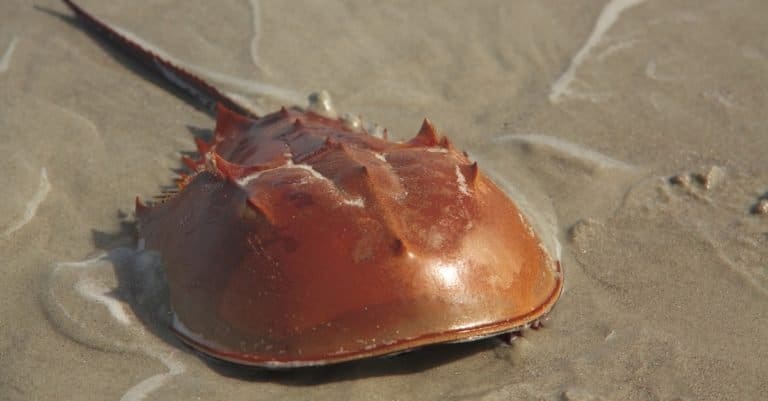
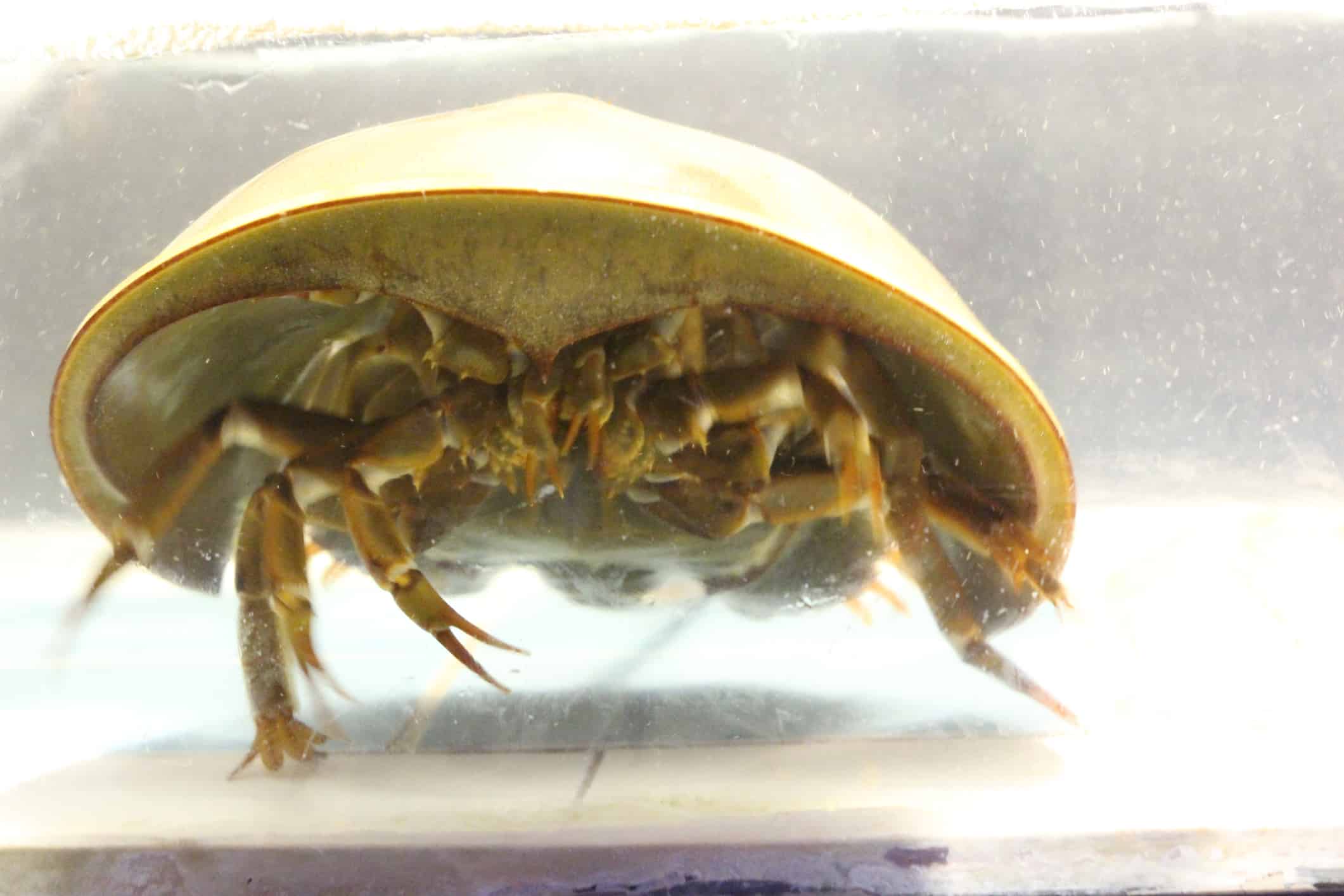
13. Horseshoe Crab
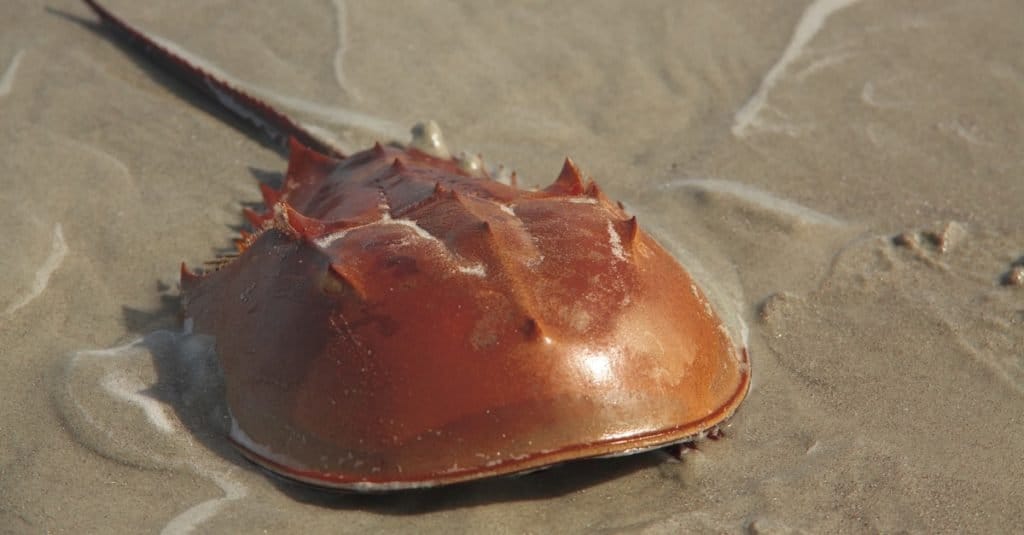
Horseshoe crabs are older than dinosaurs!
©SandraG/Shutterstock.com
The horseshoe crab’s name is deceptive. It is not a crustacean or a crab. This animal is a chelicerate, which surprisingly, is closely related to spiders and scorpions.
This interesting-looking creature has 10 eyes and additional photoreceptors for navigation, circadian rhythm, and detecting light.
14. Scorpion
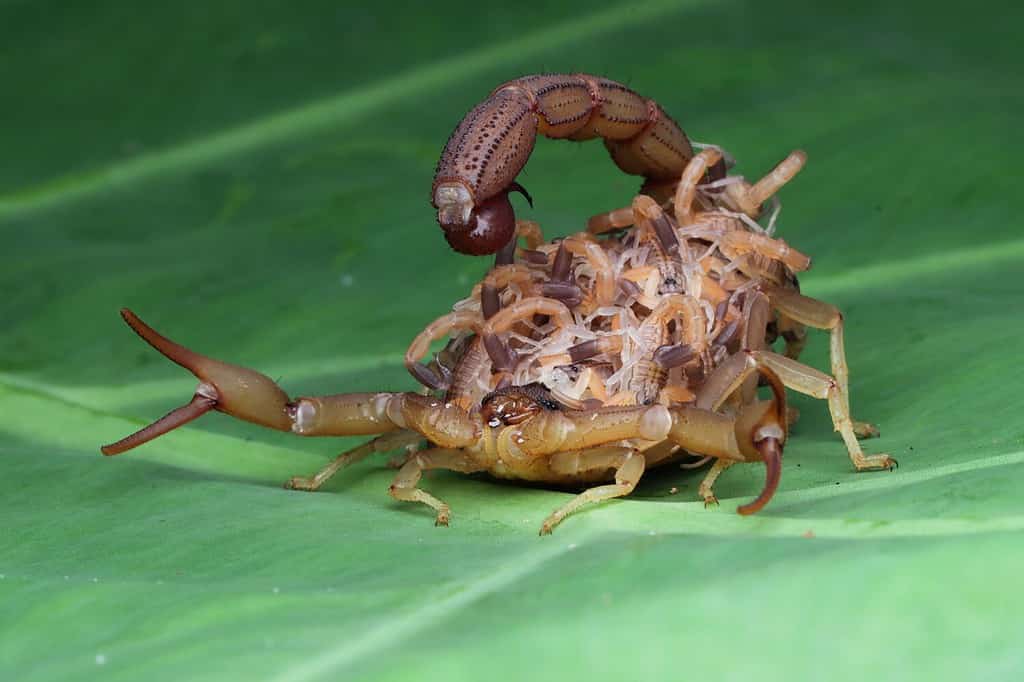
Scorpions are cousins to spiders.
©Kurit afshen/Shutterstock.com
Scorpions are well-known for having pincers that sting with a poisonous substance. The desert is the scorpion’s primary habitat; however, it can be found elsewhere.
Most scorpions have two median eyes and 2–5 pairs of lateral eyes, though numbers vary based on species. For seeing, the first two eyes are located on top of the head, while the others are located on the body. Lateral eyes recognize motion and distinctions between dark and light.
15. Chiton
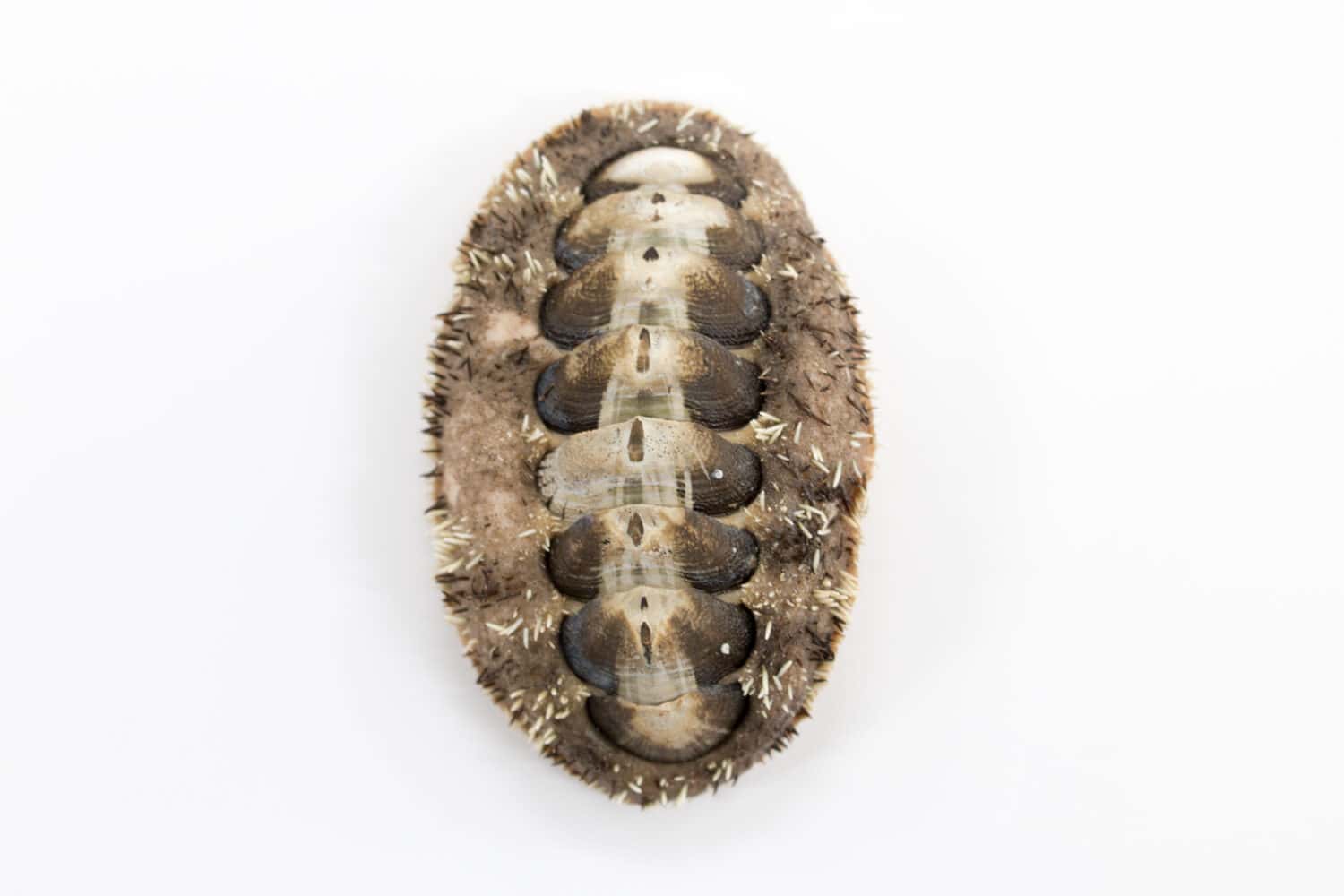
Polyplacophora loves hiding in underground caves.
©Rattiya Thongdumhyu/Shutterstock.com
A mollusk belonging to the Polyplacophora class called a chiton takes the cake for sheer number of eyes. Chiltons can have up to 1,000 eyes!
These many dozens of tiny ocelli contain aragonite lenses and are embedded in the shell plates. They detect patterns in light vs. dark.
16. Box Jellyfish
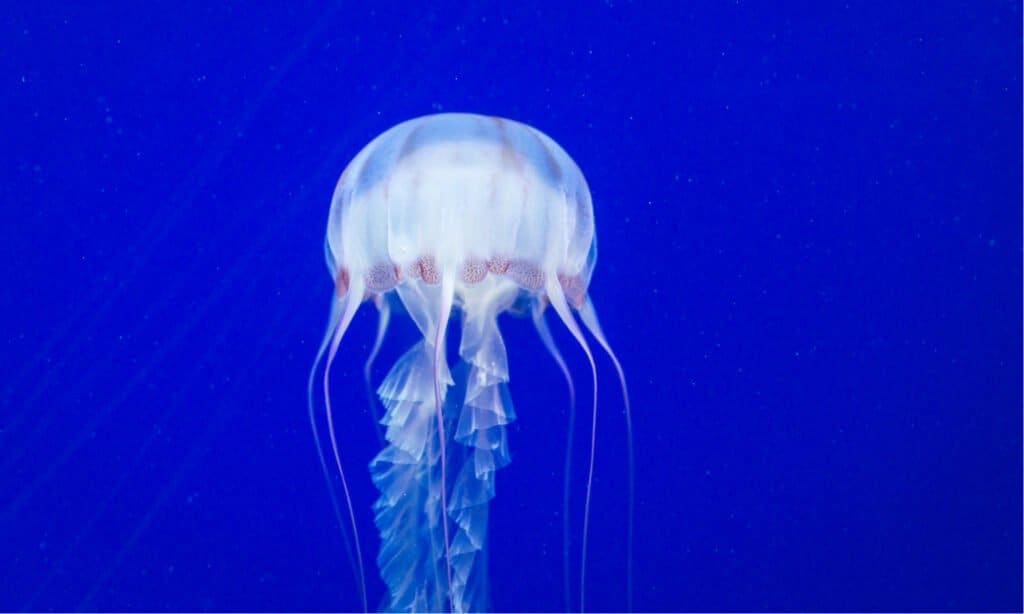
The box jellyfish is the world’s most dangerous jellyfish!
©Danza/Shutterstock.com
Jellyfish can be visually stunning creatures. Although you may not be able to tell, box jellyfish have 24 eyes! However, only one pair of these eyes are image-forming camera-type eyes. The rest are light/dark detectors.
These eyes enable the box jellyfish to accomplish difficult activities such as travel, avoiding barriers, quick directional movement, and reacting to light.
Summary of Animals with More Than 2 Eyes
| Animal | Number of Eyes | |
|---|---|---|
| 1. | Komodo Dragon | 3 |
| 2. | Iguana | 3 |
| 3. | Tuatara | 3 |
| 4. | Lamprey | 4 |
| 5. | Triops | 3 |
| 6. | Four-eyed Fish | 4 |
| 7. | Bees | 5 |
| 8. | Praying Mantis | 5 |
| 9. | Starfish | 5 |
| 10. | Opabinia | 5 |
| 11. | Jumping Spider | 8 |
| 12. | Ogre-faced Spider | 8 |
| 13. | Horseshoe Crab | 10 |
| 14. | Scorpion | 12 |
| 15. | Chiton | 1,000 |
| 16. | Box Jellyfish | 24 |