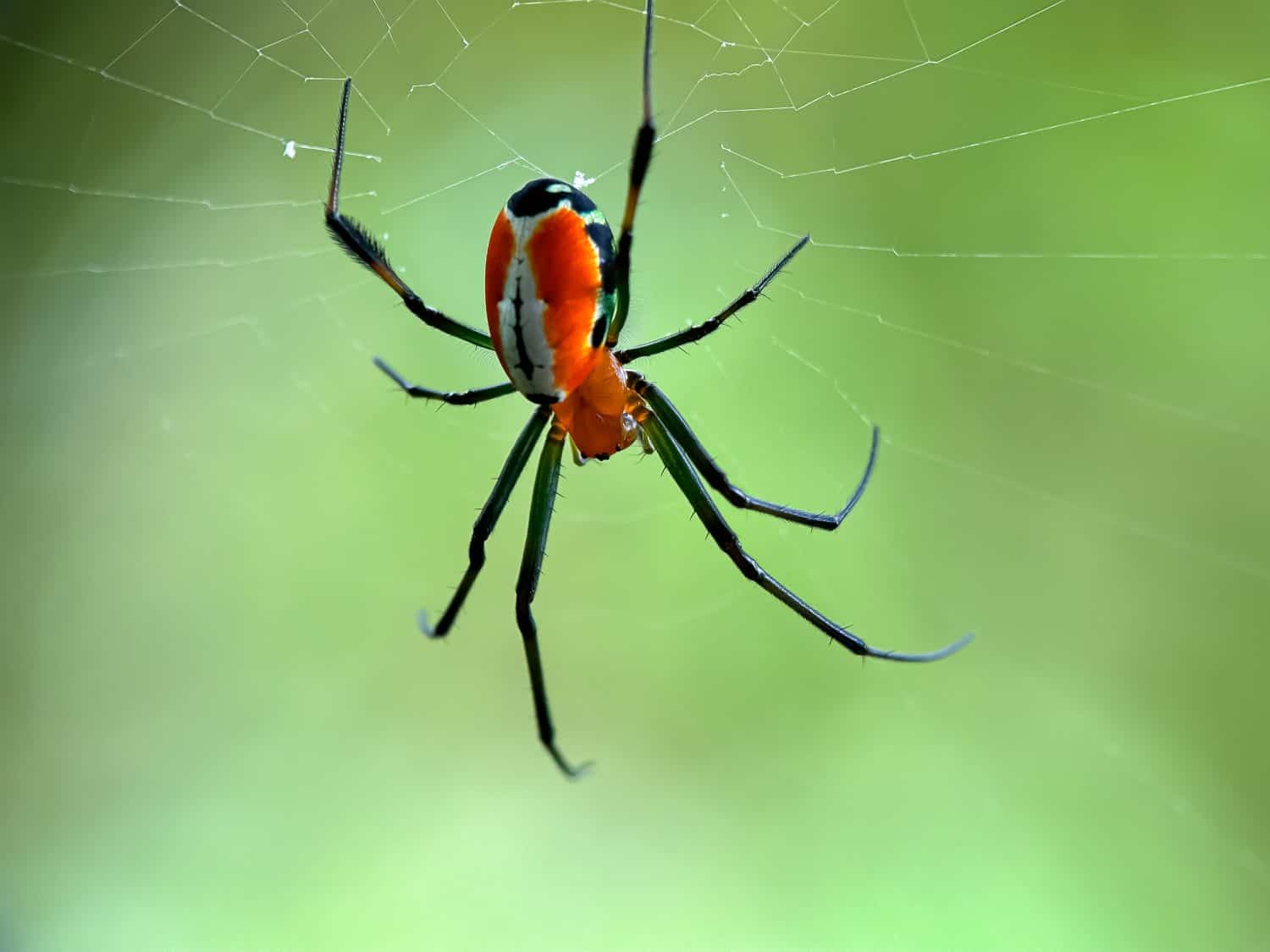

Nature’s orchestra is composed of the strings that hold the earth together. Without some of the earth’s most valuable players, like pollinators, arachnids, and many other living organisms, the melody of life would cease to exist. Spiders are among the most valuable yet overlooked creatures in nature. Though they are not insects and are fairly small, they are among the most diverse predators on earth.
They consume a wide variety of prey, from insects and worms to even small vertebrates, employing strikingly fascinating predatory strategies. Many of these strategies are crucial for controlling populations of animals we consider to be pests. Most notably, spiders consume up to 800 million tons of prey each year, making it apparent just how much they are needed in the system of nature’s checks and balances.
Given how much spiders can shape the world, I wanted to speak to an expert on spider insights and what else we might have missed about their importance. Scientist Dr. Sebastian Alejandro Echeverri, who is a science communicator, wildlife photographer, and co-host of the new BBC Earth Podcast, has spent years studying how spiders see the world, and in turn, how they help us see them differently. Learning from Dr. Echeverri about spiders reminded me that even the smallest creatures have something to teach us.
Being able to show other people the courtship dances of jumping spiders, and seeing their eyes light up, has always been something special.
Dr. Sebastian Alejandro Echeverri, and co-host of the BBC Earth Podcast
Silent Signals: The Science of Spider Communication
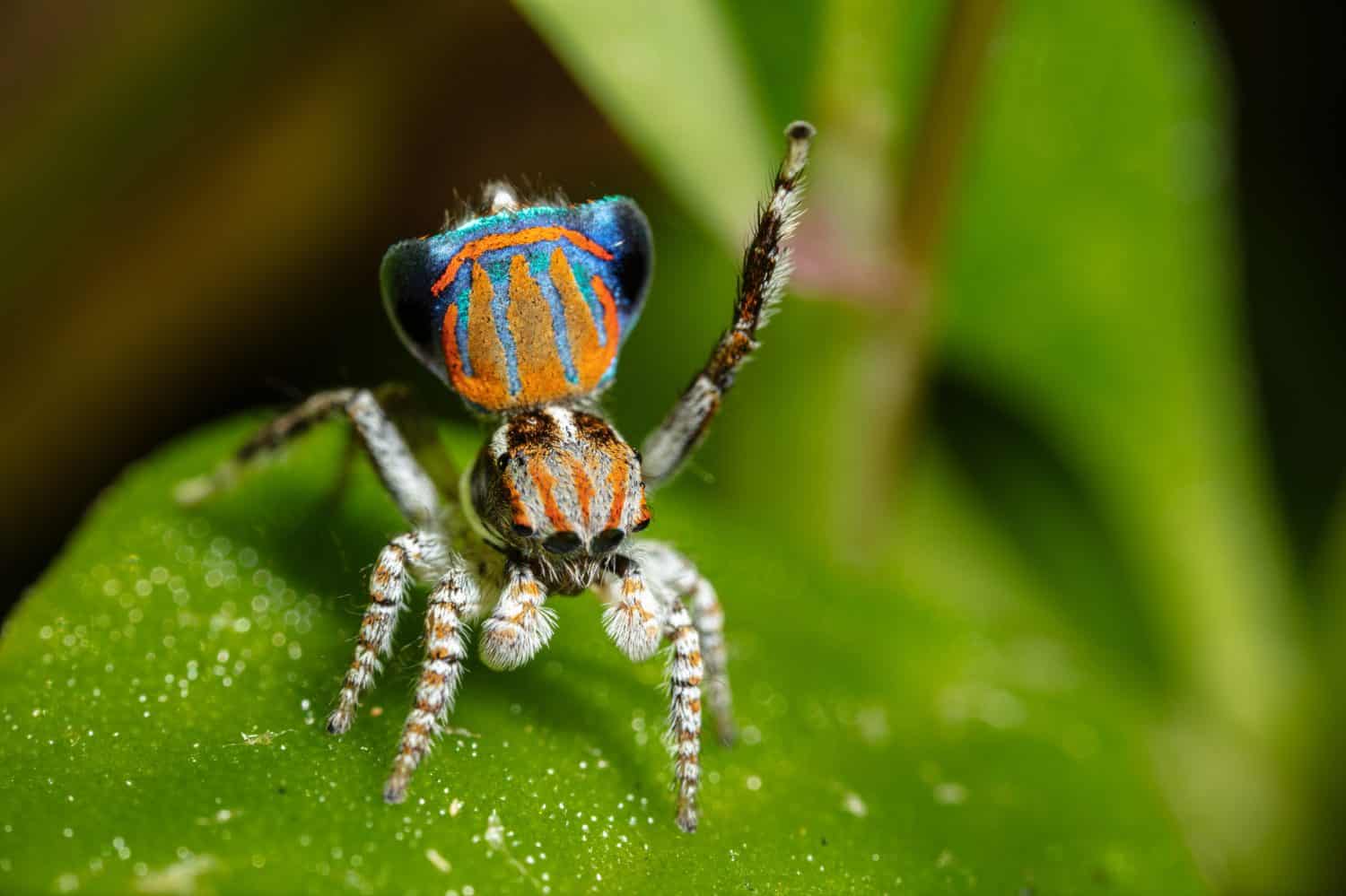
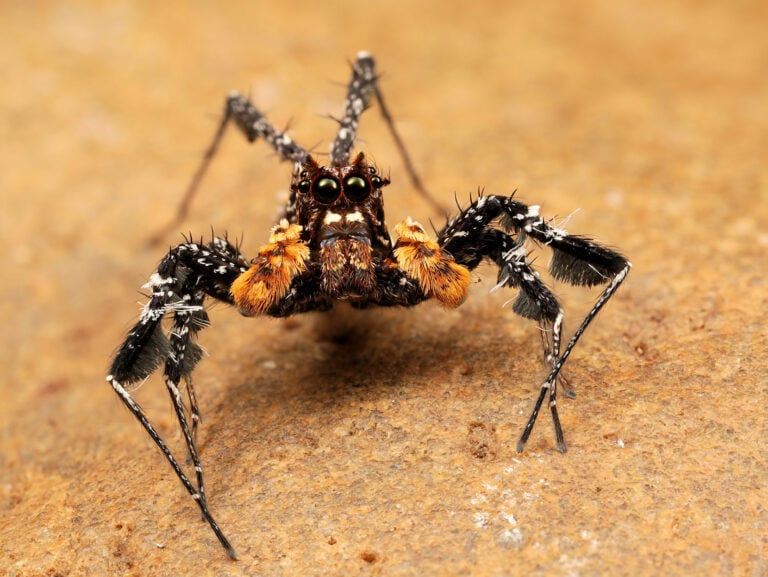
Male peacock spiders are most known for their coloration and high-energy mating dances to attract females.
©Simon Mustoe/Shutterstock.com
When you think of communication, you might think of the exchange of information between individuals. One of the biggest parts of communication for a spider is their web. Relying on non-vocal communication, spiders primarily sense vibrations to better understand their environment. Orb weaver species can detect the size and location of a trapped insect simply by tuning into the frequency of its struggle on the web. However, communication does not stop at vibrations for spiders.
Some spiders even use visual cues to communicate, which is part of what Dr. Echeverri’s research focused on. Dr. Echeverri used the jumping spider Habronattus pyrrithrix to show how male spiders have to orient and move themselves to be chosen by a female mate. “Being able to show other people the courtship dances of jumping spiders, and seeing their eyes light up, has always been something special,” he says.
Another researcher studied the pheromones and scents that potentially aid in mate selection. In the lab of Damian Elias at UC Berkeley, he found that spiders can ‘sing’ with their appendages. These insights show us just how intricate the life of spiders can be.
Importance of Science Communication
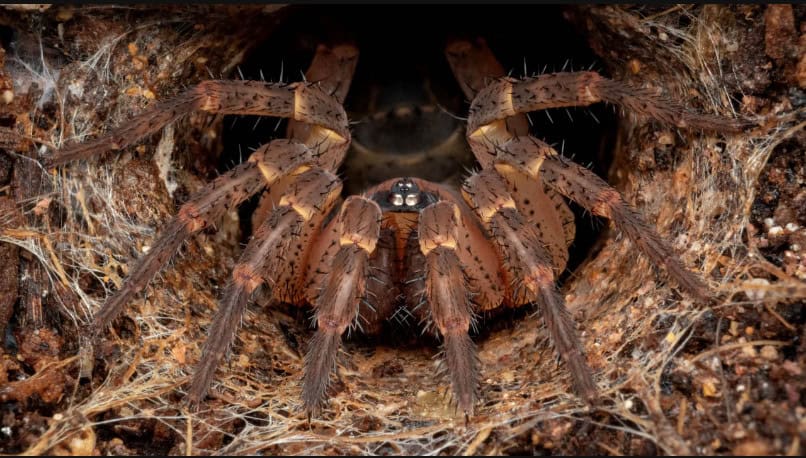
Dr. Echeverri won first prize in the category ‘Arachnids in controlled conditions’. For “Under the Trapdoor” at the 6th Latin American Congress of Arachnology.
©Dr. Echeverri – License
When science communicators encourage discussions of spiders and their behavior, fear turns into understanding.
“[I want to] help people understand that spiders are ‘just’ animals,” Dr. Echeverri says. “They are just like any other animals they are used to seeing. They do what they do because they are trying to find food, avoid being eaten, and eventually reproduce.”
Once we understand our similarities to these creatures, maybe there will be less for us to fear. Similar to us, maternal attachment and sacrifice exist in spiders. One spider in particular, the mother wolf spider, keeps her young clinging to her back for their first few weeks of life. Many spiders observe their surroundings with extraordinary acuity and curiosity. The high cognitive abilities of jumping spiders have been shown to recognize human faces and even display curiosity. Not to mention the perseverance and dedication it takes to build and rebuild a web.
Citizen Scientists and Spider Discovery

Citizen science is when the public volunteers to participate in research.
©JoAnn Melgar/Shutterstock.com
A big part of what contributes to the data behind real-world problems is the volunteers who collect data. “It turns out that regular people found 13 previously unrecorded spiders in Puerto Rico and the U.S. Virgin Islands,” Dr. Echeverri says. Technologies like iNaturalist, which encourage anyone to capture and document species sightings, allow different experts to identify new species or changes in their range and habitat.
“Because they posted them online, a scientist was able to figure out what species they were,” Dr. Echeverri adds. Encouraging more accessible public engagement, rather than focusing solely on high-impact research, can change perceptions about spiders and foster greater awareness of their role.
Spinning Harmonies of Hope
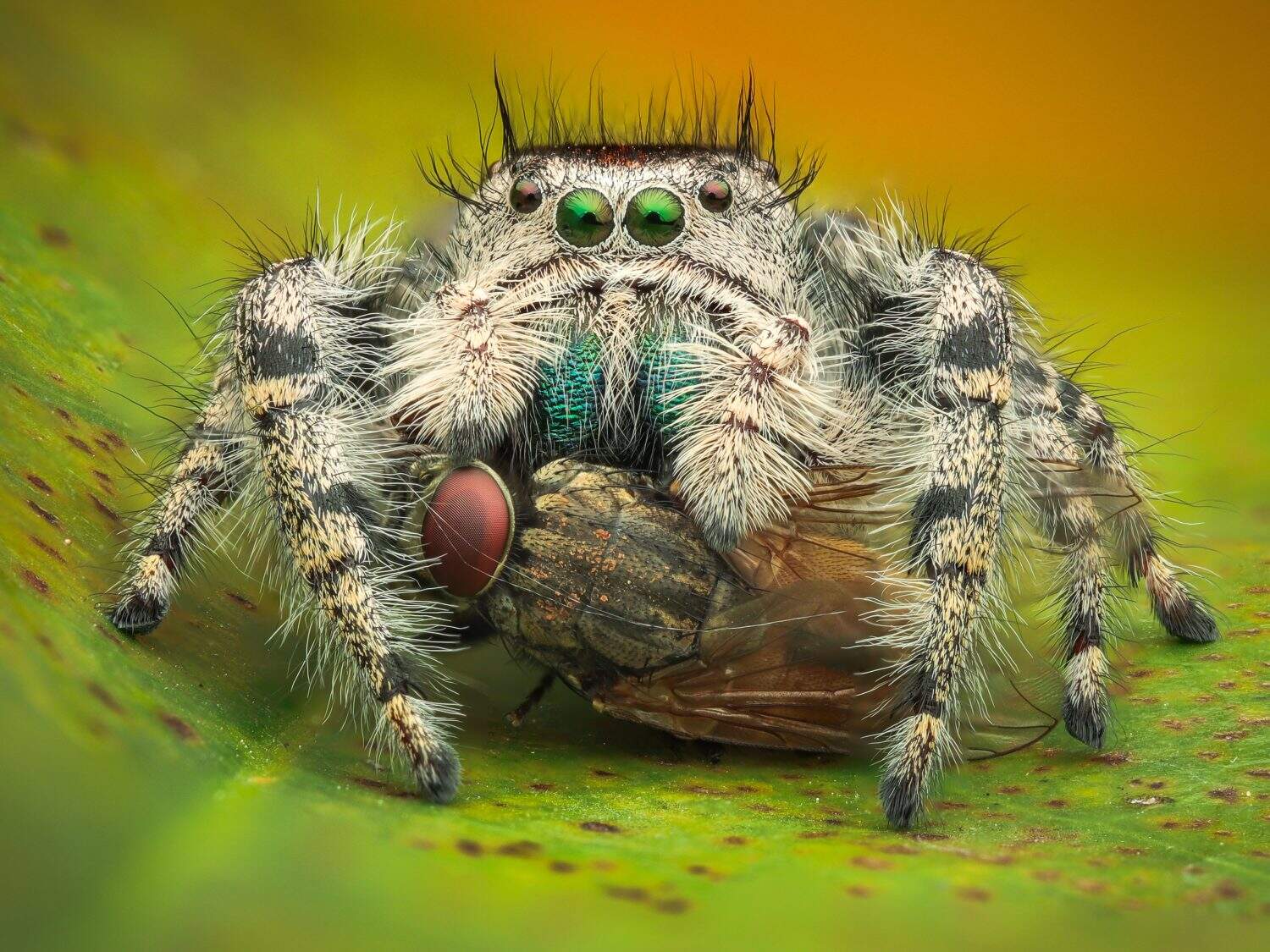
Jumping spiders typically do not use their webs for venom.
©Rico Andreas/Shutterstock.com
There are over 53,000 known species of spiders as of 2025. All of these species contribute to the balance of nature by controlling populations. Understanding these arachnids enriches our appreciation for nature’s orchestra, which is crucial to sustaining all life. I can only hope we can imagine a world where every living being, from those with two legs to eight, receives the same amount of respect and appreciation. Spiders existed long before us and will likely continue on after us. Contributing to citizen science projects and pushing ourselves to learn more about these important organisms allows us to be better stewards of the Earth, which is the least we can do as its inhabitants.
It is equally important to observe spiders in their natural surroundings. By participating in citizen science projects and striving to learn more about these important organisms, we can become better stewards of the Earth—a responsibility that is the least we can fulfill as its inhabitants.