
Quick Take
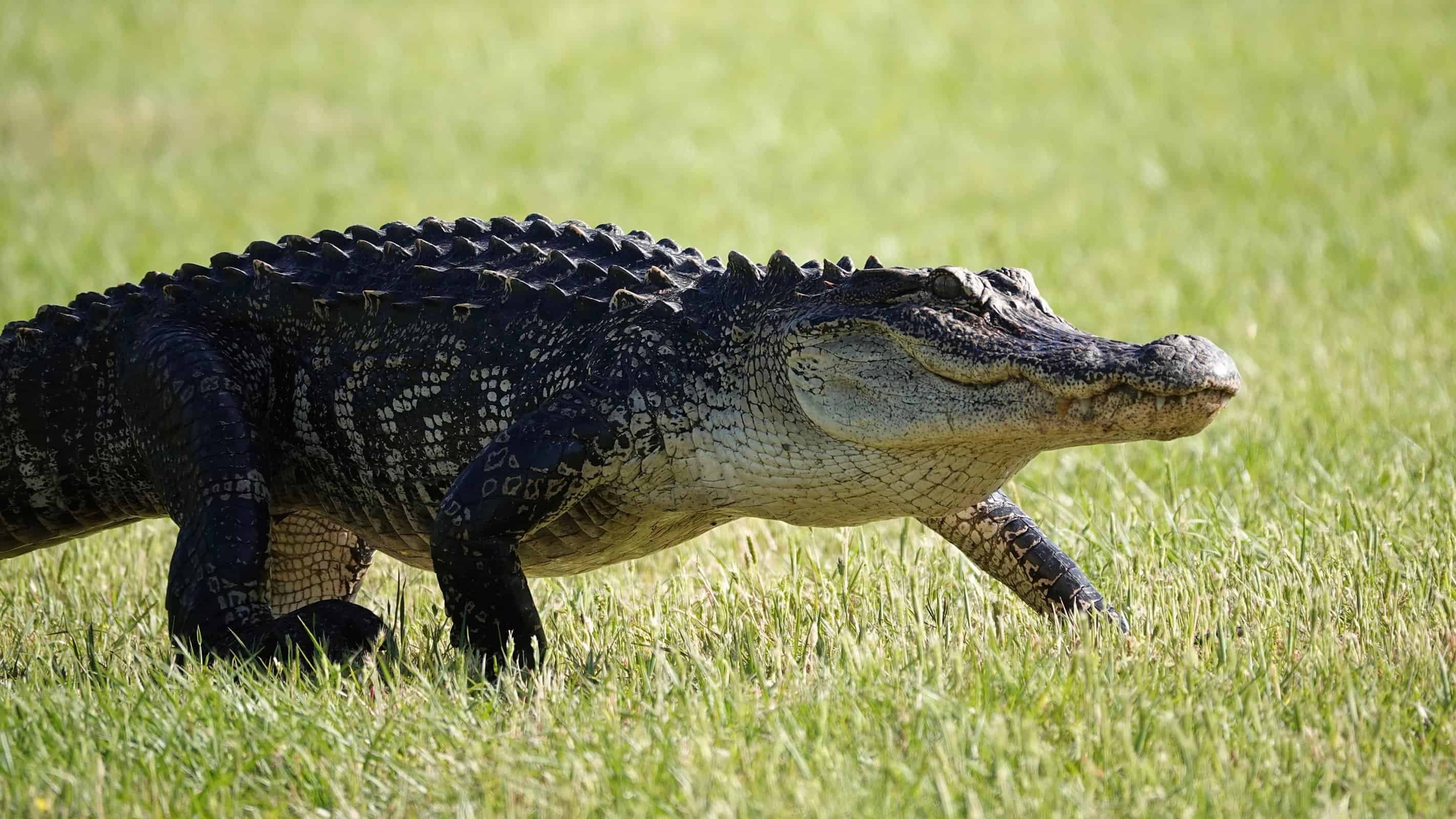
- Male alligators in North Carolina can reach 13 feet and may exceed 500 pounds.
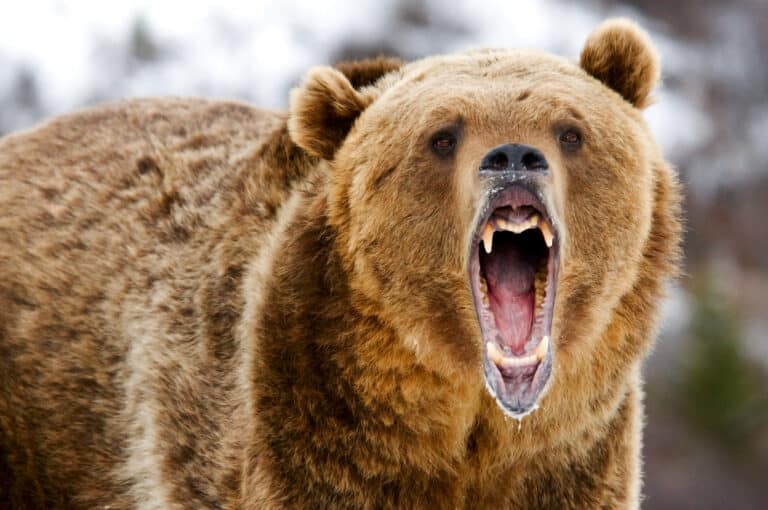
- The largest recorded black bear was a male from Craven County that weighed 880 pounds.
- The elk inhabiting Great Smoky Mountain National Park are not a native North Carolina species.
- The largest blue catfish ever caught in North Carolina weighed over 100 pounds.
North Carolina is a coastal state in the Southeastern U.S. It is a popular vacation spot for history buffs, beachcombers, and wildlife enthusiasts. From the Outer Banks to the Appalachian Mountains, there is a wide variety of habitats that support thousands of species. In fact, there are at least 1,340 terrestrial and aquatic species native to North Carolina. But among these thousands of animals, which is the largest mammal? Or snake? Which reptile is the largest? Keep reading to discover some of the largest animals in North Carolina and where to find them.
7. Largest Insect: Eastern Hercules Beetle
| Scientific Name | Size | Location |
|---|---|---|
| Dynastes tityus | Total length of 2.5 inches | Near decaying wood in deciduous forests across the state |
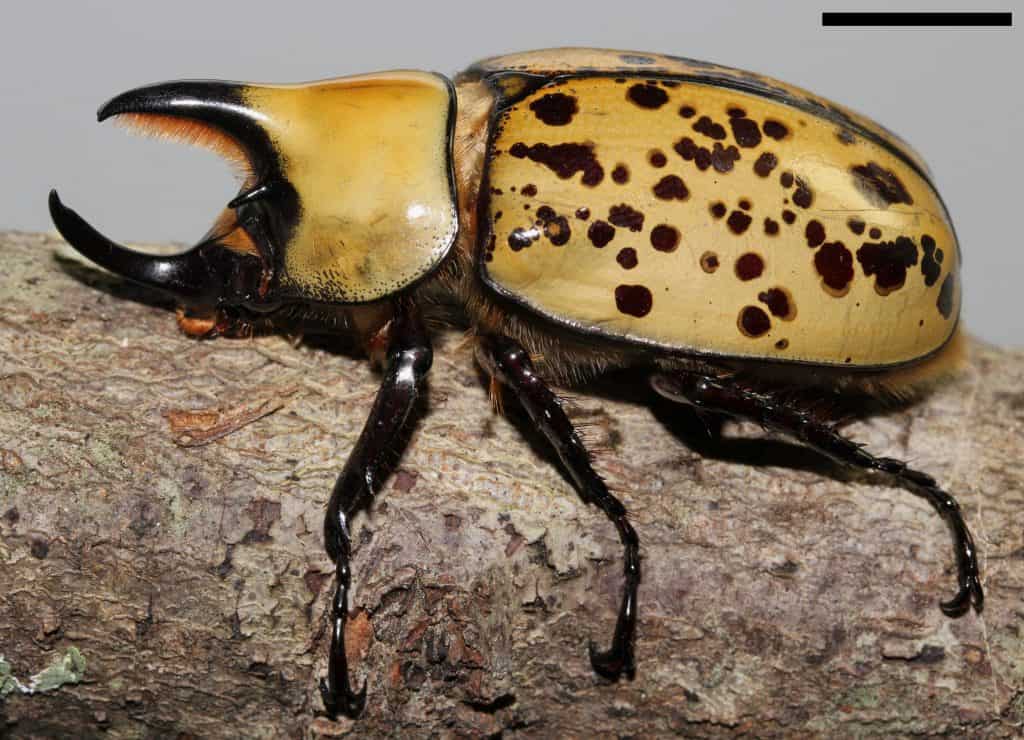
The Eastern Hercules beetle is one of the largest beetles in North America.
The Eastern Hercules beetle is a species of rhinoceros beetle and it is the largest insect native to North Carolina. Males can reach up to 2.5 inches in total length, including their horns. Their horns are used to compete with other males for mating rights and territory. These beetles also have wings. Like most beetles, the forewings, called elytra, are a hard shell covering the more fragile hind wings underneath. They are generally green, grey, or tan with spots.
Eastern Hercules beetles are found in deciduous forests in the eastern, southern, and midwestern U.S. They typically favor ash trees, but they can also be found on other hardwoods such as oak, cherry, willow, and maple. The larvae primarily feed on rotting hardwood, while adults consume tree sap and soft, decaying fruit found on the forest floor.
6. Largest Fish: Blue Catfish
| Scientific Name | Size | Location |
|---|---|---|
| (Ictalurus furcatus) | Up to 5 feet; over 100 pounds | Common in large rivers and reservoirs across the state |
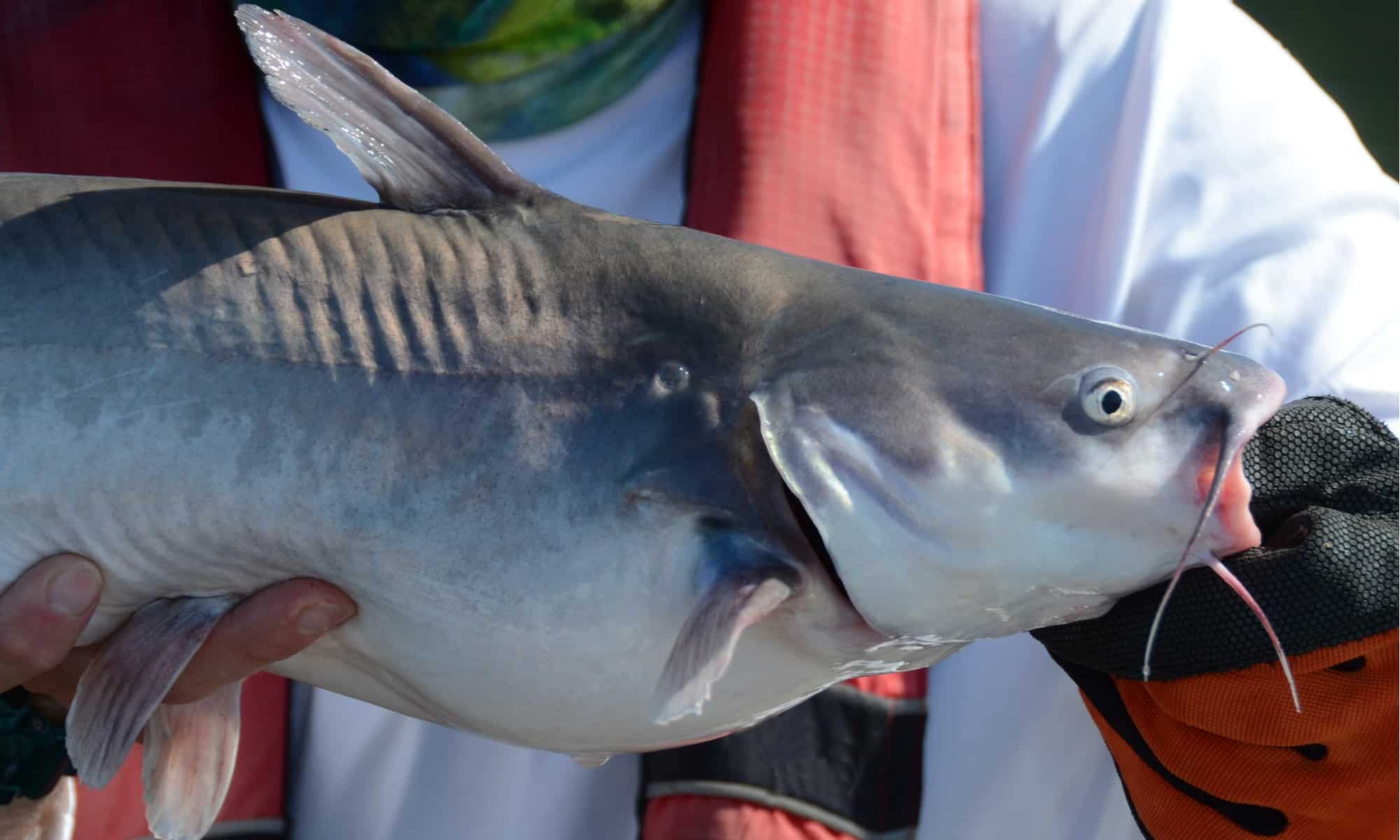
The largest blue catfish ever caught in North Carolina weighed just over 127 pounds.
©M Huston/Shutterstock.com
Blue catfish are not native to North Carolina and are considered an invasive species. They average around 3 feet and 20 pounds, but they can reach lengths of up to 5 feet long and weigh over 100 pounds. The North Carolina record for blue catfish is 127 pounds and 1 ounce. A blue catfish caught in Kerr lake on the Virginia–North Carolina border weighed 143 pounds. Blue catfish favor faster currents, so they are most common in large rivers, such as the Cape Fear River and the Catawba River. They can also be found in large reservoirs in the Piedmont region, located between the Appalachians and the Atlantic.
Blue catfish have elongated bodies that are silvery-blue on top with white on their sides and bellies. They have very forked tails and flat dorsal fins. Blue catfish also have dark, whisker-like barbels around their mouths. These bottom dwelling fish are opportunistic predators, often consuming native fish species. They also compete with resident and migratory fish for resources. Although they are considered a non-game fish in North Carolina, these fish are popular with anglers due to their large size, fighting strength, and mild flavor.
5. Largest Snake: Eastern Coachwhip
| Scientific Name | Size | Location |
|---|---|---|
| Masticophis flagellum flagellum | Up to 8 feet | Most common in the Sandhills and southeastern Coastal Plain |
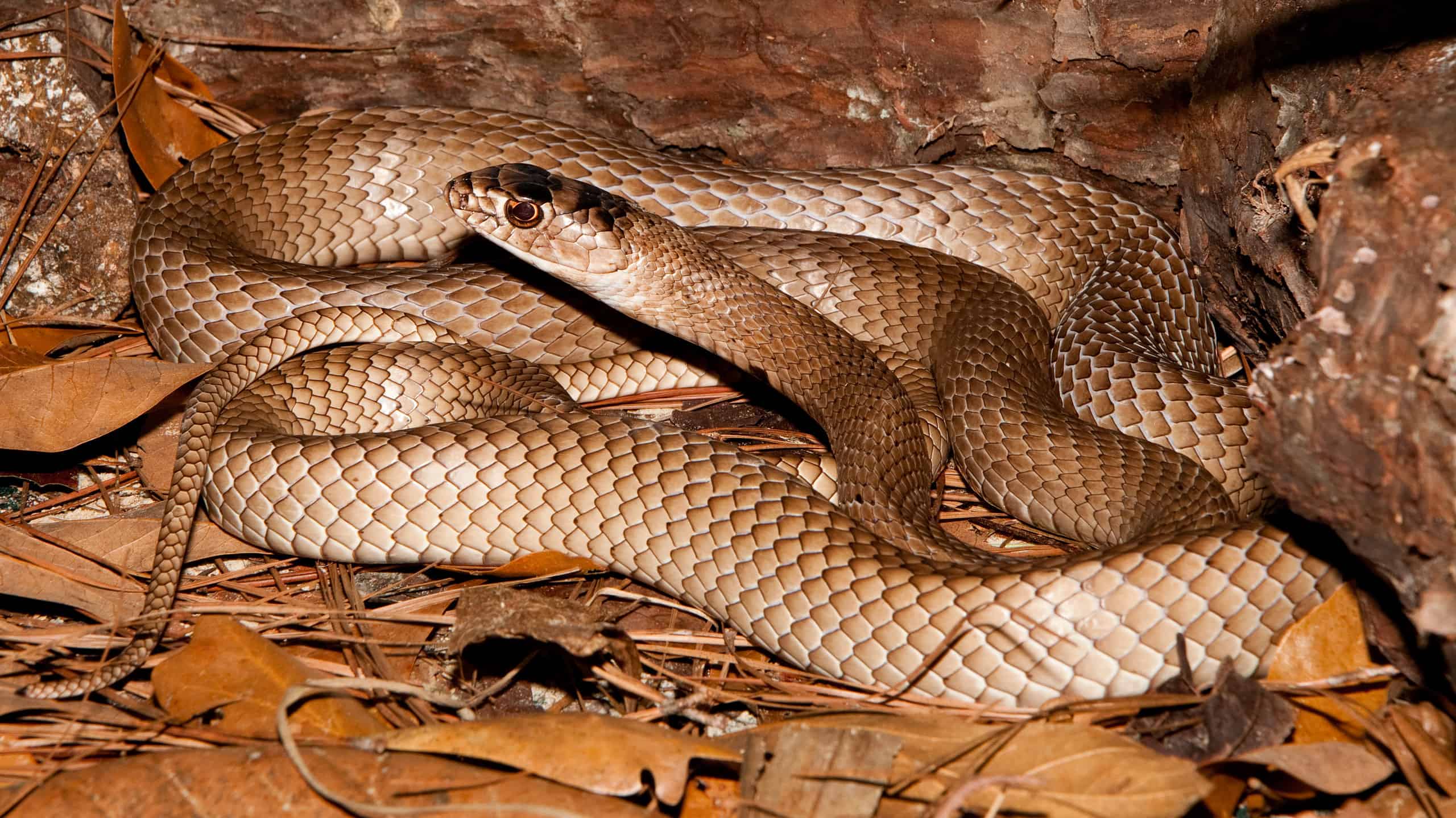
The Eastern coachwhip prefers dry habitats with sandy, well-drained soils.
©Jay Ondreicka/Shutterstock.com
Eastern coachwhips are the longest snakes in the state, with a maximum length of up to 8 feet. Color patterns vary by subspecies, but in North Carolina, these slender snakes have dark heads and a two-toned color pattern of black or dark brown on the front half of the body, fading into light brown or tan on the back half. The edges of their scales are dark, which gives them a braided appearance, especially on their long, thin tails.
The Eastern coachwhip favors drier habitats, such as open woodlands with sandy soils. They are most commonly seen in the Sandhills region and in the Coastal Plain. These snakes are active, opportunistic hunters and will consume anything they can catch. However, in North Carolina, lizards tend to account for most of their diet. Eastern coachwhips are not constrictors and they are not venomous, but a bite from this snake is still painful.
4. Largest Bird: Bald Eagle
| Scientific Name | Size | Location |
|---|---|---|
| Haliaeetus leucocephalus | Up to 3 feet from beak to tail; wingspan between 7 and 8 feet; weight from 8 to 13 pounds | Found throughout the state |
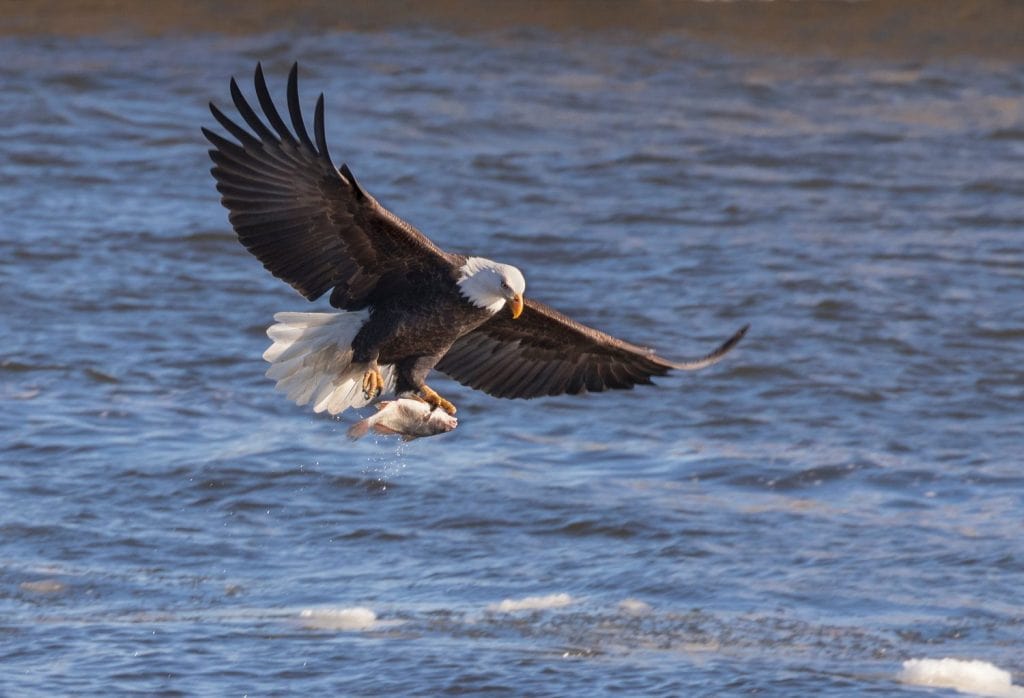
The bald eagle lives near large bodies of water throughout North Carolina, as its diet primarily consists of fish.
©Natalia Kuzmina/Shutterstock.com
Once thought to be nearly extinct in the state, bald eagles have made a comeback. These large raptors can reach up to 3 feet long from head to tail with wingspans of up to 8 feet. They generally weigh between 8 and 13 pounds, with females being larger. Bald eagles have brown body plumage with white heads, necks and tails. They have bright yellow beaks and feet, with light yellow eyes.
Bald eagles are found near large bodies of water throughout North Carolina. Their main diet is fish, but these opportunistic birds also consume water fowl, rabbits, and even carrion. Bald eagles also steal food from other birds. They perch and nest on tall, isolated trees, building nests of branches and grasses that can reach up to 8 feet wide and 20 feet deep.
3. Largest Reptile: American Alligator
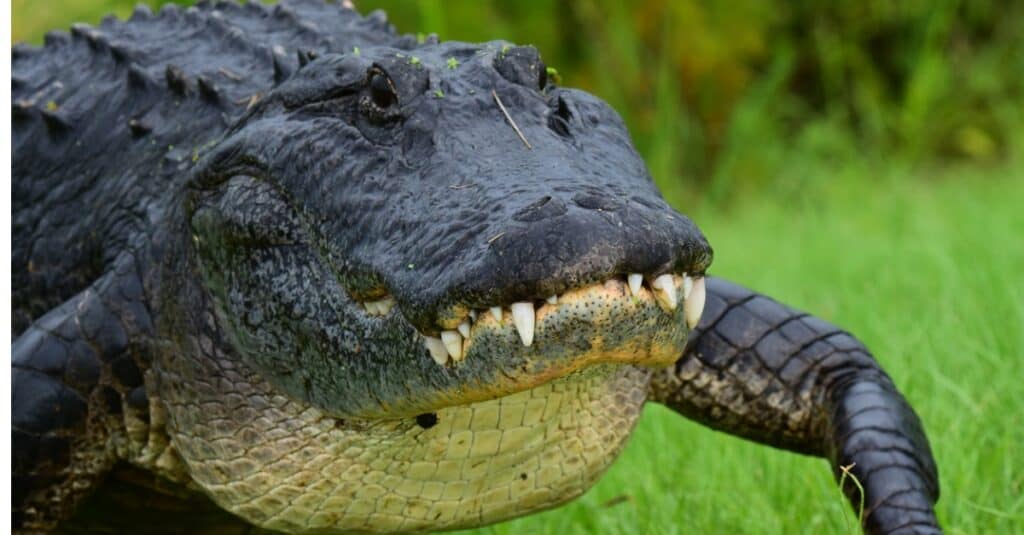
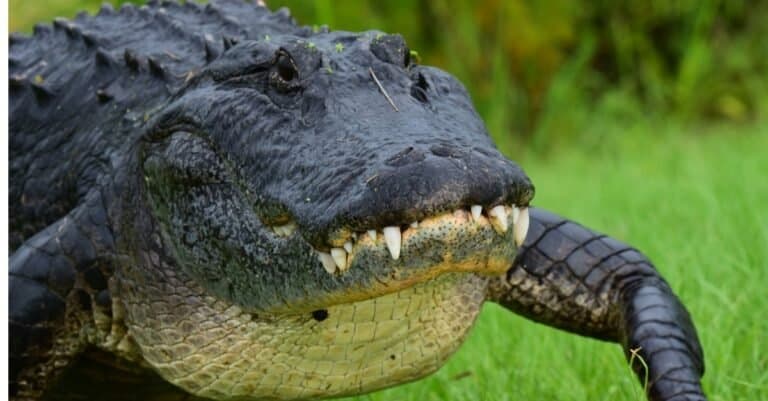
Alligators in North Carolina can grow up to 13 feet.
©iStock.com/cturtletrax
| Scientific Name | Size | Location |
|---|---|---|
| Alligator mississippiensis | Up to 13 feet long; males may exceed 500 pounds | Primarily found in freshwater swamps, ponds, lakes, and rivers; Usually seen in the southeastern part of the state. |
The American alligator is among the largest animals in North Carolina, but it is not a common sight throughout the state. Alligators are typically found in the coastal areas, particularly in the southeastern counties of Brunswick, New Hanover, Craven, Columbus, Onslow, and Pender. These alligators live in freshwater ponds, lakes, swamps, marshes, and backwaters. They are also sometimes observed in brackish water and even on the beach.
Their leathery skin is black, dark grey, or dark olive green. They have broad, rounded snouts and long, powerful tails. In North Carolina, male alligators generally measure up to 13 feet long and can weigh upwards of 500 pounds. Females grow less than 9 feet and weigh up to 200 pounds. They typically feed on fish, frogs, turtles, snakes, mammals, and birds. North Carolina is the northern extent of their range, so alligators grow more slowly and do not reach the large sizes of alligators further south.
2. Largest Native Mammal: Black Bear
| Scientific Name | Size | Location |
|---|---|---|
| Ursus americanus | 5-6 feet long; height 2-3 feet standing on all fours; weight up to 700 pounds in males | Southern Appalachian Mountains, coastal bays and swamps |

The largest recorded black bear in North Carolina weighed 880 pounds.
©Pierre Leclerc/Shutterstock.com
Black bears commonly occur in coastal and mountain regions of North Carolina, but they are rarely seen in the Piedmont region. They generally inhabit forested environments from sea level up to 6,560 feet. Although scientifically classified as carnivores, these bears are actually omnivores and will eat whatever is available in their habitat. Their diet typically consists of foods such as acorns, nuts, berries, carrion, agricultural crops, fish, reptiles, amphibians, fruits, grasses, insects, larvae, and small mammals.
In North Carolina, black fur with a brown muzzle is the most common color, but these bears can also have chocolate brown or cinnamon-colored fur. Additionally, they may have a white patch on their chests. Black bears can reach 5-6 feet in length and stand 2-3 feet on all fours. Males weigh between 200 and 700 pounds, while females weigh 100 to 300 pounds. The largest recorded black bear was a male from the coastal plain in Craven County that weighed 880 pounds.
1. Largest Non-Native Mammal: Manitoban Elk
| Scientific Name | Size | Location |
|---|---|---|
| Cervus elaphus manitobensis | Up to 8 feet long; 5 feet tall at the shoulder, up to 700 pounds with some large males reaching 1,000 pounds | Mostly found in the Great Smoky Mountain National Park, especially in the Cataloochee Valley. |
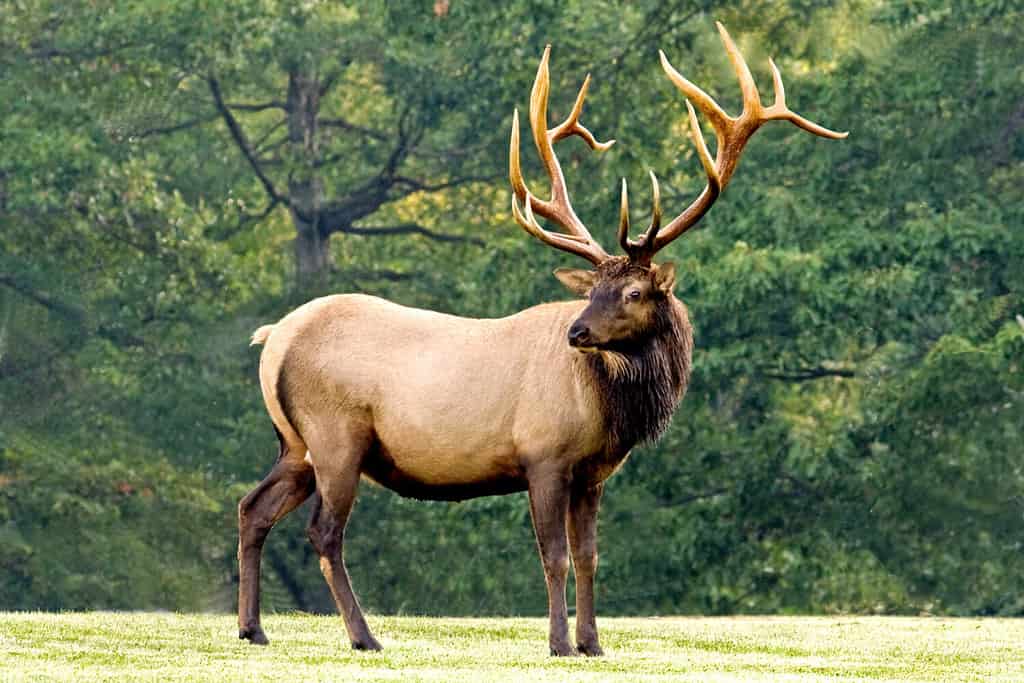
Elk are the largest animals in North Carolina.
©Paul Staniszewski/Shutterstock.com
The largest animals in North Carolina are elk. The state was once part of the Eastern elk’s (Cervus elaphus canadensis) range, but the species was extirpated from North Carolina by 1800. Today, the elk found in North Carolina belong to the Manitoban subspecies (Cervus elaphus manitobensis). In an attempt to reintroduce elk into their historical range, the National Park Service brought 52 elk into the Cataloochee area of the Great Smoky Mountain National Park in 2001 and 2002. The project was a success, with DNA studies showing that there were approximately 240 elk in Western North Carolina as of 2022.
Elk bulls measure up to 8 feet long from nose to tail, stand 5 feet tall at the shoulder, and weigh up to 700 pounds. However, large Manitoban elk bulls may reach 800 to 1,000 pounds. Cows are around 6.5 feet in length, stand 4.5 feet tall, and weigh about 500 pounds. Elk have thick, coppery brown to light brown coats, often with darker necks and legs. The males have antlers that they grow and shed annually. Elk are herbivores, with a typical diet of grasses, acorns, forbs, leaves, buds, and bark.