
Quick Take
- The hellbender's wrinkled, "lasagna-like" skin looks ugly but actually solves a breathing problem that gills can't. See how the skin breathes →
- Hellbender fathers guard their eggs for months before sometimes eating them. Scientists have a name for why this happens. Explore the nesting behavior →
- This salamander can "see" without using its eyes, and the body part responsible for this ability isn't what you'd expect. Discover the light-sensing tail →
- 77% of hellbender populations are either gone or vanishing, and yet this slimy, beady-eyed creature somehow became a beloved regional icon. See the decline and the icon →
A Creature Known by Many Names
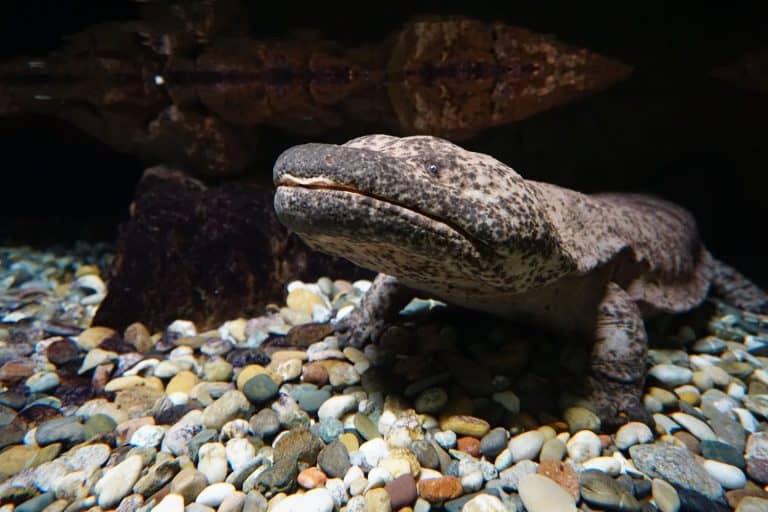
In the cold, swift streams of Appalachia, a mysterious amphibian lies hidden. The locals have called it by dozens of names: mudpuppy, snot otter, water dog, mud devil, Allegheny alligator, lasagna lizard. Early Appalachian settlers referred to it as the “hellbender” as far back as 1802, a name that has endured as much for the creature’s fearsome look as its slick, wrinkled sides and startlingly slimy skin.
Nicknames alone can’t reveal the oddities of this animal. Its slippery hide isn’t just for show. Hellbenders ooze a thick, bitter slime through the pores of their skin, a foul-tasting deterrent that sends potential predators searching for an easier meal.
Life Hidden Beneath the Surface
Spotting a hellbender in the wild is far from easy. These salamanders only inhabit cool, unspoiled streams across the eastern United States. During daylight, they wedge their flattened, slippery bodies into crevices, staying hidden until dusk brings the cover of darkness for hunting.
The hellbender’s size sets it apart: reaching over two feet in length and weighing up to five pounds, it is the largest amphibian in North America. Globally, only the Chinese and Japanese giant salamanders surpass it.
Their nesting behavior is equally remarkable. While most amphibians abandon their eggs, hellbender males carve nest chambers beneath rocks. After chasing females away once the eggs are fertilized, fathers stand guard for months, fanning the developing offspring with oxygenated water. Yet there’s a twist, if hunger strikes, the male may turn on his own brood, practicing what biologists call filial cannibalism, a behavior found in other amphibians but always striking in practice.
Despite their size, hellbenders are homebodies. They may spend their entire life within a two-hundred-foot ribbon of river. Once a den is chosen, the salamander rarely strays, particularly because pristine streams are disappearing fast.
Secret Adaptations for a Watery World
Unlike fish, hellbenders lack gills. Instead, they rely on capillaries near the surface of their skin to absorb oxygen straight from the stream’s flow. Fleshy, wrinkled skin, often described as “lasagna-like”, increases the total area for this exchange, making these amphibians surprisingly efficient at breathing through their skin. Their lungs have not vanished, but serve mainly for buoyancy, letting them rise or sink as needed.
Molting is another oddity: hellbenders shed their outer skin as they grow and then eat it, recycling nutrients much as other salamanders do.
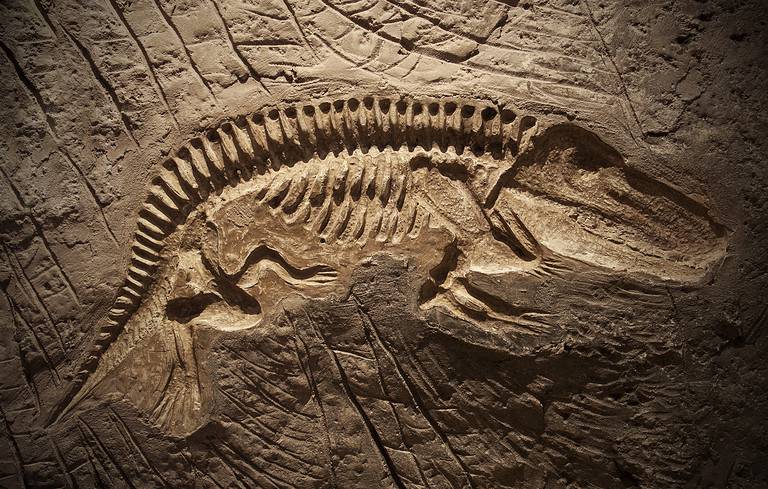
This animal’s design is ancient. Scientists note that hellbenders and their ancestors have remained largely unchanged for at least 160 million years, retaining the same shape and habits as those that lived alongside the dinosaurs. Today, their only close relatives, the giant salamanders of China and Japan, dwell half a world away.
To navigate murky waters and dark nights, hellbenders evolved sharp touch sensors. Lacking good vision in their underwater world, they depend on sensitive skin to interpret their surroundings. Specialized photoreceptors, concentrated in their tails, let them “feel” light levels, so a quick tail-flip into the open tells if it’s safe to emerge or still risky, all without exposing the body to watchful predators.
The Challenge of Survival
Amphibians worldwide are struggling, and the story is no different for hellbenders. A 2024 report from the U.S. Fish and Wildlife Service revealed grim numbers: 41 percent of historical hellbender populations are believed extinct, while another 36 percent are dwindling. The threats are familiar, pollution, disease, habitat destruction, climate change, and illegal pet collecting, but the hellbender’s specialized needs add a unique risk. When forests vanish from riverbanks, rainfall sweeps sediment into streams, choking the cracks and crevices where hellbenders shelter and breed.
Still, as odd as they look, beady-eyed, broad-mouthed, with squat legs and muddy skin, the hellbender has become a surprising mascot. Breweries, cafes, filmmakers, and even the town of Boone, North Carolina have adopted its image. The animal’s newfound celebrity may prove its best chance for long-term survival, as public connection fuels conservation efforts.
The urgency is new. Only in recent decades did scientists begin to grasp how dire the hellbender’s situation was, following field reports in the 1970s and 80s. Captive breeding of the species didn’t succeed until 2011, when Ozark hellbenders hatched at the St. Louis Zoo, a milestone that opened doors for future recovery.
The Next Chapter for a Reluctant Icon
What does it take to protect an animal whose story stayed hidden so long? Researchers believe the answer is teamwork, an expanding alliance of zoos, agencies, and scientists pooling their resources. Some zoos are breeding hellbenders for release in Appalachian waterways. Outreach programs urge the public not to disturb stream rocks, helping protect fragile dens. And institutions like the Smithsonian’s National Zoo provide safe havens, letting people see the enigmatic salamander firsthand and sparking new curiosity.
For hellbenders, snot otter, devil dog, “lasagna lizard”, the struggle is far from over. Yet their unlikely rise as regional icons gives hope not only for their streams, but for the countless wild places that remain mysterious until we finally take a closer look.