
Quick Take
- Manatees are aquatic herbivores, but they may have slightly different diets depending on their habitat.
- Because manatees require up to 10% of their body weight in food daily, they cannot be too selective in their diet.
- Manatees spend up to 8 hours a day grazing.
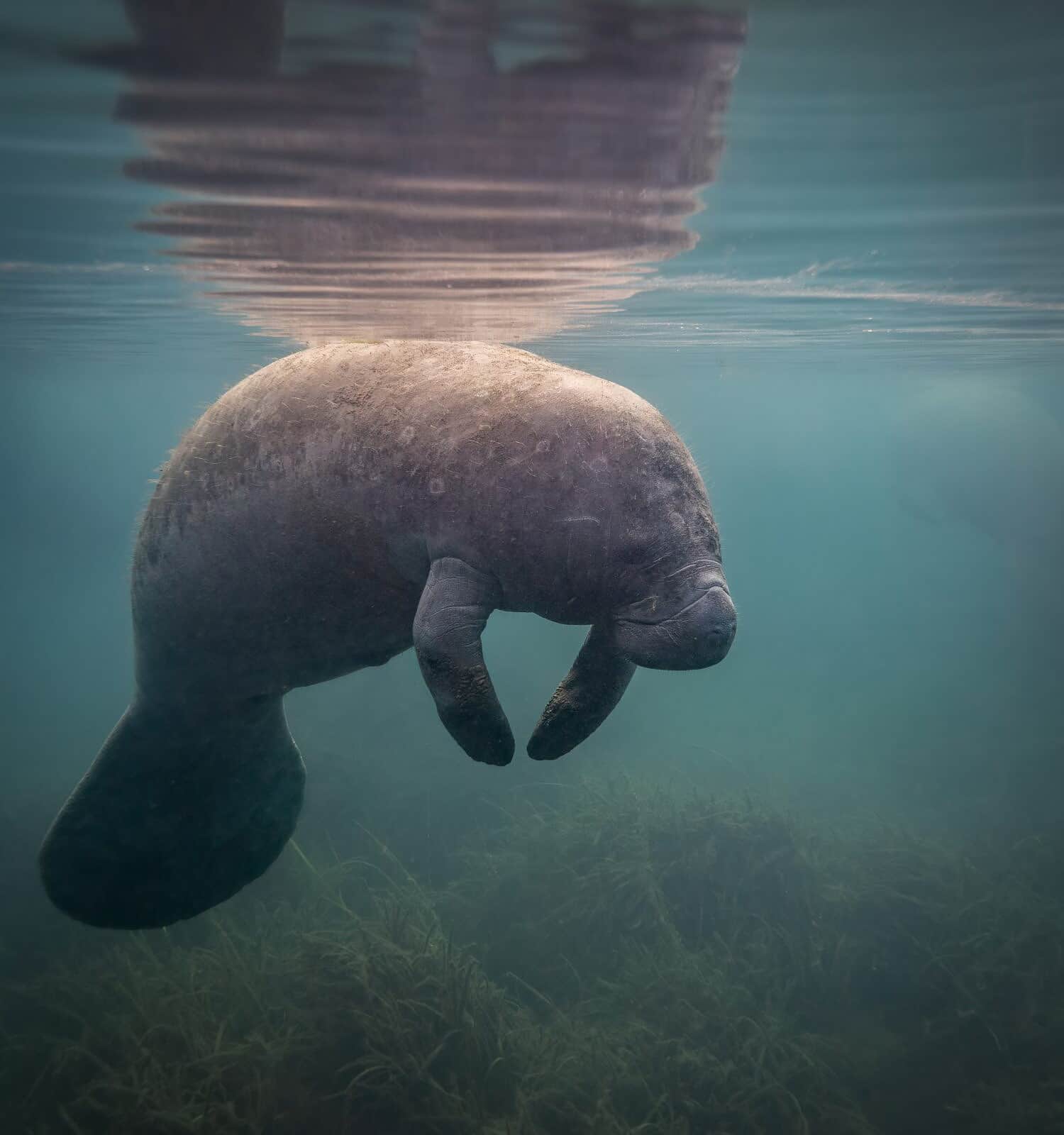
Manatees are gentle creatures comprising three species that live in warm coastal waters and river basins. Also called “sea cows,” manatees are known for spending much of their day grazing and exploring the world around them. As one might imagine from the “sea cow” moniker, manatees are large, herbivorous mammals that regularly weigh 1,000 pounds or more. But what do manatees eat to maintain that weight?
The Manatee Diet
There are three recognized manatee species: the West Indian manatee, the Amazonian manatee, and the West African manatee. They graze in warm coastal waters around the Gulf Coast and the Caribbean, the Amazon Basin, and West Africa, respectively. Although they are all herbivores, manatees in different regions have slightly different diets. For example, in addition to plants, Antillean manatees have occasionally been observed eating fish. West African manatees sometimes eat clams and mollusks, and may feed in rice fields during the rainy season.
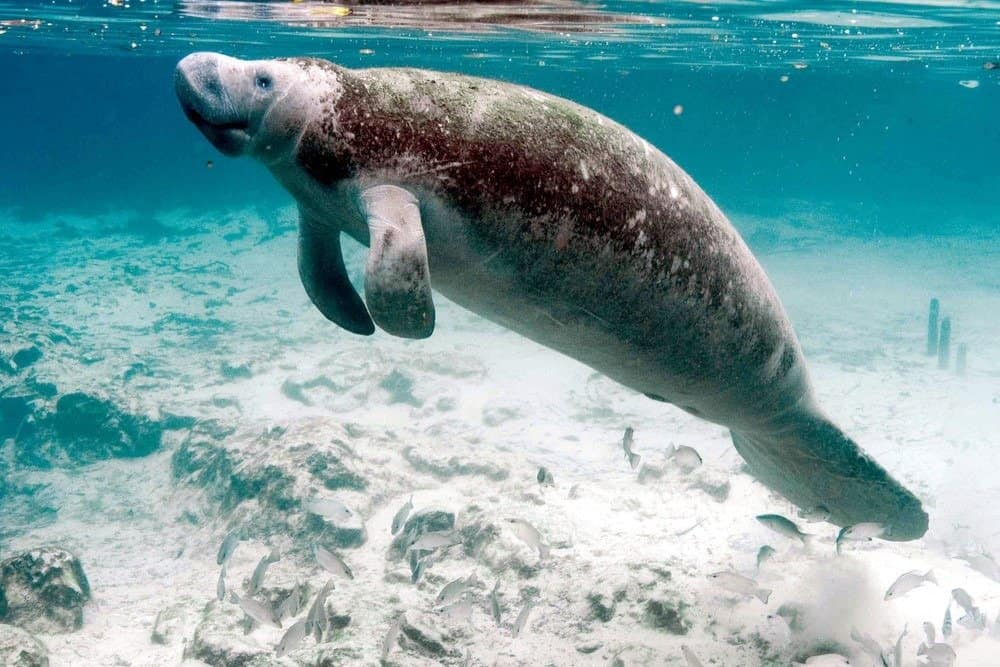
Florida manatees eat over 60 types of plants.
©Ramos Keith, U.S. Fish and Wildlife Service / public domain – Original / License
Baby manatees nurse from the mother’s teats located under her pectoral flippers. The milk is mostly water but also contains fats and proteins. Like whales, manatees nurse underwater. After just a few weeks, baby manatees begin to eat the same diet as adults.
Florida manatees alone eat over 60 different types of plants. So for the sake of brevity, here are some of the common foods that manatees eat:
- Water hyacinths
- Turtle grass
- Horsetail paspalum
- Manatee grass
- Alligator weed
- Widgeon grass
- Water celery
- Hydrilla
- Some forms of algae
How Do Manatees Forage for Food?
Given the large amount of food they need to eat each day, manatees cannot afford to be too selective about the foods they eat. Manatees require up to 10% of their body weight in vegetation per day. To keep themselves well-fed, they spend up to 8 hours a day grazing. Because their plant-based diet can wear down their teeth, manatees also have special molars that are continually replaced throughout their lives.
Manatees consume a variety of plants, including those growing on the bottom of bodies of water, floating plants, shoreline vegetation, and emergent plants rooted in the water but extending above the waterline. When at the surface, manatees gather food in their mouths, chew it, and then move on to graze on other plants.
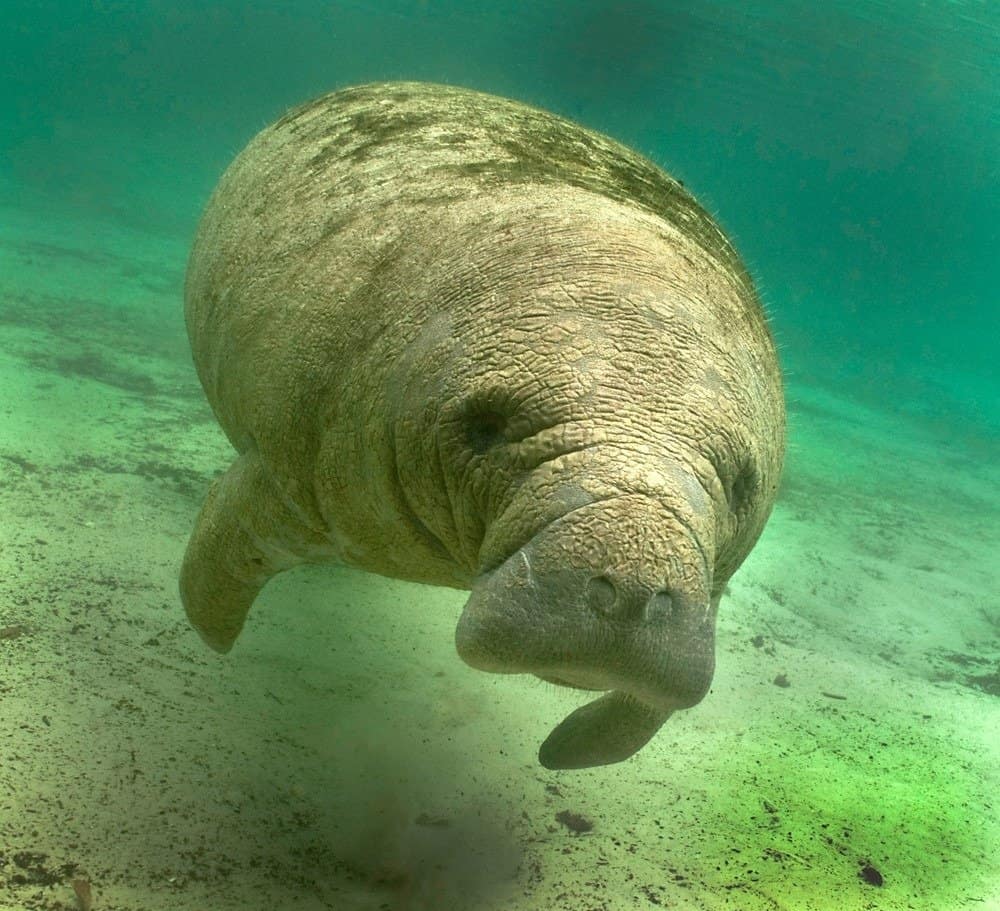
Manatees look for food at every level of the water and sometimes on the banks.
©gary powell/Shutterstock.com
They truly earn their nickname “sea cows” by grazing on various plants and using their flippers and lips to guide food to their mouths. Manatees have also been observed pulling themselves slightly out of the water to feed on vegetation along the banks.
Manatees living in the Amazon River Basin in Brazil, Colombia, Ecuador, and Peru have adapted to survive periods of food scarcity during seasonal water level drops. These manatees can go without eating for extended periods if necessary, due to their low metabolic rates. They also conserve energy by decreasing their activity levels.