
Quick Take
- Bison calves can do something that most newborn animals cannot, and this ability is the only reason they survive their first hours of life. Calf survival details →
- A paved highway cutting through bison territory isn't actually a barrier, and the reason why reveals something counterintuitive about how these animals think. Watch the crossing →
- The factors driving a bison herd's movement go far beyond hunger, and some of them have nothing to do with food at all. See what drives migration →
- Bison bulls and cows live almost completely separate lives, with only one critical window each year bringing them together. Bison social behavior →
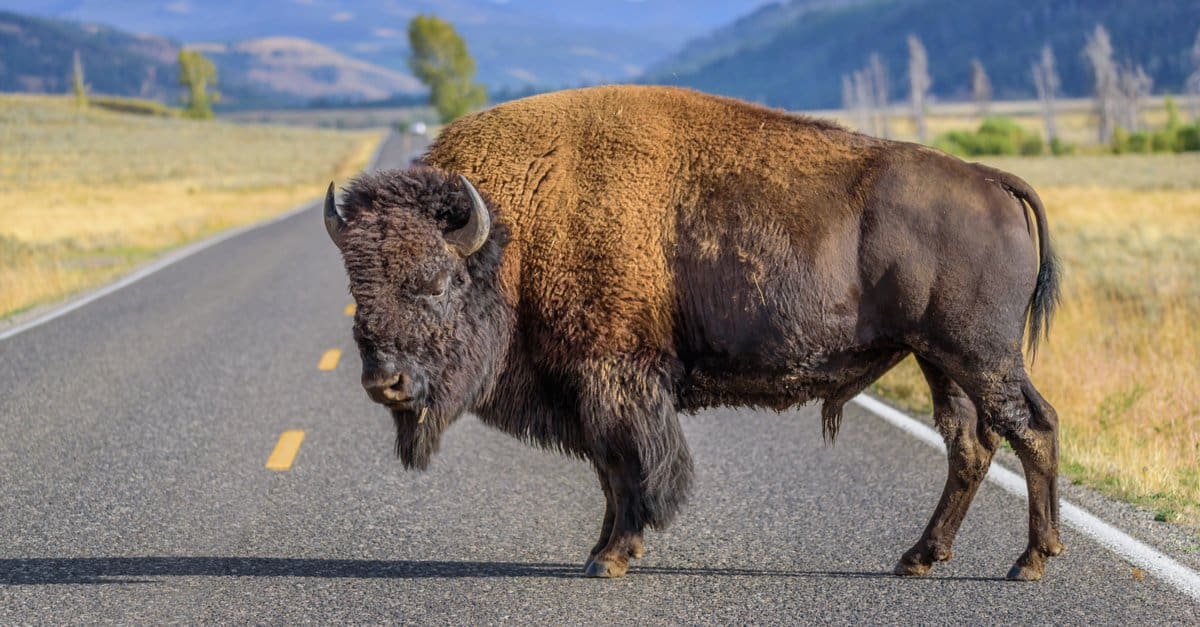
Imagine rounding a bend in the road and realizing traffic is not being stopped by construction, an accident, or even another car. It is being stopped by several thousand pounds of American bison suddenly charging onto the pavement.
That is exactly what unfolds in the video below. One bison appears, then another, and within seconds the hillside turns into a moving wall of shaggy brown animals. Adults stream down the slope and onto the roadway while smaller reddish-brown calves keep pace between them. Drivers have little choice but to sit still and let the herd decide when traffic can resume.
Watch the Massive Herd Take Over the Road Below
Why Would an Entire Bison Herd Cross a Road?
The video does not provide enough information to confidently identify where it was filmed, but the behavior itself is not unusual wherever large bison herds and roads overlap. Bison are highly mobile animals, and a strip of pavement is not much of a barrier when the herd is already moving toward food, water, breeding areas, or seasonal range.
Yellowstone National Park offers one of the best-studied examples. Its bison move in response to forage conditions and winter snowpack, often heading toward lower elevations as snow becomes deeper. The National Park Service says Yellowstone bison can migrate as much as 70 miles between seasonal ranges. Because they repeatedly move back and forth across parts of that range while grazing, some individuals may cover roughly 1,000 miles over the course of a year.
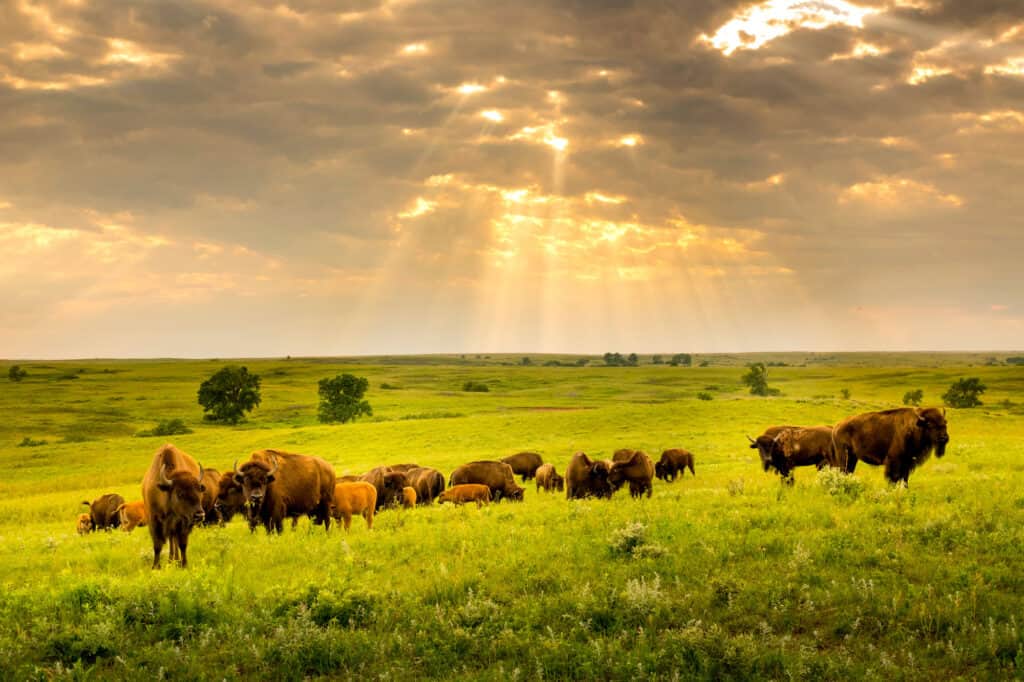
Bison regularly move in search of suitable grazing habitat and seasonal range.
©Ricardo Reitmeyer/Shutterstock.com
Those Reddish-Brown Bison Are Calves
The smaller rust-colored animals visible among the adults are young bison. American bison are the largest land mammals in North America, with mature bulls capable of weighing around 2,000 pounds. Newborn calves are considerably easier to overlook. They typically weigh about 30 to 70 pounds and are born with distinctive reddish-brown fur that gradually darkens as they grow.
Most calves are born in spring after a gestation lasting roughly nine to nine and a half months. They do not get much time to lounge around after arriving. National Park Service biologists report that calves can stand and nurse within about 30 minutes and are capable of traveling with the herd within two to three hours. That early mobility is important for an animal born into a moving herd where predators such as wolves and grizzly bears may target the young.
Cows and calves commonly remain together in groups, while mature bulls tend to spend more time alone or with other males outside the breeding season. During the summer rut, however, bulls return to groups containing females and compete for opportunities to mate.
America Once Came Shockingly Close to Losing Bison
The scale of the herd in this video offers a glimpse of something that was once normal across huge portions of North America. National Park Service estimates place the historic bison population at roughly 30 million to 60 million animals before the catastrophic population collapse of the 1800s.
Commercial hunting, the hide trade, habitat changes, livestock competition, disease, and deliberate efforts to destroy bison herds helped reduce that enormous population to fewer than 1,000 animals by the 1890s. Conservation programs, private herds, tribal efforts, and protected populations eventually helped pull the species back from the brink. Today, seeing a large herd race across the landscape is not simply impressive. It is something that came surprisingly close to disappearing entirely.
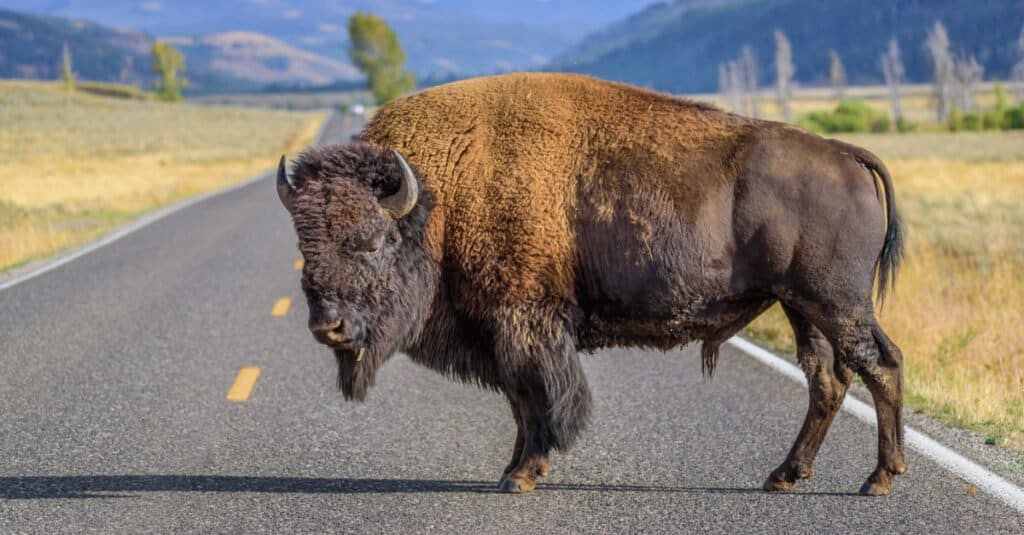
Bison are often called buffalo in North America, although the animals are true bison.
©iStock.com/IngerEriksen
If Bison Block the Road, Let Them Win
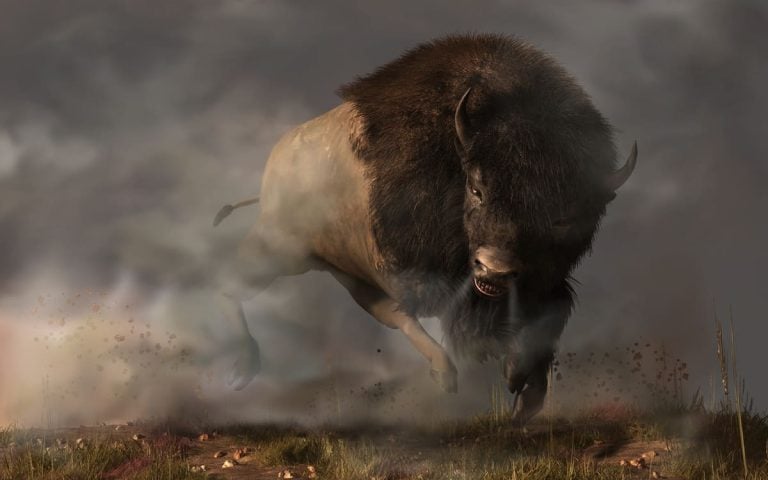
The drivers in the video are doing exactly what people should do when a herd suddenly occupies the road: wait. A bison may look slow while grazing, but these animals can run about 35 mph and are far more agile than their size suggests. Trying to squeeze a vehicle through the herd, honking to make them move, or getting out for a closer photograph can turn an incredible wildlife encounter into a dangerous one very quickly.
Yellowstone National Park instructs visitors to remain at least 25 yards away from bison and to stay inside their vehicles when animals are blocking a roadway. Drivers should slow down, remain patient, and allow the animals to move on their own. Sometimes the correct response to a traffic jam really is to accept that the 2,000-pound animal in front of you has the right of way.