
Quick Take
- Pigs and humans share more physiology than most people realize, a fact that explains exactly what happens when a pig raids fermented feed. See the physiology →
- 'Teacup pig' sounds adorable, but the adult reality catches most new owners completely off guard. Learn the adult reality →
- Corn is one of the most common ingredients in pig feed, a fact that makes this pig's misadventure a lot easier to understand than it first appears. Explore pig diet basics →
- Some foods that pigs will eagerly eat can seriously harm them, and some of these foods might surprise you. See harmful foods to avoid →
Some animals have a talent for getting themselves into trouble, but this little pig may have taken things to another level. In the video below, a small pig appears so deeply asleep that even tumbling down a grassy hillside doesn’t seem to wake it up. The people filming can hardly believe what they’re watching, and their reactions make the footage even more memorable.
According to the story accompanying the clip, the pig had gotten into a supply of fermented corn and was experiencing the aftermath. That might explain its unusual behavior, although there’s no way to confirm from the footage alone whether the animal actually consumed alcohol or was intoxicated. Either way, the video raises an interesting question: Can pigs really get drunk from eating fermented food?
Viewer discretion is advised: The video contains strong language.
Watch the Pig in Action
What Happened to This Little Pig?
The short clip shows the pig sprawled out on a grassy slope, seemingly unbothered as it rolls downhill. The people nearby react with a mixture of surprise and laughter as the animal continues its unusual journey. The video’s exact filming location hasn’t been independently established, and there’s no confirmed veterinary explanation for the pig’s behavior. However, the story that has circulated with the footage suggests the animal found its way into fermented corn.
That explanation isn’t as far-fetched as it might sound. When yeast breaks down available sugars in a low-oxygen environment, fermentation can produce ethanol, the same type of alcohol found in beer and wine. Corn can serve as a starting ingredient for alcoholic beverages when its starches are converted into fermentable sugars. In fact, traditional Andean chicha has been made using fermented corn for centuries. Whether this particular pig consumed enough ethanol to become intoxicated remains unknown.
Can Pigs Actually Get Drunk?
Yes, pigs can experience alcohol intoxication, just as many other mammals can. Pigs share several important anatomical and physiological characteristics with humans, which is one reason researchers study them in biomedical science. Ethanol affects the central nervous system, potentially causing impaired coordination, unusual movements, drowsiness, and, at higher levels of exposure, dangerous depression of normal bodily functions.
There have been reports of pigs getting into fermented feed and appearing intoxicated. However, not every batch of fermented corn contains a significant amount of alcohol, and not every sleepy or uncoordinated pig is drunk. Illness, injury, overheating, or exposure to other harmful substances can produce concerning symptoms. If this pig really did consume alcohol, its apparent inability to respond normally would be a reason for concern rather than proof that it was simply enjoying a harmless nap.
What Exactly Are Micro Pigs?
The animal in the video looks relatively small, which brings up another common misconception about pigs. Terms like micro pig, miniature pig, and teacup pig are often used interchangeably, but they don’t all refer to officially recognized breeds. Miniature pigs include Vietnamese potbellied pigs and several other varieties developed or selectively bred for smaller adult sizes. Potbellied pigs became popular in the United States during the 1980s, and their popularity helped establish a market for pigs kept as household companions.
Unfortunately, the word “miniature” can be misleading. Vietnamese potbellied pigs commonly weigh between 70 and 150 pounds as adults, and some can reach 200 pounds. Pigs marketed as teacup pets don’t necessarily remain tiny, either. These animals can continue growing for several years, which means an adorable little piglet may eventually become a surprisingly large houseguest. Anyone considering a pet pig should understand how big these supposedly tiny pigs can actually get before bringing one home.
What Do Domestic Pigs Normally Eat?
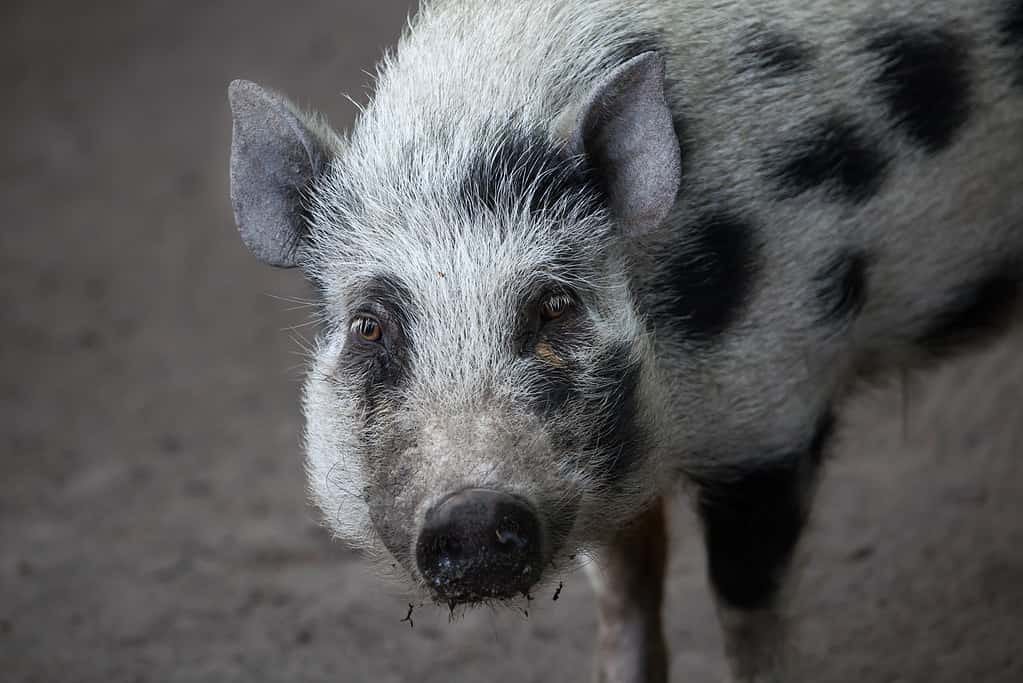
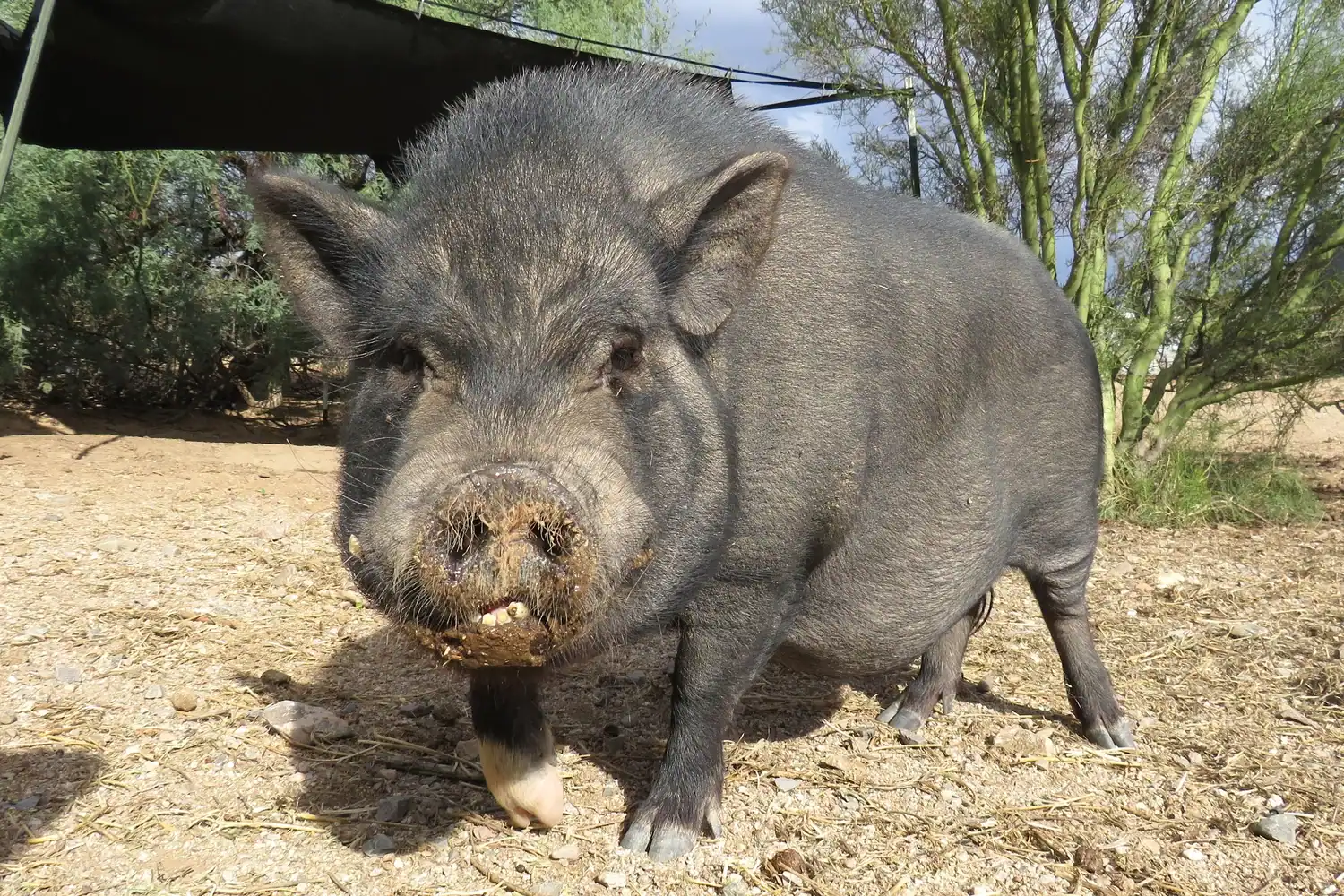
Domestic pigs will eat just about anything!
©iStock.com/wrangel
Anyone who has spent time around pigs knows they’re rarely shy about food. These intelligent animals are omnivores, meaning they can eat both plant and animal material. Depending on their surroundings, pigs may forage for roots, grasses, fruit, seeds, insects, and other available food sources. Their strong sense of smell and natural rooting behavior help them locate food, sometimes in places their owners would rather they didn’t explore.
On commercial farms, pigs generally receive carefully formulated feed designed to provide the energy, protein, vitamins, and minerals they need. Corn is a particularly common ingredient in American swine diets because it provides an excellent source of dietary energy. Soybean meal is frequently added as a protein source, while wheat, barley, and other ingredients may be included depending on the animals’ nutritional requirements. Pet pigs also need balanced nutrition, typically from feed specifically formulated for miniature pigs.
One important distinction is that a pig’s willingness to eat something doesn’t mean it’s safe. Pigs are naturally curious and may investigate spilled feed, discarded food, compost, and anything else that smells interesting. That adventurous appetite can occasionally get them into trouble, especially when food has spoiled, become contaminated, or fermented under uncontrolled conditions.
Why Fermented Feed Can Be Dangerous for Pigs
Although fermented ingredients can be used safely in properly managed animal diets, accidentally fermented or spoiled feed presents a different situation. Depending on the conditions, it may contain alcohol, harmful microorganisms, or toxins produced by certain molds. A pig that suddenly becomes unusually sleepy, stumbles, struggles to stand, or appears disoriented could be experiencing intoxication or another serious medical problem. Those symptoms deserve attention, regardless of how amusing the animal’s behavior might appear in a short video.
Owners should keep pigs away from alcoholic beverages, moldy grain, spoiled food, and potentially poisonous plants. Even certain natural foods, including large quantities of green acorns or oak leaves, can cause problems. If a pig is suspected of consuming something toxic or begins behaving abnormally, contacting a veterinarian promptly is the safest response. Fresh drinking water, appropriate feed, and a secure environment can help prevent many accidental exposures.
As for the little pig in the video, we can only hope its unexpected hillside adventure ended without injury or lasting consequences. The footage certainly makes for an unforgettable moment, but it’s also a reminder that even familiar farm animals can find themselves in dangerous situations when curiosity and an unrestricted food supply come together.