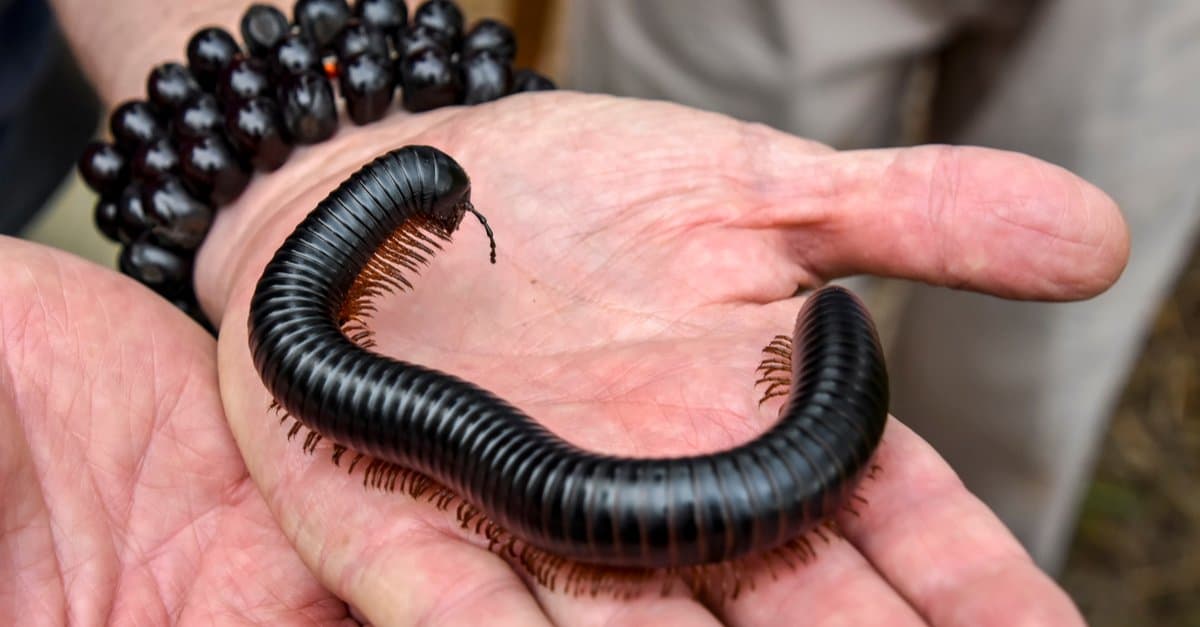

Millipedes are fascinating creatures, and they can sometimes be found in your home. Having any sort of animal in your house can be frustrating, but, despite common misconceptions, millipedes are not actually insects. Instead, they are arthropods, belonging to the subphylum of Myriapoda, and the Diplopoda class.
Millipedes are interesting creatures, yet so mysterious. If you find them in your house, it’s nothing to stress about. Here is everything you need to know about house millipedes and what causes their appearance.
Habitats of Millipedes
Millipedes have a large range and can be found almost everywhere since their habitat is so common. In the U.S., they are found in every state and also live in most parts of the world, except in Antarctica.
Millipedes live in soil with decaying litter. They are found in areas where there are leaves, dead plant life, and mulch, as they feed on these materials. Gardens are another area where these animals thrive. If millipedes are getting into your home, then it means they have a suitable habitat outside your home.
Millipedes are not typically found indoors, and if they do then they usually cannot survive more than a couple of days. This is because they need moisture to survive.
What Attracts Millipedes Into Homes
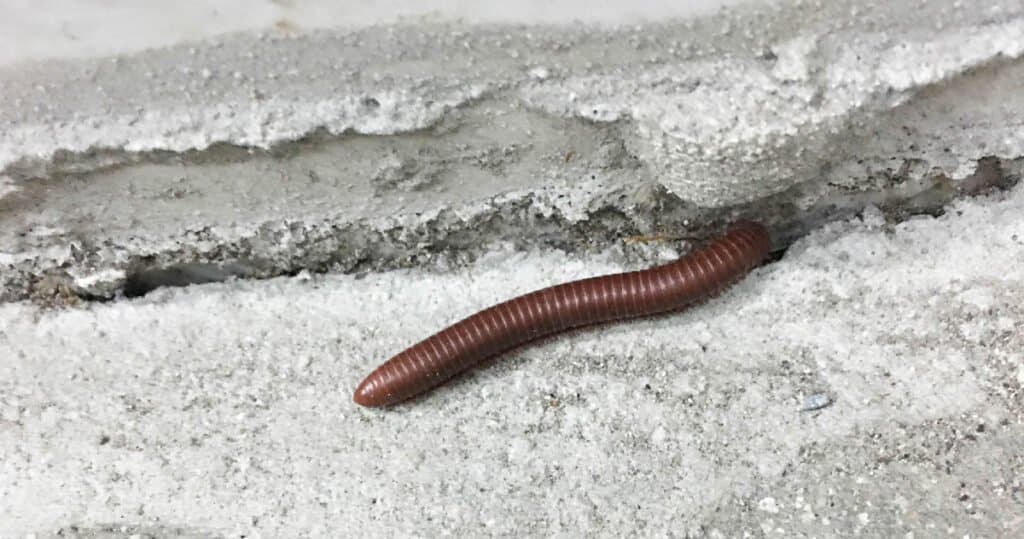
In extreme weather conditions, house millipedes find their way inside to survive.
©Vach cameraman/Shutterstock.com
Millipedes survive better outside than inside. However, extreme weather like excess rain, dry temperatures, or cold will make them temporarily move inside your home. As we mentioned, millipedes typically cannot live indoors for more than a couple of days. However, if the conditions are right, then they may be able to live in your house a little longer, but this is rare.
Millipedes prefer moist, damp areas, and if indoors, they will be more commonly found in places like bathrooms, kitchens, laundry rooms, and basements. If you have millipedes inside, then you will likely have them outside your home also. If you have grass, soil, or woodpiles next to your home’s foundation, it may make it easier for them to get inside. Houses with poor drainage, soil, or unmaintained lawns next to them are more likely to have problems with millipedes.
How to Prevent Millipedes Indoors
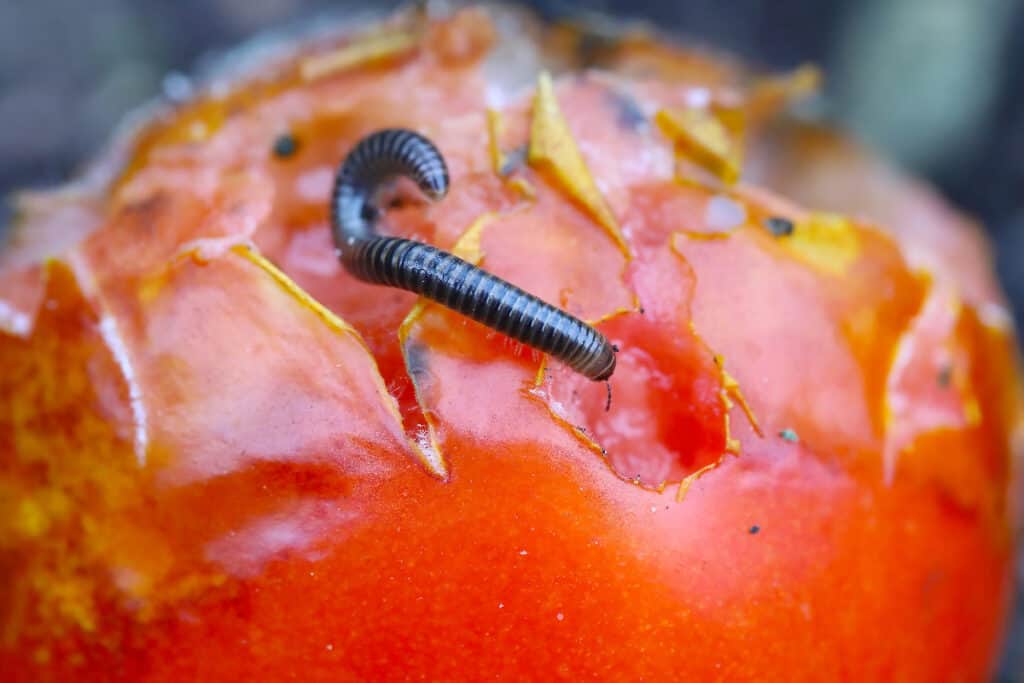
Sealing openings and cracks can help prevent millipedes from invading your home.
©Tomasz Klejdysz/Shutterstock.com
Preventing millipedes from coming inside is relatively easy. Since millipedes cannot maintain a population inside, stopping them from getting in is one of the best prevention methods.
Millipedes can find their way in through small holes, crevices, or pipes that lead into your home. They can come in if the doors are not sealed properly or if there are any gaps they can fit into. It is possible they come inside your home in high numbers, but this is only in cases of infestation. In case of an infestation, examine the foundation of your home thoroughly. It may have openings through which the animals enter your home.
Taking care of their population outside your home will also stop them from coming in. You can prevent millipedes from invading your home by:
- Remove moisture from your home.
- Seal any gaps that can let them in.
- Decrease their population outside your home.
Are House Millipedes Harmful
Millipedes are not harmful to your home. Unlike other pests, they do not cause any damage to your house, clothes, or food source.
Millipedes can, however, secrete a toxin from their body, which they use to deter predators. However, this is only an issue if the toxin comes into contact with your skin. Large and brighter-colored millipedes usually have more harmful toxins.
Types of Millipedes Found in Homes
There are around 12,000 species of millipedes in the world. The types of millipedes that will invade your home are dependent on the area you live in. Garden millipedes (Oxidus gracilis) are the most common species to find their way into buildings and homes. Other names for this species include the greenhouse millipede, hothouse millipede, or short-flange millipede.
Garden millipedes are around 0.7 to 0.9 inches and have, on average, around 60 legs. They are brown with pale-colored legs and small antennae on their head. Garden millipedes come from Japan but have found their way into North America, South America, and Europe. Millipedes are highly adaptable since their habitat is available in all parts of the world.
Do House Millipedes Have Benefits
House millipedes do not have any benefits in your home and will not survive long if they come inside. They are more beneficial outside, where they can recycle and break down organic matter. They can be useful for breaking down materials in compost piles.