
Quick Take
- Some beloved pet breeds fool even seasoned animal lovers into shouting 'bobcat.'
- The popular story of bobcat-and-house-cat hybrids has a surprising explanation.
- Spotting one in daylight might not mean what you think. The right response may surprise you.
You glance out your back window and notice a large, spotted cat moving along the fence. You’ve heard about bobcats wandering into yards around your neighborhood, and you wonder if you’re the latest witness to such an occurrence. The creature has pointed ears, long legs, and other features similar to a big house cat. Could it simply be a large domestic kitty?
If you’ve been in this situation before, we’re here to put your mind at ease. Bobcats have become increasingly familiar visitors in suburban neighborhoods across the United States, and they sometimes look similar to domestic cats. Large breeds like Maine coons and heavily patterned tabby cats can add to the confusion. That said, here’s some guidance on how to properly identify the feline in your yard.
Bobcat vs. Big House Cat
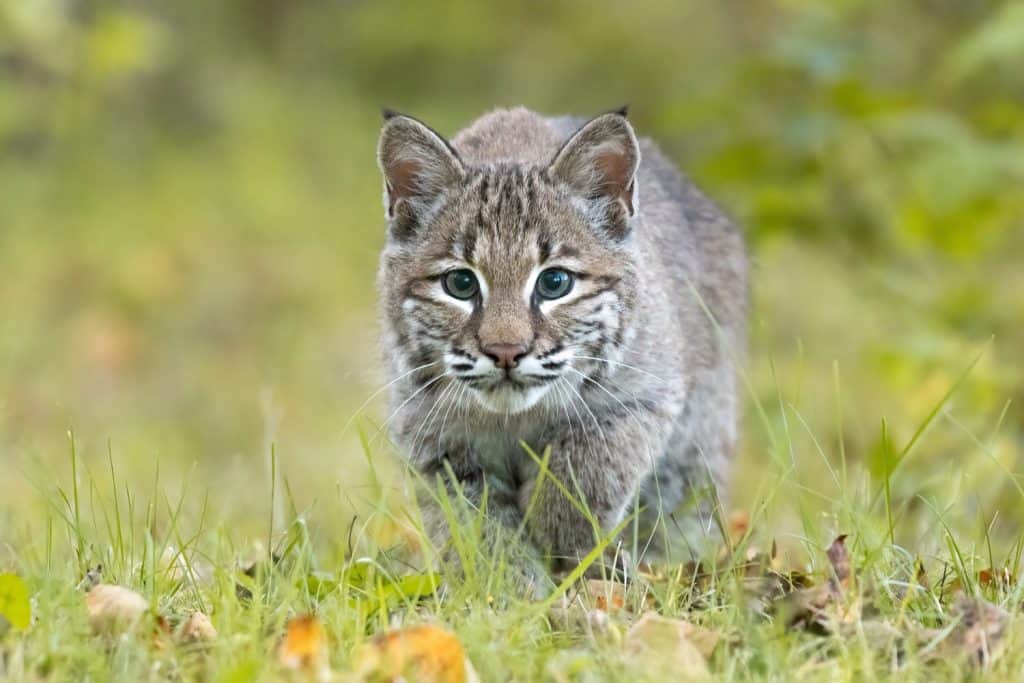
At first glance, bobcats may look like domestic cats, but they actually have many differences.
©Travis Potter/Shutterstock.com
Domestic cats and bobcats share several similarities, from their body shapes to their whiskers and patterned coats. However, if you really look closer, you will see several differences.
Body Type
Bobcats have muscular bodies, relatively long legs, broad paws, and compact tails. They generally look stockier and more powerful than an average house cat. If you only looked at a bobcat briefly, you would be forgiven for not noticing the difference. After all, domestic cats can vary tremendously in appearance. Some are slender and tiny, while others are large, muscular animals with thick coats that make them appear even bigger.
The Tail is the Key
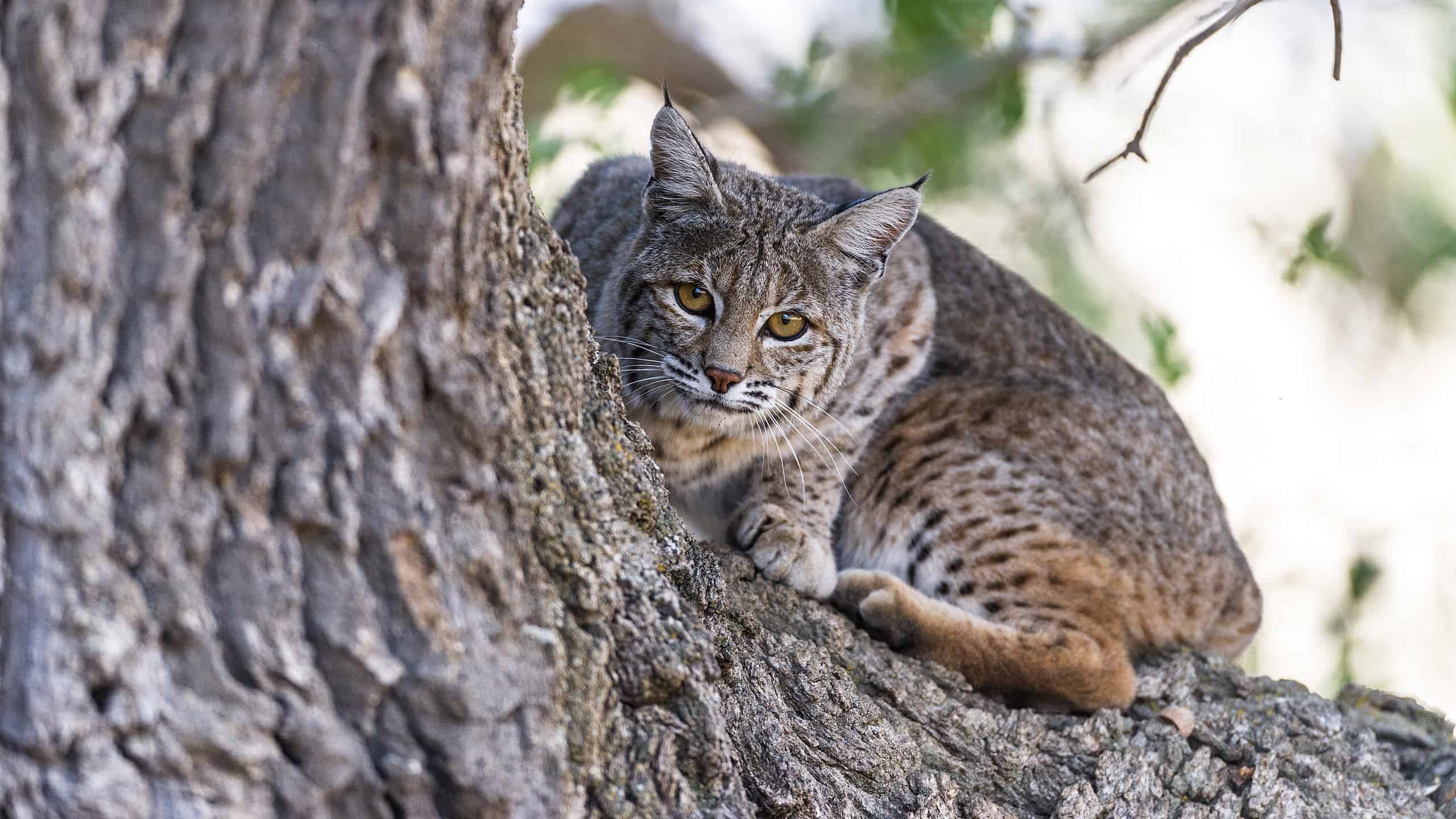
Perhaps the most obvious clue that you’re looking at a bobcat is its tail. As its name suggests, a bobcat has a naturally short, or “bobbed,” tail. Most bobcat tails measure approximately 4 to 7 inches long, although some have slightly longer tails. The color of the tail is especially distinctive. A bobcat’s tail typically has a black marking on its upper tip, while the underside of the tip is white. This contrast helps distinguish it from other cats.
Look at the Face
On closer inspection, you’ll likely notice that a bobcat’s face is distinctive. Like many domestic cats, bobcats have pointed ears, but they typically also have small black tufts of fur extending from the ear tips. Not every bobcat has this feature, but many do.
Another unique feature is the facial ruff. Bobcats have longer fur that extends outward from their cheeks, creating a broad, somewhat triangular facial appearance. The ruff often contains white patches and dark markings. Domestic cats generally have smoother facial outlines, although long-haired breeds can look similar. Maine Coons, for example, frequently have prominent ear tufts and thick cheek fur. A bobcat’s face also tends to look wider and more angular, particularly when viewed from the front. Its facial markings often include distinct dark lines extending across the cheeks.
Coat Patterns Can Also Be Misleading
One reason why you may confuse a bobcat with a big house cat is the fur. Bobcats typically have tan, grayish-brown, or reddish-brown coats with darker spots and streaks. Their undersides are generally lighter, often white or cream-colored with dark markings. That’s not so unlike brown tabbies, which are often mistaken for bobcats. These tabbies may feature dark stripes, spots, and facial markings that resemble those of their wild counterparts.
Many people also mistake the Maine coon breed of domestic cat for a bobcat at first glance. That’s typically because they can weigh 15 to 20 pounds or more and can have thick fur. They also have tufted ears, broad faces, and substantial paws, which can make the similarities confusing.
Can Bobcats Breed with Domestic Cats?
Over the years, stories have circulated about bobcats breeding with domestic cats. However, these stories are myths. That idea came from people seeing many unusually large domestic cats with spotted coats and short tails.
No widely accepted, scientifically verified evidence shows that bobcats and domestic cats regularly produce viable hybrid offspring in the wild. Bobcats and domestic cats are different species with substantial genetic differences. If a neighborhood cat looks unusually wild, it’s far more reasonable to suspect it’s a distinctive domestic breed than to assume it’s a bobcat hybrid.
Where Do Bobcats Live in the United States?
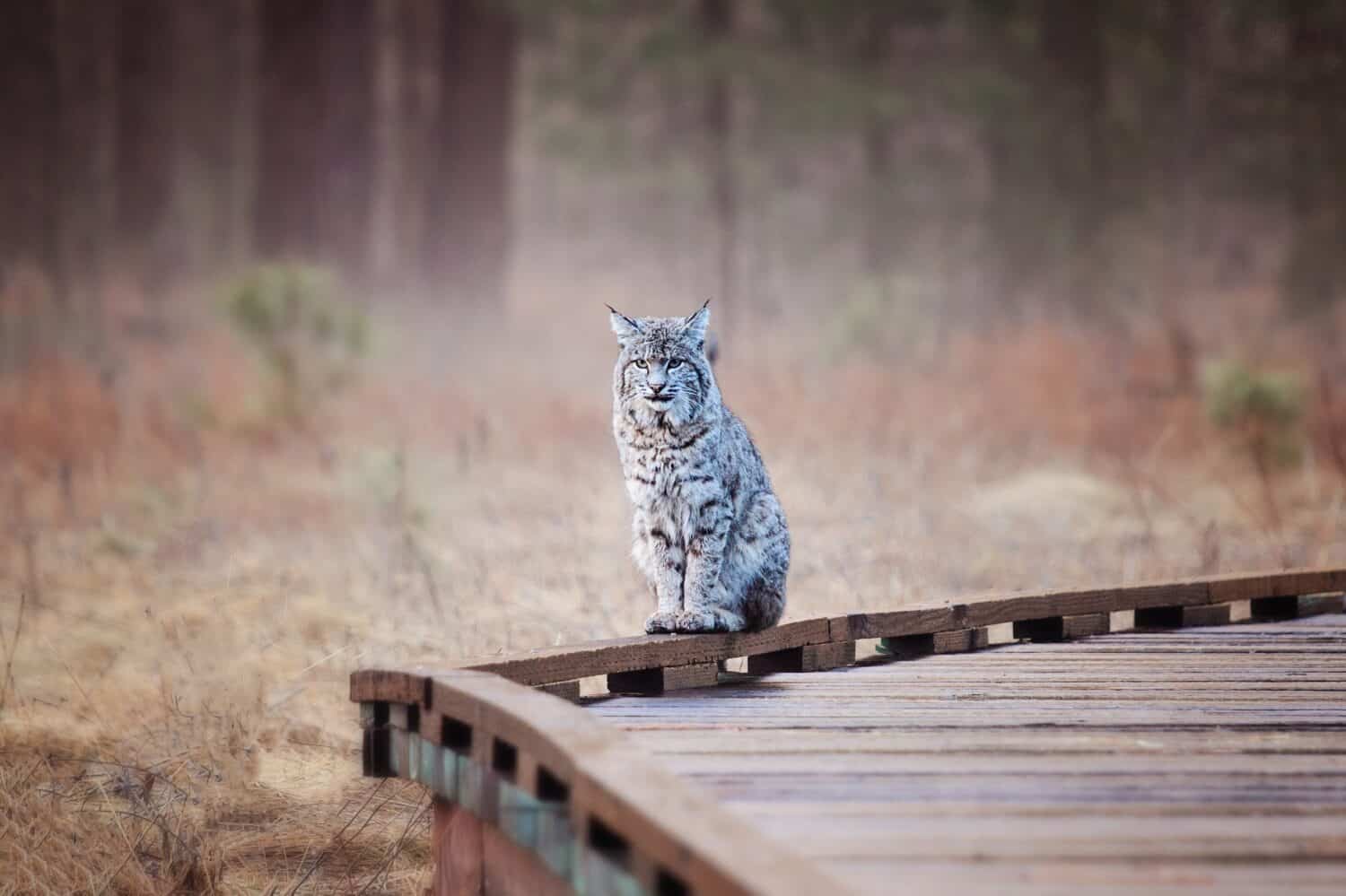
Bobcat sightings are becoming more common across the United States.
©Jenny Williams/Shutterstock.com
Bobcats are among the most widely distributed wild cats in North America. In the Southwest, bobcats commonly inhabit desert scrublands and rocky terrain. In the Southeast, they occur in forests and wetlands. Northern populations inhabit wooded landscapes where rabbits and other small mammals provide reliable food.
Although bobcats occur across much of the country, they aren’t equally common everywhere. Dense urban development and habitat fragmentation have reduced their presence in certain areas.
How to Protect Small Pets and Backyard Poultry
So, you’ve discovered that you’re not just looking at a big house cat; now what? Bobcats are capable predators and your small cats or dogs could get hurt if an altercation occurs. Also, backyard chickens and ducks can be easy prey when poorly protected.
Fortunately, homeowners can reduce the risk of encounters without harming wildlife. by doing the following:
- Keep cats indoors, especially overnight and around dawn and dusk, when bobcats are often active.
- Secure poultry in sturdy enclosures with a covered roof, strong hardware cloth, and protection against digging.
- Remove outdoor food sources, including pet food, unsecured garbage, and spilled birdseed that attracts rodents.
- Reduce hiding places near poultry coops by clearing excessive brush and keeping vegetation maintained.
If you know that bobcats frequent your area and you have pets, then vigilance is key.
What to Do if You See a Bobcat During the Day?
Bobcats are mostly active around dawn and dusk, but they may appear during the day. Seeing them in broad daylight doesn’t mean they are sick or dangerous. Bobcats sometimes hunt during daylight hours, particularly when food is available or when they need to feed their young. They may also travel between habitats or rest in sunny locations.
If you see a bobcat, remain calm and give it plenty of space. Don’t approach, corner, or attempt to feed it. Keep children and pets away and allow the animal an opportunity to leave. If the bobcat approaches or seems to be acting erratically, make yourself look larger and slowly back away without running. If necessary, make loud noises to encourage it to leave.
In the unusual event that the bobcat is excessively aggressive or acting strangely, call animal control. Luckily, bobcat attacks on humans are extremely rare. In most cases, the animal will move away once it realizes a person is nearby.
More Than a Big House Cat
Bobcats are unique felines, so if you spot one in your backyard, take a moment to enjoy its beauty. If you leave the bobcat alone, it will likely go on its way. At least now you’ll know what you’re seeing the next time you glance into your backyard.