
Quick Take
- Copperheads are strict carnivores.
- Copperheads are found in the Eastern and Central United States.
- Copperheads are not aggressive.
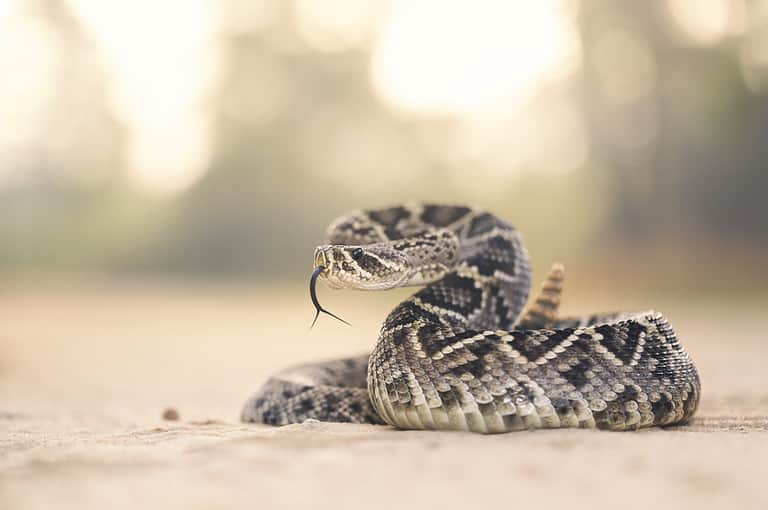
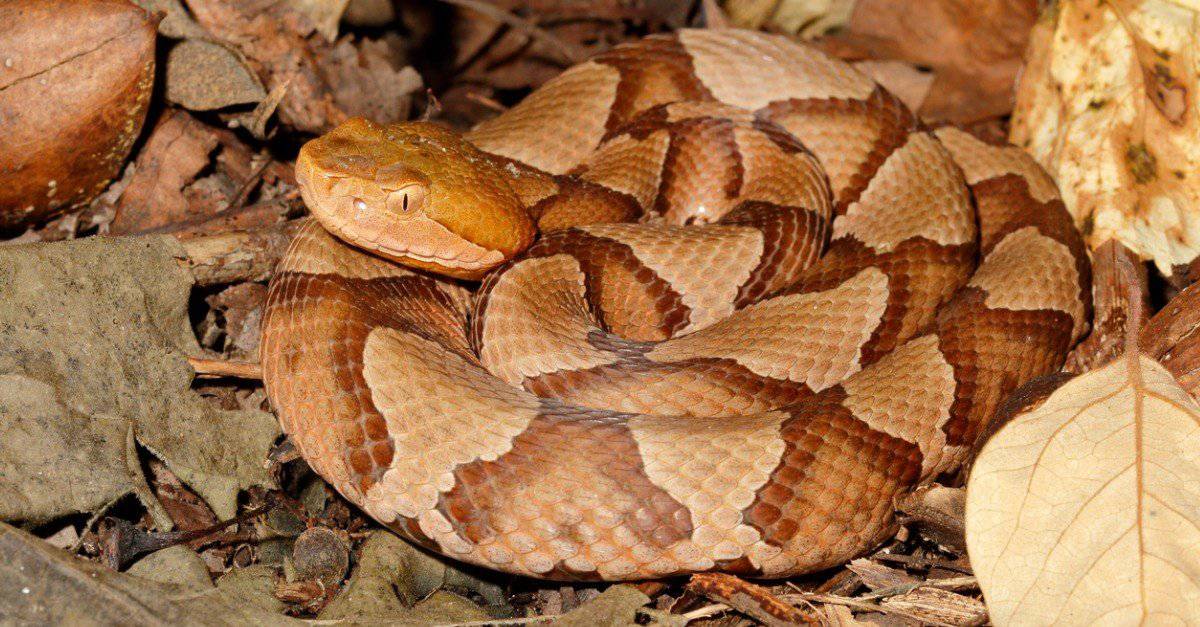
The copperhead (Agkistrodon contortrix) is a venomous snake typically measuring 2 to 3 feet in length. These venomous snakes have distinctive pinkish-tan to gray-brown bodies with dark brown, hourglass-shaped, or bowtie-shaped bands. They are commonly found throughout the Eastern and Central United States. Copperheads are generally not considered aggressive. They are shy and tend to freeze when threatened, with most bites occurring when the snakes are accidentally stepped on. Copperheads are strict carnivores that rely entirely on a diet of meat to survive. Continue reading to discover what their carnivorous diet consists of.
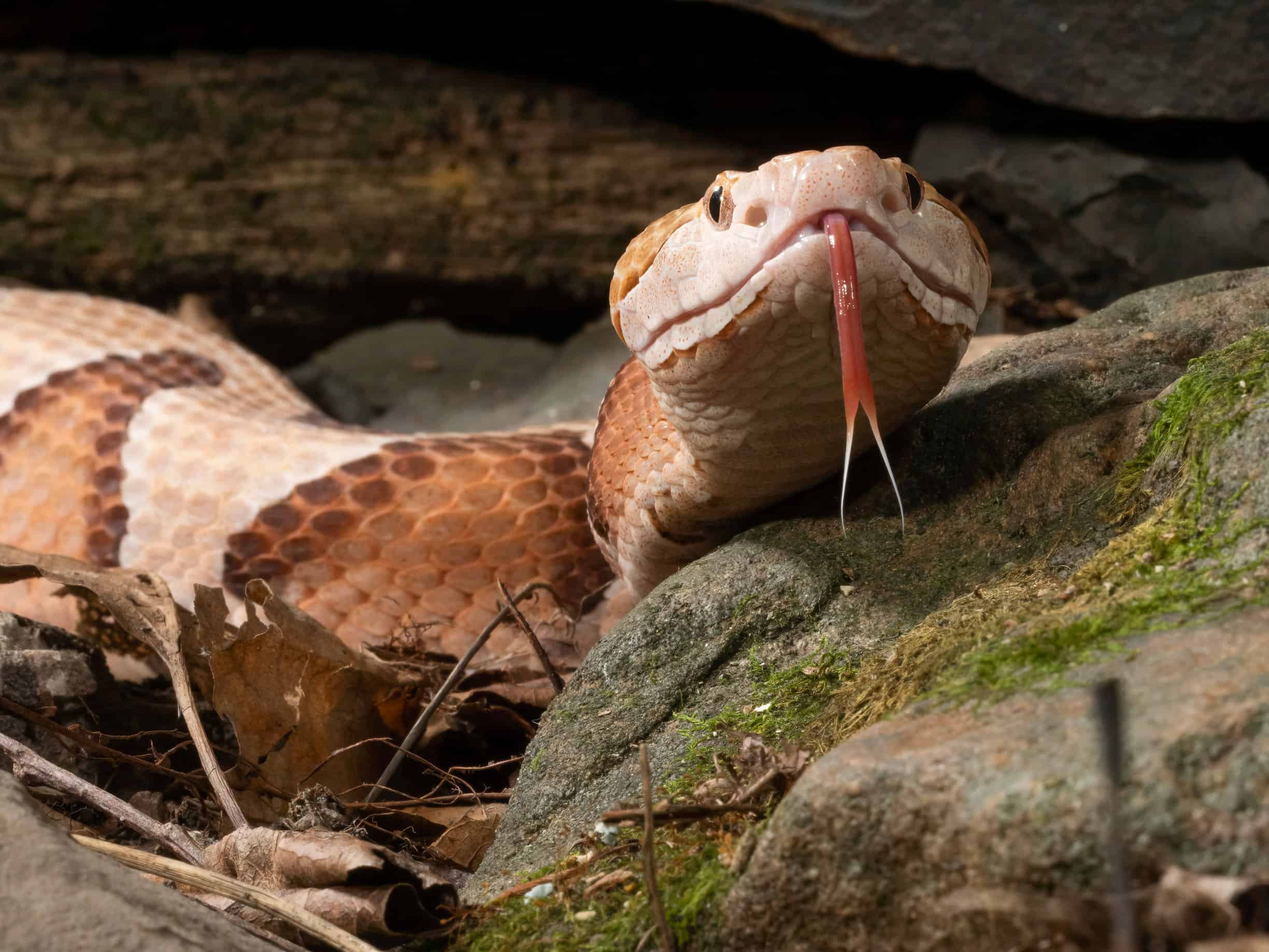
Copperheads are highly adaptable and can thrive in a variety of habitats, including suburban areas.
©Joe McDonald/Shutterstock.com
What Do Copperheads Eat?
Copperheads are carnivores, and carnivores eat meat. Copperheads are highly opportunistic predators and generalist feeders that consume a wide variety of prey depending on availability. They primarily use a “sit-and-wait” ambush strategy to catch prey. They are found in diverse habitats, including wooded areas, rocky terrain, and near water, which allows them to exploit varied food sources. Copperheads are known to eat any animal small enough for them to consume, including, on rare occasions, their own young.
In the wild, copperheads eat mice, amphibians, and insects, depending on where they live. As pets, copperheads are often fed small mice, frogs, and lizards.
Copperheads have been observed eating:
- Rats
- Mice
- Birds
- Snakes
- Swamp rabbits
- Lizards
- Frogs
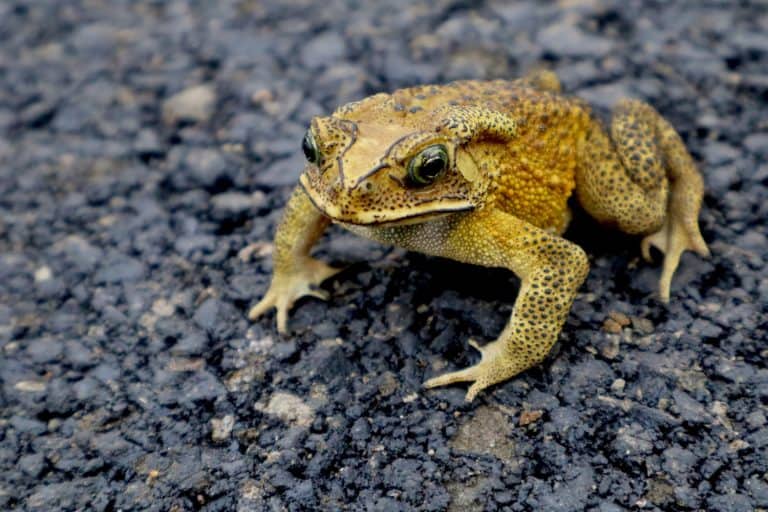
- Toads
- Young cottontails
- Young turtles
- Cicadas
- Grasshoppers
- Prairie voles
According to a University of Kansas study (Fitch 1960), copperheads consume more prairie voles than cicadas. The study also discovered that baby copperheads don’t eat the same prey as adults. Young copperheads eat insects, caterpillars, and smaller frogs, while the adults eat more mice and birds.
During the summer, copperheads may eat as infrequently as once every three weeks, and during winter brumation, they typically do not eat at all.
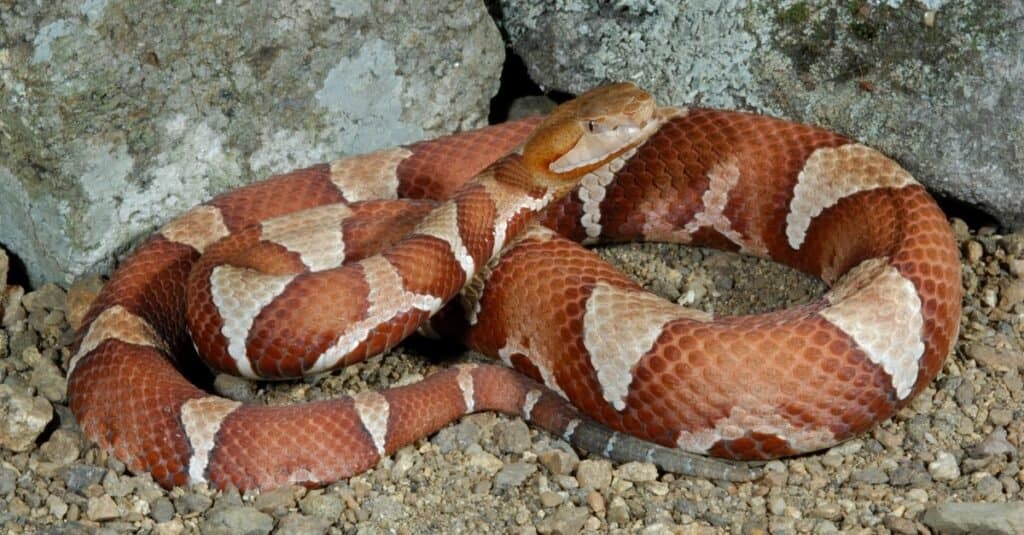
Copperheads eat two times their body weight in a year
©Breck P. Kent/Shutterstock.com
How Do Copperheads Hunt for Food?
Copperheads are ambush predators that wait patiently for their prey to come within their range. They also possess heat-sensing pits between the eyes and nostrils, which help them locate prey. This is the reason copperheads are referred to as pit vipers.
When copperheads spot their prey, they strike and inject venom, often allowing the prey to escape initially. The snake then follows the scent trail to locate the incapacitated or dead animal.
Copperheads are typically diurnal (active during the day) in spring and fall, but become primarily nocturnal (active at night) during the summer, though this pattern can vary depending on local conditions.
Are Copperheads Dangerous to Humans?
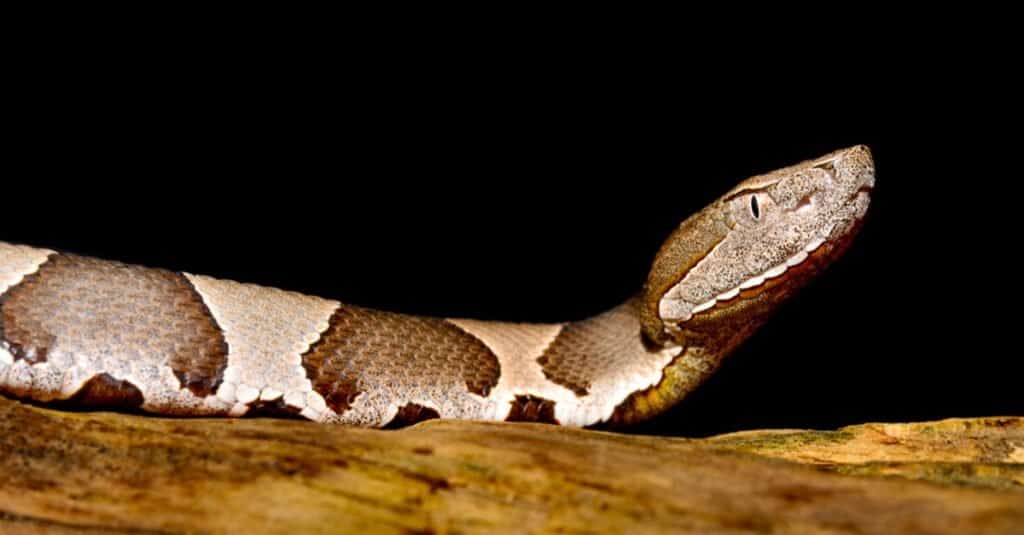
Baby copperheads eat insects, caterpillars and very small frogs
©Jeff W. Jarrett/Shutterstock.com
Copperheads are highly venomous snakes and members of the pit viper family. Copperhead bites in humans are rarely fatal in the United States, and deaths are exceedingly rare.
While highly venomous, copperheads typically inject a small amount of venom that causes intense pain, swelling, and bruising rather than death. Medical attention is crucial, but deaths are extremely rare, often only in cases of severe allergic reactions or in high-risk individuals.
Copperhead bites can pose a threat to people with compromised immune systems or other underlying health conditions. Fortunately, copperheads are not aggressive and typically only strike or bite when they are disturbed.