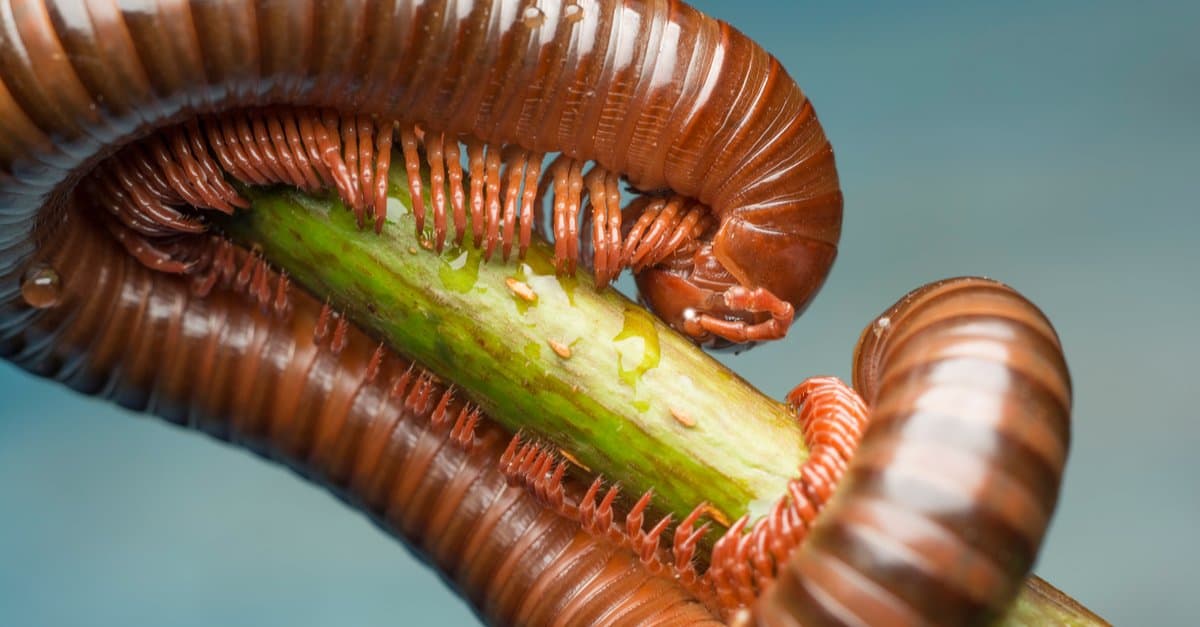

Millipedes are probably not among the most popular animals in the world. When we think of them, it is usually concerning a pest-control problem. Yet, there is a dedicated pet community that enjoys caring for millipedes. With only 12,000 millipede species identified out of an estimated 80,000, scientists are also eager to discover and describe new millipede species. Overall, most people know little about millipedes. Their name is also misleading, as there is only one known species with anywhere near 1,000 legs. The Eumillipes persephone from Western Australia can have up to 1,036 legs, officially making it the leggiest animal on earth.
The class of Diplopoda, to which millipedes belong, is a large class of arthropods. Millipede research is ongoing, with little known about individual species. Most millipedes have multiple body segments with two legs per segment. They are primarily detritivores, which means they eat decaying organic matter. Generally, they are quite small, with most millipedes averaging between 1 and 4 inches. There are, however, some notable exceptions. Continue reading to learn more about some of the largest known millipede species in the world.
5. Sonoran Giant Desert Millipede (Orthoporus ornatus)
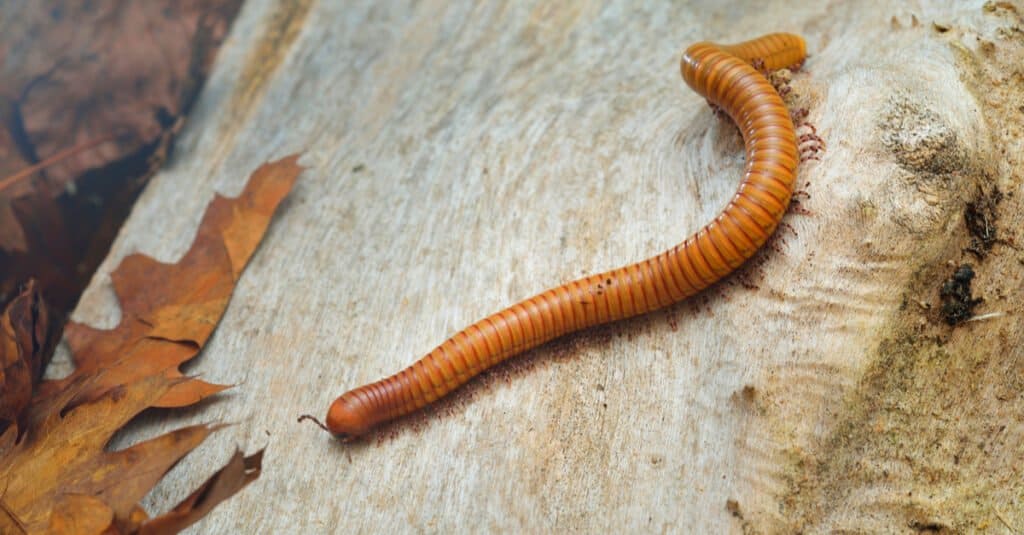
Sonoran desert millipedes spend most of their time underground.
©Alex Stemmers/Shutterstock.com
- Size: Up to around 9 inches long
- Habitat: Desert environments in the southwestern U.S. and northern Mexico
The Sonoran giant desert millipede is a large millipede that has been observed in Arizona, New Mexico, and Texas, along with many Mexican states. The giant desert millipede is often brownish in hue but can also be yellow or brownish-orange. This species can live up to 10 years.
These millipedes mostly stay underground in the deep, porous soil of their desert habitat, foraging for decaying organic material. The soil also provides shelter from the elements and ample space for movement. Typical of millipedes, the Sonoran giant desert millipede is largely harmless but will curl up into a ball when it feels threatened. In rare cases, the millipede may also release a toxic substance from the sides of its body, which smells bad and is designed to discourage predators from feeding on it.
4. Giant Chocolate Millipede (Ophistreptus guineensis)
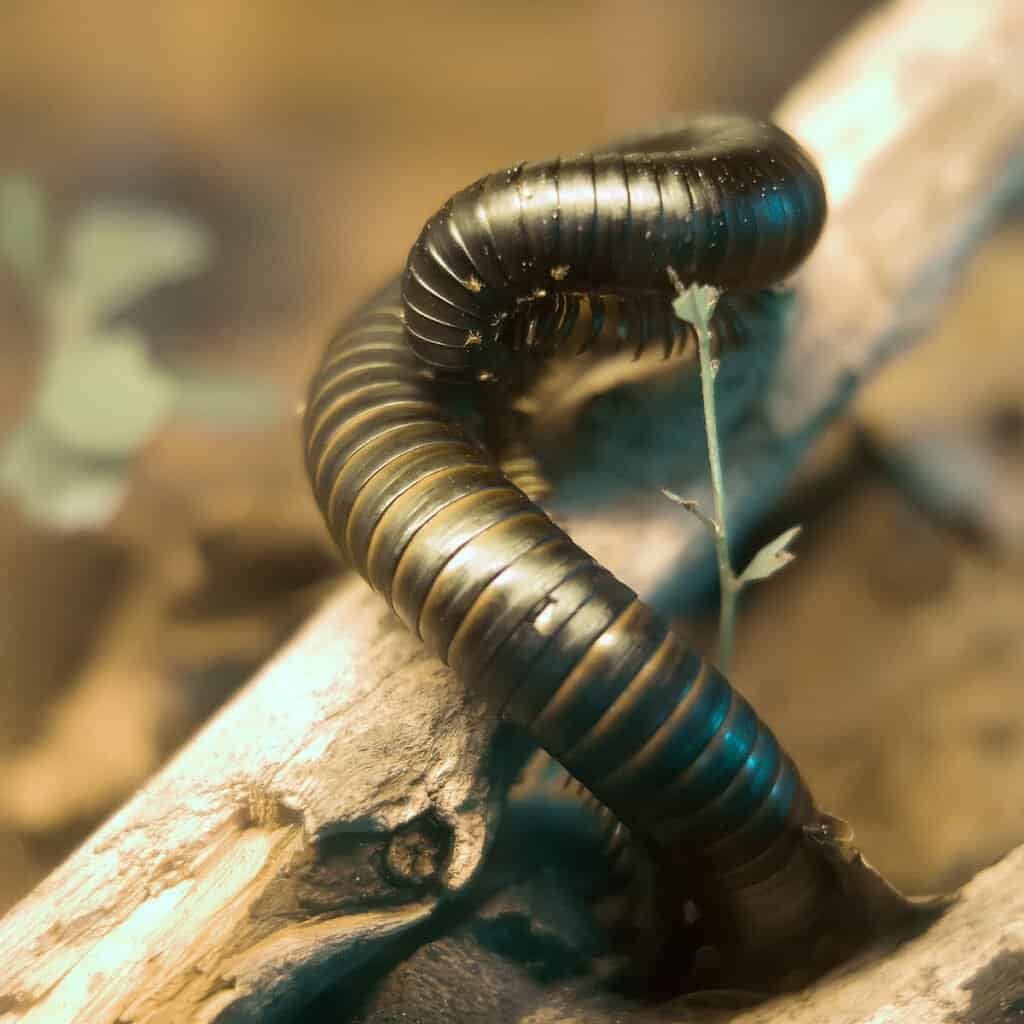
The giant chocolate millipede is popular in the pet trade as they are easy to care for in captivity.
©iztverichka/Shutterstock.com
- Size: Up to 10 inches
- Habitat: Dry savannas in Ghana and Nigeria
This large millipede is originally from Ghana and Nigeria. Due to the ease of handling and breeding, this millipede is popular in the pet trade. It is known to have a mild temperament and is harmless to humans. The name comes from its rich brown coloration, which resembles chocolate. Pet millipedes prefer munching on leaves, bark, soft fruits, and vegetables. They are known to live up to 7 years in captivity.
Because there are so many millipede species on Earth, comprehensive information about the giant chocolate millipede is limited. Most available information comes from pet care websites, as the chocolate millipede is known for being hardy and relatively easy to keep in captivity.
3. Giant Madagascar Millipede (Spirostreptus sculptus)
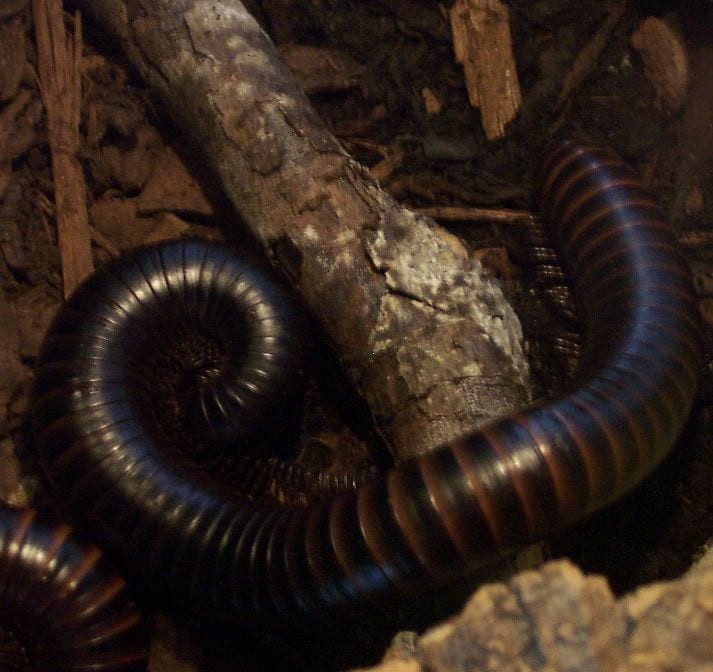
Millipedes in the Spirostreptus genus regularly reach longer than six inches.
- Size: Up to 11 inches
- Habitat: Old growth rainforests in Madagascar
The giant millipede Spirostreptus sculptus was recently rediscovered in the Makira Natural Park, a rainforest in northeastern Madagascar, after being lost to science for 126 years. This species was previously known only from the original type specimen that was described in 1897. It currently does not even have a common name. Despite a lack of scientific records, researchers found the millipede was actually fairly common in the rainforest.
Spirostreptus sculptus is a dark brown millipede with lighter brown segment rings, legs, and antennae. The millipede’s body has around 60 segments. Millipedes in the Spirostreptus genus commonly reach lengths greater than 6 inches. They are believed to have a lifespan of around 5 years.
2. Siamese Pointy-Tailed Millipede (Thyropygus allevatus)
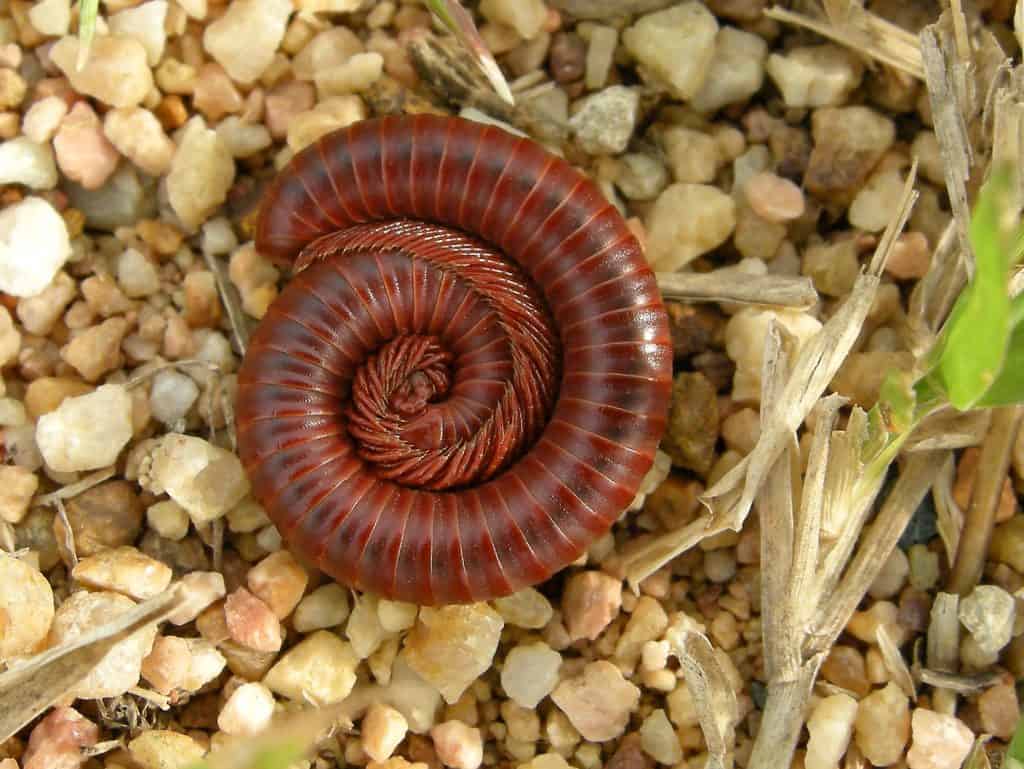
The Siamese pointy-tailed millipede can reach over 11 inches long.
- Size: Over 11 inches
- Habitat: Humid subtropical and tropical regions of Southeast Asia
Siamese pointy-tailed millipedes are thought to be one of the largest millipedes in Asia. As the name indicates, these millipedes have spiky tails that aid in digging. They have cylindrical bodies of dark reddish-brown with lighter segment rings. They are typically found in the soil or near the ground in dark, humid places such as in leaf litter or under rotting logs. Siamese pointy-tailed millipedes are native to Thailand, but can be found across Southeast Asia.
Like most millipedes, they primarily eat decaying vegetation in their natural habitats. In captivity, they are said to be shy, docile pets. They may curl into a ball when threatened, but they are not aggressive towards humans. The Siamese pointy-tailed millipede is believed to have a lifespan of 7-10 years.
1. African Giant Millipede (Archispirostreptus gigas)
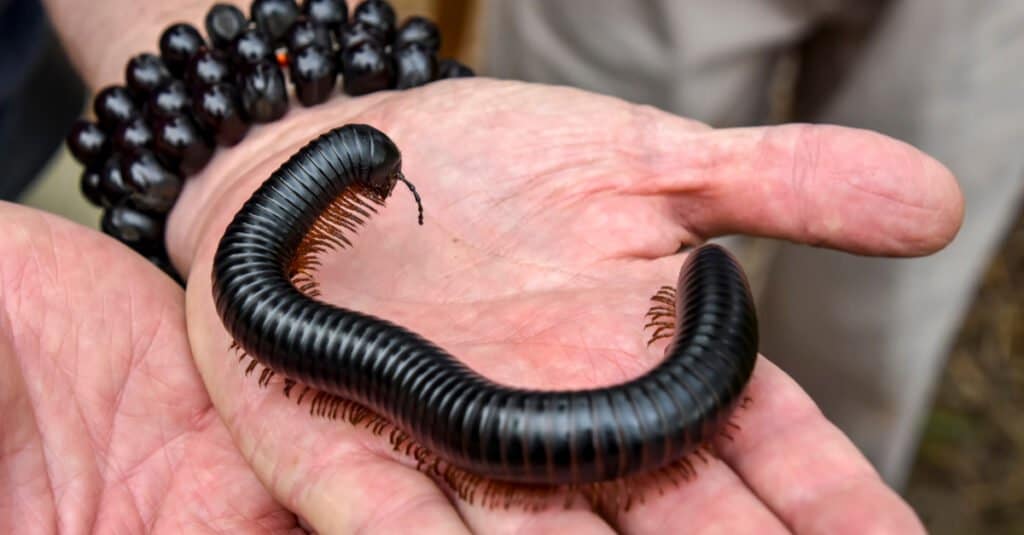
The African giant millipede is the largest living millipede species on Earth.
©Wandel Guides/Shutterstock.com
- Size: Over 15 inches
- Habitat: Subtropical forests of Africa and parts of Oman
African giant black millipedes are the largest living millipedes in the world, capable of growing over a foot long. The largest African giant millipede on record was 15.2 inches long, 2.6 inches in circumference, and had 256 legs. Like many millipedes, it is generally harmless, living its life on the forest floor and munching on organic matter. The giant black millipede is mostly found in lowland parts of East Africa, and has been introduced to the Dhofar region of Oman. They can live 5-7 years in the wild and up to 10 years in captivity.
The African giant millipede has a symbiotic relationship with mites. The mites, which are tiny arachnids, crawl on the millipede’s exoskeleton and help keep it clean. In return, the mites receive food and protection. While the relationship is beneficial to both parties, mites have been known to cause agricultural damage. A permit from the U.S.D.A. is required to import or transport these millipedes in the United States.
The Largest Extinct Millipede Species
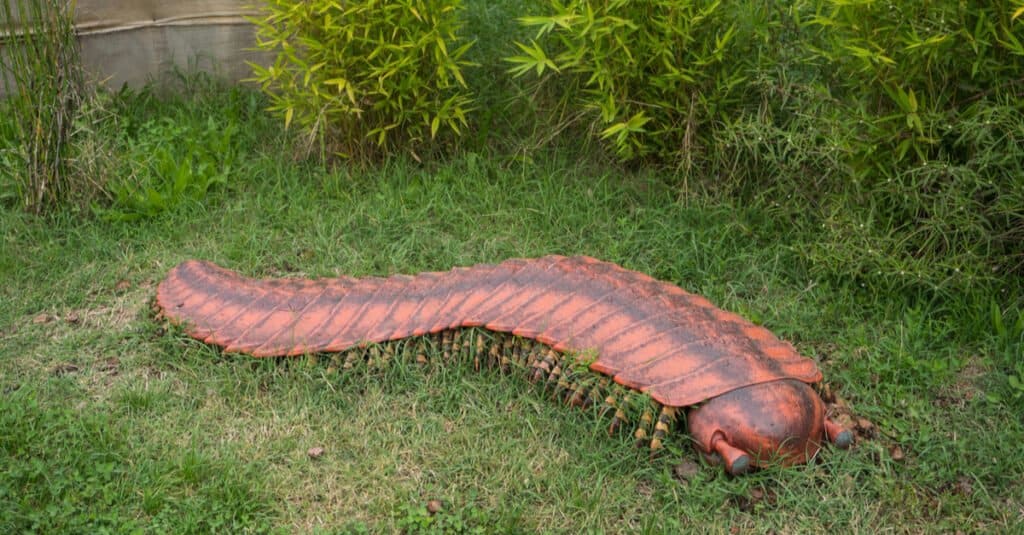
The largest millipede to ever roam the world was Arthropleura.
©FABRIZIO CONTE/Shutterstock.com
While the African giant millipede is the largest living millipede today, it wasn’t always so. To find the largest millipede of all time, we need to travel back to the Carboniferous period, which lasted from about 359 to 299 million years ago. Before dinosaurs walked the Earth, the genus Arthropleura included the largest millipedes ever known. From fossil analysis, scientists have concluded that species of Arthropleura may have grown as long as 8.5 feet. While they were most likely still detritivores or herbivores, seeing an 8-foot millipede in the wild would make the African Giant millipede seem tiny in comparison.