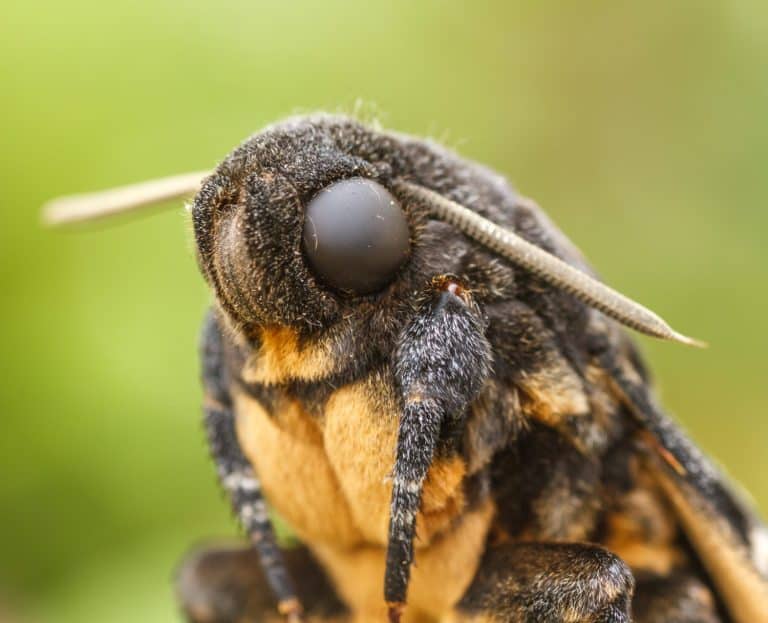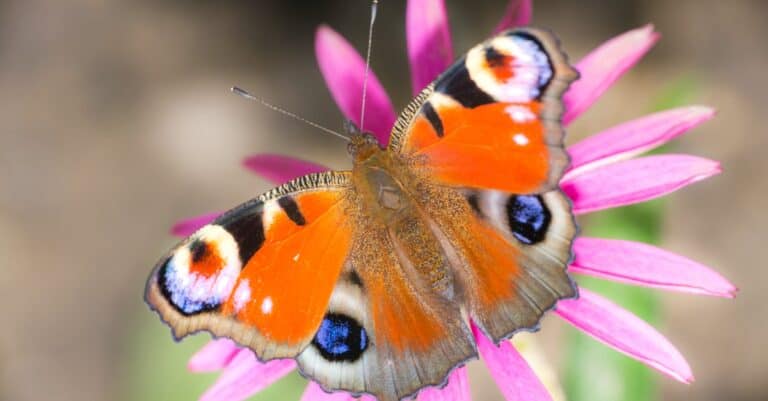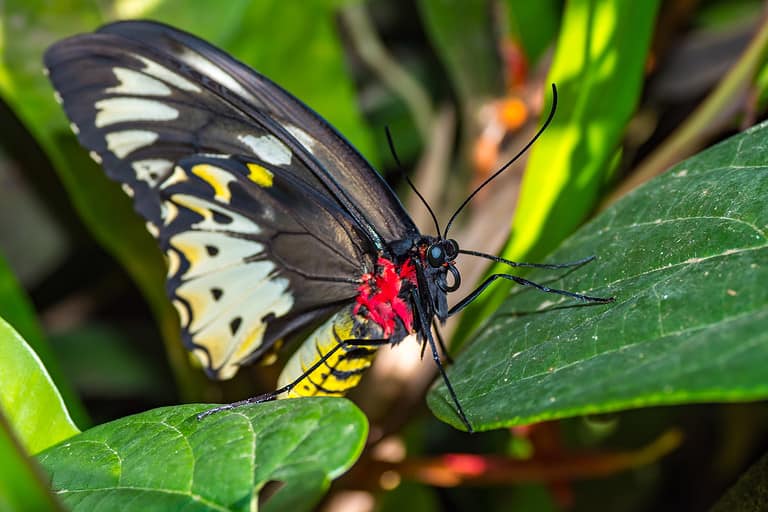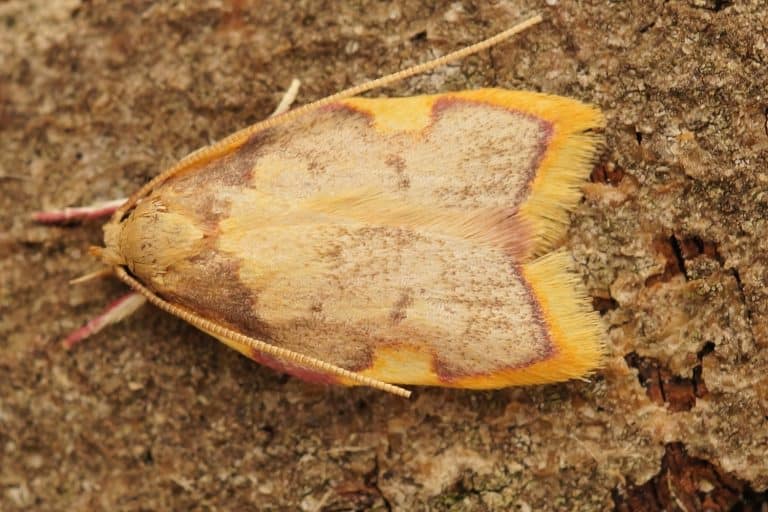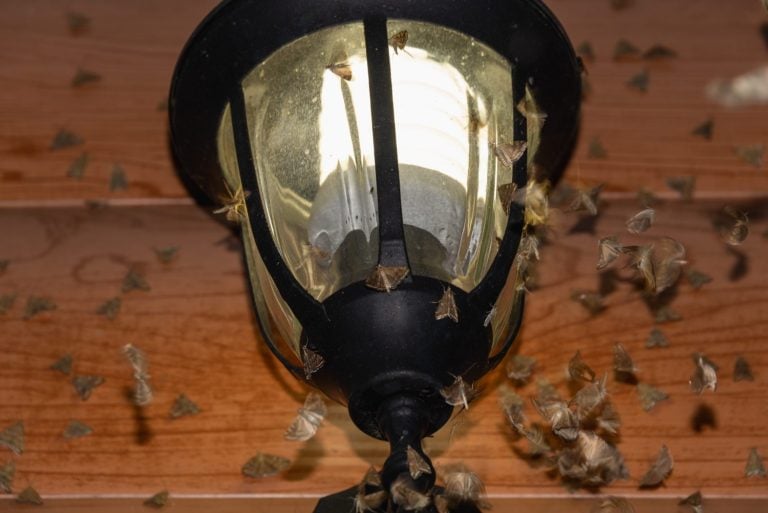

When many of us think of moths, we think of drab little insects that flit around light bulbs at night. However, some of the most beautiful lepidopterans are moths, not butterflies. So, what is the difference between a moth and a butterfly? Moths tend to have furry, robust bodies and feathery antennae with no knobs at the ends. Moths generally fold their wings flat over their backs, while butterflies hold theirs upright. Also, most moths are nocturnal, while most butterflies are diurnal.
In evolutionary history, moths appeared much earlier than butterflies — around 200 million years earlier. Moths make up 89%-94% percent of the Lepidoptera order. Many moths are more neutral colored, as that helps them camouflage during the day when they’re at rest. However, some are spectacularly colorful. Check out the following list to see 10 of the world’s most beautiful moths.
#10: Madagascan Sunset Moth
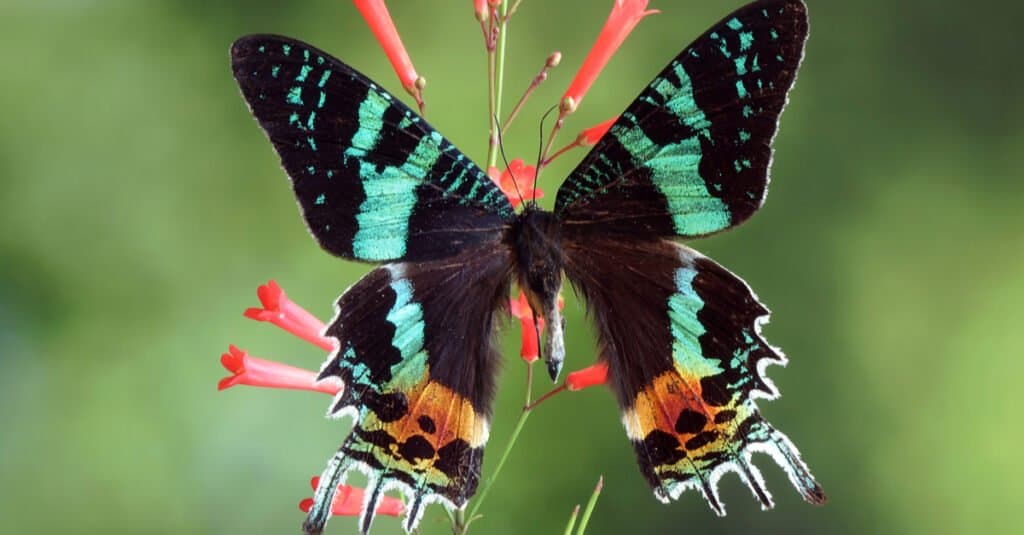
The Madagascan sunset moth can be found only in Madagascar.
©Mark Brandon/Shutterstock.com
No one could blame a person for thinking this colorful moth is a butterfly. Found only in Madagascar, the Madagascan sunset moth (Chrysiridia rhipheus) is a large, day-flying moth with a wingspan of between 3.25 and 4 inches and six tails on its hindwings. Its base color is black, and it has iridescent reddish-orange, blue, and green markings. These colors are produced by an optical illusion due to the reflection of certain wavelengths of light, as well as the refraction of polarized light on their curved, ribbon-like scales.
However, its colorful wings aren’t just for show. They also warn would-be predators that the moth is toxic. The caterpillar exclusively eats the leaves, flowers, and fruit of Omphalea shrubs, which are full of alkaloids. Adult moths prefer white or yellowish-white flowers for nectar, such as the tea plant, Indian almond plant, and the common mango tree.
#9: Argent and Sable Moth
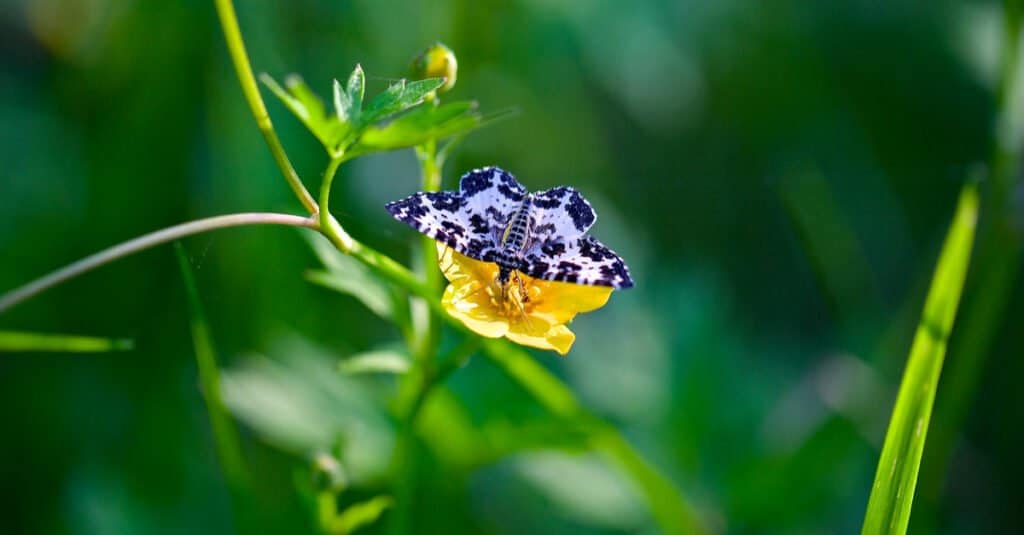
The argent and sable moth gets its name from heraldic terms that mean white and black.
©Nata Naumovec/Shutterstock.com
The argent and sable moth (Rheumaptera hastata) is found in open woodlands around the world, including Europe, North America, and northern Asia. Its wings have a lacy black and white pattern with a notable checkerboard pattern at the edges of the wings. Its body is also black with horizontal white stripes. The name “argent and sable” is derived from heraldic terms meaning “white and black.”
Like the sunset moth, the argent and sable flies during the day. It’s a small moth, with a wingspan of only 1-1.5 inches. The caterpillars primarily feed on birch and bog myrtle leaves, as well as other hardwood trees and shrubs. The adult moths feed on nectar, honeydew, sap, and decayed fruit.
#8: Rosy Maple Moth
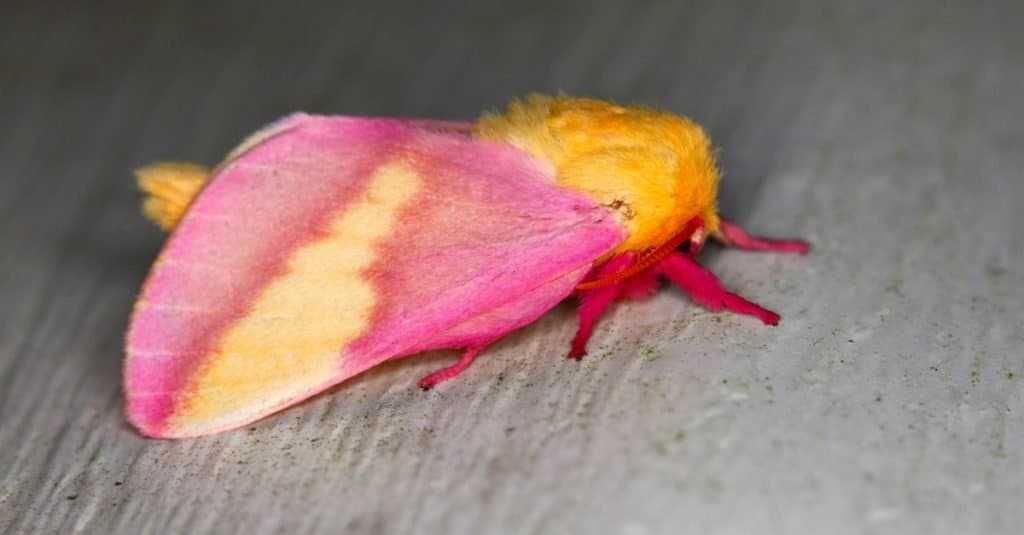
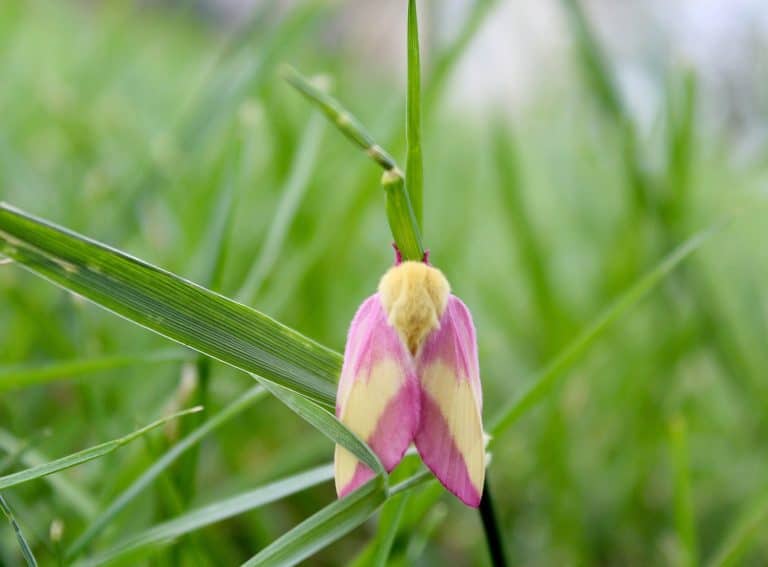
The rosy maple moth uses its bright colors to trick predators into thinking it is toxic.
©Jason Patrick Ross/Shutterstock.com
Rosy maple moths (Dryocampa rubicunda) are small silk moths with wingspans that can reach just over 2 inches. These moths are endemic to North America. They inhabit deciduous forests in the east from southern Canada to Florida. The rosy maple moth has a furry yellow body, pink legs, and yellow and pink striped wings.
Their bright colors are used as a defense mechanism to trick predators into thinking they are toxic, but they are harmless. As their name suggests, rosy maple caterpillars feed on the leaves of maple trees, including red maples, silver maples, sugar maples, and box elder maples. However, adult rosy maple moths do not feed.
#7: Spanish Moon Moth
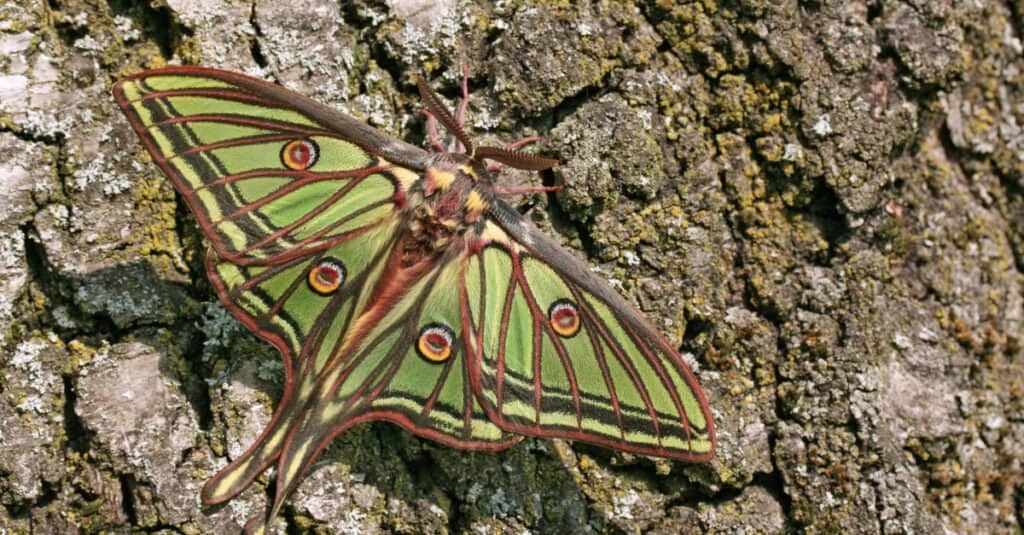
The hindwings of male Spanish moon moths have long tails.
©Andreas Weitzmann/Shutterstock.com
The Spanish Moon moth (Graellsia isabella) is found in the pine forests of Spain and France, specifically in the Alps and the Pyrenees mountain ranges. The Spanish moon moth has a 2.5 to 4 inch wingspan. The veins in its wings are outlined with dark brown and filled in with reddish-brown. This makes the pale green wings look like shards of stained glass. Each wing also has a yellow, purple, and white eyespot.
The females are larger than the males, but the forewings of the males are more angular and butterfly-like. The female’s hindwings have lobes, while the male’s hindwings have long tails. The male’s antennae are also more feathery. The caterpillar exclusively feeds on pine trees, particularly black pine and Scots pine, but the adult moths do not feed.
#6: White Witch
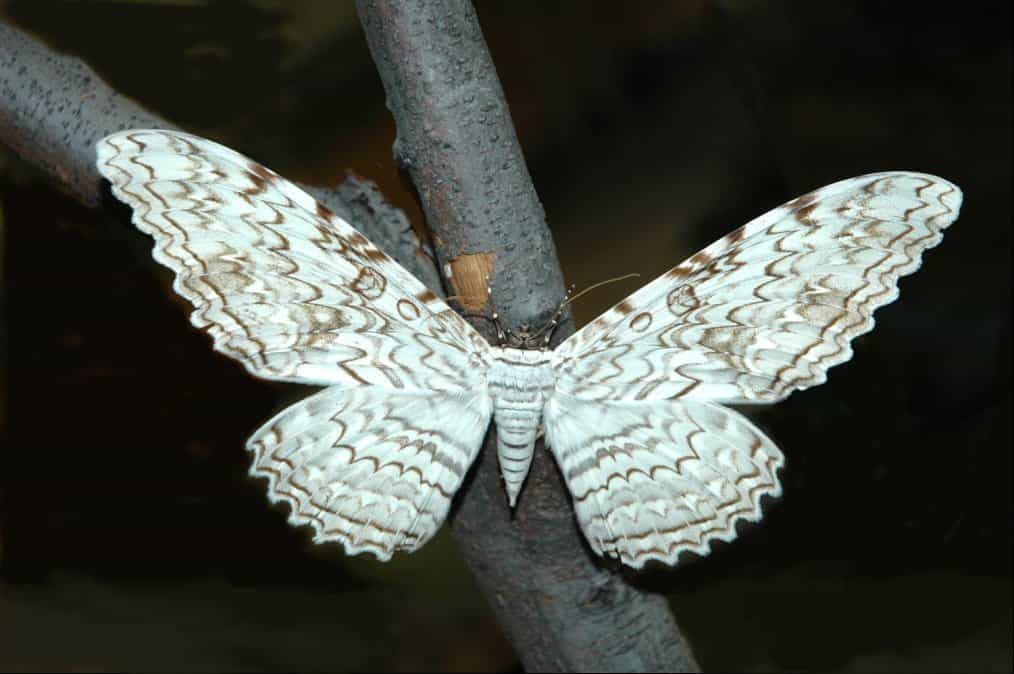
The white witch has the largest wingspan of any moth in the world.
The white witch (Thysania agrippina) has the largest wingspan of any moth in the world. It is also one of the world’s largest insects. The wingspan of this moth is said to reach a maximum of 12 inches, with some sources suggesting they can grow even larger.
Although it is not colorful, its pale wings have intricate brown to blackish brown markings. The moth can be found in rainforests and other tropical regions from Mexico to South America. The caterpillars are believed to eat woody legumes such as acacia and mesquite. Adult moths primarily consume nectar from night-blooming flowers.
#5: Cecropia Moth
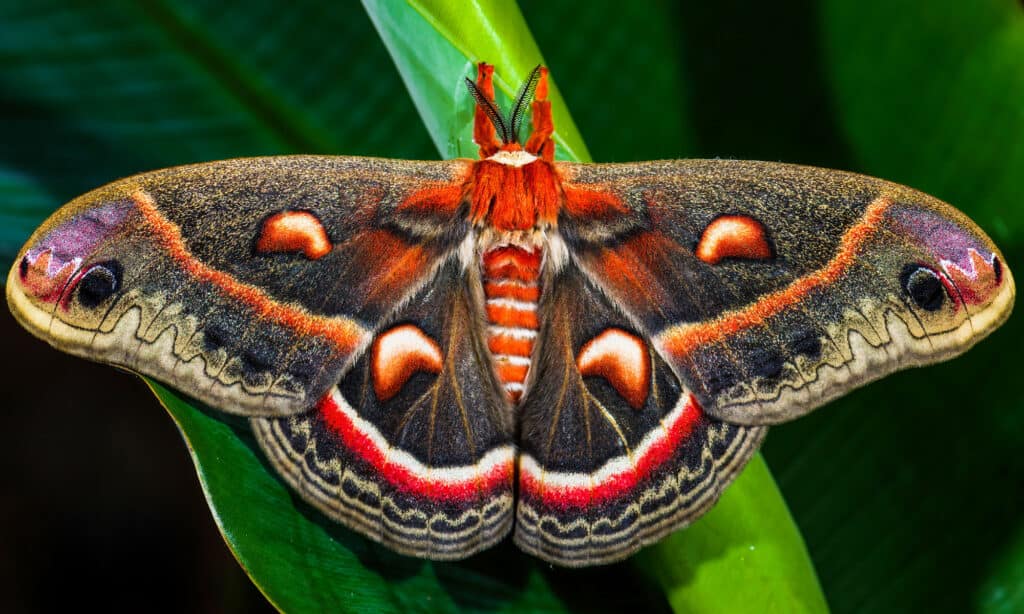
The cecropia moth is the largest moth in North America.
©David Havel/Shutterstock.com
The largest native moth in North America is the cecropia moth (Hyalophora cecropia), which has a wingspan of 5 to 7 inches. They can primarily be found in hardwood forests east of the Rocky Mountains. The cecropia moth has a red, black, and white striped body with red, black, white, and tan markings. Their forewings have black eye spots and a hint of purple on the tips.
The caterpillars are also large, reaching 4 inches long when fully developed. They eat a wide variety of trees, including maple, birch, cherry, plum, and apple, among others. Like many moth species, the adults do not eat, as they are focused on mating and reproducing.
#4: Garden Tiger Moth
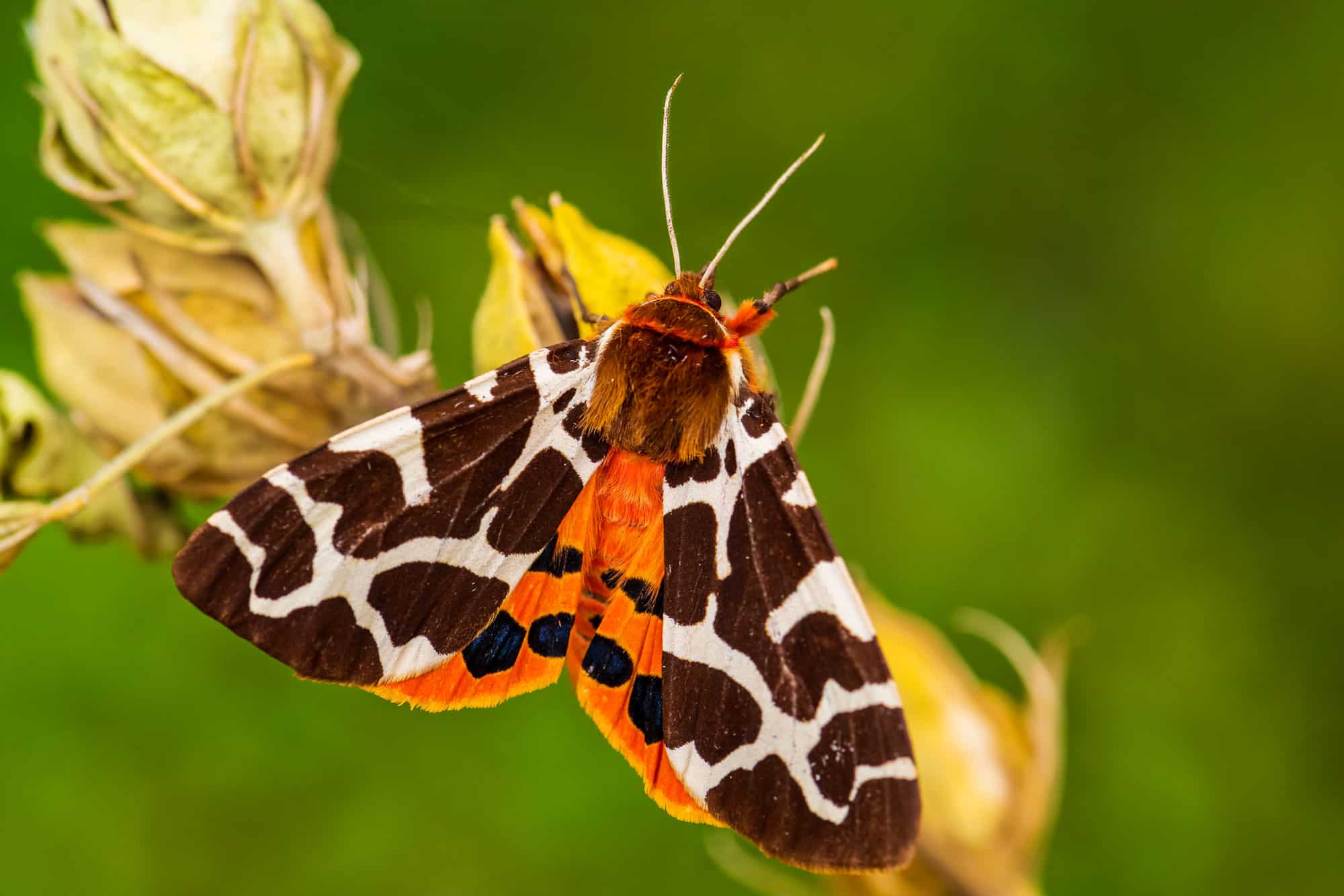
One way tiger moths deter predators is by showing their bright hindwings.
©David Havel/Shutterstock.com
The medium-sized garden tiger moth (Arctia caja) has a wingspan of 2-3 inches. It can be found in a variety of open habitats throughout the U.S., Canada, and Europe. The garden tiger moth has white forewings with brown blotches. Both its hindwings and its body are bright orange with blue and black spots. It deters predators by showing its bright hindwings and secreting a yellow fluid from ducts behind its head.
The caterpillars of the tiger moth are often called woolly bears because of the dense hair, or setae, all over their bodies. They are opportunistic and will feed on a wide range of plants including dandelions, clover, nettles, blackberry bushes, and cherry trees. They can even tolerate toxic plants like foxglove, which helps them deter predators. The adult moths primarily eat nectar.
#3: Joseph’s Coat Moth
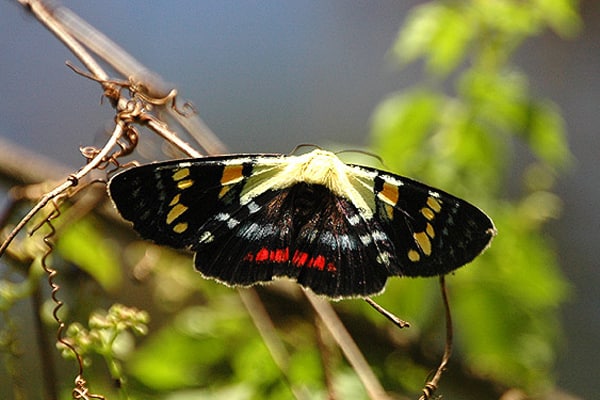
The moth is named for Joseph’s coat of many colors in the Bible story.
©Tom Tarrant / CC BY-SA 3.0 / Wikimedia Commons – Original / License
The beautiful Joseph’s coat moth (Agarista agricola) is named after Joseph’s coat of many colors in the Bible story. Found in the woodlands and forests of Australia and New Guinea, this day-flying moth has a wingspan up to 2.75 inches.
The Joseph’s coat moth has black wings with streaks, blotches, and bands of yellow, white, iridescent blue, and red. Its hindwings are fringed with white, and the thorax, the segment between the head and the abdomen, is yellow. It also appears to wear a “cape” of white or cream. The caterpillar feeds on species of wild grapevines, while adults feed on nectar and honeydew.
#2: Atlas Moth
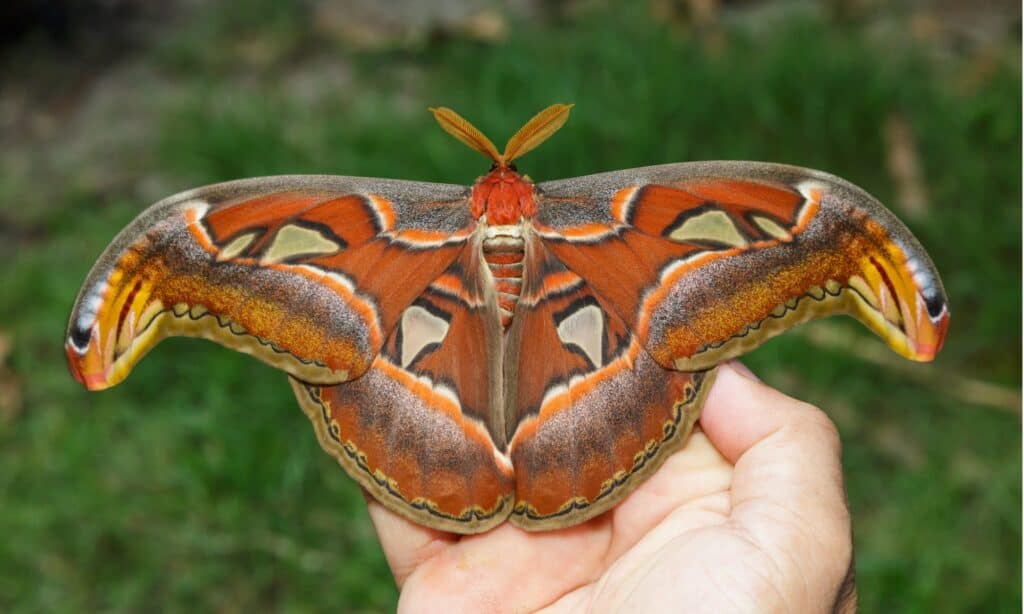
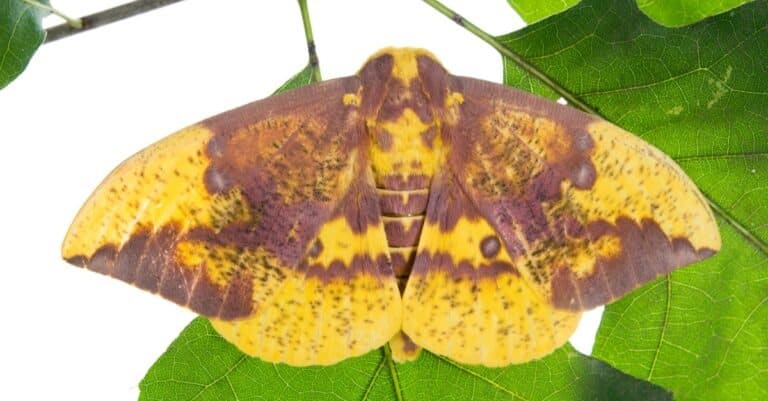
The wingspan of the atlas moth can reach between 10 and 11 inches.
©iStock.com/Mathisa_s
The atlas moth (Attacus atlas) is a burnt-orange beauty with colors of rusty brown, light yellow, red, purple, and black. They are found in subtropical and tropical rainforests across Southeast Asia. It is one of the largest moths in the world with a wingspan that can reach between 10 and 11 inches.
The caterpillars are voracious eaters, growing as large as 4.7 inches long and an inch wide. They only eat the leaves of the host plants, which include cinnamon, tea, cocoa, and pepper plants, as well as guava, mango, and avocado. However, the adult moths do not feed at all. They spend their days resting and their nights searching for a mate.
#1: Luna Moth
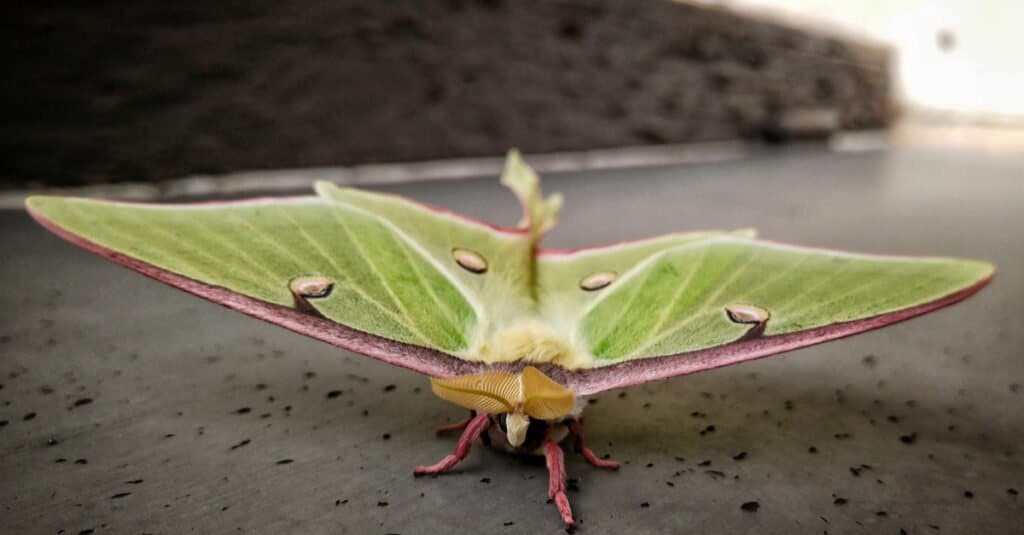
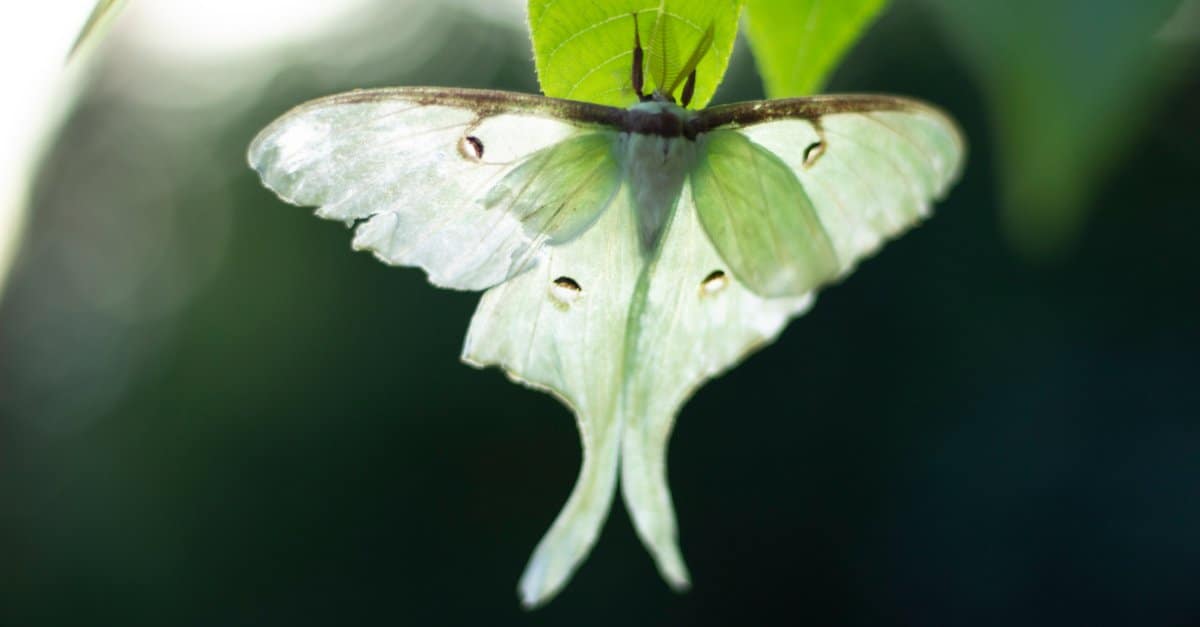
The Luna moth has an average lifespan of around one week.
©Ryan Hughes/Shutterstock.com
One of the most beautiful moths on earth, the luna moth (Actias luna), is found in the eastern U.S. and southeastern Canada. The luna moth has a stout body covered with pale fur. Moths born earlier in the spring have wings that are a light, luminous sea foam green with pinkish-purple wing edges. Later generations in the same year are more yellow colored with yellow wing edges. These moths have eyespots on their forewings and hindwings, and the hindwings have beautiful long tails.
The luna moth is a large moth, with a wingspan of 3 to 4.25 inches. They are typically found in deciduous forests and woodland environments. The caterpillars feed on many different types of trees, including alder, birch, hickory, cherry, sweet gum, and red maple, among others. Luna moths do not feed as adults. They only live long enough to lay their eggs, which is about a week.