

Quick Take
- Unlike almost every other noisy insect, this moth makes its sound in a completely unexpected way. Discover the squeak mechanism →
- Find out if this moth's creepy appearance signals danger for humans. See how it weaponizes its look →
- Folklore branded it a harbinger of death, and even its scientific name was pulled from mythology about the underworld. Explore the dark mythology →
- Despite its terrifying reputation, only one type of creature actually has reason to fear this moth. Find out who fears it →
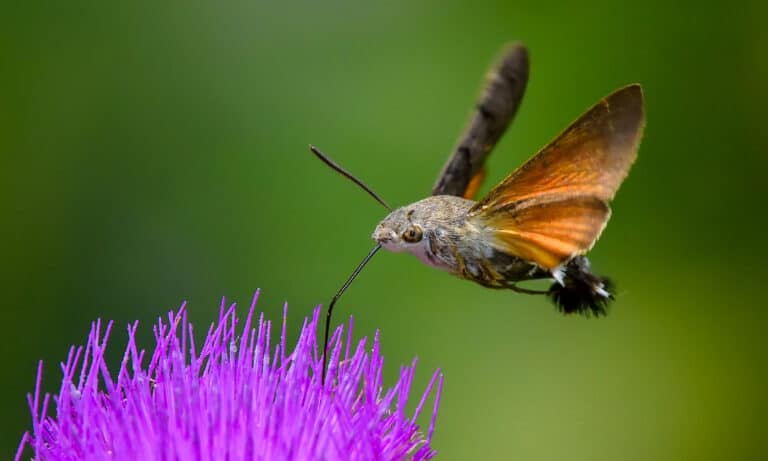
Despite this insect’s terrifying name, it makes the most adorable squeaking sound. Scientists think this sound may deter or confuse predators. When threatened, the death’s head hawkmoth emits a sound similar to a squeaky toy, which scientists believe helps to confuse predators. Check out the video above and hear for yourself.
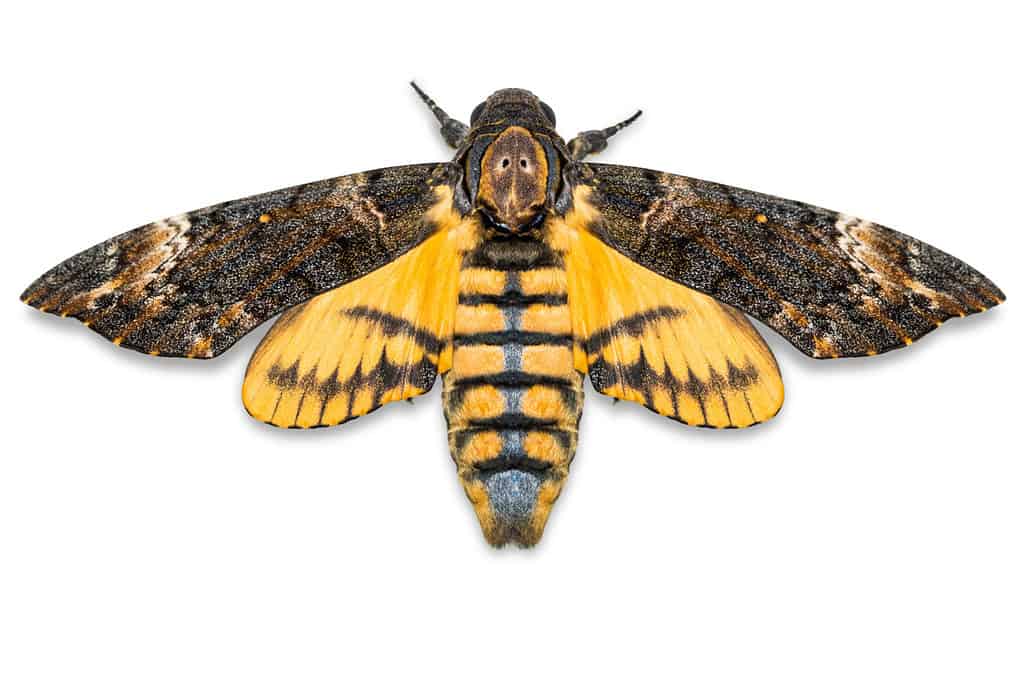
The death’s head hawkmoth emits an unusual squeaking sound.
©Matee Nuserm/Shutterstock.com
Where Do Death’s Head Hawkmoths Live?
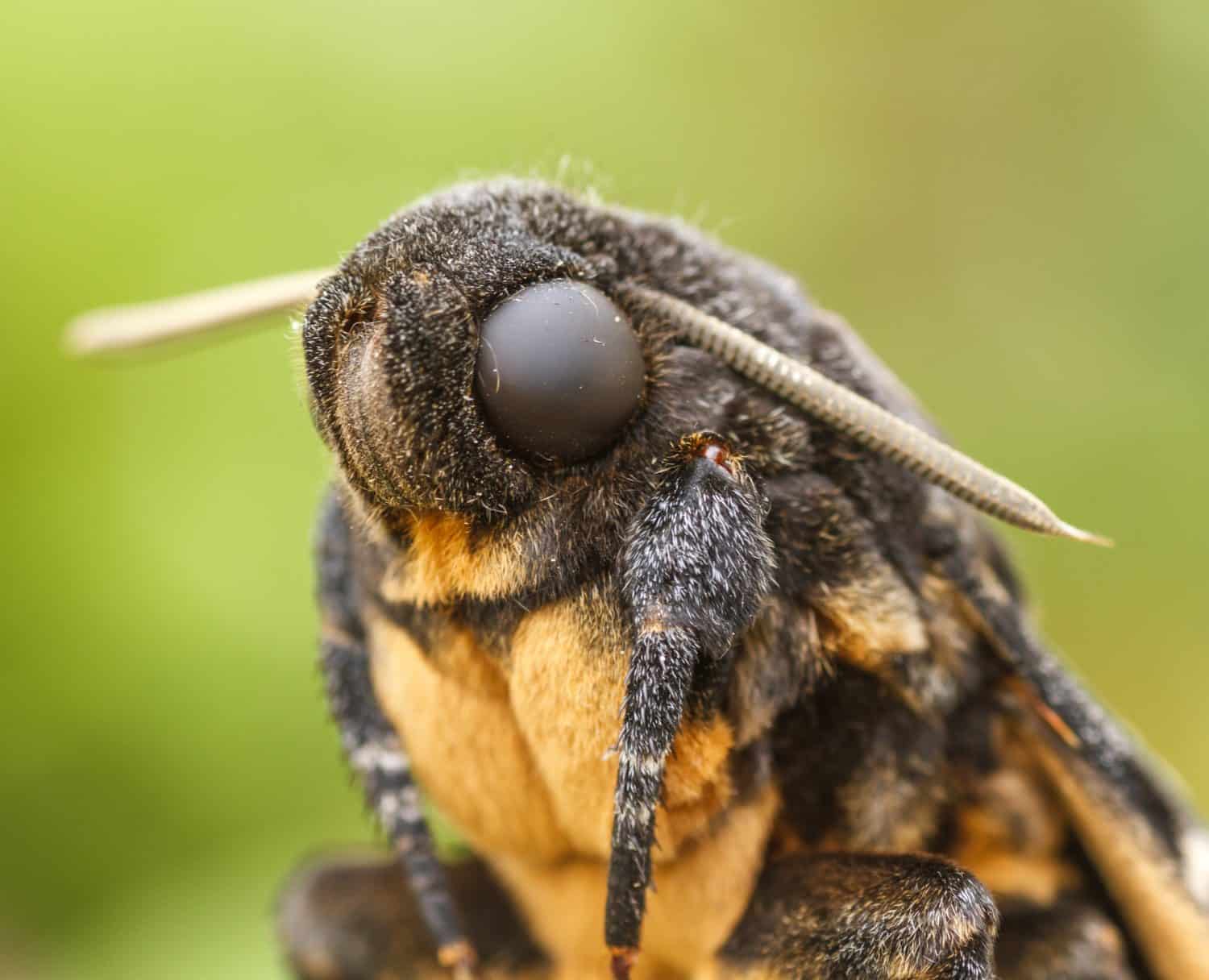
The term ‘death’s head hawkmoth’ refers to three species of moth in the genus Acherontia. These large insects have wingspans that range from about 3 to 5 inches, depending on the species. The caterpillars are also large, with the African hawkmoth caterpillar reaching nearly 6 inches in length.
Three Species of Death’s Head Hawkmoth:
- African or European death’s head hawkmoth (Acherontia atropos): Found in Africa and parts of Europe
- Lesser death’s head hawkmoth (Acherontia styx): Found in Asia and the Middle East
- Greater death’s head hawkmoth (Acherontia lachesis): Found in South and East Asia
How Did They Get Their Terrifying Name?
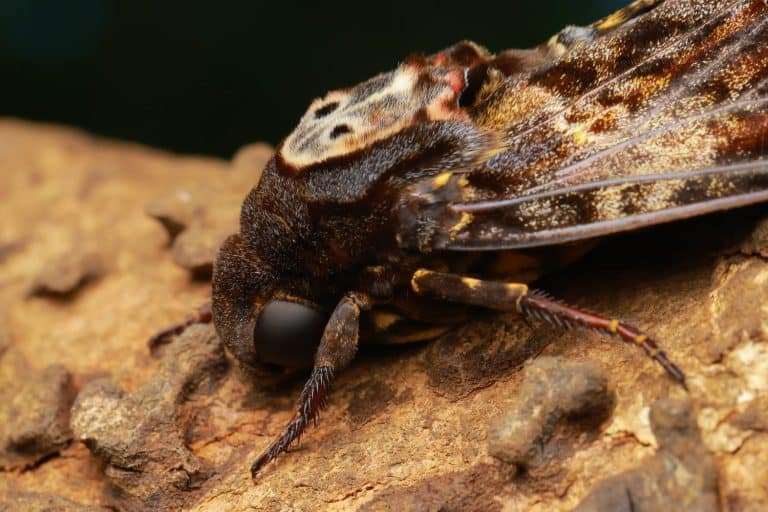
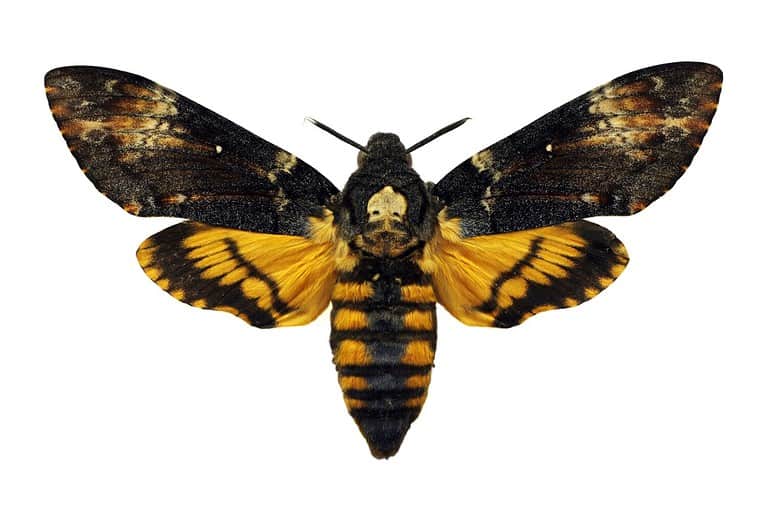
It’s easy to recognize a death’s head hawkmoth by the distinct pattern on its back. The moth has what appears to be a human skull on its thorax. This, along with its gloomy brown and pale yellow coloring, likely contributed to the moth’s supernatural reputation.
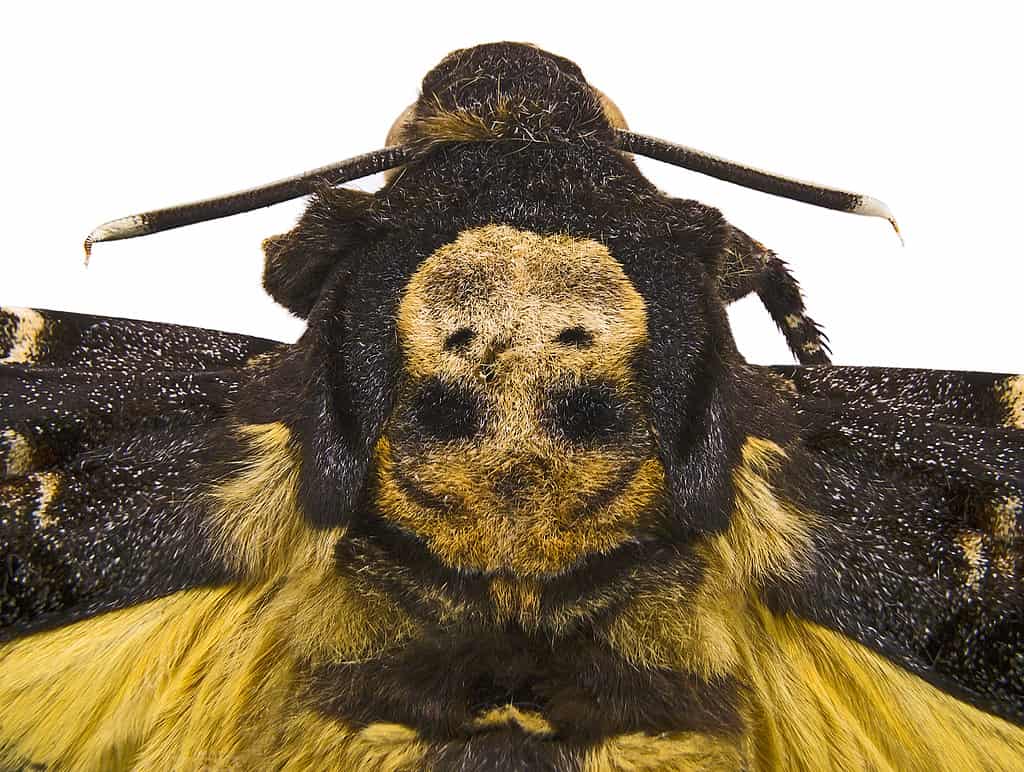
The death’s head hawk moth has the eerie pattern of a skull across its back.
Folklore surrounding the moth tells tales of it being a harbinger of death. The scientific name, Acherontia, comes from the mythological Greek river of the dead (Acheron). The African death’s head hawkmoth (A. atropos) is named after Atropos, one of the three Fates in Greek mythology.
How Does the Death’s Head Hawkmoth Make Its Squeak?
While many insects make sounds by rubbing external body parts together—such as crickets rubbing their wings to produce a chirp—the death’s head hawkmoth produces its squeak internally.
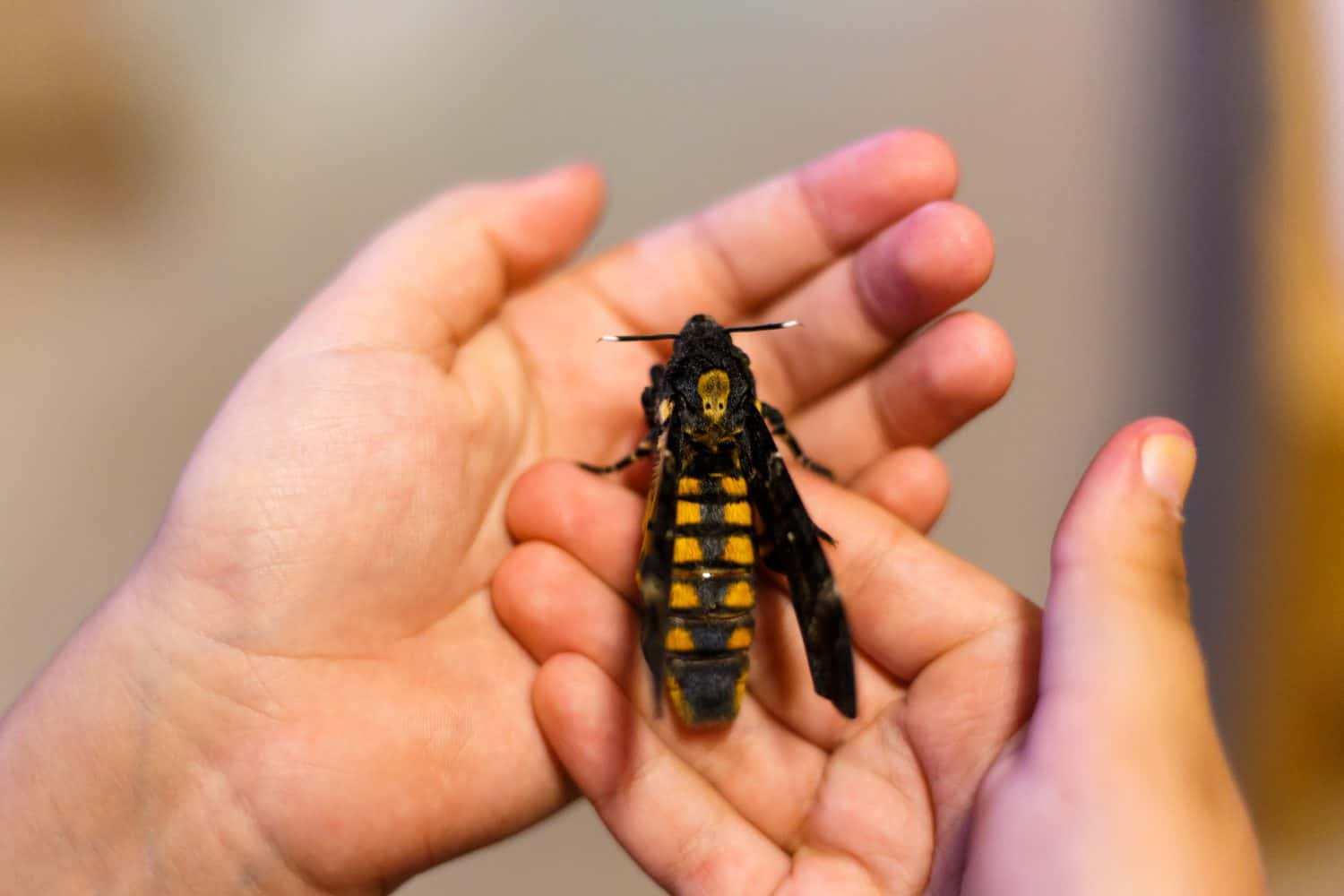
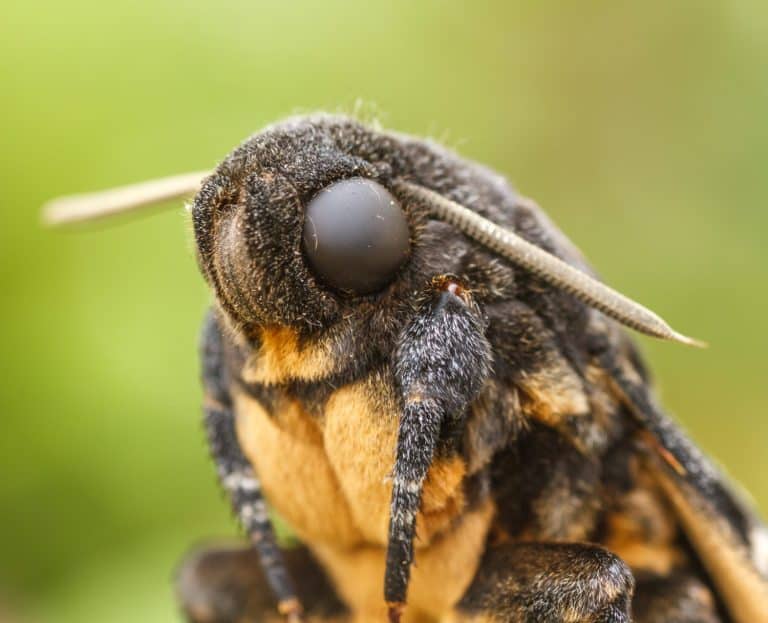
Death’s head hawk moths are harmless to humans.
©Rada No/Shutterstock.com
A little over a decade ago, scientists studied the moth’s unusual method of generating sound. They confirmed that the moth uses rapid movements in a two-part system, similar to how an accordion works.
When threatened, the moth sucks in air, causing the epipharynx (a flap between the mouth and throat) to vibrate rapidly. The moth then opens the flap and expels the air, creating a second sound. This entire process occurs in less than a fifth of a second, according to the study.
Are Death’s Head Hawkmoths Dangerous?
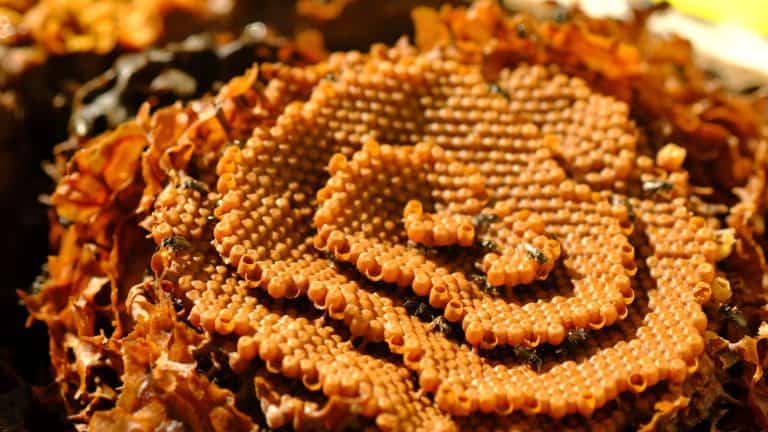
Unless you’re a bee, death’s head hawkmoths are completely harmless. Even then, while they are known to raid beehives and steal honey, causing minor disturbance or damage to the hive, they do not typically destroy beehives.
Researchers believe the moths may use their high-pitched squeaking sounds to mimic those made by a queen bee. If so, this strategy may help calm the bee colony, allowing the moth to steal honey without being attacked.