
Quick Take
- Atlas moths live only 1 week in their winged form.
- Rare specimens command close to $1,000, mainly due to their beauty.
- Lacking functional mouthparts, adult Atlas moths rely entirely on energy reserves stored during their caterpillar stage.
- Because adults live only about a week, breeders must monitor emergence closely to preserve specimens in prime condition.
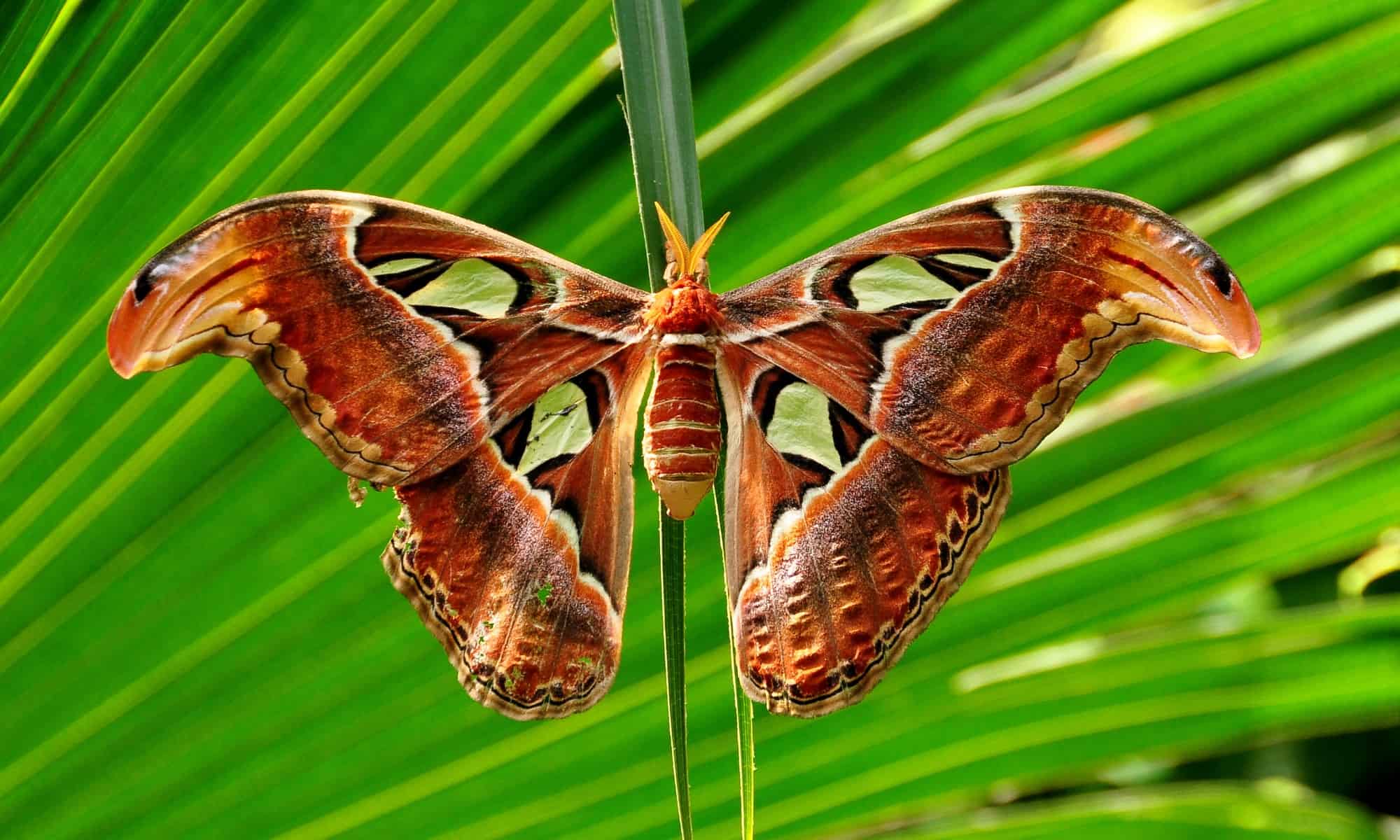
The only guarantee in life is death. It comes for us all, one way or another, but some creatures seem to get the cruelest end of the stick. Atlas moths have some of the most stunningly decorated wings—like handcrafted, finely polished wood in the shape of a cobra’s face—but that grandeur doesn’t last long. Like a star that burns bright, Atlas moths are quite literally born to die.
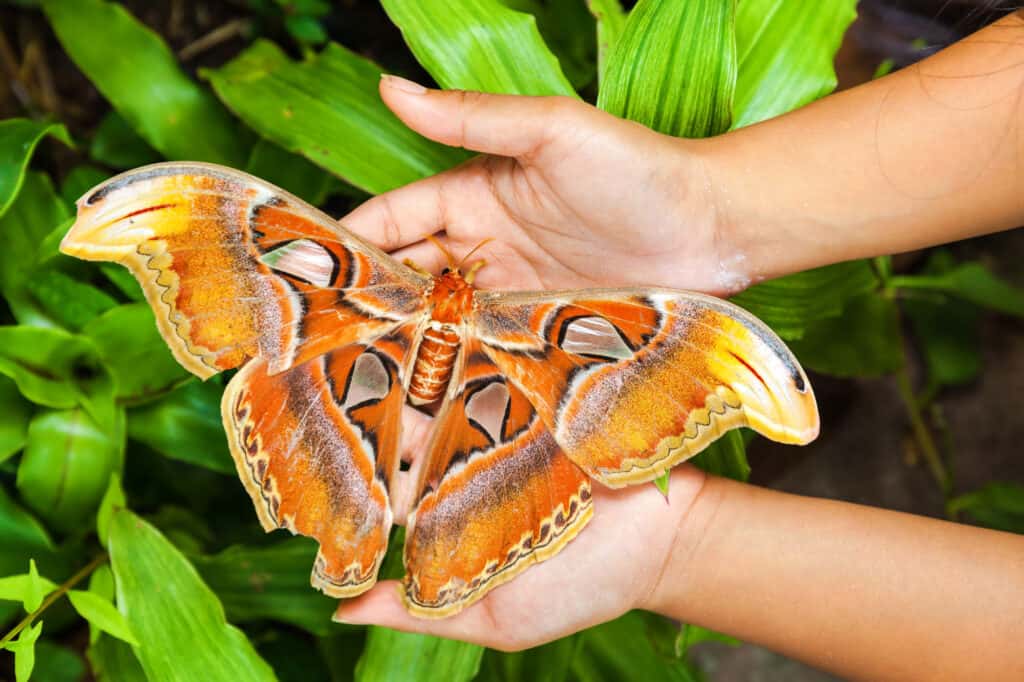
Atlas Moths are found in Southeast Asian countries such as Borneo.
©Cocos.Bounty/Shutterstock.com
Atlas moths, which lack mouths, are almost more like porcelain dolls than living creatures. They cannot eat or drink. Even their magnificent wingspans only exist in their final form, which lasts a few short days. Whether you consider them one of nature’s cruel jokes or a true testament to the price of beauty, these briefly existing moths command serious money at auction. Let’s learn more about Atlas Moths, their fleeting, tragic lives, and why people are willing to buy them for hundreds, if not thousands, of dollars.
Atlas Moth Background
First described by Carl Linnaeus in 1758 as Phalaena atlas, the species was later placed in the genus Attacus. Atlas moths (also known as Attacus moths) are among the largest saturniid moths native to tropical forests of South and Southeast Asia, including India, Sri Lanka, southern China, and Indonesia. Easily one of the largest members of the winged insect order Lepidoptera, Atlas moths have wingspans up to nine and a half inches, making them among the largest moths in the world by wingspan and overall wing surface area. Only a few other moths are bigger, including white witches and Hercules moths. As with most silk moths, female Atlas moths are considerably larger and heavier than males. Males, however, have much wider antennae.
Habitat-wise, these moths are usually found in the tropical and subtropical forests across South and Southeast Asia, particularly in countries like Borneo. Interestingly, Atlas moths are often mistaken for a few other species in the genus Attacus. These include Attacus taprobanis, which is native to southern India and Sri Lanka, and has a very similar morphology to Atlas moths. There are even several New World species that are mistaken for Atlas moths, including members of the genus Rothschildia.
Growth Versus Longevity
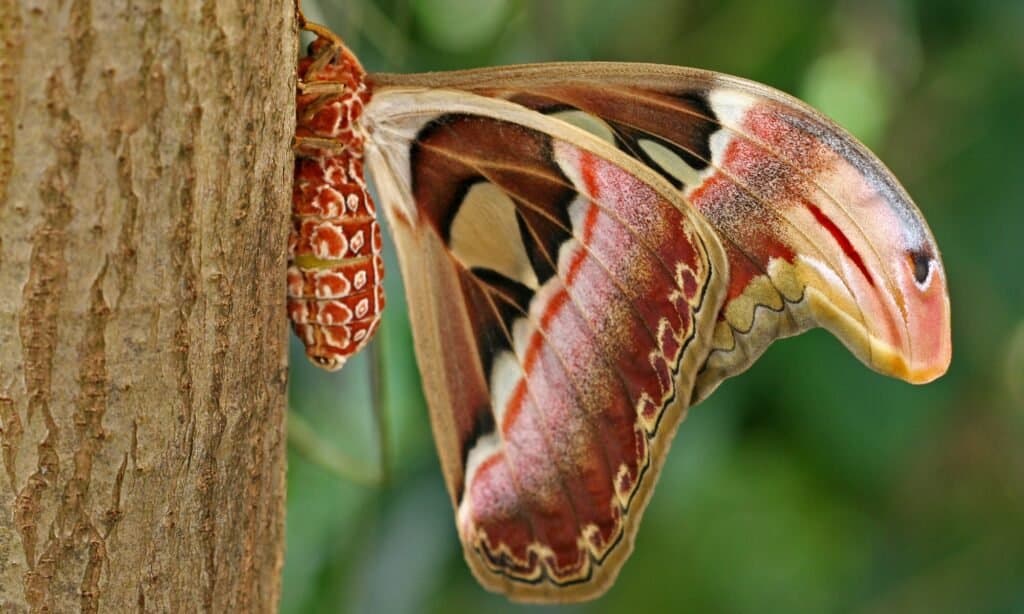
Atlas Moths lack mouths, which means they never eat or drink during their short lifespans.
©iStock.com/Rainbohm
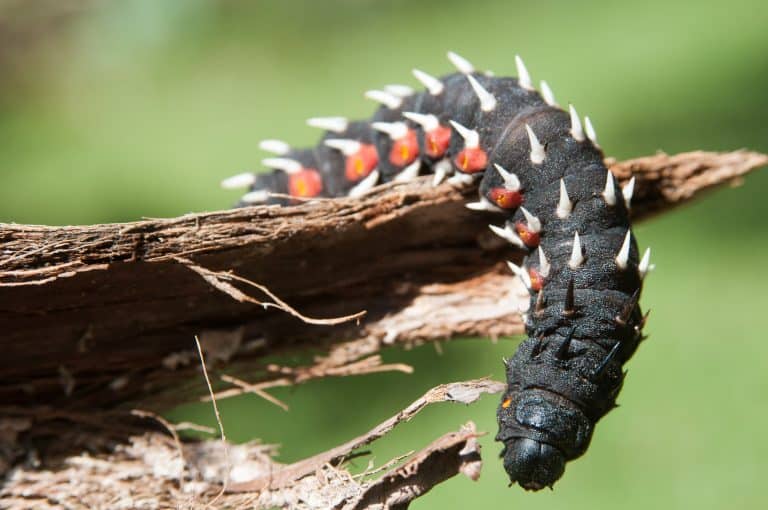
The life of an Atlas moth starts normally enough. Born out of eggs kept on the underside of food plants, the Atlas caterpillars hatch and eat their own eggshells before moving onto vegetable matter from citrus, cinnamon, and guava trees. In fact, the caterpillars are serious eating machines, gorging themselves on trees for weeks to build up the necessary fat reserves. During this time, they can grow up to four and a half inches long and over two centimeters wide. They often have white, fleshy spines on their backs, as well as a large green spot surrounded by an orange ring on the bottom of their abdomens.
Once the caterpillars reach their maximum length, they begin to pupate. This involves spinning a cocoon interwoven with leaves and attached to a twig. It takes about four weeks, depending on environmental factors, for adult Atlas moths to emerge.
Short and Sweet
Once the adult moths taste fresh air, the countdown to death begins. They lack mouths, which means they can’t eat or drink, essentially rendering them organic batteries. By this stage, Atlas moths are so large that they rely entirely on fat reserves accumulated during their caterpillar stage. Atlas moths only live five to seven days, and at most two weeks. During this time, they must complete a singular mission: mating. Male Atlas moths use their large antennae to find female pheromones, sometimes from miles away. Once the deed is done and eggs are laid, Atlas moths simply die. They may be beautiful looking, but only for a few days.
Worth Every Penny
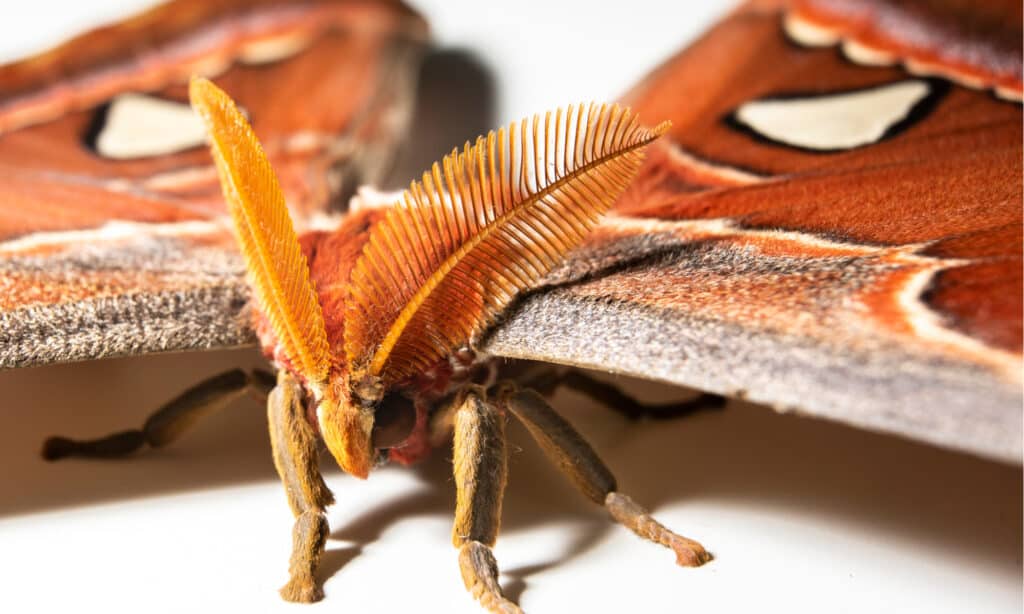
Atlas Moths are a prized specimen for taxidermy collections.
©Lukas_Kozlik/Shutterstock.com
This fleeting, ephemeral, and statuesque lifespan holds great value to collectors, decorators, and artists. In fact, every part of the Atlas Moth is valuable on the open market. Their cocoons are sold to hobbyists and butterfly houses, often so people can witness adult moths emerge. Once a mature adult Atlas moth in perfect condition dies—known as an A1 specimen—it is dried, preserved, and sold to the highest bidder. If you see a preserved Atlas moth, it is most likely mounted in a professional shadow box. In recent years, these moths are sometimes featured in “Cottagecore” and “Dark Academia” aesthetic displays.
Unlike other moths, Atlas moths live such brief lives that most specimens are sourced from farms. These are the only places that can consistently track and preserve them during their fleeting lifespans. Such farms may reduce collection pressure on wild populations, though the conservation benefits are not clearly established.
People may pay anywhere from $20 to $300 for preserved Atlas moths, with rare or exceptionally large specimens sometimes fetching higher prices. Not only do their wings contain some of the most spectacular patterns found in nature, but they also represent rarity. The commercial buying and selling of unique Atlas moth specimens stands in stark contrast to the sea of mass-produced goods.