
Quick Take
- The peacock butterfly was crowned Britain’s favourite butterfly after beating 59 other native species in a nationwide public poll. See the voting results →
- The peacock butterfly's striking rusty-red wings and bold eye spots help deter predators while making it one of the UK’s most recognizable butterflies. Discover its surprising noise →
- Peacock butterflies are widespread across Britain and are commonly seen in gardens, parks, woodlands, and hedgerows. Learn about its hibernation →
No insects are more closely associated with summer than butterflies, and the UK recently crowned the nation’s favorite species. The winner is the peacock butterfly, which is a familiar sight in parks and gardens across the country. This colorful butterfly beat 59 other native species in a nationwide public vote. Keep reading to learn why it’s loved so much!
How Britain Chose Its Favourite Butterfly
Choosing the nation’s favorite butterfly is no easy feat, so the Butterfly Conservation asked the British public to vote for their favorite from sixty native species. More than 20,000 votes were cast, making it one of the most significant butterfly polls in the UK.
Rather than choosing any of the more exotic-looking butterflies, the poll revealed that people favor butterflies that are regular visitors to gardens and parks. The stunning peacock butterfly was chosen as the winner, followed by the orange-tip, red admiral, holly blue, and brimstone.
Surprisingly, some of the species that are highly prized by butterfly enthusiasts ranked much lower in the poll. The largest butterfly in Britain, the swallowtail, finished ninth, while the pretty purple emperor only managed the fifteenth position.
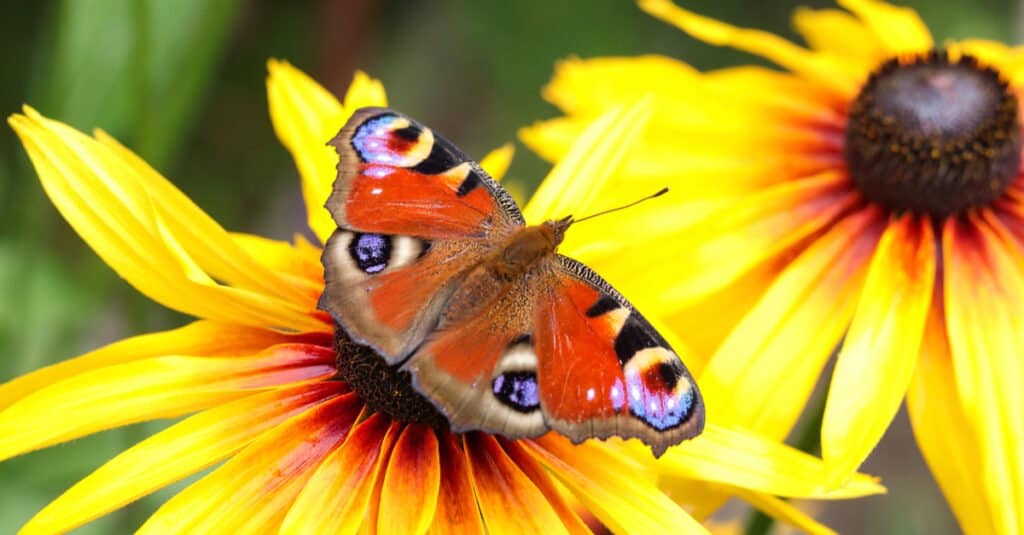
The peacock butterfly is the UK’s favorite butterfly species.
©iStock.com/Mariia Romanyk
What Makes the Peacock Butterfly So Distinctive?
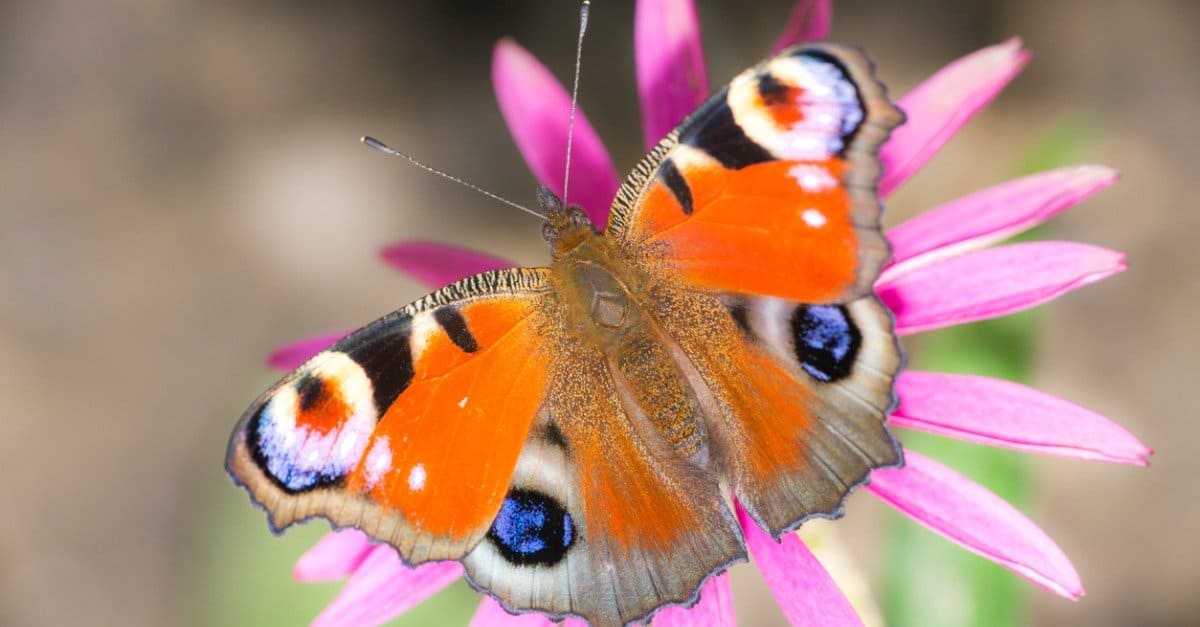
The peacock butterfly (Aglais io) is a brightly colored butterfly that inhabits Europe and Asia. They are fairly large butterflies and have a wingspan of around 2.5 to 2.7 inches. Peacock butterflies have rusty red wings, with a large, stunning eyespot on each one. These eyespots closely resemble the markings on a peacock’s feathers, which is how these butterflies earned their common name.
The eyespots are located on the wingtips and are typically blue, yellow, and black. The main purpose of these eyespots is to act as a deterrent against predators, such as birds. This is because they actually resemble eyes. This discourages would-be predators from preying on the butterfly, as they think the eyes belong to a much bigger animal than it really is. However, while the upper side of their wings is brightly colored, the underside is usually dull brown or black. This coloration helps with camouflage, as it closely resembles a dead leaf. Unusually for butterflies, peacock butterflies can make a faint hissing noise by rubbing their forewings and hindwings together, which may help deter predators.
Even the caterpillars of peacock butterflies are distinctive; they have a shiny black appearance with white dots on each segment. They grow to a little over 1.5 inches long and have several rows of barbed spikes, which also help deter predators.
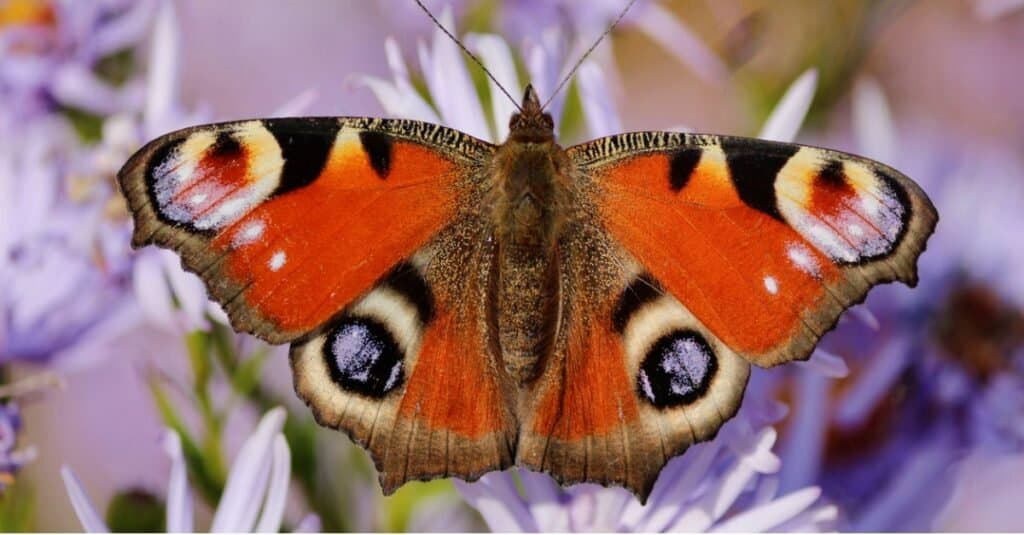
Peacock butterflies have distinctive eyespots on their wings.
©iStock.com/Svetlana Sinichkina
Why Britain Loves the Peacock Butterfly
Peacock butterflies haven’t been chosen as Britain’s best just because they’re pretty. Instead, peacock butterflies are some of the most common butterflies seen during the summer. They tend to hibernate until the spring, waking up in March or April. Peacock butterflies live in a wide range of habitats across the country. However, they are most commonly seen in gardens, parks, hedgerows, and woodlands from the spring until the autumn, when they go back into hibernation again. Many of them hibernate as adults in dark places, such as porches, which is why they’re some of the first butterflies seen in the spring.
Peacock butterflies can be found taking nectar from a variety of flowering plants, while their larvae prefer stinging nettles. Peacock butterflies are also strong, capable fliers, and the males often engage in territorial displays with each other, such as spiraling together in the air. These stunning displays are likely one of the reasons that they are such a popular butterfly in Britain.