
Quick Take
- With at least 60 distinct species, piranhas vary in size significantly.
- Piranhas are freshwater fish that are native to rivers and lakes in South America.
- The red-bellied piranha is the most common pet piranha and the species most likely to bite a human.
There are between 30 and 60 distinct species of piranha, which are members of the family Serrasalmidae. Piranha are found in South American freshwater rivers and lakes, although they have been introduced to other regions, including Bangladesh, China, and parts of the United States. Piranhas vary in size, from smaller species like the 6.5-inch Wimple piranha (Catoprion mento) to large, aggressive predators like the black piranha (Serrasalmus rhombeus), the largest modern species of piranha, which can be over one foot long. While they have a reputation as vicious killers, piranhas are generally cautious and only attack when they feel threatened, are defending their nest, or are deprived of food. Continue reading to discover whether piranha are dangerous and what threats they pose to humans.

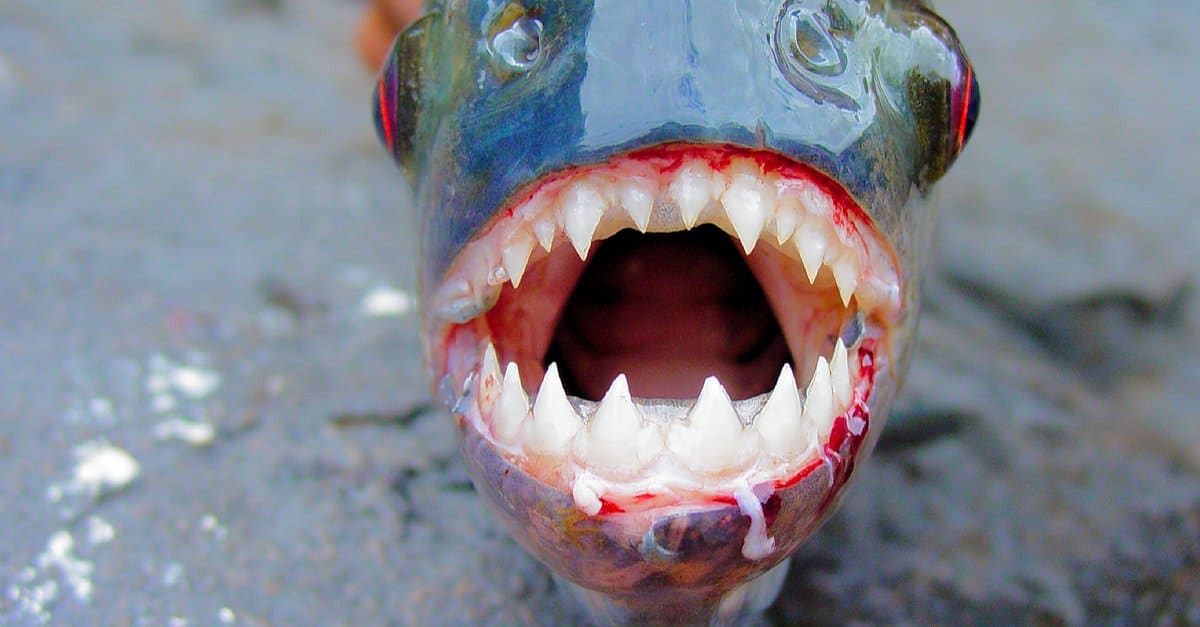
Piranha teeth are angled sharply inward, interlocking perfectly like a zipper when the jaw closes.
©guentermanaus/Shutterstock.com
Piranhas: Overview
Piranhas are freshwater fish native to South America that possess razor-sharp teeth for tearing apart their prey. These omnivorous fish have a reputation for being dangerous predators. However, not all species of piranha are dangerous to humans. In fact, most piranha species pose no threat to humans. Although all piranhas possess sharp teeth and can bite, attacks are rare and, in most cases, involve the notorious red-bellied piranha (Pygocentrus nattereri).
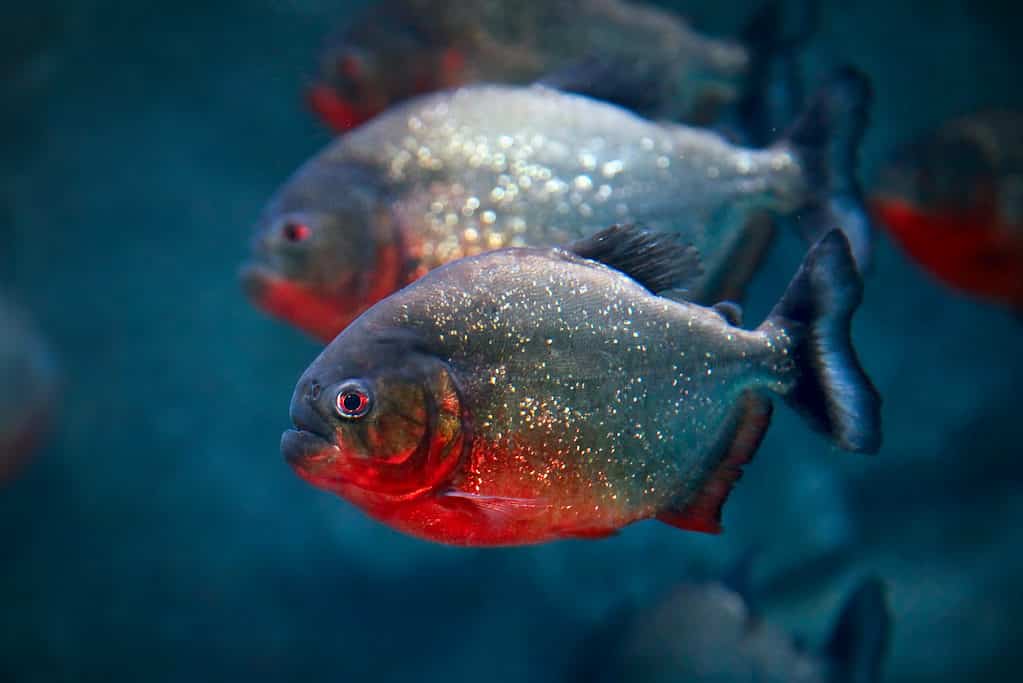
The red-bellied piranha is the species most likely to bite swimmers.
©Tatiana Belova/Shutterstock.com
The red-bellied piranha has a shimmery, silvery body marked with red on the underside, specifically the belly, chin, and throat, which often intensifies in color with age. Adults may also display reddish pectoral fins.
The red-bellied piranha is also the most common piranha pet species. Red-bellied piranhas have been introduced into U.S. waterways through the exotic pet trade, with specimens frequently caught or spotted in Florida, Texas, and California as a result of illegal dumping by their owners. Although no permanent breeding populations have been established, there is concern about their potential to become invasive. Due to this risk, individual ownership of piranhas is prohibited or restricted in several states.
What Do Piranhas Eat?
Most piranhas are opportunistic omnivores, with many species being primarily carnivorous, while some are almost exclusively herbivorous.
Although piranhas are capable hunters, they frequently scavenge for carrion, insects, fish, and plant matter. While many piranhas prefer protein, they regularly supplement their diet with plants, which provide necessary fiber.
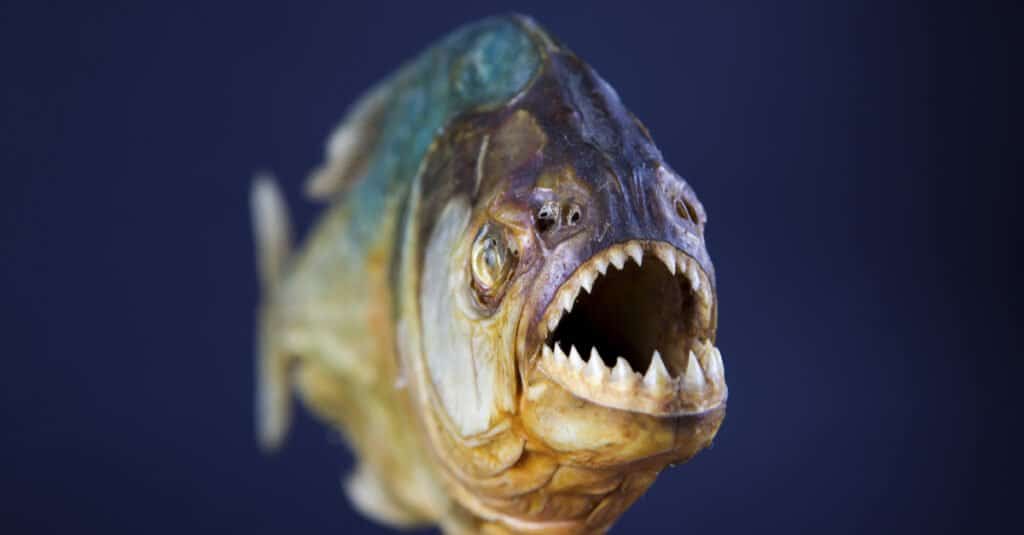
Although their appearance may be frightening, piranhas do not pose a major threat to humans.
©simongee/Shutterstock.com
Although popular culture often depicts them as aggressive, frenzied predators that hunt large, healthy animals, in reality, piranhas typically target weak, injured, or dead animals, playing a vital cleanup role in their ecosystems.
Are Piranhas a Threat to Humans?
Piranhas pose little threat to humans; they are generally wary and tend to avoid people whenever possible. While bites do occur, they are typically isolated nips to the hands or feet when the fish are defending their nests or food is scarce.
There are no officially recognized human fatalities caused by active piranha attacks. In all documented cases where humans were eaten by piranhas, the individuals were already deceased.