
Quick Take
- Viruses are ruthless invaders in human cells. So why do they suddenly play nice inside mosquitoes? See the contrast →
- Scientists discovered an unusual viral behavior in mosquito cells that helps explain how these insects carry viruses without becoming seriously ill. Explore the discovery →
- The same trait that makes viruses deadly to us is the very thing that would destroy their ability to spread, and mosquitoes somehow exploit that paradox. Understand translational repression →
- Understanding why mosquitoes survive viruses could be the key to making sure those viruses never reach us at all. See prevention strategies →
As they say, the difference between medicine and poison is the dose. The difference between viral transmission and infection, it appears, has to do with the restraint found in the virus itself. Mosquitoes have long been known and feared as potent transmitters of deadly viruses. Yet, time after time, these insects manage to pass along pathogens without being affected themselves. A new study may help explain how mosquitoes transport deadly viruses without suffering major harm themselves.
Nature craves a balance, and it appears this balance extends to the transmission of deadly, damaging viral pathogens. A team of researchers at Pompeu Fabra University in Spain found that while viruses immediately seek full control of human cells to do damage, they exercise a curious kind of restraint while lingering in mosquito cells. This gives them just enough time to spread effectively without outright killing their well-traveled hosts. Let’s learn more about this fascinating new study, how scientists discovered this aspect of viral transmission, and what it tells us about the evolutionary strategy of something half-alive, half-dead like viruses.
A Global Problem
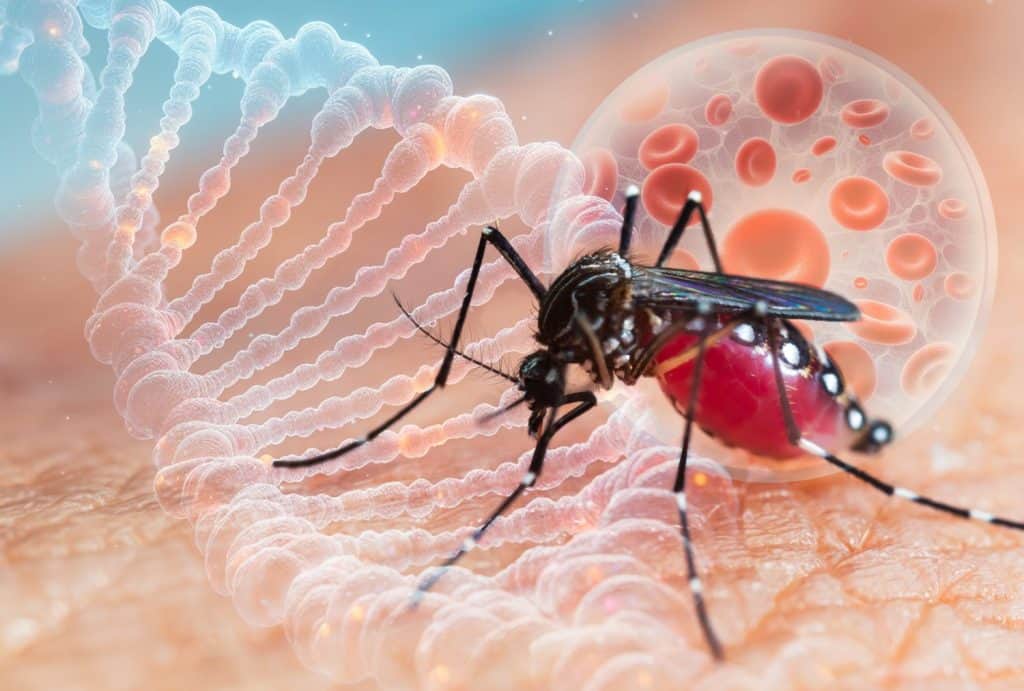
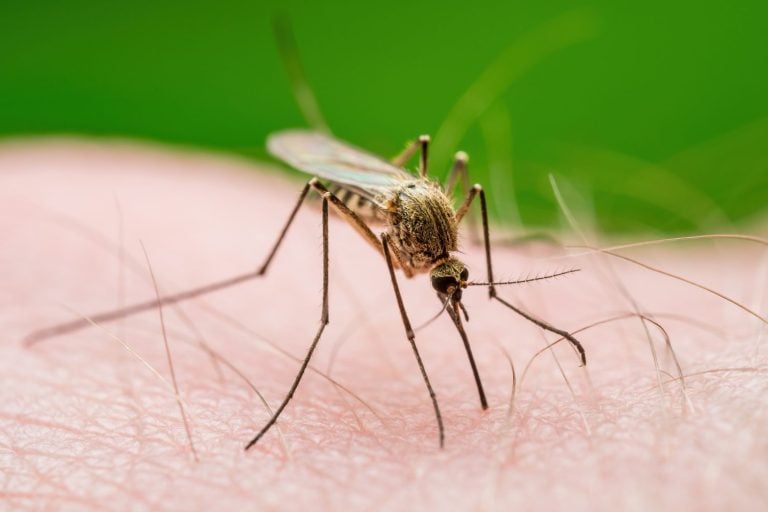
Viruses once confined to tropical regions are making their way across the world due to globalization and climate change.
©frank60/Shutterstock.com
Mosquitoes and the viral infections they transmit have always been a problem. In recent decades, however, their ability to inflict damage on a widespread scale has become a public health concern, if not an outright crisis. Diseases once restricted to more tropical regions, like West Nile Virus, malaria, or dengue fever, have managed to spread far and wide thanks to globalization and climate change. European countries like Spain have recorded incidents of these tropical diseases at a growing rate.
Such an increase in viral transmission has led some researchers to wonder just how these diseases are making their way across the world so easily. While mosquitoes are common carriers of viruses like West Nile, the manner in which they transmit these viruses without incurring any damage themselves remained a mystery. At least, until now.
Mosquitoes show an uncanny invulnerability to viruses. Although mosquitoes become infected with viruses for life after biting an infected person and can transmit the virus to each new person they bite, the mosquitoes themselves do not suffer significant harm. Researchers at Pompeu Fabra University in Barcelona, Spain, set out to discover how mosquitoes can spread diseases that cause thousands of deaths in humans without suffering apparent ill effects themselves.
Signs of Life
Viruses are curious entities: neither truly alive nor dead, but something in between. If anything on Earth fits the definition of a zombie, it’s a virus. They exist in a strange gray area between life and non-life. Viruses are inert—though destructive—packages of genetic material that do not move or metabolize inside their protein shells. However, that changes when they find a host.
Once a virus touches a compatible host cell, it seems to come alive with a singular, belligerent purpose: to take over. When a virus attaches to a human cell, it tries to completely hijack the cell and replicate itself a thousand-fold. It triggers a massive inflammatory response in the human host, resulting in damage, injury, or even death.
This unstoppable urge to replicate, however, is curiously absent inside mosquitoes.
Showing Restraint
In a new study published in the journal PLOS Biology, researchers from the Universitat Pompeu Fabra Laboratory of Molecular Virology showed that viruses approach mosquito cells quite differently than human cells. The team, led by Juana Díez, found that viral genetic material accumulates in mosquito cells but does not produce proteins. Called translational repression, this phenomenon allows a virus to keep replicating without damaging the host mosquito cell.
As the study’s joint first author, Marc Talló, said in a statement to EurekaAlert, “It’s as if the virus lowered the volume of its own activity.” A balance remains in effect so that the virus can replicate enough to ensure its eventual transmission without overloading its precious delivery method—the mosquito. Viruses cannot achieve their full replication potential in a mosquito cell. It’s an evolutionary trade-off, one that allows for effective transmission to a more suitable host like a human being. Without this subtle equilibrium, viruses could kill mosquitoes and thereby prevent viruses from being transmitted more widely.
Transmission Prevention Strategies
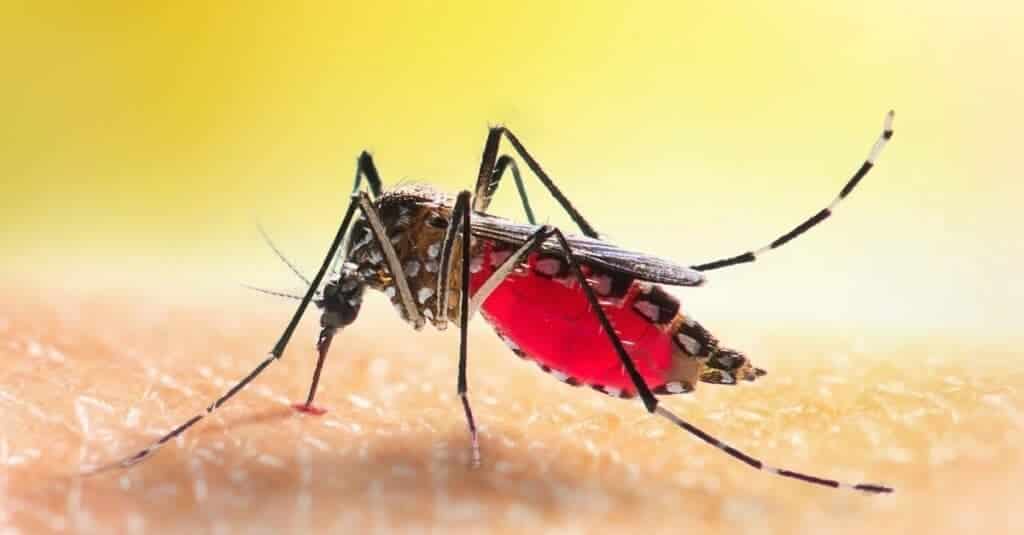
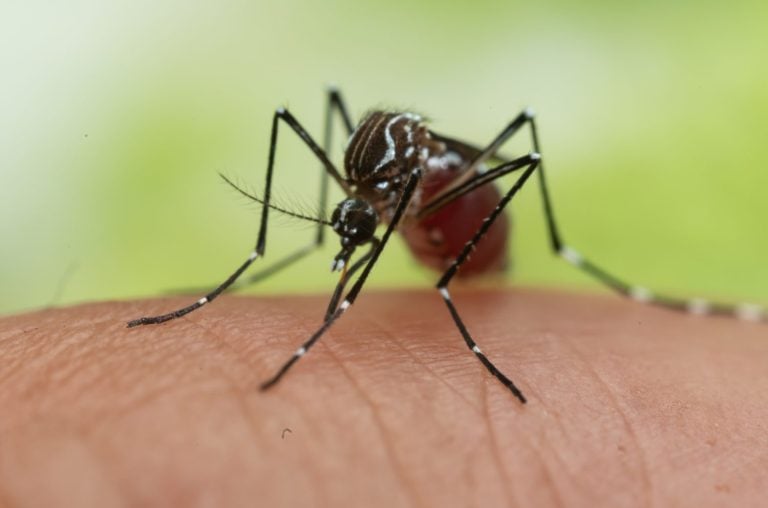
This study is a step toward engineering mosquitoes to be less effective transmission vectors.
©iStock.com/panom
Observing and understanding the different strategies viruses employ to ensure their longevity has implications for the future of transmission prevention in humans. As coordinator of the study, Juana Díez explained in a statement to Eureka Alert that this discovery could help stop viruses in their tracks. She said, “If we manage to alter this balance, forcing the virus to replicate uncontrollably or, on the contrary, blocking its ability to persist, we could stop mosquitoes from acting as transmission vectors.”
While the researchers involved in the study emphasize that such modification of mosquitoes requires further research, this study is a step in the right direction. Additional studies will need to be conducted under real-world conditions. Even so, any progress in combating the global spread of diseases that were once regionally confined could eventually save thousands of lives.
As researcher Mireia Puig said in a statement to Eureka Alert, “This type of research is increasingly an essential part of the response to an emerging threat.”