
Quick Take
- Baby platypuses, called puggles, are born with teeth, but lose them upon leaving the care of their mothers.
- Instead of teeth, adult platypuses have four keratinized grinding pads, which they use to grind their prey.
- Platypuses do not have stomachs.
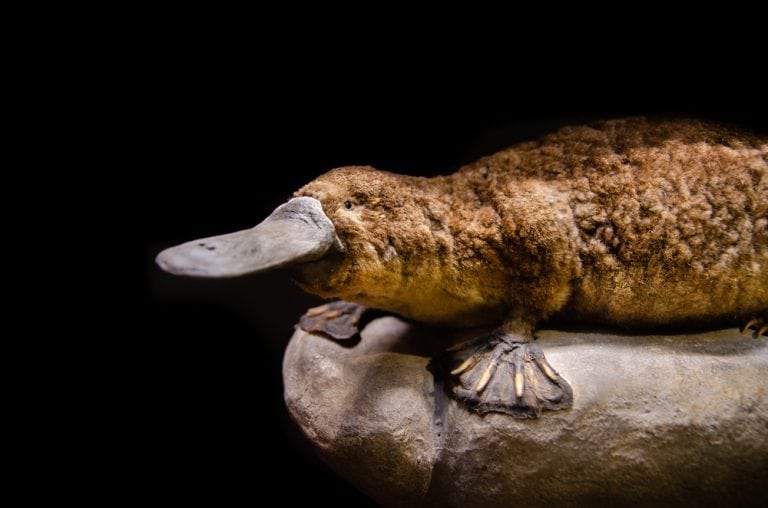
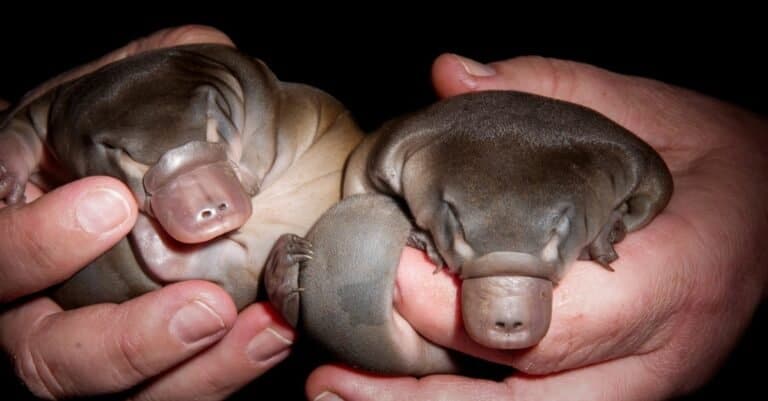
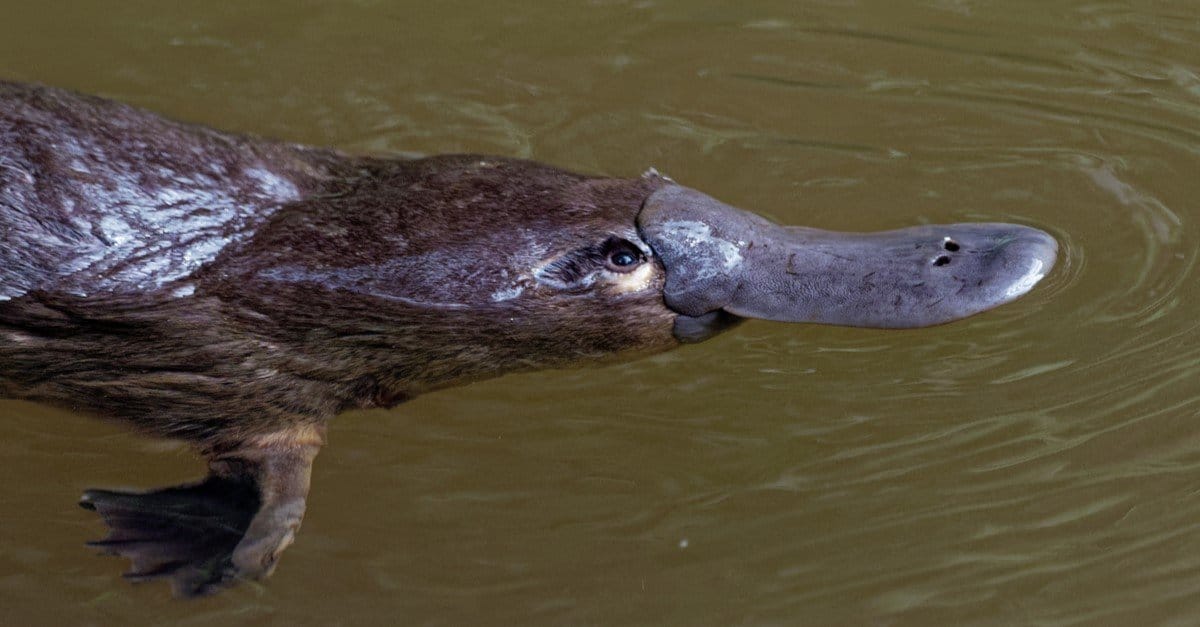
The platypus (Ornithorhynchus anatinus) is perhaps one of the most peculiar-looking animals on Earth. It has a furry body, a duck-like bill, webbed feet, and a beaver-like tail. Despite its ambiguous appearance, the platypus is a solitary egg-laying mammal. They are warm-blooded, have fur, and nurse their young with milk (from skin pores rather than nipples), all key mammalian traits. The platypus is a nocturnal, carnivorous bottom-feeder that hunts in freshwater. It closes its eyes, ears, and nostrils while underwater, relying on the electroreceptors in its sensitive bill to detect prey. The platypus’s diet consists of aquatic invertebrates like insect larvae, worms, and shrimp. The platypus scoops up its prey and stores it in cheek pouches, saving it to eat after surfacing. Although adult platypuses do not have teeth, baby platypuses, called puggles, do. Continue reading to learn about puggle teeth and what adult platypuses have instead.
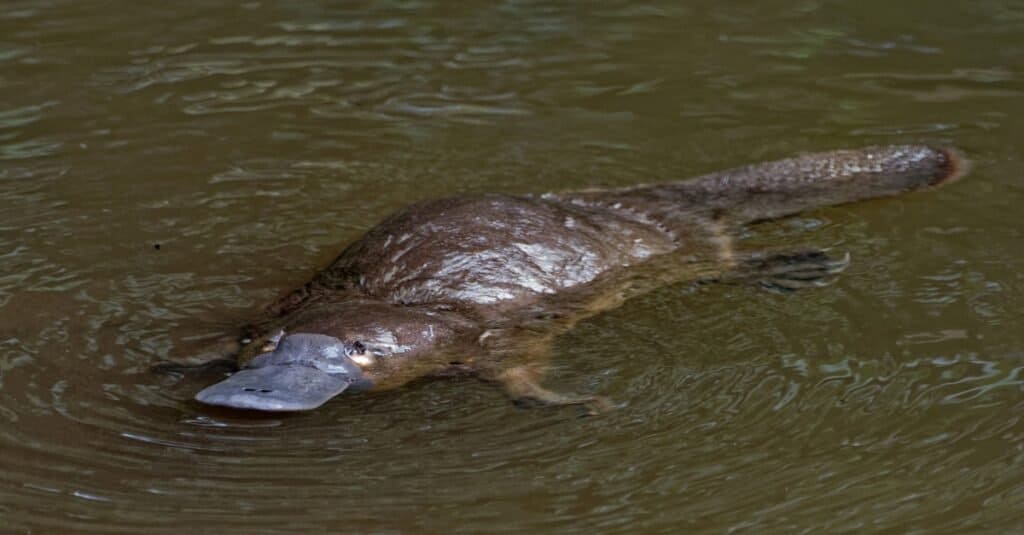
The platypus is one of five extant species of monotremes, a unique group of egg-laying mammals that also includes four species of echidnas.
©Martin Pelanek/Shutterstock.com
Do Platypuses Have Teeth?
Baby platypuses, called puggles, are born with temporary, vestigial teeth that help them break out of their eggs. These teeth include one premolar and two molars on each side of the upper jaw, and two to three molars on each side of the lower jaw. They lose these teeth soon after leaving the care of their mothers, between three and four months of age.
These deciduous teeth are replaced by hard, keratinized grinding pads located at the back of the mouth on both the upper and lower jaws. There are four pads in total: two on the upper part and two on the lower part of the platypus’s bill.
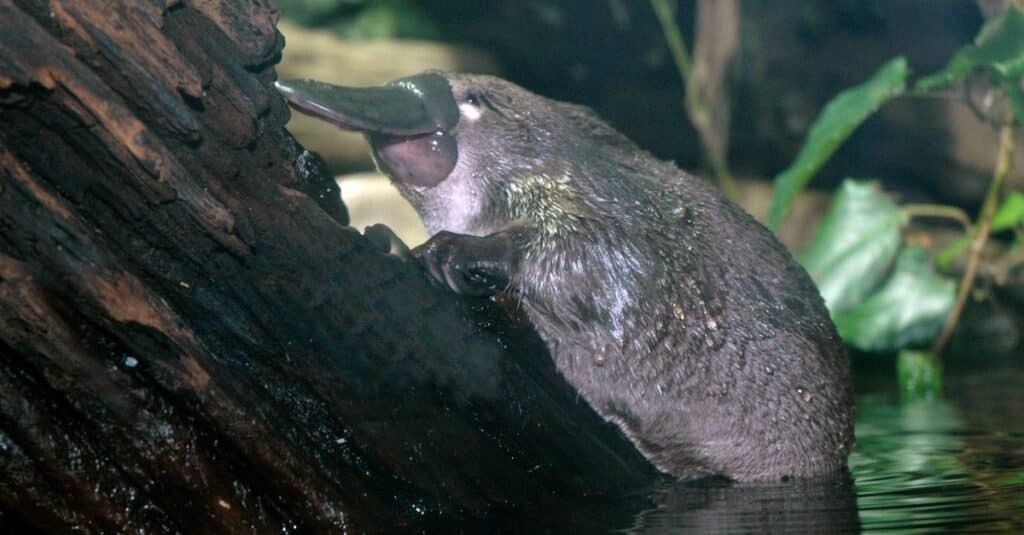
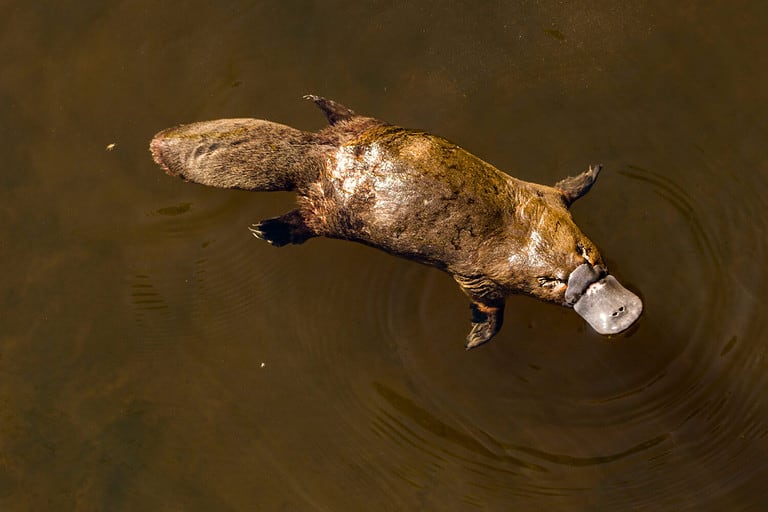
A platypus uses its sensitive bill for foraging.
©iStock.com/Michel VIARD
The pads are made of keratin, the same tough structural protein found in human hair, fingernails, and animal hooves. They are flat, but rough, and function similarly to molars by providing a flat surface on which to mash food.
Like human hair and nails, platypus grinding pads are subject to wear from mashing prey. However, unlike human hair and nails, the platypus’s grinding pads do not continuously regenerate.
What is the Platypus’ Bill Used For?
The platypus’s bill is used for foraging. The platypus hunts for shellfish and worms, scooping prey mixed with mud and gravel from the bottom of the water habitat. Its bill is made up of thousands of optimized nerve endings called electroreceptors. These electroreceptors can detect the tiny electrical currents of potential prey. The platypus hunts underwater with its eyes and ears closed, relying heavily on these receptors.
After searching the riverbed for prey, the platypus returns to the surface with its catch tucked in its cheek pouches. At the surface, the platypus uses its grinding pads, along with bits of gravel and mud, to mash up its food before swallowing.
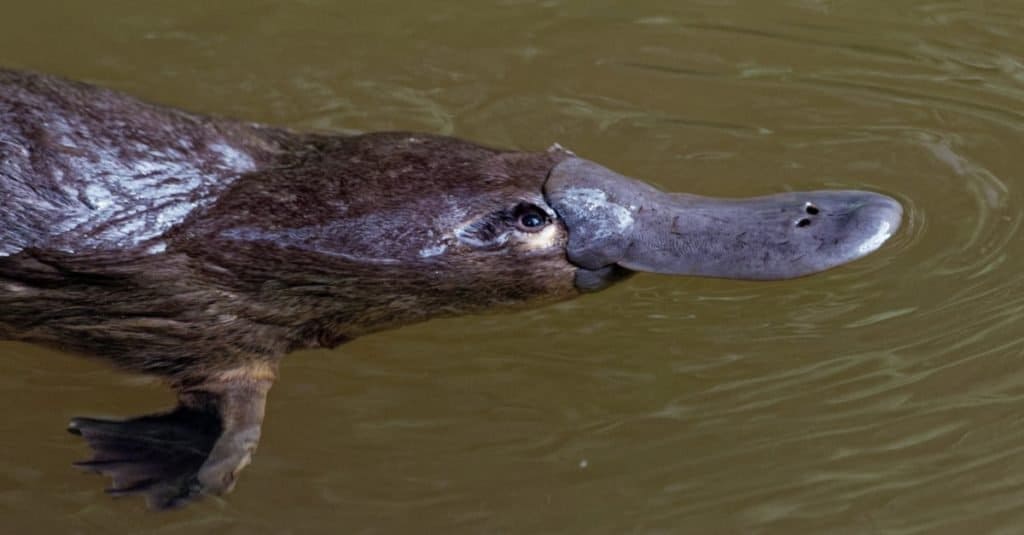
The platypus bill contains two upper and two lower grinding pads instead of mammalian teeth.
©Martin Pelanek/Shutterstock.com
How Does a Platypus Eat and Digest Its Food?
The platypus does not have any teeth because it does not need them. It crushes its food inside its bill with the help of gravel bits and mud pieces collected along with its food from the river bed. Interestingly, the platypus doesn’t have a stomach. Instead, the platypus has a gullet (esophagus) that leads directly to the intestines. Therefore, after the grinding pads break down the food, it travels straight to the intestines.