
Quick Take
- The real reason scientists lack an official name for a baby platypus exposes something startling about how rarely humans have ever actually seen one. Why so few have seen one →
- 'Puggle' is the internet's favorite word for a baby platypus, but its actual origin has nothing to do with platypuses, and scientists refuse to use it. Scientists vs. 'puggle' →
- A platypus mother nurses her young without nipples, and the way she pulls it off is something most people find hard to believe. How nursing without nipples works →
- When the first platypus specimen reached British scientists, many suspected it was a deliberate hoax. Their reasoning was completely logical. Why scientists doubted platypuses →
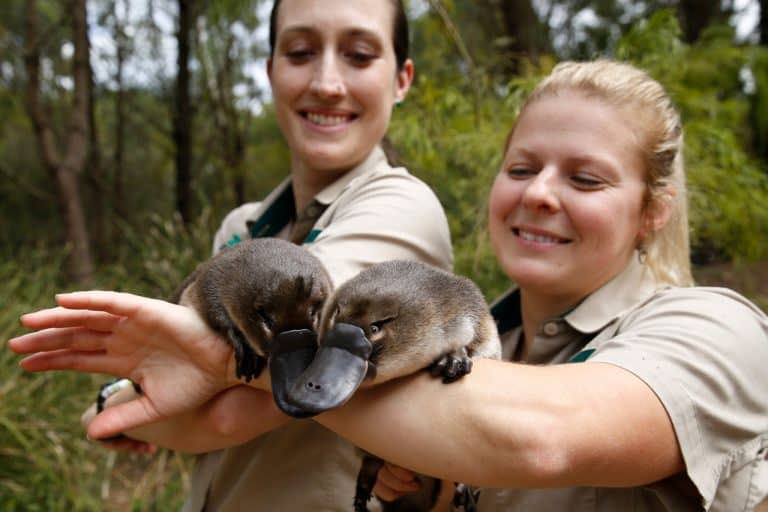
If you’ve ever headed down an internet rabbit hole of wondering what to call a baby platypus, you’re not alone. (Guilty as charged!) And depending on where you look, the answer might be “puggle,” “nestling,” “juvenile,” or even “hatchling.”
Unlike baby kangaroos (joeys) or baby bears (cubs), baby platypuses don’t have a universally accepted name. According to Associate Professor Gilad Bino of the Centre for Ecosystem Science at the University of New South Wales, however, the confusion actually reveals something fascinating about one of the world’s strangest mammals.
“The honest answer to ‘what do you call a baby platypus’ is that there’s no official word at all,” he tells us. How’s that for a biological curveball?
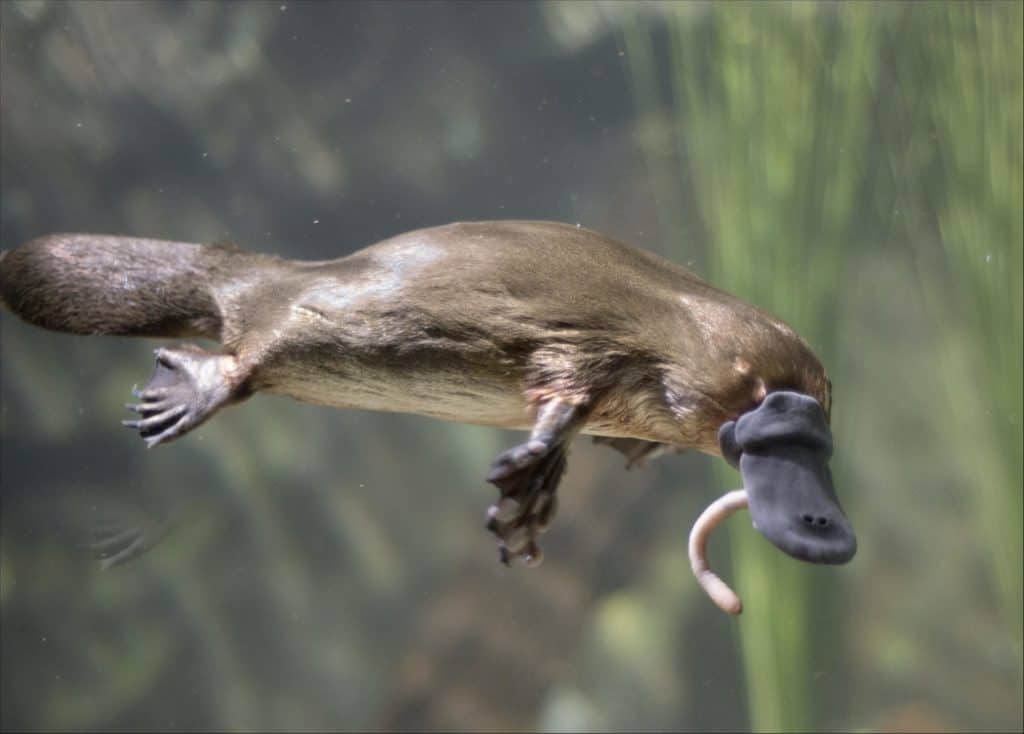
Scientists may disagree on what to call a baby platypus, but there’s no debate that the adult platypus is one of nature’s most unusual mammals.
©John Carnemolla/Shutterstock.com
So, Why Are There SO Many Names for Baby Platypuses?
Part of the confusion comes from the fact that some of the names refer to specific stages of development, while others are just popular nicknames.
“All three get used, but they’re not equal,” says Bino. “‘Puggle’ is the one you see everywhere online, and it’s charming, but it isn’t a scientific term, and it isn’t even strictly a platypus word.” So, while “puggle” may be popular, it hasn’t exactly been accepted by the scientific community.
According to Bino, the term originated in 1979 as the name of a fictional Australian bush animal before later being adopted for baby echidnas (another egg-laying mammal found in Australia and a few other parts of the world). It wasn’t commonly applied to platypuses until the early 2000s.
Meanwhile, scientists use more precise terms. “‘Nestling’ and ‘juvenile,’ on the other hand, are real biological terms,” says Bino.
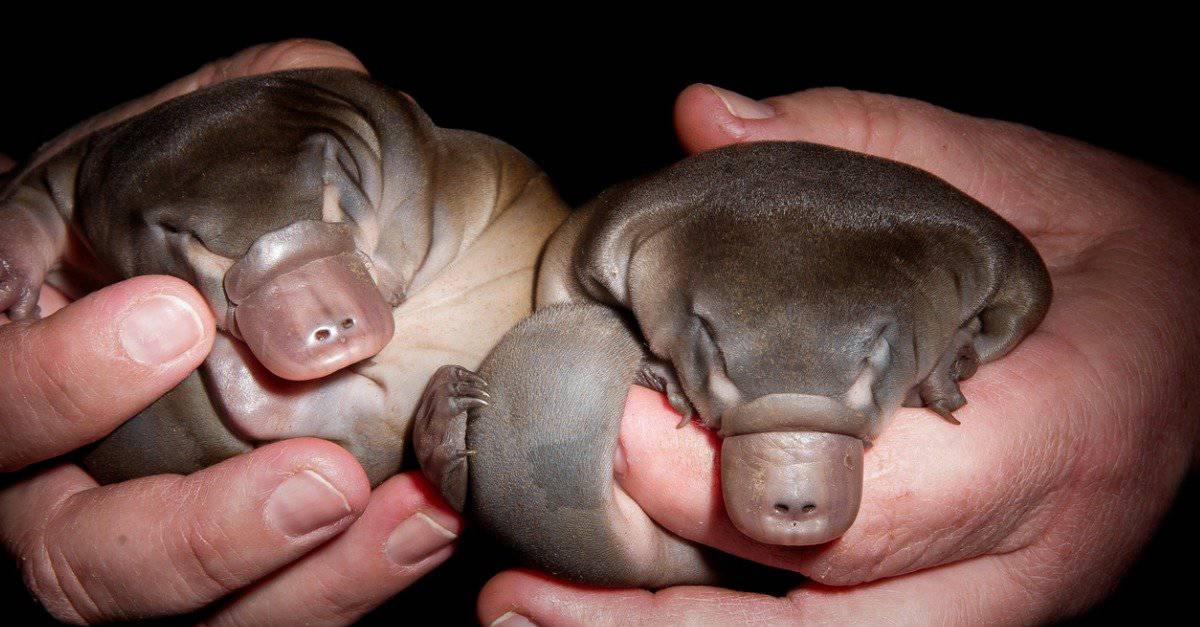
The distinction matters because these words describe different stages in a young platypus’s life. “‘Hatchling,’ ‘nestling,’ and ‘juvenile’ describe genuinely different stages of life,” Bino explains. “A hatchling is the tiny, blind, naked animal just out of the egg; a nestling is the dependent young still down in the burrow being nursed; a juvenile is the fully furred youngster that has emerged and is fending for itself but isn’t yet old enough to breed.”
“Puggle,” by contrast, is used to refer to any young platypus, regardless of its age or developmental stage.
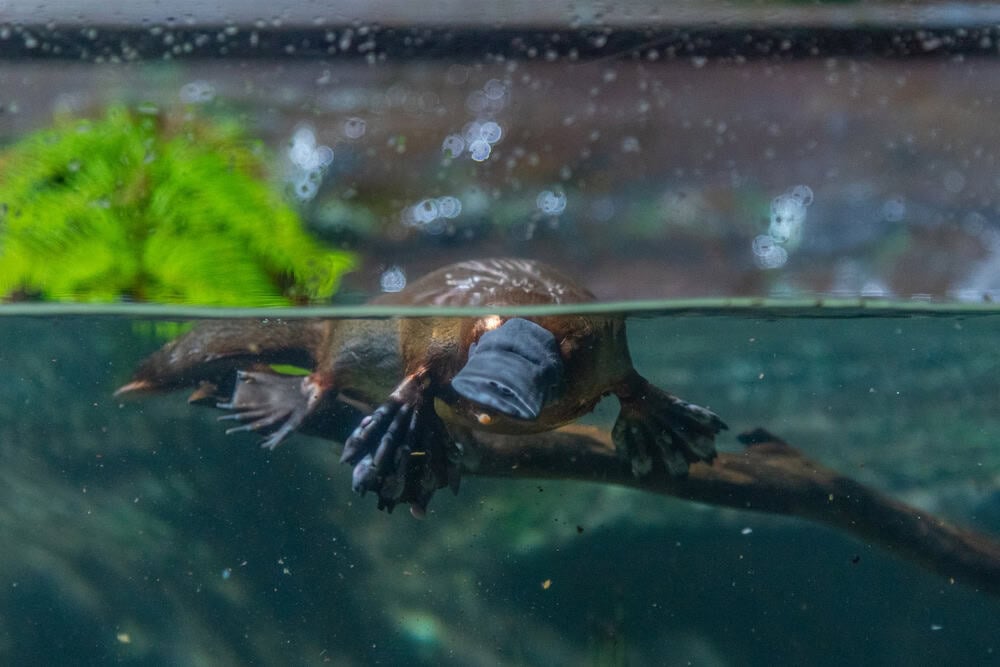
With its duck-like bill, webbed feet, and egg-laying habits, the platypus definitely challenges expectations about what a mammal can be.
©trabantos/Shutterstock.com
Scientists and the Public Don’t Always Speak the Same Language
If you’ve noticed that zoos and wildlife organizations often use the word puggle while scientists don’t, there’s a reason.
“The public says ‘puggle,’ almost universally; it’s cute, and it’s caught on,” says Bino. “Zoos and some wildlife organizations have leaned into ‘puggle’ too, because it’s friendly for visitors.”
Researchers, however, tend to favor terms that communicate an animal’s developmental stage. “In the scientific literature, you’ll rarely see it; researchers use ‘nestling’ for the young while it’s still in the burrow and ‘juvenile’ once it’s emerged, because those words pin down a real stage of development,” Bino shares.
‘Puggle’ is the one you see everywhere online, and it’s charming, but it isn’t a scientific term, and it isn’t even strictly a platypus word.
Associate Professor Gilad Bino of the Centre for Ecosystem Science at the University of New South Wales
The Animal That Refuses to Fit Into a Category
The naming debate is only the beginning of a bigger enigma. Much of the platypus’s appeal comes from the fact that it seems to break nearly every rule people associate with mammals. “Partly it’s that the platypus breaks the rules we think we know,” says Bino. “It has a bill like a duck, a tail like a beaver, webbed feet like an otter, it lays eggs, but it feeds its young milk, and the males are venomous.”
In fact, when the first platypus specimen reached Britain in 1799, some scientists reportedly suspected it was a hoax assembled from different animals. And the oddities don’t stop there. Platypuses hunt underwater with their eyes and ears closed, detecting prey by sensing electrical signals. Males use venomous spurs during the breeding season to battle rivals.
“The platypus is a living reminder that evolution is far more inventive than our tidy categories,” says Bino.
Meet the Monotremes
Platypuses belong to one of the most unusual groups in the animal kingdom: monotremes. “Monotremes, the platypus and the four echidnas, are the only mammals that lay eggs,” Bino explains.
Although they may share traits with reptiles and birds, monotremes are unquestionably mammals. “They have fur, they’re warm-blooded, and they produce milk,” says Bino. “They just hung onto some very ancient features that the rest of the mammals, us included, gave up.”
Scientists consider monotremes especially important because they represent the oldest surviving branch of the mammal family tree. “When we sequenced the platypus genome, it read like a mixture of mammal, bird, and reptile,” says Bino. “So studying them is as close as we can get to looking back at what the earliest mammals were like.”
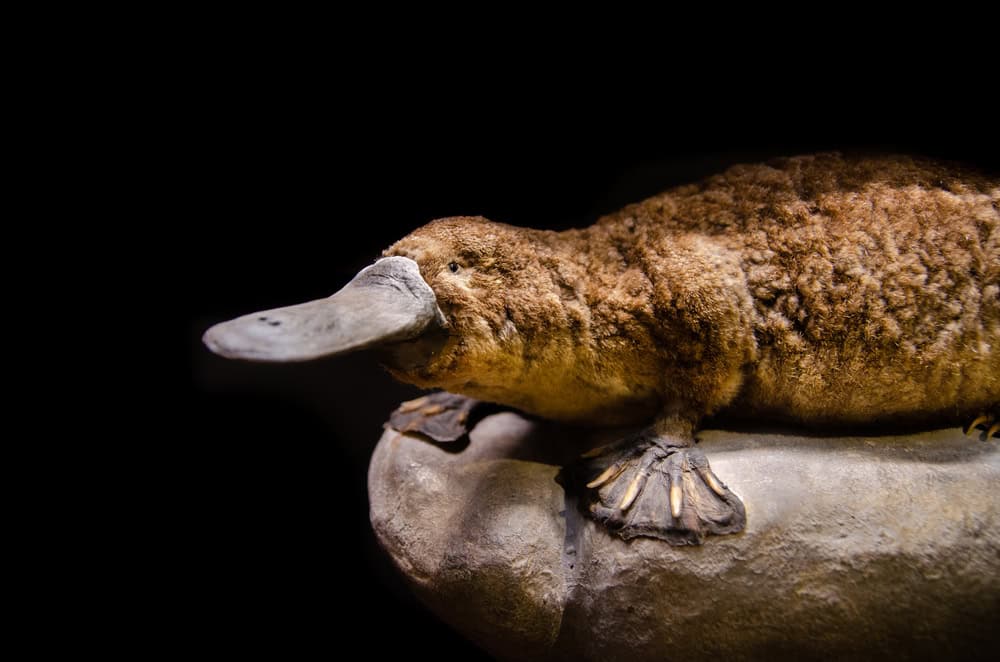
By the time young platypuses leave the burrow, they’re already furred, strong swimmers, and nearly adult-sized.
©Lerner Vadim/Shutterstock.com
From Egg to Independent Youngster
In case you’re curious, the platypus life cycle is every bit as unusual as the animal itself. After mating, the female digs a special breeding burrow and creates a nest from wet vegetation. She typically lays two eggs, which are often described as leathery, and incubates them for about ten days.
The hatchlings that emerge are incredibly small. “The hatchlings are astonishingly tiny and helpless, blind, naked, about the size of a jellybean, smaller than your thumb,” says Bino.
Then comes one of the most surprising facts about platypuses. “And here’s the part people find hard to believe: she has no nipples,” says Bino. “She sweats milk, in effect, from patches of skin on her belly, and the young lap it up from her fur.”
The babies remain in the burrow for three to four months before emerging nearly adult-sized and ready to fend for themselves.
The Real Lesson Behind the Naming Debate
For Bino, the most interesting part of the puggle-versus-nestling debate isn’t the terminology itself. “The very absence of an agreed name tells you something,” says Bino. “We don’t have a settled word for a baby platypus because almost no one has ever seen one. It spends its first months hidden deep in a burrow and emerges already nearly grown.” Unlike many familiar animals, baby platypuses spend their earliest months hidden underground, rarely seen by humans.
In other words, the naming debate isn’t really about choosing the perfect word. It’s a reminder that even after centuries of study, the platypus remains one of nature’s most mysterious animals. “If a missing word makes people curious enough to care about the secretive animal behind it, that’s a good outcome,” says Bino.