
Quick Take
- Bathing your Lionhead rabbit seems like basic hygiene, yet it's actually one of the most dangerous things you can do to them. See bathing dangers →
- Lionheads can be litter trained, though the most common setup mistake will guarantee it fails before you even start. Avoid litter training mistakes →
- Bonding with a rabbit requires a completely different approach than bonding with a cat or dog, and most new owners get it backwards. Build trust the right way →
Lionheads are tiny rabbits with short ears, compact bodies, and small heads. They’re known for being sweet, happy-go-lucky bunnies with lion-like manes. Although they can be high-maintenance, they make excellent pets for dedicated owners who can provide them with a lot of space, time, and affection. Caring for a rabbit can be time-consuming and expensive, especially when you factor in their veterinary care. In this article, we’ll discuss everything it takes to care for a Lionhead rabbit, from their diet to housing and more.
What Is a Lionhead Rabbit?
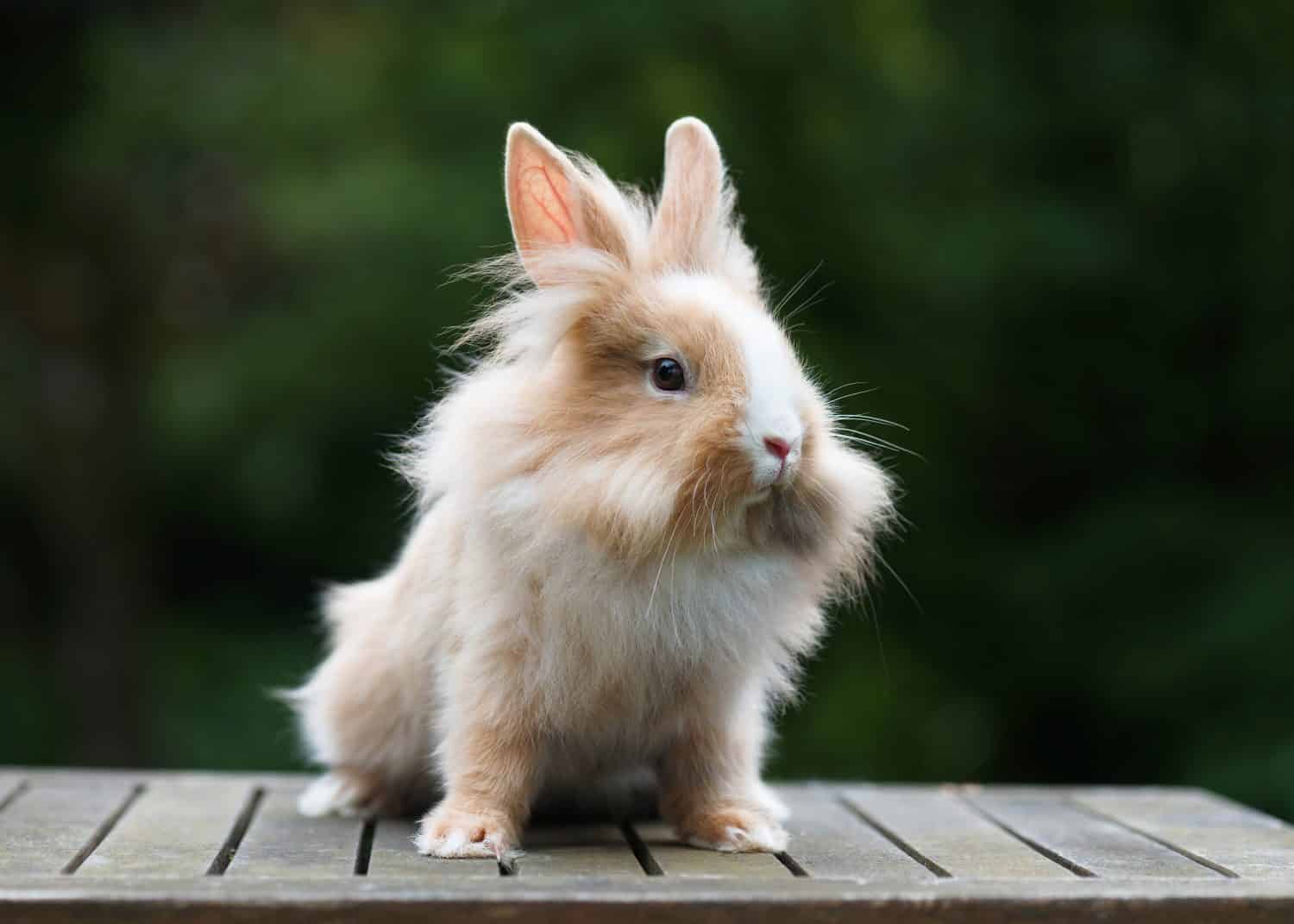
Lionhead rabbits are named for their manes, which make them look like tiny lions. They weigh less than four pounds and are incredibly fluffy. There are two types of Lionhead rabbits: single and double-maned. Single-maned Lionheads grow out of their manes as they age, and adults have only wisps of fur. Double-maned rabbits keep their fluffy manes throughout their lives. They may also have longer hair on other areas of the body, such as the back legs.
These rabbits are known for their playful dispositions and docile natures. They’re more likely to enjoy cuddles than other breeds and love to play with chew toys and race through tunnels. While cute, Lionhead rabbits are a huge responsibility as well. That fluffy mane requires maintenance. Lionhead rabbits also do best in bonded pairs. They cannot be kept in small, pet store cages, but instead thrive when allowed to roam in a large, bunny-proofed environment. Read on to take a closer look at how to properly care for a Lionhead rabbit.
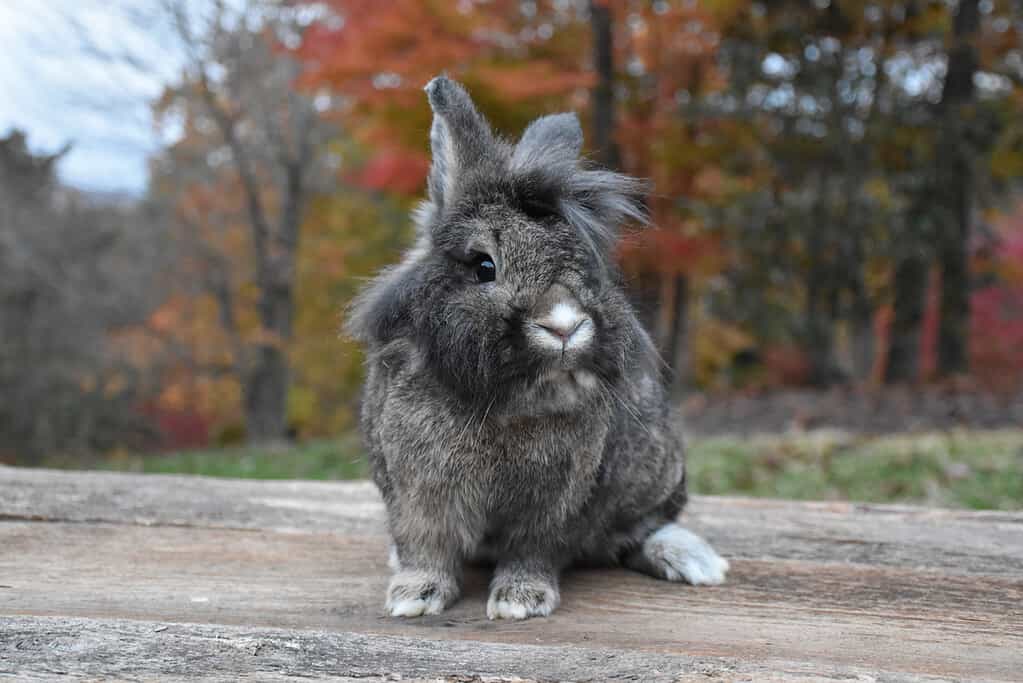
Lionhead rabbits are sweet and docile pets.
©iStock.com/JudyN
The Playful and Affectionate Nature of Lionhead Rabbits
Lionheads are known for being sweet and even-tempered. They’re docile, and some enjoy cuddling with their favorite humans. However, getting to this point takes time and daily interaction. You should never force your rabbits to cuddle. Instead, try sitting with them and allowing them to come to you.
These buns are also very playful. When given space to roam, Lionheads will zoom around and launch themselves into the air excitedly (also known as a binky). They’re sure to make you laugh with their antics. A Lionhead’s personality shines through when they’re given proper care, which includes the right nutrition, space to roam, and attention from you. We’ll discuss more about how to bond with and care for your Lionheads below.
Bonding with Your Lionhead Rabbits
Bonding with a rabbit isn’t the same as bonding with a cat or dog, which are the pets many of us are used to. The reason for this difference is that rabbits are prey animals. This means they can be much more fearful of humans because we’re a predator species. Rabbits don’t like us towering above them, picking them up from above, or making quick, unpredictable movements.

All rabbits need time to get used to a new home and can be skittish when you first meet.
The best way to bond with your Lionhead rabbits is to get low to the ground, either sitting or lying down on the floor. Offer your rabbits small pieces of fruits or vegetables to encourage them to interact with you. Speak in quiet tones, and don’t try to touch them at first. Wait until they’re coming close voluntarily before offering head scratches.
Over time, your rabbits will get used to sharing a space with you. They will no longer fear normal human behaviors like walking around or talking to others in the household. This does take time, especially if living with a family is a new experience for your Lionheads.
Understanding the Proper Feeding Requirements for a Healthy Diet
Take an in-depth look at the proper feeding requirements for your Lionhead bunny. A nutritious diet includes hay, vegetables and rabbit pellets, and occasional fruit or other treats.
Hay
Rabbits must have constant access to hay and fresh water. Grass hay such as timothy hay or orchard grass should make up around 85%-90% of their overall diet. Young rabbits can eat alfalfa hay until they reach about 6 to 8 months old. Alfalfa hay’s high calcium and protein content is not recommended for most adult rabbits.
Lionhead rabbits have fast metabolisms that must stay in motion, meaning they should never be without food or water. As grazing animals, these bunnies will spend most of their day munching on hay or other foods. Rabbit teeth continue to grow throughout their lives. Since they have shorter faces, Lionhead rabbits are prone to dental issues such as malocclusion and spurs. The rough texture of the hay helps to naturally grind down their teeth.
Vegetables and Pellets
The other 10%-15% of your Lionhead rabbit’s diet consists of daily fresh vegetables and rabbit pellets. Dark, leafy greens are best for rabbits, and they should get a variety of vegetables to ensure their nutritional needs are met. A few safe greens they can eat include romaine lettuce, dandelion greens, carrot tops, cilantro, and parsley.
A small amount of daily rabbit pellets can also help to ensure they’re getting the right balance of nutrients. Avoid pellets with bright colors and seeds, and instead opt for plain, timothy-based pellets. While these look boring to the human eye, they contain everything your rabbit needs without harmful additives.

A nutritious diet for Lionheads includes fresh vegetables each day.
©Olga Novik/iStock via Getty Images
Fruit and Other Treats
Fruit can be served to your Lionhead rabbit in very small servings as a treat but shouldn’t be a dietary staple due to the high natural sugar content. Fruits and forage mixes are the healthiest treats for your rabbit. Safe fruits include apples (with no seeds or stems), bananas (no peel), strawberries, blueberries, and melon such as cantaloupe, honeydew, and watermelon (with no rinds or seeds).
Avoid store-bought treats unless you look carefully into each ingredient, as many items sold in pet stores are unsafe. This includes anything containing seeds, yogurt, or other dairy products. Human foods are also typically off-limits since they’re often too processed and contain unsafe ingredients.
Proper Grooming
Due to their long fur, Lionhead rabbits can be high maintenance in the grooming department. Here are some pointers for keeping their fur healthy:
- Brush your Lionhead daily. This prevents mats and removes loose fur before they can swallow it, which can cause digestive blockages.
- Never pull the fur. You want to brush slowly and gently. If your Lionhead has matted fur, trim it away carefully with a pair of scissors.
- Haircuts can keep your bunny clean. Lionheads can especially get dirty around their rear, but cutting the fur around their bums short can prevent this.
- Never bathe a Lionhead rabbit. Rabbits are self-grooming animals. Baths are not only emotionally stressful but can cause severe problems. Similarly, your bun should never be left outside in the rain or taken for a swim. Due to their dense undercoats, wet rabbits have a hard time drying, which can expose them to respiratory infections and hypothermia.
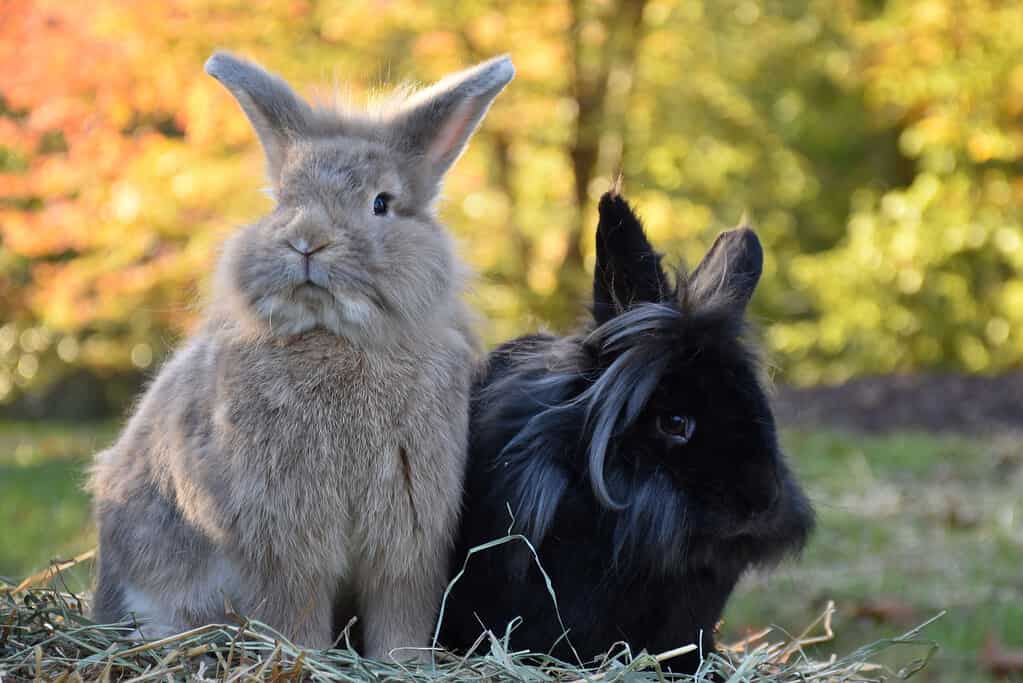
Lionheads should always be kept in bonded pairs.
©JudyN/iStock via Getty Images
Housing for Lionhead Rabbits
A common myth is that these rabbits can be comfortably kept in cages or hutches. Both are inappropriate for your Lionhead. Most experts recommend a large pen instead of a cage. They need an area that’s just for them, and it should be large enough for them to run, jump, and stand upright. Lionhead rabbits are active and energetic, so they need plenty of room to roam.
Another option is to allow your Lionheads to free roam in one room of the house. It can be easier to bunny-proof on a small scale. Complete free-roaming can be impossible if you have predator animals in the house like dogs or cats, which should never be allowed to interact with your Lionhead.
For example, many people keep their rabbits in dog exercise pens when they can’t supervise them. This is especially useful when you first adopt your Lionheads and don’t yet trust them to free-roam without you around. Once they outgrow being closed in the pen, you can keep it open as a safe space for them, similar to a dog’s crate.
Bunny-Proofing Your Home
Bunny-proofing the space your rabbits reside in is essential to their well-being. It can also prevent them from being destructive. If there’s one thing a rabbit loves, it’s to chew.
Here are some tips for rabbit-proofing your Lionhead’s space:
- Move cords out of reach, or use cord protectors. Many rabbits will chew cords if they’re within reach. If you have a room, such as an office, with many cords, you can also close this space off to your rabbit.
- Use baby gates for areas that are off-limits. This includes stairs, unsafe rooms, and anywhere else you don’t want your rabbits to go.
- Block baseboards with storage cubes or furniture. Not all rabbits chew baseboards, but it’s better to block them off preemptively than have to replace them later.
- Make sure your bunny can’t settle beneath your furniture. Lionheads naturally enjoy dark, covered spaces. These areas can be difficult to clean, and it’s hard to get the rabbits out in case of an emergency. Use storage cubes or other solutions to ensure your rabbits can’t get underneath beds, couches, and other furniture that’s low to the ground.
- Cover carpet corners. If your rabbits dig at the corners of the carpet, cover the carpet with objects that will prevent the rabbits from digging there.
- Lay rugs on hardwood floors. Many Lionheads dislike hard flooring since their feet can’t grip it well, and they end up slipping around. Area rugs or fleece fabric can help.
- Pick up treasured or dangerous items. Keeping your home tidy is key to keeping your Lionheads safe and saving you from replacing your favorite things. Pay special attention to toxic materials like cleaners and plants, and things rabbits naturally love to chew like paper and wood.
Setting Up Your Lionhead Rabbit’s Space
Now that your rabbit’s home is safe, make sure they can still exhibit their natural behaviors. The first thing you need is a safe, non-destructive digging space. A dig box is excellent for this. Bunnies often love to rifle through their hay piles as well.
Chew toys are also essential. Chewing is good for your rabbits’ teeth, so make sure they have plenty of safe things to gnaw on. Each rabbit should also have their own hide. Ideally, you should provide extras as well. The larger your rabbit’s space, the more hiding places they’ll need to feel safe while exploring the area.

Lionhead rabbits are active and need plenty of space to roam.
©Katesalin Pagkaihang/Shutterstock.com
Potty Training Your Lionhead Rabbit
Before you let your rabbits free roam, they need to be potty trained. Rabbits naturally urinate in corners, which can make potty training quite easy. Like cats, they can be trained to use litter boxes. Look for a litter box that’s easy to climb in and out of, is large enough for your largest rabbit to stand fully inside, and that doesn’t have a lid. Lids can hold in odor and dust, which is bad for your rabbits’ lungs.
Keep at least one litter box per rabbit and clean them regularly. Never use clay or clumping cat litter, but instead opt for paper litter or rabbit-safe wood pellets. Potty training is simple: keep your rabbit in a small area, such as a dog exercise pen. You can line the floor with a waterproof liner, such as a shower curtain covered by a layer of wicking fleece. Set up your litter box and place a large pile of hay inside, since rabbits urinate the most as they’re eating.
Place any stray poop into the litter box to show your rabbits where you want them to go. If they pee outside of the box, clean the area thoroughly. You can place pee-soiled paper towels into the litter box as well, but make sure your rabbits don’t try to eat them. Sometimes, rabbits will choose a different corner than where you put the litter box. In this case, it’s best to move the litter box to the corner they chose.
Common Health Issues and Essential Veterinary Care for Lionhead Rabbits
Lionhead rabbits typically live anywhere from 7-9 years on average, but with excellent care, some may live 10 years or more. That’s a pretty long time compared to other small pets. The best way to ensure your Lionhead lives a long, happy life is to give them the right care. This includes a balanced diet, proper housing, companionship, and veterinary care.
Common Lionhead Rabbit Health Issues
However, there are some illnesses that Lionhead rabbits are prone to, including:
- Upper respiratory infections (URIs): Upper respiratory infections are common in rabbits and can be deadly, especially without treatment. Keep your rabbits’ environment clean and dust-free, use only rabbit-safe litters, and seek veterinary treatment if you notice any signs of illness.
- Dental problems: Lionheads are especially prone to dental problems due to their small heads and a tendency to have a lower jaw that’s longer than their upper jaw. You may notice overgrown teeth, difficulty eating, abscesses in the mouth, or dental infections.
- Spinal injuries: Careful handling is necessary to prevent spinal injuries in rabbits. Always supervise young children and teach them to interact gently, as they can easily injure your Lionheads by mistake. Avoid stairs and don’t let your Lionheads jump or fall from high surfaces.
- Gastrointestinal (GI) stasis: GI stasis happens when a rabbit isn’t eating enough to keep their digestive system moving. If your rabbit goes even eight hours without eating, they should be rushed to the emergency vet. GI stasis can kill a rabbit within just 24 hours.
- Hairball obstructions: Lionheads have long, thick coats that can cause blockages in their intestines when consumed during everyday grooming. Regular brushing is essential to prevent this from happening, especially while your rabbit’s fur is molting.
- Parasites: Outdoor and even indoor Lionheads can catch a variety of parasites including mites, E. Coniculi, and flystrike.

Lionhead rabbits live an average of 7-9 years.
©Mary Swift/iStock via Getty Images
How Often Should My Lionhead Rabbit See a Veterinarian?
When you adopt any new animal, you should bring them to the veterinarian for a check-up immediately. This ensures they’re healthy and is especially important if you already have pets at home who could get sick if your Lionhead has something contagious.
After this initial check-up, young, healthy Lionheads only need to see the vet once a year. Senior rabbits should have check-ups every six months. If your Lionheads show any symptoms or changes in behavior, take them in for a sick visit between their regular check-ups. Illness in rabbits can progress very quickly, so getting them to the vet promptly is crucial.
Pet Insurance for Lionhead Rabbits
Rabbits should see veterinarians who specialize in exotic mammals, which requires additional schooling. These vets are often more expensive than veterinarians who typically see common companion animals like dogs and cats.
If your Lionhead gets sick or injured, vet bills can be very expensive, sometimes costing thousands of dollars—this is where pet insurance can be life-saving. It ensures that you don’t have to think so much about money when your pet is suffering.
Currently, Nationwide is the only insurance company that insures pet rabbits in all 50 states. Their plans range in coverage and deductible amounts. Plans with higher coverage and lower deductibles cost more monthly but can save you more in case of an emergency.