
Quick Take
- There are between 180 and 200 distinct breeds of domestic rabbits.
- Rabbits excrete two specific types of feces.
- Sometimes rabbit pellets will be strung together, connected by ingested fur.
There are 29 or 30 recognized species of wild rabbits and approximately 200 distinct breeds of domestic rabbits (Oryctolagus cuniculus domesticus) worldwide. Wild rabbits range from the swamp rabbit (Sylvilagus aquaticus), (16-22 inches long; 1.5-6 pounds), the largest wild rabbit species in North America (excluding hares, which are not considered true rabbits), to the pygmy rabbit (S. idahoensis), the smallest, at 9 to 12 inches long and weighing about one pound. Domestic breeds range from the Flemish giant (30 inches long; 15–25 pounds) to the Netherland dwarf, the smallest domestic rabbit at 7.5–9 inches long and weighing between one and two pounds. Rabbits are obligate herbivores, meaning their digestive systems can only tolerate plants like grasses and leafy greens. Because of their high-fiber, plant-based diet, all rabbits, both wild and domesticated, have a specialized digestive system that produces two distinct types of feces. Continue reading to discover everything you’ve ever wanted to know about rabbit poop.
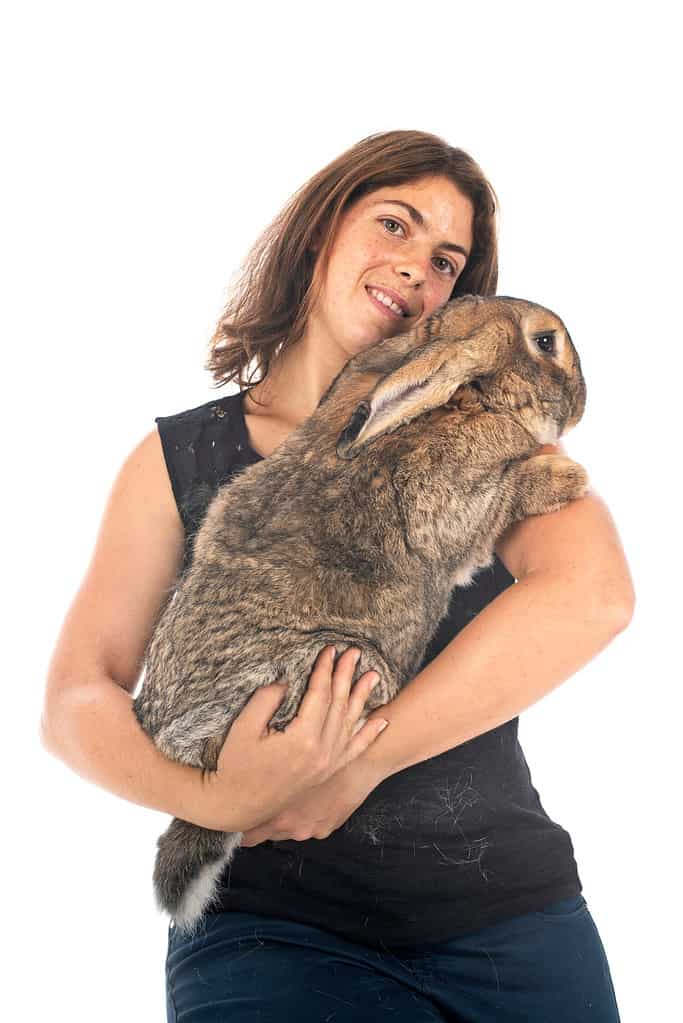
The Flemish giant is the largest breed of rabbit.
©cynoclub/Shutterstock.com
What Do Rabbit Droppings Look Like?
Healthy rabbit fecal pellets are small, cylindrical, and dry, measuring roughly 0.27 to 0.47 inches in diameter, similar in size to a pea. They are typically dark brown to black in color, firm in texture, and composed of undigested fiber. A healthy rabbit produces 200–300 pellets daily.
Wild rabbit poop is not vastly different from domestic rabbit poop, as both produce similar hard, round, fibrous pellets. While domestic rabbits may have slightly larger or lighter-colored pellets due to a diet of processed hay and pellets, wild rabbit droppings are often greener, smaller, and more fibrous.
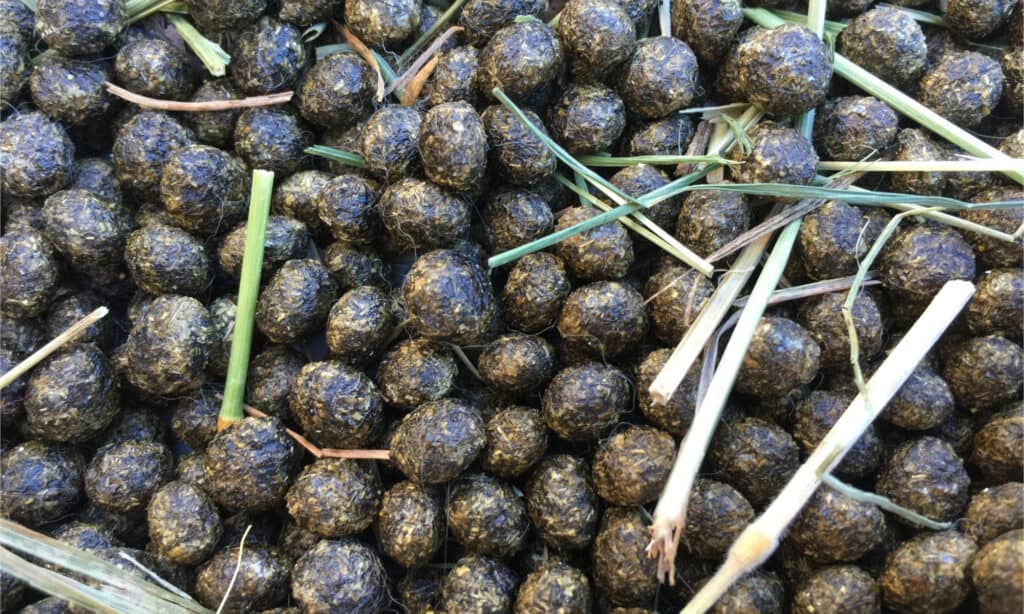
Rabbits typically excrete individual pellets.
©KanphotoSS/Shutterstock.com
Both wild and domestic rabbits produce a large amount of waste. Domestic rabbits may appear to poop more because their waste is more noticeable in a confined indoor environment, and their diets are typically more consistent and higher in quality compared to the varied, sporadic food sources of wild rabbits..
Do Rabbits Eat Their Poop?
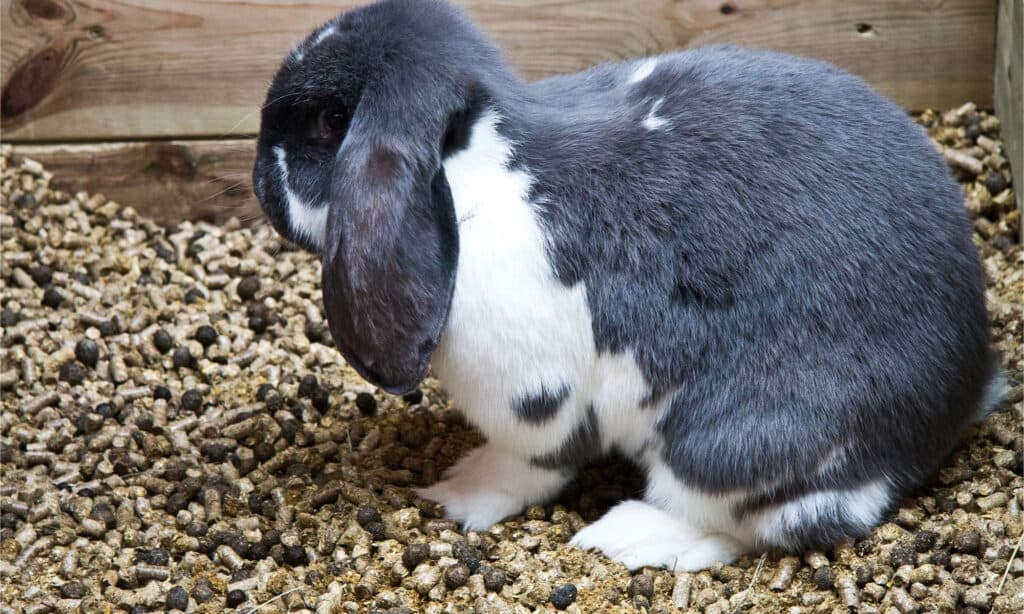
Rabbits re-ingest their night feces for ultimate nutrient absorption.
©Poly Liss/Shutterstock.com
Rabbits produce two distinct types of solid waste: dry individual pellets throughout the day, and cecotropes, often called night feces, which are nutrient-dense, soft, grape-like clusters that rabbits produce in their cecum and ingest directly from the anus.
Cecotropes differ from standard dry, fibrous fecal pellets. They are typically soft, shiny, and clustered together, often smelling stronger than normal feces. Cecotropes allow rabbits to maximize nutrient intake without increasing bulk in their gastrointestinal tract.
Do Rabbit Droppings String Together?
When rabbits ingest hair during shedding, their droppings may occasionally be connected by fur, resembling a string of pearls. These strings are typical during a molting season or with long-haired breeds.
What Rabbit Poop Can Tell You About Your Pet’s Health
Rabbit droppings are a key source of information about a rabbit’s health. Changes in the size, shape, color, or consistency of a rabbit’s feces can indicate serious issues like GI stasis, dehydration, diet imbalances, or parasites. Routine monitoring of fecal output can help catch these issues early.
Is Rabbit Poop Dangerous?
Rabbit poop is generally not dangerous to humans and is safe to handle, making it an excellent, non-toxic fertilizer for gardens. It rarely transmits diseases to people, although it can contain parasites. While usually harmless, rabbit poop should be kept away from children and cleaned up to prevent the rare possibility of bacterial ingestion.