A
Species Profile

Anomalocaris

Anomalocaris

Cambrian seas' original superpredator
Dotted Yeti/Shutterstock.com

Anomalocaris Distribution

Click a location to explore more animals from that region

This map shows coastal regions where Anomalocaris are found.

Loading map...
Anomalocaris

At a Glance

Genus Overview This page covers the Anomalocaris genus as a group. Stats below are general traits shared across the genus.
Diet Carnivore
Activity Cathemeral+
Lifespan 3 years
Weight 4 lbs
Status Not Evaluated
Did You Know?

Size across the genus is estimated at ~30 cm to ~1 m+ long, making some species among the largest Cambrian animals.

Scientific Classification

Genus Overview "Anomalocaris" is not a single species but represents an entire genus containing multiple species.

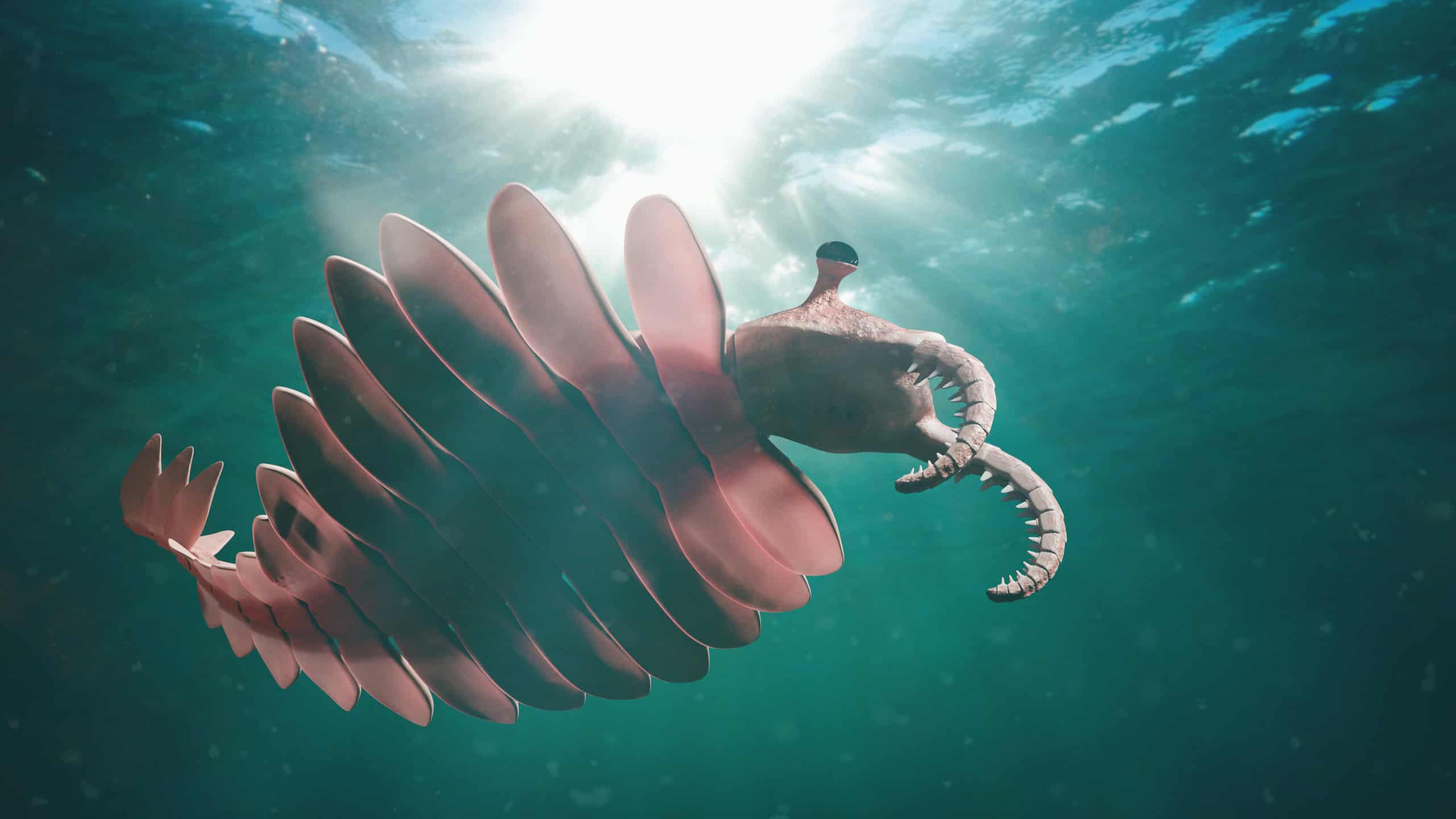
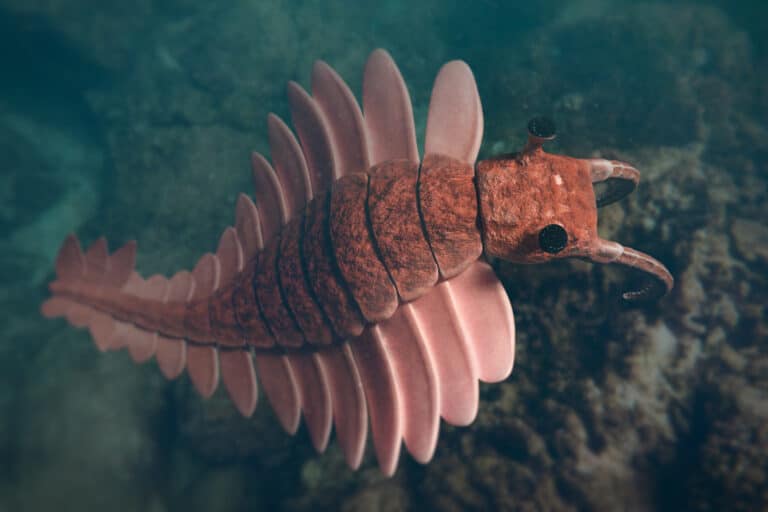
Anomalocaris is an extinct Cambrian marine animal (a radiodont, stem-group arthropod) famous for being among the largest and most capable predators of its time. It is characterized by a pair of large frontal grasping appendages, a circular mouth apparatus, lateral swimming flaps, and prominent compound eyes.

Kingdom
Animalia
Phylum
Arthropoda
Genus
Anomalocaris

Distinguishing Features

  • Pair of segmented frontal appendages used for grasping prey
  • Radial, pineapple-ring-like oral cone (mouthparts)
  • Series of lateral swimming flaps along the body for active swimming
  • Large stalked compound eyes in many reconstructions
  • Typically large body size for the Cambrian (often tens of centimeters, varying by species and estimates)

Did You Know?

Size across the genus is estimated at ~30 cm to ~1 m+ long, making some species among the largest Cambrian animals.

Anomalocaris is a radiodont (stem-group arthropod), not a modern crustacean or a crown-group arthropod.

Its fossils were famously reconstructed from parts once misidentified as separate animals (appendage, mouth, and body).

Large compound eyes suggest strong visual hunting in clear, shallow Cambrian seas.

Swimming likely relied on coordinated waves along lateral body flaps-an efficient early solution for active nektonic life.

Lifespan is unknown across all Anomalocaris species (no direct aging evidence in the fossil record).

Unique Adaptations

  • Paired frontal grasping appendages with spines for trapping and manipulating prey-signature tools of radiodont predation.
  • Oral cone (circular mouth apparatus) built from sclerotized plates, functioning like a gripping, crushing/tearing intake.
  • Lateral swimming flaps along the body that could undulate in sequence for efficient propulsion and maneuvering.
  • Large compound eyes (noted in well-preserved material) supporting wide fields of view and improved prey detection.
  • Flexible, segmented body plan representing an early experiment in arthropod-related locomotion and predation before crown-group dominance.

Interesting Behaviors

  • Active, free-swimming (nektonic) lifestyle inferred across the genus; individuals likely cruised above the seafloor rather than crawling.
  • Prey capture was probably done by seizing animals with paired spiny frontal appendages, then bringing food to the circular oral cone for processing.
  • Vision-led hunting is a common interpretation given prominent compound eyes; reliance on sight may have varied with water clarity and habitat.
  • Ecological role likely ranged from apex predator to high-level mesopredator depending on local community structure and species size; smaller species would have targeted smaller prey.
  • Diet remains debated: many reconstructions emphasize soft-bodied prey, while occasional damage patterns on shelly fossils have been proposed as predation evidence-behavior may have varied among species and environments.

Cultural Significance

Anomalocaris is a famous animal of the Cambrian Explosion, often shown in museums and documentaries as an early, weird-looking predator that changed ideas about early ecosystems and arthropod evolution. Its reconstruction is a classic story of scientists rebuilding a whole animal from broken fossils.

Myths & Legends

Name-origin story: the genus name means "abnormal shrimp," reflecting early confusion and the shock of realizing the fossils belonged to a large, unfamiliar Cambrian predator.

Burgess Shale reconstruction tale: for decades, different body parts were described as separate creatures before being recognized as one animal-an oft-retold historical anecdote in paleontology teaching and museum lore.

Popular-culture 'Cambrian monster' motif: although not traditional folklore, Anomalocaris has become a modern symbolic "sea dragon" of deep time in paleoart, children's books, and nature media, representing the strangeness of Earth's earliest complex oceans.

Conservation Status

NE Not Evaluated

Has not yet been evaluated against the criteria.

Population Unknown

You might be looking for:

Anomalocaris canadensis

55%

Anomalocaris canadensis

Classic Burgess Shale species; among the best-known Anomalocaris fossils from the Cambrian of Canada.

Anomalocaris saron

20%

Anomalocaris saron

Species described from Cambrian deposits; one of several named species variably assigned within Anomalocaris/radiodont taxa in the literature.

Anomalocaris briggsi

15%

Anomalocaris briggsi

Another named species historically referred to Anomalocaris; some assignments have been revised as radiodont taxonomy changed.

Radiodonta (radiodonts)

10%

Radiodonta

The broader order-level group that includes Anomalocaris and close relatives (e.g., Hurdia, Peytoia), often what people mean by ‘anomalocaridids’.

Life Cycle

Birth 1000 youngs
Lifespan 3 years

Lifespan

In the Wild
1–7 years

Reproduction

Mating System Data Deficient
Social Structure Transient
Breeding Pattern Transient
Fertilization Broadcast Spawning
Birth Type Broadcast_spawning

Anomalocaris (Cambrian nektonic/nektobenthic predator): reproduction is unknown. Likely solitary, with brief mating encounters. No evidence of pair bonds, brood care, or sex organs. Best guess: not enough data; possible external fertilization (broadcast spawning).

Behavior & Ecology

Social Aggregation Group: 1
Activity Cathemeral, Diurnal, Crepuscular
Diet Carnivore Likely soft-bodied arthropods and worms (genus-level generalization; prey preferences probably varied among Anomalocaris species and local Cambrian communities).

Temperament

Predatory
Opportunistic
Likely non-territorial in the strict vertebrate sense but expected to maintain personal spacing around resources
Encounter-driven aggression possible during competition for prey or mates (inferred)
Behavior likely varied across the genus with size (smaller species potentially more risk-averse; larger species potentially bolder)

Communication

none known No evidence for sound production in radiodonts
visual cues (inferred): body orientation, approach/retreat displays, appendage positioning during encounters
tactile interactions (inferred): contact using frontal appendages during prey handling or conspecific encounters
hydrodynamic cues (inferred): detection of water movement/vibrations associated with prey or nearby conspecifics
chemical cues: not evidenced, but possible passive detection of dissolved cues in seawater Speculative

Habitat

Open Ocean Coastal Seabed/Benthic Deep Sea
Biomes:
Terrain:
Coastal Muddy
Elevation: -39370 in

Ecological Role

Large Cambrian nektonic predator (often near the top of local food webs), functioning as an apex or high-level mesopredator depending on species size and community context.

Top-down regulation of arthropod and worm populations Selective predation influencing prey behavior, habitat use, and community structure Energy transfer from benthic and pelagic invertebrate production to higher trophic levels Potential contribution to nutrient recycling via processing and fragmenting animal biomass

Diet Details

Main Prey:
Trilobites and other small-medium benthic arthropods Soft-bodied arthropods Worms and other elongate soft-bodied invertebrates Small nektonic invertebrates

Human Interaction

Domestication Status

Wild

Anomalocaris is an extinct Cambrian marine radiodont (stem-group arthropod). No domestication history exists across the genus; all human interaction is indirect (fossils, research, education, media).

As a Pet

Not Suitable as Pet

Legality: Not applicable as a living pet because the genus is extinct. Fossil ownership/trade legality varies by country/province/state and by land/collection permits; many scientifically significant specimens are restricted to licensed collection and institutional curation.

Care Level: Expert Only

Purchase Cost:
Lifetime Cost:

Economic Value

Uses:
Scientific research value Museum and educational exhibit value Geotourism (fossil localities, museum draws) Media/merchandising and popular science branding Fossil market value (where legal)
Products:
  • museum displays and traveling exhibits featuring radiodont reconstructions
  • educational materials (textbooks, documentaries, replicas/models)
  • licensed casts/replicas of specimens
  • tourism revenue linked to Cambrian fossil sites and museums
  • collectible fossils/casts in the commercial market (jurisdiction-dependent)

Relationships

Predators 2

Larger radiodonts Radiodonta
Large Cambrian arthropods Arthropoda

Related Species 9

Anomalocaris
Anomalocaris Anomalocaris canadensis Shared Genus
Anomalocaris saron Anomalocaris saron Shared Genus
Anomalocaris briggsi Anomalocaris briggsi Shared Genus
Anomalocaris magnabasis Anomalocaris magnabasis Shared Genus
Hurdia Hurdia victoria Shared Order
Peytoia Peytoia nathorsti Shared Order
Laggania Laggania cambria Shared Order
Amplectobelua Amplectobelua symbrachiata Shared Order
Aegirocassis Aegirocassis benmoulae Shared Order

Ecological Equivalents 4

Animals that fill a similar ecological role in their ecosystem

Other large radiodont predators Radiodonta Share a niche as visually oriented, free-swimming Cambrian nektonic hunters and scavengers that used frontal grasping appendages and a ventral oral cone. Different genera show variation in appendage spines and head carapace structure that reflect differences in prey and feeding.
Large Cambrian arthropod predators and scavengers Overlapping role as macropredators/omnivores on Cambrian seafloors. While Sidneyia was more benthic, both occupied higher trophic levels and likely competed for arthropod and worm prey where their ranges overlapped.
Mantis shrimp Stomatopoda Not closely related, but ecologically comparable as visual predators with specialized raptorial appendages. Useful for illustrating how appendage morphology can map to different prey-handling strategies (soft-bodied versus harder prey), paralleling variation inferred among radiodonts.
Pelagic predatory cephalopods Coleoidea Comparable as active swimmers relying on acute vision and rapid strike-capture in the water column; highlights the nektonic pursuit component often inferred for Anomalocaris-grade radiodonts.

Types of Anomalocaris

4

Explore 4 recognized types of anomalocaris

Anomalocaris canadensis Anomalocaris canadensis
Anomalocaris saron Anomalocaris saron
Anomalocaris briggsi Anomalocaris briggsi
Anomalocaris magnabasis (status/assignment discussed in literature) Anomalocaris magnabasis

About half a billion years ago, life on earth was restricted to the sea. The planet was home to several bizarre and odd-looking creatures that occupied the oceans. One of the peculiar life forms that occupied the Earth’s ocean at the time was the Anomalocaris. This mysterious shrimp-like creature was a major predator that ruled the ancient seas during an era known as the Cambrian period. Present-day fossil discoveries indicate that it had widespread distributions with fossils found in various places, including Canada, Australia, Greenland, Utah, and China

Description & Size

The Anomalocaris’s name means “unlike other shrimp” or “abnormal shrimp.” The name Anomalocaris is a reference to the first fossil of the animal that was discovered which scientists thought was similar to the abdomen of a crustacean, hence the name.

Anomalocaris was a large apex predator with a unique appearance. It swam the oceans using the rows of undulating overlapping lobes (flexible flaps) on the sides of its body. These lobes formed a single fin that allowed it to propel itself fast through the water. It also had a large fan-shaped tail which the animal probably used for propulsion. 

The widest part of the animal’s body was between the third to fifth lobe, then it gradually narrowed towards the tails. The body of the Anomalocaris had 14 podomeres or segments.

The Anomalocaris has a large head with a pair of large compound eyes on both sides. It also has an unusually large disk-like mouth consisting of 32 overlapping plates. These plates gave the Anomalocaris’ head the appearance of a pineapple ring. 

The Anomalocaris was a large predator. Early estimates suggest its length was about 1m. However, experts now say it could have been up to 2-3m long. Like modern-day shrimps, it had two large tooth-like prongs. These prongs extended from the walls of its gullet to outside its body and were at least seven inches long when extended. 
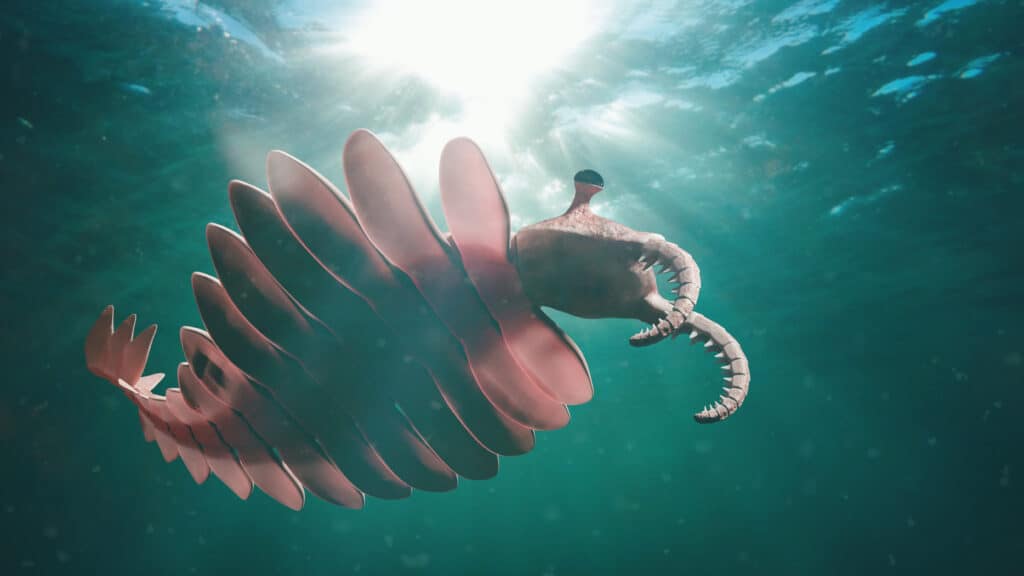
Anomalocaris

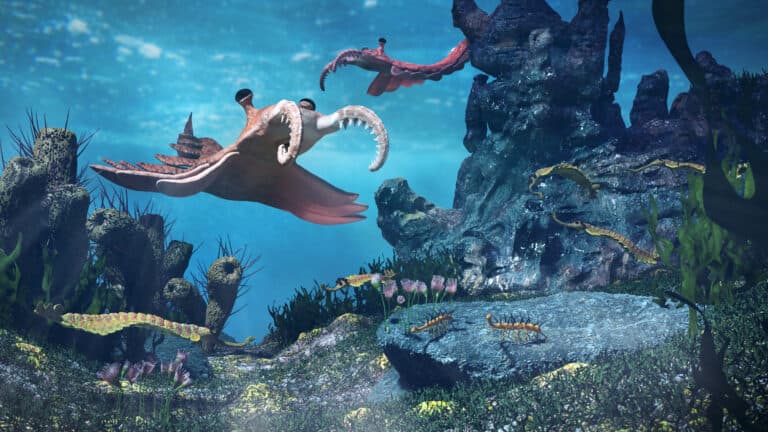
Anomalocaris was a large, shrimp-like creature that lived during the Cambrian period.

Diet – What Did Anomalocaris Eat?

For a long time, paleontologists considered the Anomalocaris an active predator. Experts believed it could stalk its prey with its large compound eyes, swim quickly to catch up with it, and grab the prey with its strong, spiked front limbs. Its large size suggests it was one of the first apex predators ever. The Anomalocaris’ mouth had 32 overlapping plates, which scientists believed the animal used to crush prey. Fossil evidence suggests that its diet might have consisted of trilobites, a group of extinct marine arthropods that lived in the Cambrian Period.

However, recent research seems to suggest differently. There are indications that the Anomalocaris could not close its mouth all the way, and its mouth plates were too small. This would make a trilobite diet impractical because the Anomalocaris would be unable to crush trilobite shells.

Some scientists now believe that instead of solid food, the Anomalocaris might have fed on softer animals that were available in the Cambrian waters 500 million years ago. If this is true, the diet would be more similar to modern-day shrimps, lobsters, and crabs. 

Habitat – When and Where It Lived

Paleontologists found fossils of the type species of this genus, Anomalocaris Canadensis in the Burgess shale formation of Canada. The formation contained relatively great numbers of Anomalocaris fossils, which suggests that they were present in abundance in this area. However, they have discovered Anomalocaris fossils in several other places too. This means the species adapted well to a vast range of environments, including the shallow tropical sea in Australia and what is now modern-day China. 

Threats And Predators

The 3-feet long “unusual shrimp” is unlikely to have had any major competitor at the time it lived. Scientists believed it was the largest animal in its habitat. So far, the fossil is the largest to have been discovered in any formation from that period. Thus, the Anomalocaris is thought to have been an apex predator that ruled this primordial world. 

Discoveries and Fossils – Where It Was Found

The discovery of the Anomalocaris fossil is just as mysterious as the animal itself. The first recorded discovery of this animal was in 1886 by Richard G. McConnell. However, the scientist had no idea that what he found was merely a feeding appendage of a much larger animal. Instead, they interpreted the find as the abdomen of Phyllocarid crustaceans (a sub-class of crustaceans that includes the Leptostraca and the now extinct Hymenocaris). The name Anomalocaris was assigned to this fossil in 1892. 

Later in 1911, another group of scientists found mouth parts of the Anomalocaris and thought it belonged to a jellyfish, so they gave the specimen the name Peytoia. Around the same time, more fossils were discovered, and paleontologists wrongly identified these as belonging to a type of sea sponge. This time, they named it Laggannia.

Finally, in the 1980s, scientists discovered that these three different fossils were body parts of the same strange-looking animal. The scientists named it Anomalocaris because that was the species’ first given name.

The majority of Anomalocaris fossils that have been identified were found in the Burgess Shale formation in Canada. However, fossils have been found in other countries as well. Recently, scientists found compound eyes believed to be that of the Anomalocaris during a paleontological dig on Kangaroo Island in Australia. This find especially suggested that the Anomalocaris was indeed an arthropod. 

Extinction – When Did It Die Out?

The Anomalocaris disappeared during the Great Permian Extinction, a mass extinction event that took place towards the end of the Cambrian period. This species disappeared along with up to 90% of all life on the planet. 

Similar Animals to The Anomalocaris 

  • Hallucigenia: this is an extinct genus of animal that was found fossilized in the same Burgess Shale Formation where the Anomalocaris was first found. Initially, scientists thought the species had no living relative in the present age. However, more recent research shows that it is related to modern arthropods, just like the Anomalocaris. 
  • Opabinia: this is another extinct animal that lived around the same time as the Anomalocaris. It is also related to the arthropods and had a strange appearance as well.  
  • Aysheaia: this is a genus of caterpillar-like organisms with a soft body. They also lived in the middle Cambrian and have been found in abundance in the Burgess Shale formation. 
View all 328 animals that start with A
Abdulmumin Akinde

About the Author

Abdulmumin Akinde

Abdulmumin is a pharmacist and a top-rated content writer who can pretty much write on anything that can be researched on the internet. However, he particularly enjoys writing about animals, nature, and health. He loves animals, especially horses, and would love to have one someday.
Connect:

Thank you for reading! Have some feedback for us?


Anomalocaris FAQs (Frequently Asked Questions)

The Anomalocaris lived during the Cambrian period about 500 million years ago. It was an apex predator that lived in the seas.


.