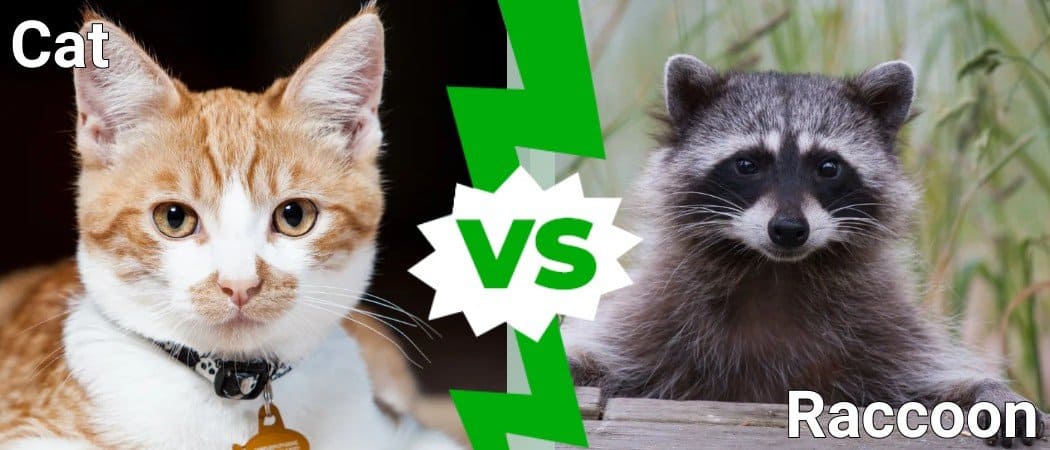

Cats (Felis catus) are found worldwide, while raccoons (Procyon lotor) are native to North and Central America and have been introduced to parts of Europe and Asia. Cats and raccoons belong to the taxonomic order Carnivora, and while they are not closely related (raccoons are more like dogs and bears), they do share a similar size, nocturnal habits, and opportunistic foraging behaviors. Because they often scavenge in the same places, especially in areas where human development intersects with natural habitats, cats and raccoons do cross paths upon occasion. While most encounters are peaceful with the animals minding their own business, there is still a risk of conflict. Continue reading to discover which animal would win the fight between a cat and a raccoon.
Key Differences Between a Cat and a Raccoon

Raccoons are larger than cats and more ferocious in fights.
©dangdumrong/Shutterstock.com
The key differences between a cat and a raccoon include their size, senses, and predatory behaviors. Cats are hunters with excellent hearing, sight, and smell; raccoons have good senses of smell and hearing, and although their vision is good at night, it’s only useful over short distances and when they don’t need to discern colors.
Cats are ambush predators that strike out at their prey, attempting to end their fights with a single blow. However, raccoons are opportunistic predators that find prey in their habitats and kill them. These differences are important not only for distinguishing between the two animals, but also for understanding how a fight between them would play out.
Key Factors in a Fight Between a Cat and a Raccoon
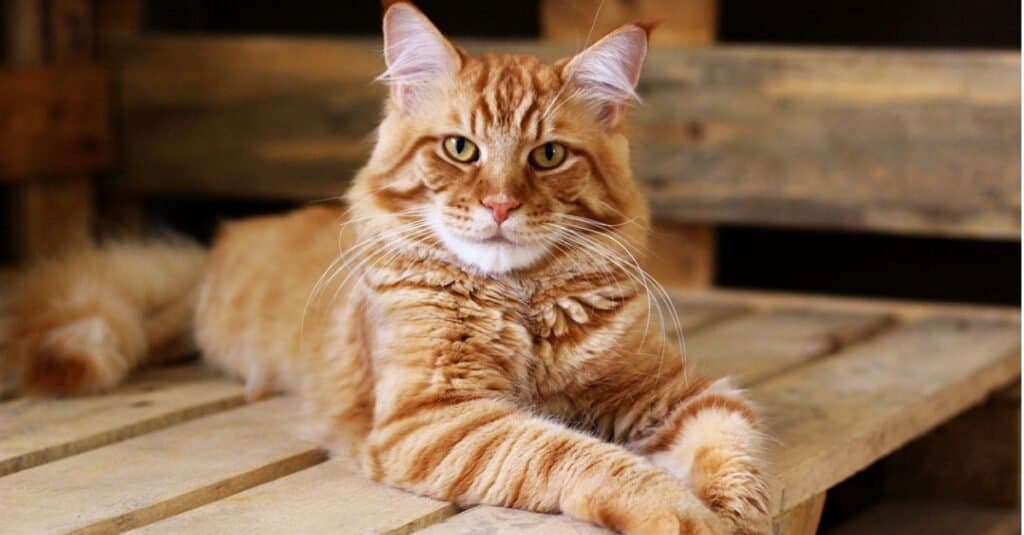
Size, speed, and fighting ability are all important factors in a fight between small mammals.
©iStock.com/mstudeny
Key factors in a fight between a cat and a raccoon include differences in size, physical abilities, combat strategy, and instinct. While an average housecat is generally no match for a raccoon in a full-blown fight, the outcome is heavily influenced by differences in their size, physical abilities, combat strategies, and instincts. Raccoons have a significant size advantage and more aggressive fighting tactics, but a cat’s speed and superior senses can help it survive or even win certain encounters.
Size

Raccoons can be twice as large as the average domesticated house cat.
©mTaira/Shutterstock.com
Raccoons are bigger than cats. Most house cats weigh between 7 and 10 lbs, stand about 9 to 10 inches tall, and measure up to 18 inches in body length (not including the tail). Raccoons typically weigh between 14 and 23 lbs, stand about 9 to 12 inches tall at the shoulder, and have a body length of 24 to 28 inches (including the tail).
Raccoons have the size advantage.
Speed and Movement

On average, cats are twice as fast as raccoons.
©ddisq/Shutterstock.com
Cats are much faster than raccoons. The average house cat can run at speeds of up to 30 mph over short distances, while raccoons typically reach speeds of around 15 mph. This speed advantage allows cats to escape from raccoons more easily, rather than catch and overwhelm them.
Cats have the speed advantage.
Senses

Raccoons will attack if provoked.
©Vital9s/Shutterstock.com
Cats have very highly evolved senses of vision, smell, and hearing. Cats have an excellent sense of smell that is far superior to humans’ and serves as one of their primary ways of understanding the world. They rely on scent more than sight to identify and interact with their environment.
Cats have superior night vision due to more rod cells in their retinas, a reflective layer called the tapetum lucidum, and slit-shaped pupils that dilate widely to gather more light. While they can’t see in total darkness, they require significantly less light than humans to see, allowing them to navigate and hunt in very low-light conditions.
Raccoons have highly developed senses of touch, hearing, and night vision. Their exceptionally sensitive paws, which are used for exploring and manipulating objects, highlight their superior sense of touch. They also possess keen hearing to locate food and detect predators, along with excellent night vision to navigate and forage effectively in the dark.
Cats have a sensory advantage over raccoons.
Defenses
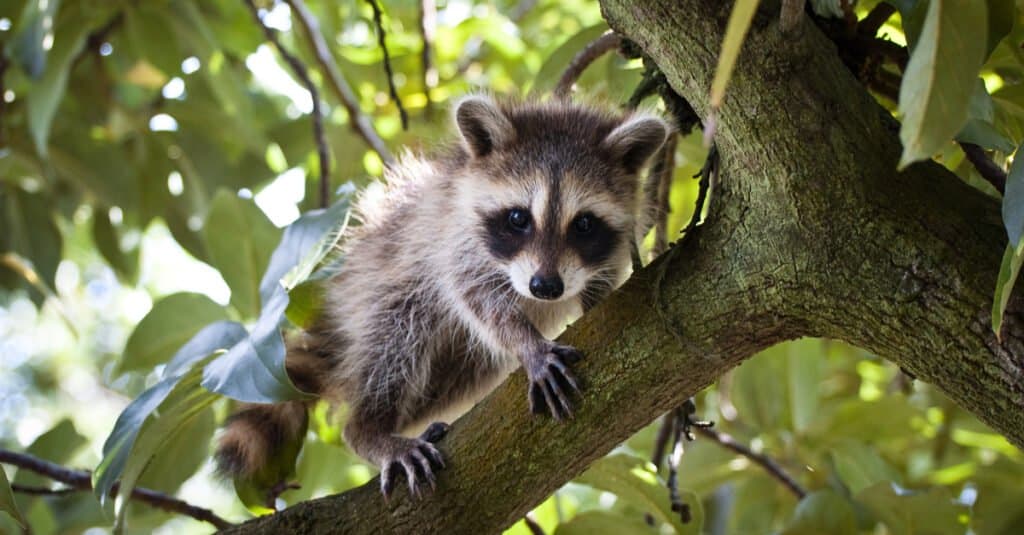
Raccoons are expert tree climbers.
©Heiko Kiera/Shutterstock.com
Cats are capable of using their speed and agility to escape from most fights they are unlikely to win. They also have great senses, so it’s hard for something on the ground to get the drop on them. Raccoons are not as swift, but they can climb trees and use bluff attacks as defenses to ward off predators.
Cats have better physical defenses than raccoons.
Combat Skills
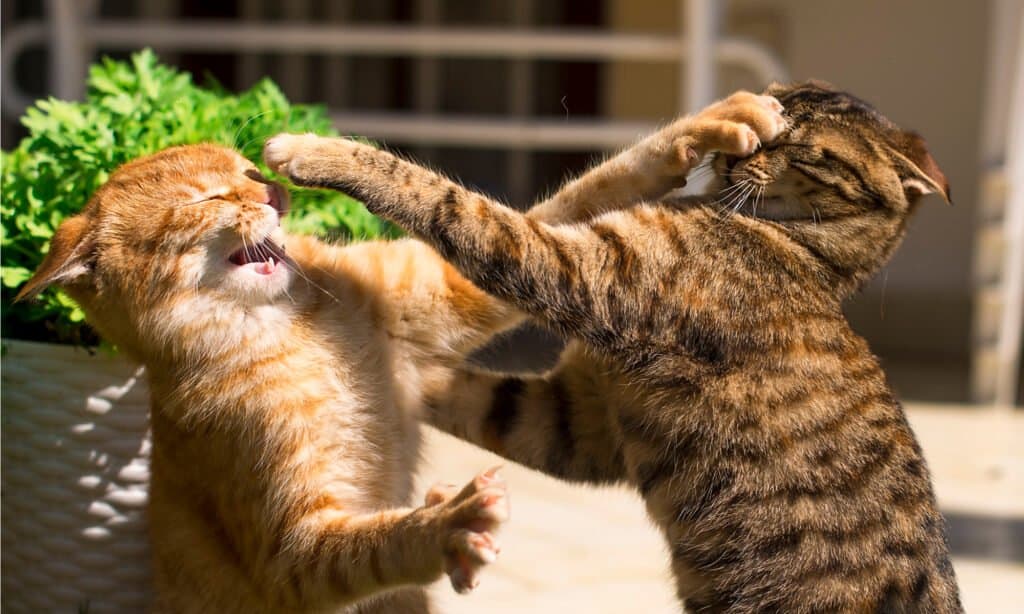
Cats display their sharp teeth and claws, arch their backs to appear larger, and employ defensive vocalizations like hissing and growling to warn off threats.
©Mariya Ilmaz/Shutterstock.com
Cats are ambush predators, stalking their prey while awaiting the opportune moment to strike. Raccoons are opportunistic predators that will consume almost any available food, including fruits, nuts, insects, small animals, fish, bird eggs, pet food, and garbage.
Cats prefer to kill with a single bite to the back of an animal’s head, while raccoons maul their prey by clawing and biting vital areas.
Raccoons have superior combat skills in a fight that doesn’t start with an ambush.
Who Would Win in a Fight Between a Cat and a Raccoon?

A raccoon would win a fight against a cat, and it would be ugly.
©vilma3000/Shutterstock.com
A raccoon is likely to win a head-to-head fight with a cat due to its size, strength, and aggressive fighting style. If a cat manages a successful ambush or uses its superior speed to escape, it might survive or even win. However, if the fight continues, the raccoon’s resilience and powerful mauling techniques make it the probable victor. As with any animal encounter, the specific outcome depends on the individual animals’ health, fighting experience, and circumstances.