Quick Take
- Raccoons can bark, and what that bark actually means depends entirely on the situation in ways most people never expect. How barking context changes →
- One sound raccoons make as babies gets permanently wired into their brain, and they go on to use it to self-soothe for the rest of their lives. The soothing sound they keep →
- A high-pitched cry near your home isn't just noise. It could be a clue about something hidden nearby. What that cry signals →
- The same raccoon sound can signal a friendly greeting or a serious threat, so telling them apart matters more than you'd think. Greeting versus threat grunts →
Only one true raccoon species, the common raccoon (Procyon lotor), is native to the United States. Although it’s a common misconception that raccoons are rodents, they actually belong to the order Carnivora, making them more closely related to bears, dogs, and weasels than to mice, rats, or squirrels. Raccoons are capable of making all sorts of noises, including squeals, churrs, and barks. Some of their sounds are tonal, while others are more rhythmic. Continue reading to explore the expressive sounds raccoons make and what each one means.
Whistle
In his research on mammalian bioacoustics, Otto J. Sieber classified the whistle as a call that represents mild distress, anxiety, or a startle response. His field data established that these whistles are almost exclusively produced by nestling cubs (kits) inside the den when startled by an unexpected touch or sound, rather than being used by mother raccoons as a primary long-distance locator tool.
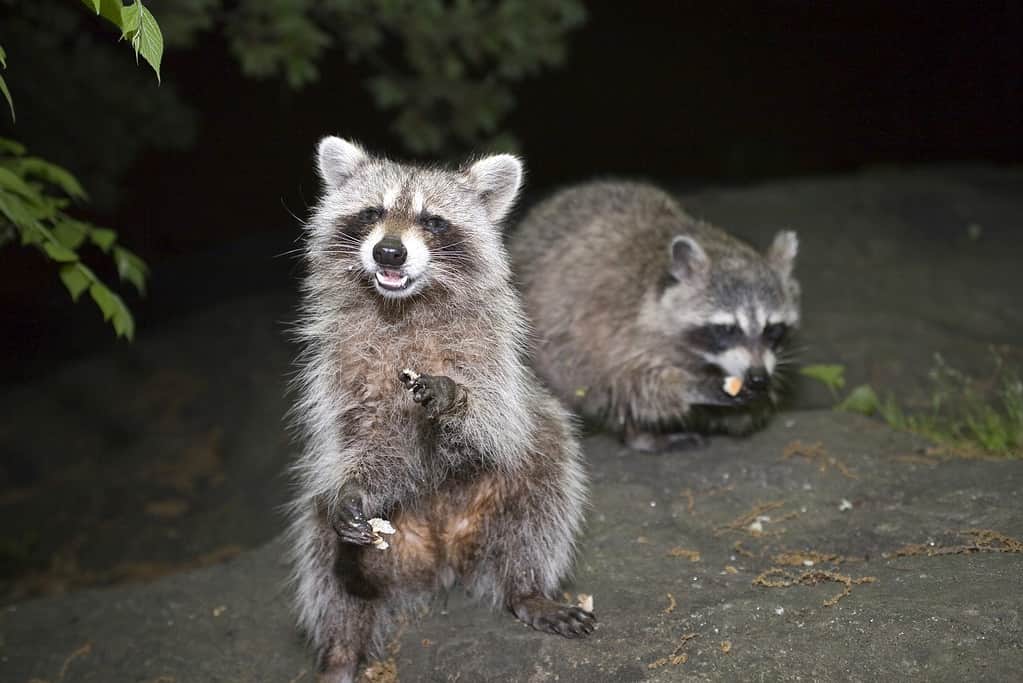
A raccoon can whistle at birth, and they’ll continue to whistle throughout their life.
©iStock.com/eddtoro
Squeal
Raccoons make a loud squeal and cry to express fear, pain, and a sense of danger. The high-pitched sound can attract other raccoons. Squeals are common from young raccoons in their den. The loud noise is also a warning signal, letting others know of a nearby threat.
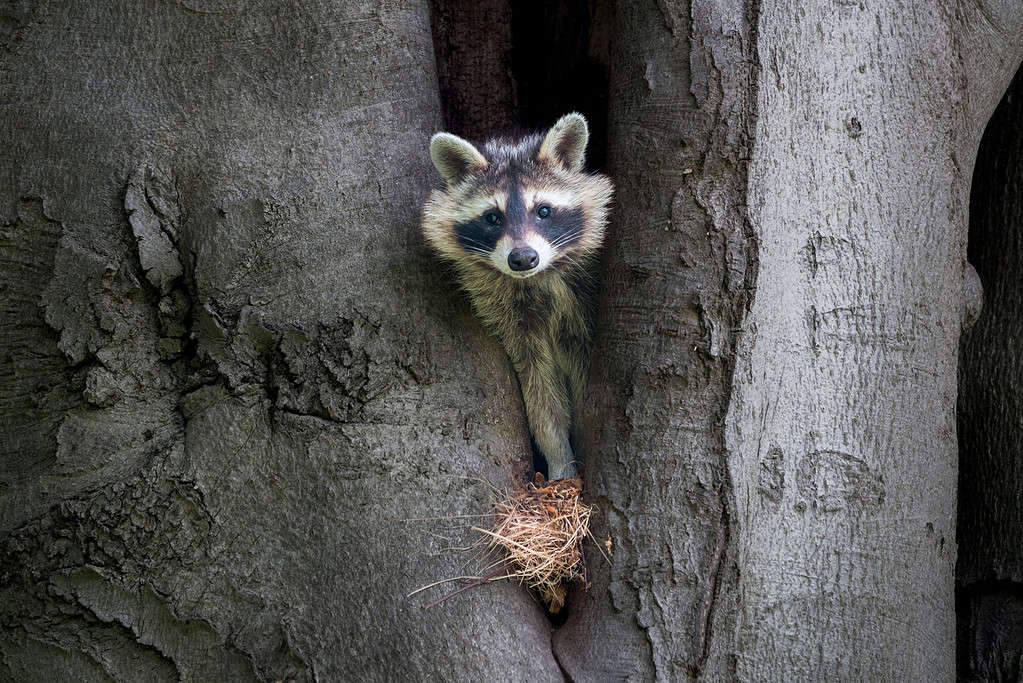
If a raccoon is in pain or feels there’s a threat, they might let out a loud squealing sound.
©Brams-Photography/iStock via Getty Images
The squeal can be mild or loud. It may also include a bit of churring. And sometimes, raccoons combine the squeal with other sounds like a whimper. This is common when they’re trying to communicate with other animals, like humans.
Screech
Whether they’re fighting or announcing they’re ready to mate, raccoons will screech. This loud sound can help a raccoon dominate or defend territory by scaring away rivals and predators.

It’s common for raccoons to screech during mating season.
©iStock.com/SergeiM
Like many of the raccoon’s sounds, the screech can vary in pitch and duration depending on the situation. There’s a difference between a mating screech and a fighting screech.
Bark
Did you know raccoons can bark? A bark is a sound raccoons make when they’re anxious or excited. The vocalization, sometimes called geckering, can mean different things depending on the situation.
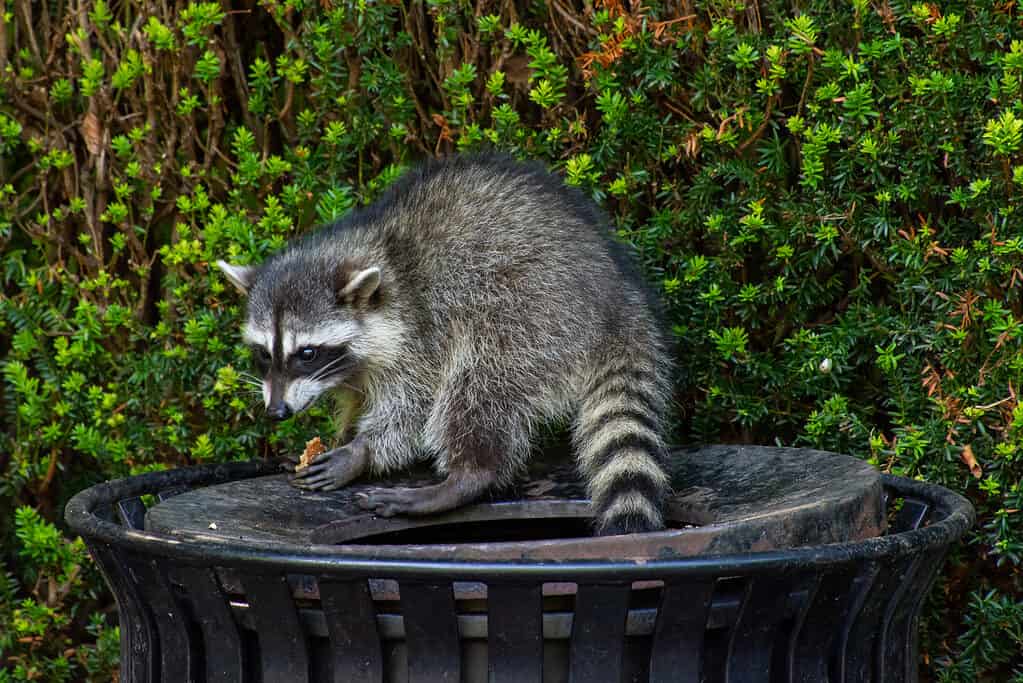
Sometimes raccoons bark in excitement over the discovery of food.
©kingma photos/Shutterstock.com
Female raccoons sometimes bark while mating. Any adult raccoon might bark in frustration or agitation. Adults also bark in excitement when they find food. The Clinic for the Rehabilitation of Wildlife offers webcams where you can watch their raccoon residents enjoy live prey training.
Grunts and Growls
Adult raccoons can grunt. Sometimes a short grunt noise sounds similar to an oinking pig. Like the other noises, this sound carries with it a few different meanings. A grunting noise can be a casual way of saying hello, or showing submission. It can also be a sign of fear or aggression.
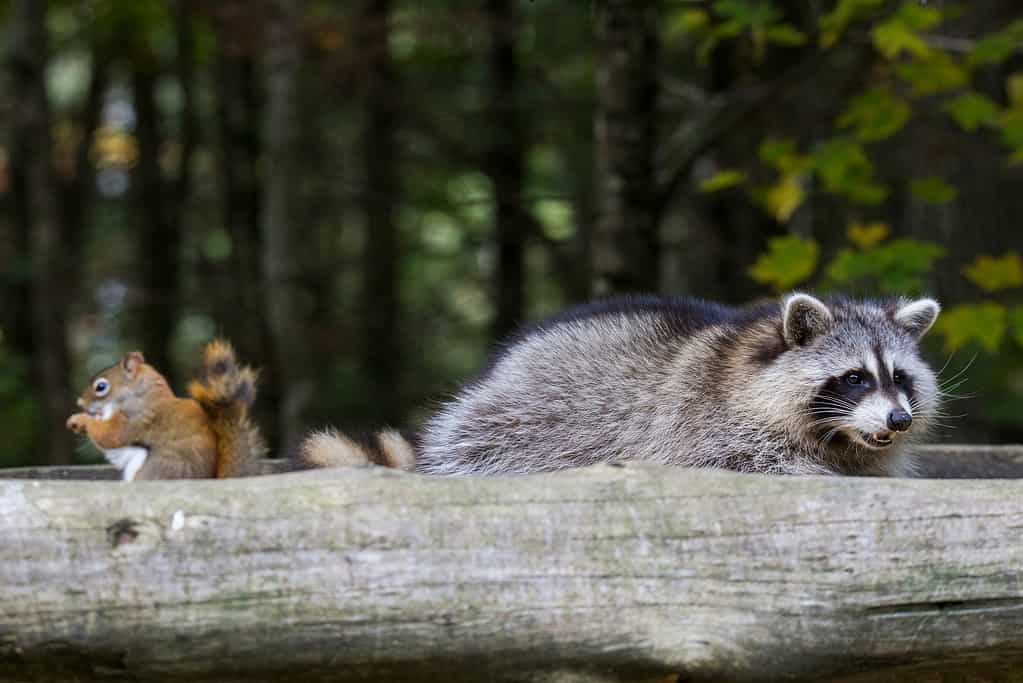
A raccoon’s grunt sounds similar to a pig’s oink.
©Mircea Costina/Shutterstock.com
Chittering
Chittering sounds are short, high-pitched noises made by raccoons when they feel playful or curious. These chirps can serve as a way to greet one another; it’s also a way to announce the presence of food or water.

Mother raccoons will chitter to calm their young, a sound the young will remember far into adulthood.
©iStock.com/Wirestock
Chittering is also a sound mothers use to comfort their young. As they mature, adults remember the noise and will recreate it to self-soothe during stressful times. Chittering sounds like the soothing purr raccoons can produce. Young raccoons love chittering the most, but older adults do it too.
Churr
Raccoons produce a rhythmic churr-churr noise. This sound happens most between a mother raccoon and her offspring while they’re feeding. Mothers use a churr-churr sound, chittering, twittering, or purring sounds to quiet down their young ones. In response to the soothing sounds, the kits express contentment with a gentle churr and sometimes a purr.
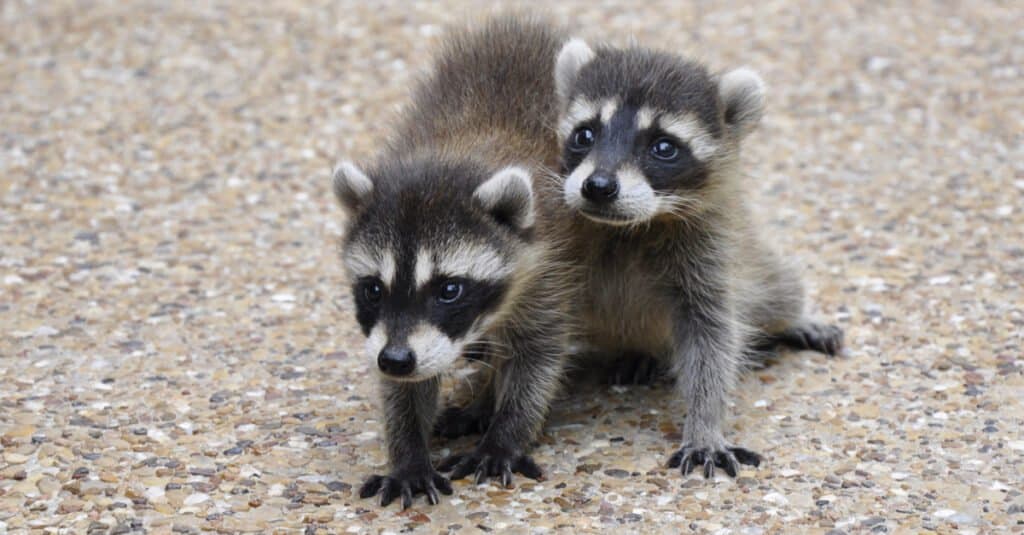
Mother raccoons will make a whirling churr-churr sound to comfort their young.
©Becky Sheridan/Shutterstock.com
Mews
The Greenwood Wildlife Rehabilitation Center offers this recording of a baby raccoon. If you listen to the sound clip, you’ll notice that even baby raccoons can make a lot of the same sounds as an adult. While in the nest, kits do a lot of mewing, crying, chittering, churring, and squealing.
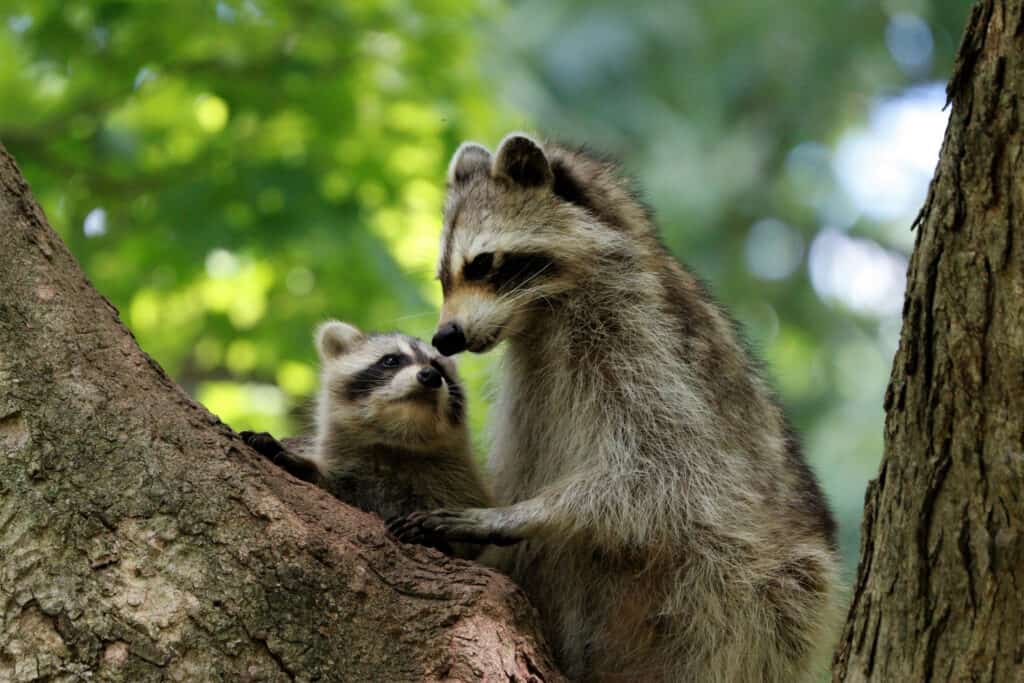
Young raccoons can make many of the same sounds as adults.
©L-N/Shutterstock.com
Whiny Cry
Baby raccoons also make a distinct crying sound. They usually reserve this sound to call out when their mother is away, which is often the case. Mother raccoons have the constant responsibility of scavenging food for their young. Adult raccoons can also cry as a way of expressing stress, fear, or pain.
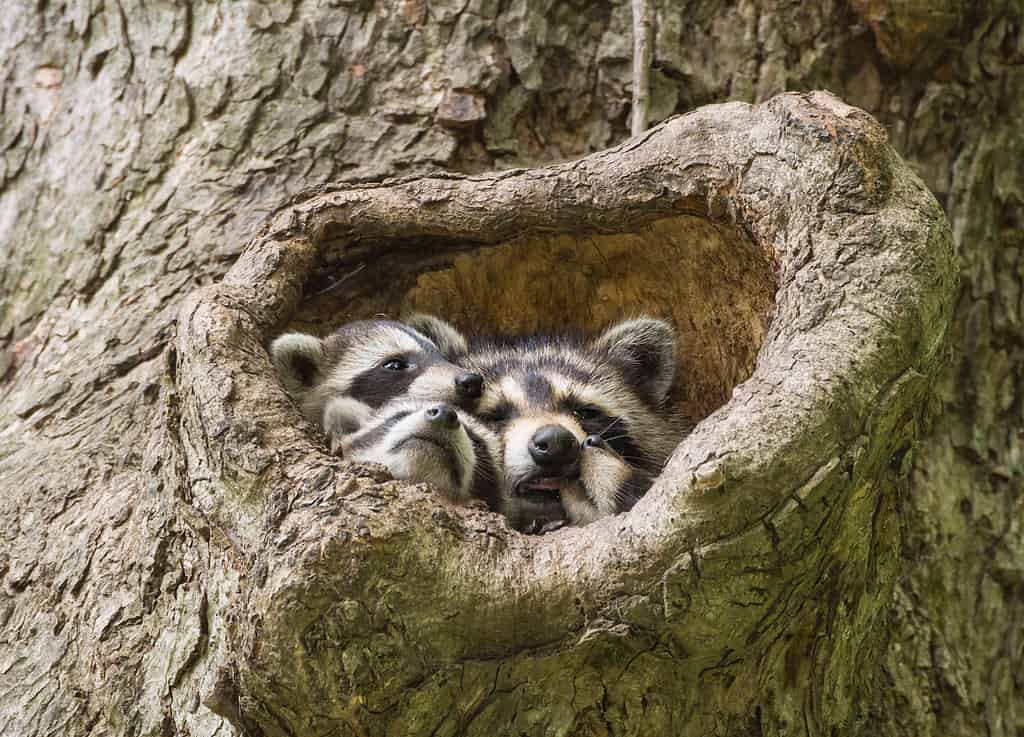
High-pitched cries can be a sign of a nearby raccoon den, with newborn kits.
©Georgi Baird/Shutterstock.com
Growl
Raccoons growl when they’re facing a threat. The sound is similar to the noise dogs make when they fight. It’s an intimidating, bass-heavy vocalization with a lot of snarl. Along with growling, they’ll likely add a few grunts and hisses as well.
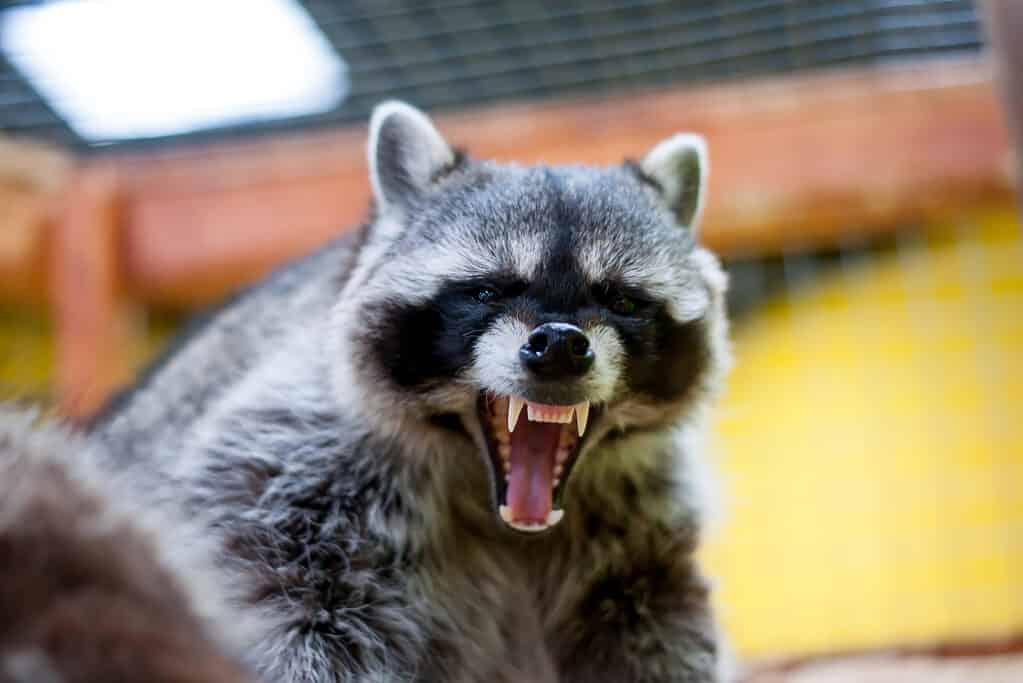
Raccoons are capable of producing an intimidating snarly growl.
©Vital9s/Shutterstock.com