Quick Take
- Koalas are famously quiet and still, but the sounds they make in September will genuinely surprise you. Hear about koala calls →
- Breeding season isn't the only thing pushing koalas to move. A second, overlooked group is also driving the September surge. Meet the overlooked group →
- The very instinct that keeps koala populations healthy is also the thing most likely to get individual koalas killed. See the dangers of roaming →
- A male koala's call may reveal something about him that rivals can actually measure, and researchers have the evidence to prove it. Explore what calls reveal →
If you decided to go into Australia’s forests to watch koalas, you’d likely be surprised that the show wouldn’t be too riveting. For most of the year, koalas don’t do very much. They spend long stretches of time tucked into the forks of eucalyptus trees resting, sleeping, and occasionally feeding on leaves. However, when September comes around, something changes, and suddenly koalas roam more than they do the rest of the year. Why? Their breeding season is underway.
During the breeding season, koalas are much more active, and they’re much louder than usual. It’s not just about adult males looking for mates either. This is also a time when young male koalas search for a home of their own. Let’s take a deeper look at koala behavior in September.
Why Koalas Start Moving More in Spring
Koalas are generally solitary animals. They don’t form large social groups or spend their days traveling together. Instead, individuals occupy home ranges that can overlap with those of other koalas, creating opportunities for animals to encounter potential mates. However, when Spring in Australia comes around, they become much more active. Male koalas roam more during this time and may travel considerably farther than they ever would the rest of the year. Some can cover substantial distances during the breeding season as they search for receptive females and interact with competing males.
Female koalas also travel more during this time, with the same intention of finding a mate. During this strange period of time, koalas that normally seem almost stationary suddenly appear to be everywhere. A koala that would typically be found high in a tree may suddenly be on the ground. Another might be spotted in a backyard or moving along the roadside. It’s quite a unique time for the small animals.
It’s Not Just Males Looking for Love
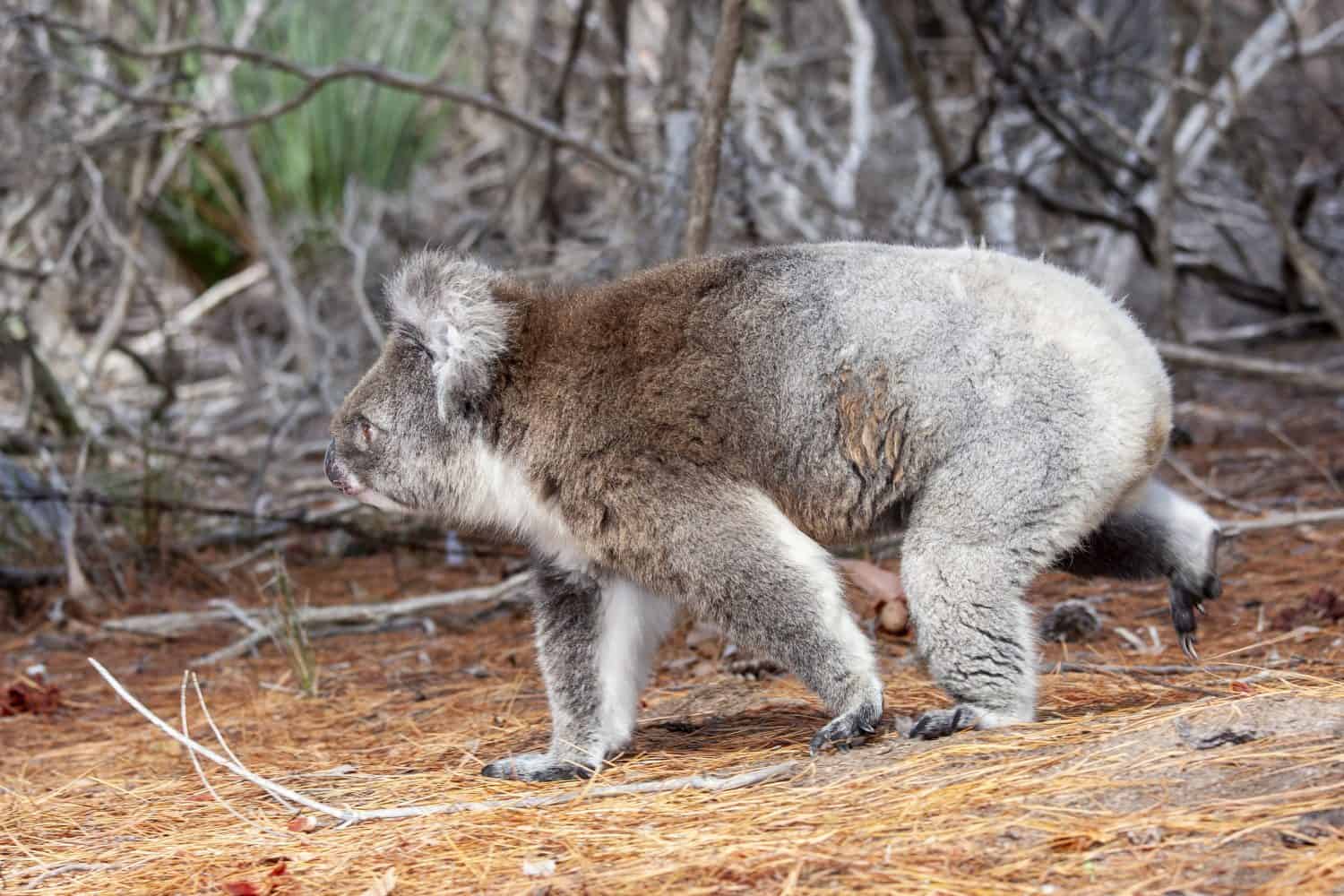
Koalas will travel during September for many reasons, from mating to finding new territory.
©Ken Griffiths/Shutterstock.com
You’ll find that many koalas roam more during September, and not just the adults looking for mates. This is also when young koalas reach the point where they need to separate from their mother and find an area for themselves, and it can be a difficult journey. In addition to facing potential predators, young koalas may try to make a home where an adult male has already established their territory. As a result, the young male will be driven away.
You may spot koalas in the most unexpected places during this time because some youngsters are forced to search far and wide. They could find themselves in places that they wouldn’t traditionally explore. Wildlife organizations note that young koalas dispersing to establish their own territories can travel considerable distances and face an elevated risk of being struck by vehicles or attacked by dogs. In other words, the same behavior that is essential for koala populations to reproduce and maintain healthy territories can also expose individual animals to danger.
Koalas Also Get Louder
Perhaps the strangest part of the spring transformation is the noise. Koalas have a reputation for being quiet, sleepy creatures. Then the breeding season arrives, and people who live near a koala habitat may suddenly hear a sound that seems completely out of the ordinary.
During mating season, male koalas produce deep bellows, grunts, growls, and snarling sounds. The calls can be surprisingly powerful and may travel great distances. Though the animal making it may be adorable, the sound is anything but cute. In fact, a male koala’s bellow has been compared to everything from a snore followed by a roar to the noises made by a pig or hippopotamus.
Why does the koala make these sounds? It all comes down to communication. A male’s bellow advertises his presence to other koalas. It can help attract females while also signaling to rival males that another male is occupying the area.
The sound may even encode information about the caller. Research summarized by New South Wales’ Environment and Heritage department has found that variation in koala bellows is likely associated with male body size. In this way, the sound could potentially help other koalas assess the animal producing the call. In practical terms, the bellow is a koala’s way of announcing, “I’m here.” Needless to say, because multiple males may be doing the same thing, the Australian bush can sound considerably noisy during breeding season.
Females Also Make Noises
Females can produce a range of sounds, including bellows and high-pitched calls. Typically, when the female produces a low-pitched bellow, it indicates that she’s ready to mate. A squawk or a wail may occur during the mating process. Koalas also have different vocalizations associated with interactions or distress. Females and younger koalas may squeak or squawk when threatened or interacting with other animals.
More Roaming Means More Threats
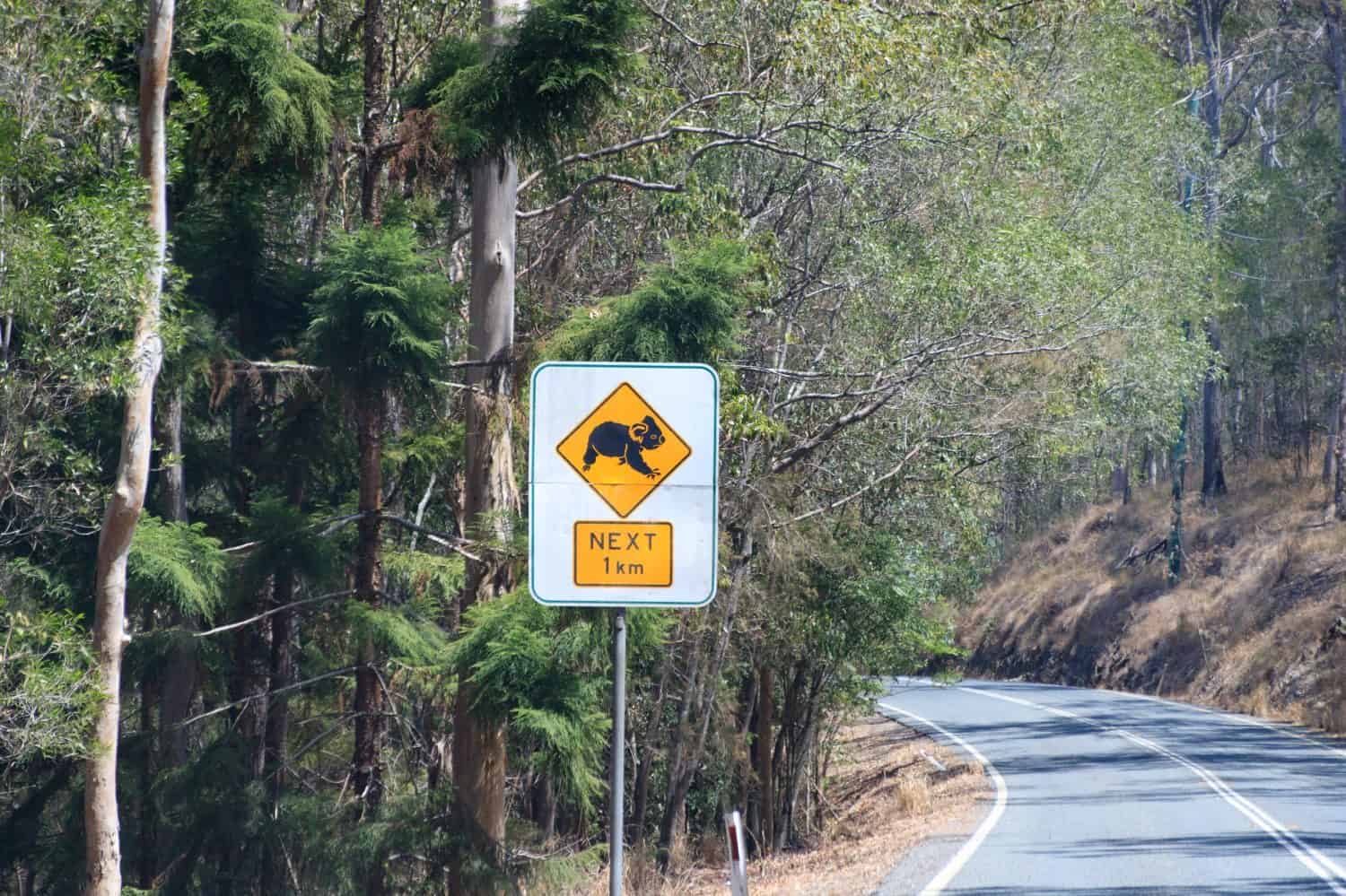
Roadways can be serious threats to koalas, so official put out road signs to help keep them safe.
©Bossa Art/Shutterstock.com
Though it’s a fascinating behavior, the fact that koalas roam more during mating season means that they may also be at higher risk of injury or death. Two primary threats increase this time of year:
Roads
Vehicle strikes are one of the most serious dangers koalas face, and breeding season can make the problem worse. A koala crossing the road may have little understanding of the danger created by traffic, so it may move slowly or hesitate in the middle of the road. The increased seasonal movement has prompted wildlife authorities to introduce specific measures in areas where koalas and vehicles frequently cross paths.
In 2026, for example, New South Wales installed vehicle-activated koala-zone signs in parts of Sydney’s Sutherland Shire. The signs were designed for roads that went through important koala habitats and operated during the August-to-February breeding season, when koalas become more mobile. They may have saved many lives.
Dogs are More of a Threat
There’s also an increased chance of dog attacks during September’s mating season. A koala that remains high in a tree is generally out of reach of a household dog. But once the koala climbs down and travels on the ground, the situation changes dramatically. Koalas are not built to outrun or fight off dogs, so a confrontation is likely to lead to serious injury. This type of incident is also more common when koalas roam into backyards where dogs may be present.
For people living in or near koala habitat, keeping dogs securely contained after dark can make a meaningful difference. Wildlife officials also recommend that people in these areas use koala-friendly fencing that provides koalas with a way to escape if they enter a yard.
A Busy Season for One of Australia’s Most Vulnerable Animals
Spring’s increase in koala activity is ultimately a positive sign of a functioning natural cycle. Breeding season gives adults opportunities to find mates, while young animals begin dispersing and establishing territories that can support future generations.
But when koalas roam more, they’re also exposed to some of the most dangerous features of the modern Australian landscape. So, if you find yourself in this area during September or the spring season, keep an eye out for a wandering koala. You’ll be contributing to the continuation of a happy koala population.