
Quick Take
- Why would a deer evolve fangs instead of antlers? The answer has everything to do with where it lives. Once you see it, it makes perfect sense. See why fangs beat antlers →
- When a male loses a fang fight, his surrender ritual is something you'd never expect from a wild animal. Discover their surrender calls →
- These deer break one of the most consistent rules across the entire deer family, and the fangs are only part of the story. Explore their unusual litter sizes →
- A pair of 2-inch fangs sounds dangerous at mealtime, but there is a bizarre anatomical workaround that makes it possible. See the tusk anatomy →
The gorani deer, also known as the Chinese water deer, breaks the typical deer mold. These deer lack antlers, have an impressive set of fangs, and can produce a terrifying screaming noise! So, what do we know about these unusual members of the Cervidae family?
What Do Chinese Water Deer Look Like?
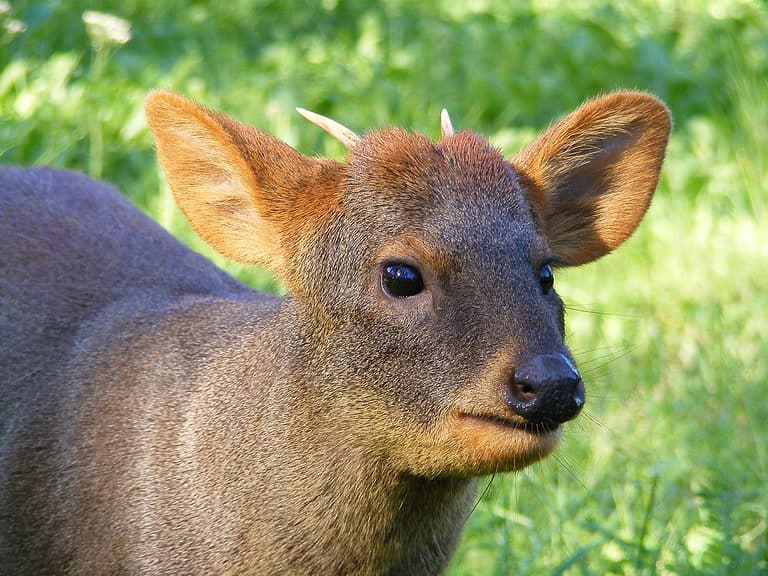
Chinese water deer (Hydropotes inermis) are small cervids that reach a height of around 1 foot 8 inches and weigh between 14 and 31 pounds. They have dense hair and a seasonal brown/tan coat that’s shorter in the summer.
Their main distinctive feature is that neither the males nor the females have antlers. In many other deer species, antlers are used as a sexual display during the mating season, and in some species, the males even come to blows using these appendages.

Chinese Water deer do not have antlers.
©iStock.com/Simon Hutchinson
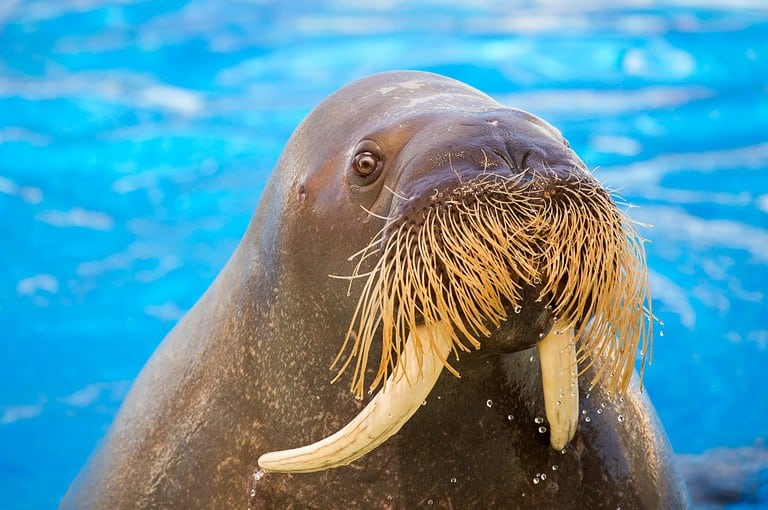
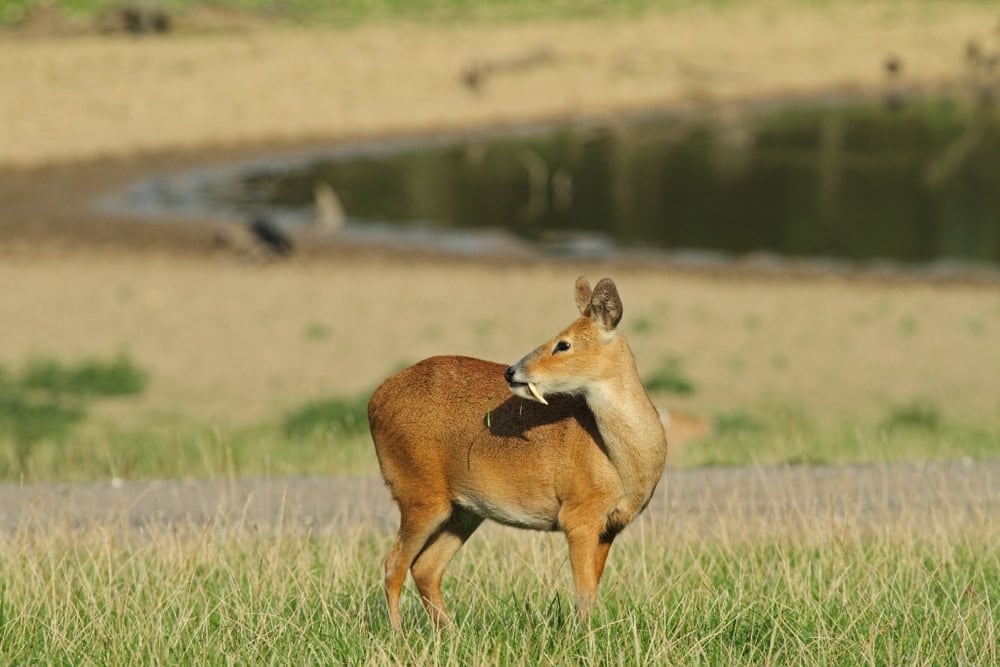
In the water deer, however, the males have long upper canine teeth (tusks) that resemble fangs. They use these tusks for the same purpose as antlers in other deer species. Males show them off by pulling back their lips to expose their tusks as they try to exert dominance over other males. The tusks are around 2-3 inches in length. If a fight occurs, the males stand parallel to each other and swing their heads downward to injure their rival on the nape of the neck or shoulders.
The tusks are adapted for slashing and sideways stabbing, and they can inflict serious injuries. Strips of hair and skin are torn out, and the wounds can be deep and serious. Once a male gains the upper hand, he chases his rival out of the territory. Defeated bucks have also been seen ‘surrendering’ by lying with their heads and necks flat on the ground.
Luckily, the fangs are angled in such a way that they do not get in the way when the deer is eating.
Water Deer Location and Lifestyle
These deer are native to China, North Korea, and South Korea, but have also been introduced in the UK. They like to live in areas with dense vegetation cover near wetlands or rivers. Their coat blends in with reed beds and riverine grasslands. These deer can also swim and use waterways to reach other areas in wetland networks. That said, they prefer drier land over very swampy conditions.
In these environments, they play a vital role as a primary consumer. They help shape the understory and reed beds, and also serve as prey for local carnivores. They contribute to nutrient recycling through their rumination and the deposition of dung and urine.
In such dense vegetation, antlers could easily get caught, so fangs are a more practical adaptation for male-male combat.
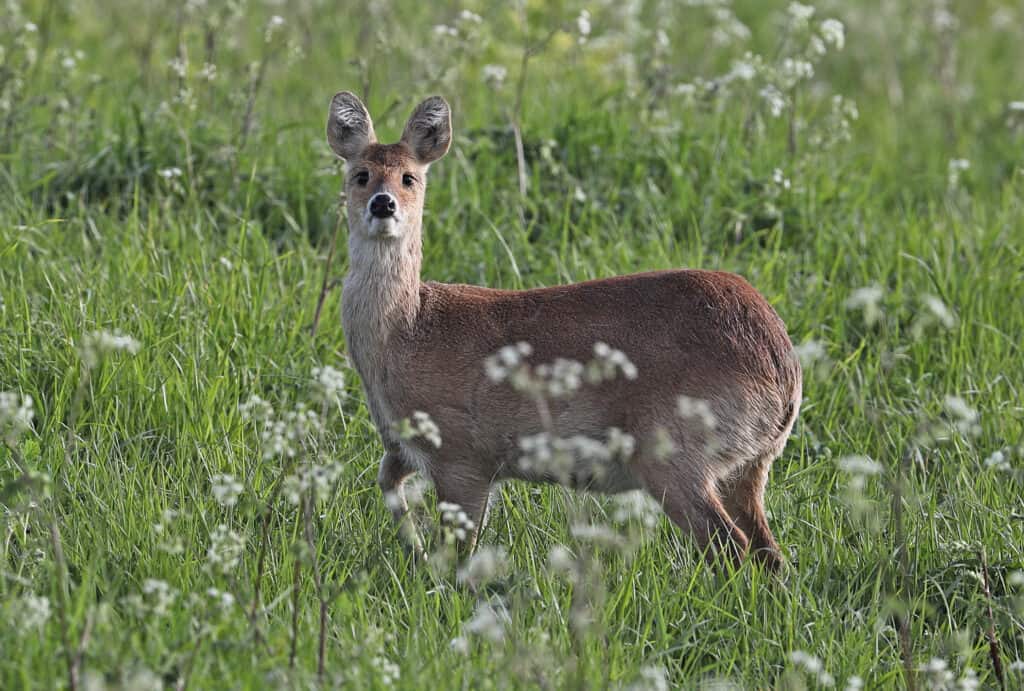
Water deer have a golden-brown coat mixed with some black hairs.
©iStock.com/Neil Bowman
Water deer typically live alone or in small family groups, but are most often seen in pairs. Male water deer do not tolerate other males in their territories, but will allow one or two females. They are most active at dawn and dusk and hide away in dense vegetation during the day to avoid predators.
Water Deer Predation
Several large carnivores view water deer as their next meal. The leopard, gray wolf, red fox, tiger, dhole, and Eurasian lynx will hunt them if they can. The fawns remain hidden in vegetation for long periods while their mother forages. These deer cannot digest plant carbohydrates efficiently, so they eat foods that are low in fiber but high in soluble carbohydrates, proteins, and fats. This makes them highly selective feeders that forage for herbs, forbs, and young, sweet grasses. Unusually for deer species, Chinese water deer can have up to seven fawns in a litter, with births typically occurring in late spring or early summer in temperate regions.
Adults also rely on hiding away as their main defense, but if this doesn’t work, they can run at speeds of up to 30 mph. When escaping a threat, they arch their backs and leap forward in a series of bounds.
Warning Screams
These deer also have a highly effective way of warning each other that danger is close by. They can repeatedly make a loud, sharp ‘barking’ sound as an alarm call. Males also make aggressive squeals and even screams when competing for a mate.
Sadly, this species is listed as Vulnerable (IUCN Red List) with a decreasing population of only around 10,000 individuals. Their numbers are threatened by housing, commercial, and industrial developments, as well as agriculture (annual and perennial non-timber crops). They are also hunted, trapped, and used to obtain colostrum, which is sold for use in Chinese folk medicine. In the UK, where an introduced population has become established, Chinese water deer are also harvested for venison sold in specialty markets.