
Quick Take
- Red pandas are officially classified as carnivores, though their diet tells a completely different story. See the dietary reality →
- Zoos run coordinated breeding programs to save red pandas, though critics argue these programs may be doing more harm than good. Read the critics' case →
- Protecting a single red panda habitat automatically shields a surprising list of other endangered species, and that turns out to matter quite a lot. Explore the habitat benefits →
- Red pandas were named nearly 50 years before giant pandas, and the two animals are not even related.
International Red Panda Day is celebrated on the third Saturday of September. Red pandas are undeniable crowd favorites. With their fluffy reddish fur, bushy tails, and expressive faces, these pint-sized climbers look absolutely huggable. But beneath that adorable exterior is an animal fighting for survival — making red panda conservation vital to protecting them from habitat loss and extinction.
Sometimes called “bamboo bears,” red pandas live solitary lives in the cool canopy forests of the Eastern Himalayas, spending their days navigating the treetops and consuming thousands of bamboo leaves. Uniquely suited to these cool mountain homes, red pandas are vulnerable to countless threats today. Deforestation, habitat loss, forest fragmentation, attacks and disease from free-roaming dogs, illegal poaching and accidental trapping, and a changing climate are steadily shrinking the forests they depend on. In fact, wild red panda populations have dropped by nearly 50 percent in just two decades, leaving these charismatic animals increasingly isolated in a landscape with fewer and fewer safe places to live.
On International Red Panda Day — and all throughout the year — saving these beloved conservation icons means protecting an entire ecosystem. From their solitary lives in the treetops to the conservation programs working to secure their future, there is far more to these “bamboo bears” than their irresistible faces. And because they share this habitat with species like snow leopards, pangolins, and Himalayan black bears, protecting the red panda automatically saves these other animals too.
Meet the “First Panda”
Western scientists discovered and named the red panda in 1825 — nearly 50 years before the giant panda. Despite the shared name, red pandas are not closely related to giant pandas. They belong to their own distinct genetic family (Ailuridae) and are closer relatives to raccoons, skunks, and weasels.
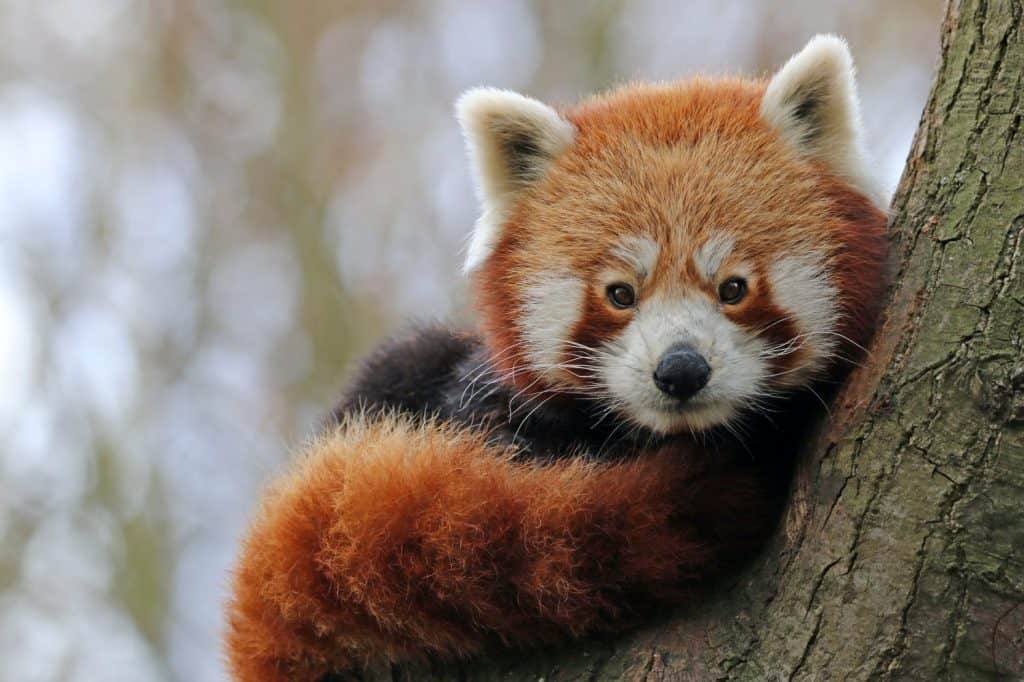
The IUCN Red List categorizes red pandas as an Endangered species.
©Edwin Butter/Shutterstock.com
Scientists recognize two distinct subspecies of red panda:
- The Himalayan red panda (Ailurus fulgens fulgens) is found in Nepal, Bhutan, northern India, and parts of China. It typically features lighter fur, a whiter face, and fainter tail rings.
- The Chinese red panda (Ailurus fulgens styani) lives in southwestern China and northern Myanmar. It is slightly larger with darker fur and more distinct tail rings.
Red pandas are master climbers, built specifically for life in the high-altitude canopy forests of the Eastern Himalayas (7,000 to 15,000 feet). Nearly every one of their physical traits helps them navigate, feed, and survive in their cold, mountainous home.
Their sharp, semi-retractable claws provide excellent grip, and their wide, fur-covered footpads offer traction on cold, slippery branches. Flexible ankle joints allow them to climb headfirst down tree trunks, while an enlarged wrist bone functions like thumb, enabling them to grip bamboo stalks and pluck leaves with incredible dexterity.
The red panda’s reddish-brown fur blends into moss and lichen-covered bark, while its white facial patches help reduce sunlight glare. And that spectacular ringed tail isn’t just for show. It also provides balance on high branches and doubles as a warm blanket wrapped around the body during freezing temperatures. Built for the cold, red pandas do not tolerate heat well and rely on dog-like panting to cool off when temperatures rise.
A Bamboo Diet with a Metabolic Catch
Despite belonging to the order Carnivora, the red panda has an unusually plant-heavy diet. Bamboo makes up 85 to 95 percent of their diet, supplemented by fruits, roots, eggs, and small insects. A single red panda can eat up to 20,000 bamboo leaves a day. However, red pandas digest less than 25 percent of the bamboo they consume. To get enough nutrients, they must eat an astonishing 20 percent to 30 percent of their total body weight in fresh bamboo every day.
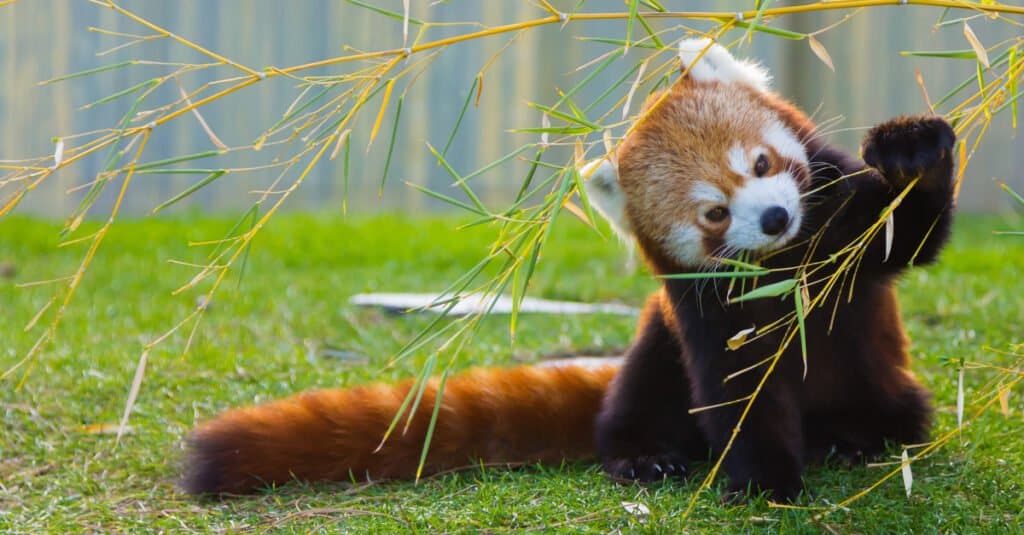
Red pandas must eat thousands of bamboo leaves every day to get enough nutrition.
©Jose Angel Astor Rocha/Shutterstock.com
To compensate for this low-energy diet, red pandas have evolved an extraordinarily slow metabolic rate. They are active mostly at dawn, dusk, and night (crepuscular and nocturnal), spending the hottest daylight hours sleeping in tree hollows or draped over branches to conserve energy.
Tiny Forest Guardians
Red pandas may be small, but they play a crucial role in their mountain forest habitats. By eating fruits as they move through the canopy, they disperse seeds that help the forest grow and regenerate.
Their dependence on mature, connected forests also makes red pandas valuable indicators of ecosystem health. Their disappearance can be an early warning sign of severe forest fragmentation, degradation, or disturbance that threatens other wildlife as well. The survival of red pandas is closely tied preserving the health and connectivity of the entire mountain ecosystem.
Why Red Pandas Prefer to Be Alone
Outside of the breeding season and the relationship between mothers and cubs, adult red pandas are highly solitary. An individual’s personal territory typically covers about 1 square mile, and adults generally avoid each other throughout most of the year.
To avoid direct confrontation, males patrol their borders and mark trees, pathways, and footpads using urine and scent glands on their paws and tails. These “scent posts” broadcast their ownership and reproductive status.
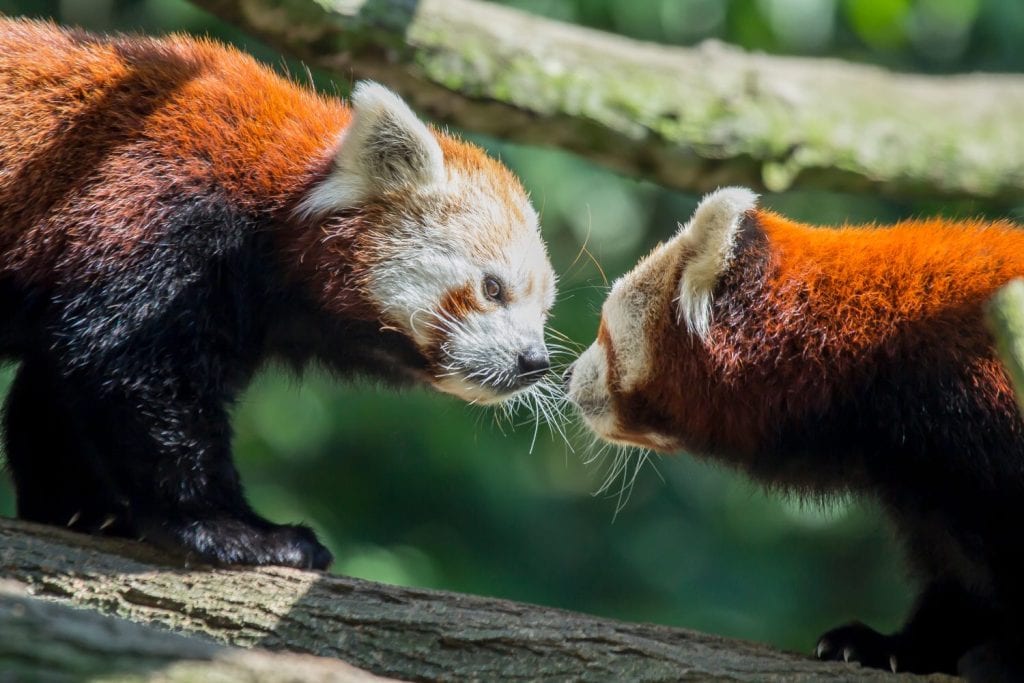
Red pandas have many names, such as red cat-bear, lesser panda, firefox, and red bear-cat.
©Zoo_freeride/Shutterstock.com
Although red pandas are generally quiet, they use twitters, bleats, squeals, and snorts during social interactions. When threatened, they emit a loud, grumbly bark, while cubs use high-pitched whistles to signal their mothers for help. They also use visual cues, such as head-bobbing and intense, direct staring, to signal their mood and intentions to other pandas.
Protective Mothers
When it comes to raising the next generation, female red pandas do all the work. Pregnant females construct secluded nests in rock crevices, tree hollows, or thick bushes, lining them with cozy moss and leaves. After giving birth to one to four cubs, a mother becomes fiercely protective and often moves her offspring between several different den sites to keep them safe, carrying each cub one-by-one in her mouth.
Young red pandas remain dependent on their mothers for up to 18 months. As they grow, they learn vital skills through social play, such as wrestling, lunging, and play-biting. Once fully mature, young pandas leave their mothers’ ranges to establish their own independent territories, returning to the solitary lifestyle of adult red pandas.
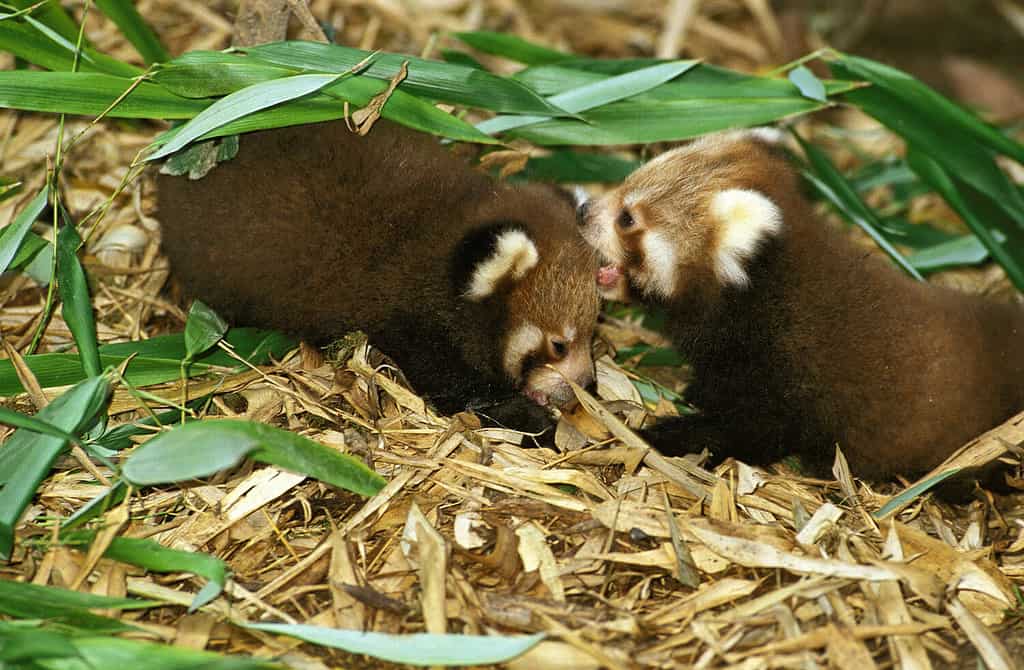
Red panda cubs stay in their mother’s den for the first three months of life.
©slowmotiongli/Shutterstock.com
Cute But Surprisingly Fierce
Red pandas may look like cuddly stuffed animals, but they are far from defenseless. Their primary defense is climbing. At the first sign of danger, a red panda will scramble up the nearest tree to stay safely out of reach. If cornered, a red panda stands on its hind legs to appear bigger and more intimidating. From this stance, it can swipe with its sharp claws and bite. As a last resort, red pandas can release a foul-smelling secretion from their scent glands to repel predators.
They might be cute, but they are far from helpless.
An Endangered Species With Nowhere to Go
Despite their impressive adaptations, red pandas are losing the one thing they cannot live without: their mountain forest homes. Wild populations have plunged by 50 percent in just two decades. The IUCN Red List classifies them as Endangered, with estimates suggesting fewer than 10,000 — and possibly as few as 2,500 — red pandas remain in the wild across Asia’s high-altitude ranges.
Their survival is threatened by a combination of interconnected challenges, with severe habitat destruction being the most significant. Logging, farming, and gathering firewood strip away the dense forest cover red pandas need to survive. Roads, dams, and mining projects fragment continuous forests into small, disconnected patches.
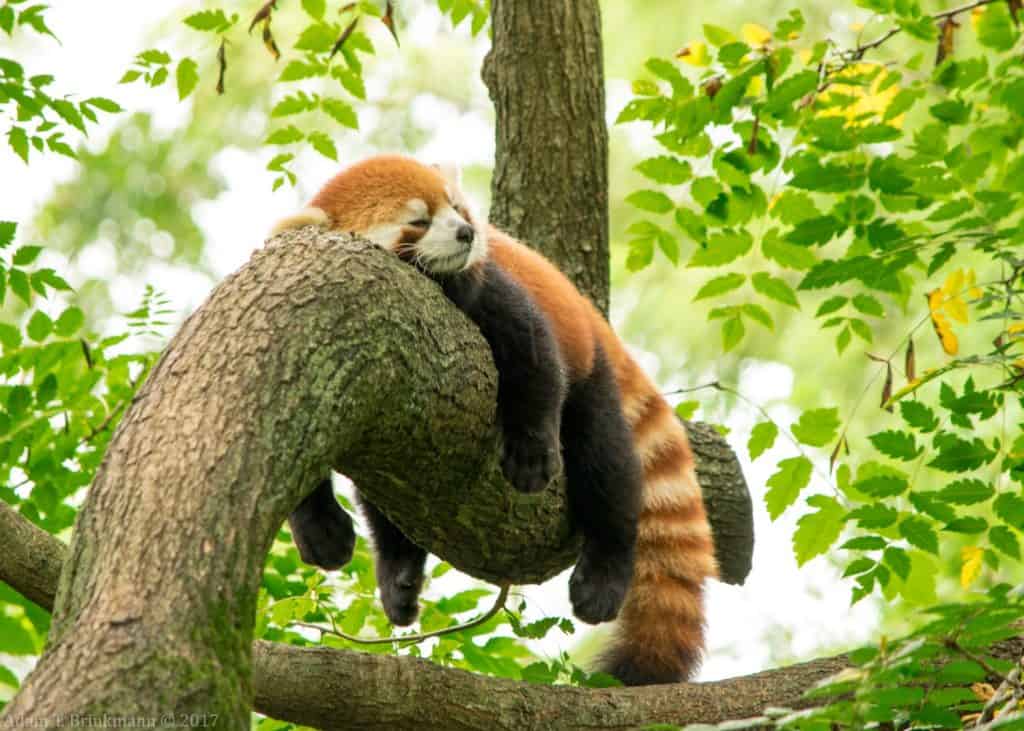
Red pandas often drape their bodies across tree branches and sleep up to 17 hours each day.
©Adam Brinkmann/Shutterstock.com
In Nepal, red panda habitat is broken into over 400 isolated fragments, making it hard for pandas to find food, mate, or maintain genetic diversity. The crisis is particularly urgent because 70 percent of red panda habitat in Nepal lies completely outside official protected areas.
Poaching, Predators, and Human Intrusion
Human activities and wildlife crime put extra pressure on wild red pandas beyond habitat destruction. Free-roaming cattle and yaks graze in bamboo understories, trampling and destroying the young bamboo shoots red pandas depend on for food.
Red pandas are also illegally hunted for their plush fur and bushy tails, which are sold for traditional clothing and decorative items. Their adorable looks make them targets for live capture to supply the illegal exotic pet trade. Unfortunately, wildlife trafficking is often difficult to measure and stop because most cases go unreported. For example, Nepal’s Wildlife Crime Control Bureau estimates 90 percent of wildlife crimes go unreported.
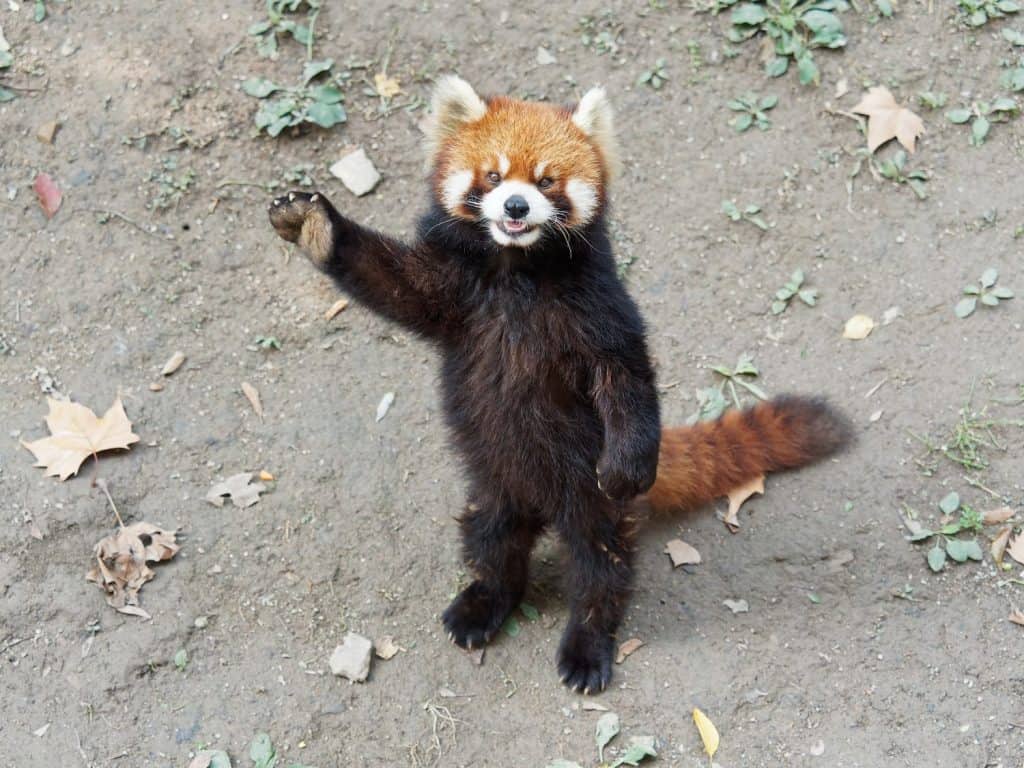
Red pandas stand on their hind legs to appear larger.
©atiger/Shutterstock.com
Even when not directly targeted by hunters, red pandas face many deadly hazards on the forest floor. Wire snares set by hunters targeting wild pigs or deer frequently catch red pandas, leaving them severely injured or killed. Free-roaming and feral dogs also attack red pandas when they descend from trees to travel between isolated forest patches. Even if they escape, the pandas are at risk from exposure to fatal illnesses like rabies and canine distemper from these encounters.
The Threat of Climate Change
As a species strictly adapted to cool, high-altitude mountain forests, red pandas are exceptionally vulnerable to global warming. Rising temperatures and unpredictable weather affect bamboo — which makes up to 95 percent of the red panda’s diet. As temperatures rise, bamboo forests shift higher up mountain slopes, forcing heat-sensitive red pandas into increasingly narrow strips of usable habitat.
Because their forest homes are already fragmented, red pandas have virtually nowhere higher to move as their climate shifts.
Protecting Red Pandas in the Wild
Because red pandas are so inextricably tied to their forest habitat, protecting them also requires protecting their entire ecosystem. Conservation efforts increasingly focus on habitat restoration, keeping forests connected, community involvement, and local economic support.
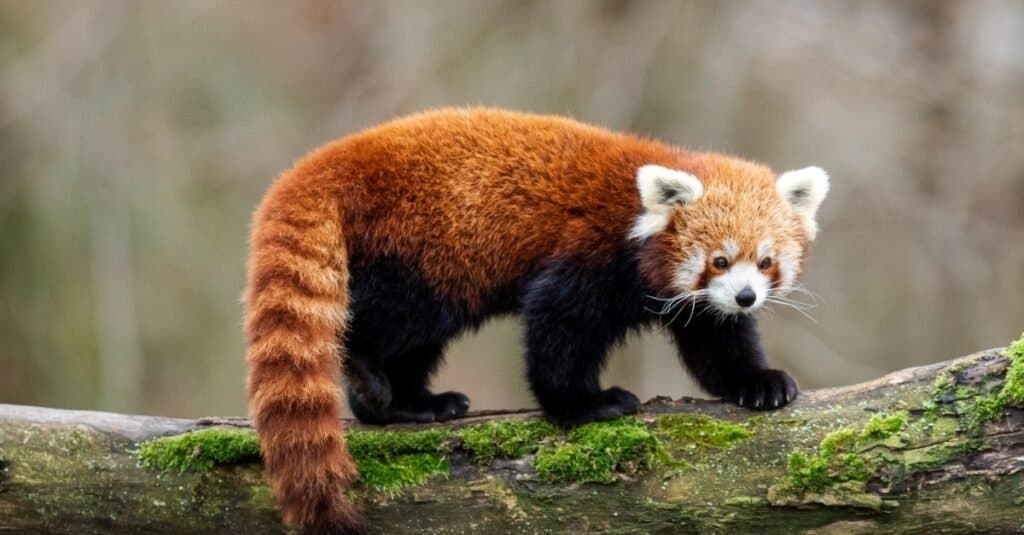
Red pandas use many different sounds to communicate, including squeals, hisses, grunts, and even a quack-like huff.
©iStock.com/AB Photography
For example, programs like the Panchthar-Ilam-Taplejung (PIT) Corridor help connect fragmented mountain forests across the Nepal-India border, creating “bio-bridges” so isolated pandas can travel safely. Other initiatives like “Plant a Red Panda Home” buy degraded private land and grow native tree nurseries to reforest clear-cut areas.
To reduce forest destruction, some programs promote eco-tourism, organic farming, fuel-efficient cookstoves (reducing firewood needs), and better livestock sheds to prevent overgrazing. Anti-poaching patrols dismantle traps, while protected areas like India’s Singalila National Park and China’s Wolong Reserve offer safe sanctuaries from human encroachment. Many conservation programs also employ local residents to patrol habitats, remove illegal snares, collect scientific data, and educate neighbors.
Can Zoos Help Save Red Pandas?
While wild protection is the primary goal, global zoo networks actively support red panda conservation through managed breeding, funding, and reintroduction programs. The Global Species Management Plan (GSMP) coordinates red pandas across six regional zoo associations (including North America’s AZA and Europe’s EAZA). Coordinators use tracking software (ZIMS) to plan transfers and maintain genetic diversity. Programs like AZA SAFE partner with conservation groups like the Red Panda Network to fund anti-poaching patrols, habitat restoration, and educational campaigns. Managed breeding can directly rebuild wild populations. For example, India’s Darjeeling Zoo successfully released nine captive-born red pandas into Singalila National Park under GSMP guidance.
Despite these successes, captive red panda conservation programs remain a topic of debate within the conservation community.
The Debate Over Captive Conservation
While zoos support conservation, advocacy groups and critics raise serious concerns about keeping red pandas in captivity. Critics argue captive breeding functions more as a visitor attraction, as captive-born animals rarely get reintroduced to rebuild wild populations. Red pandas are naturally crepuscular and nocturnal but paid “meet and greet” experiences encourage them to stay active during daytime visitor hours. Artificial enclosures struggle to replicate the massive vertical canopy of a mountain forest, which can cause stress and hinder breeding. High-profile escapes from facilities in Australia, Poland, and the US highlight welfare and safety concerns—one escape in Australia ended in a fatal traffic accident. Captive pandas face severe risks during sudden climate events, such as a 2022 cold snap at Longleat Safari Park that killed two cubs when temperatures dropped to 17.6 degrees Fahrenheit.
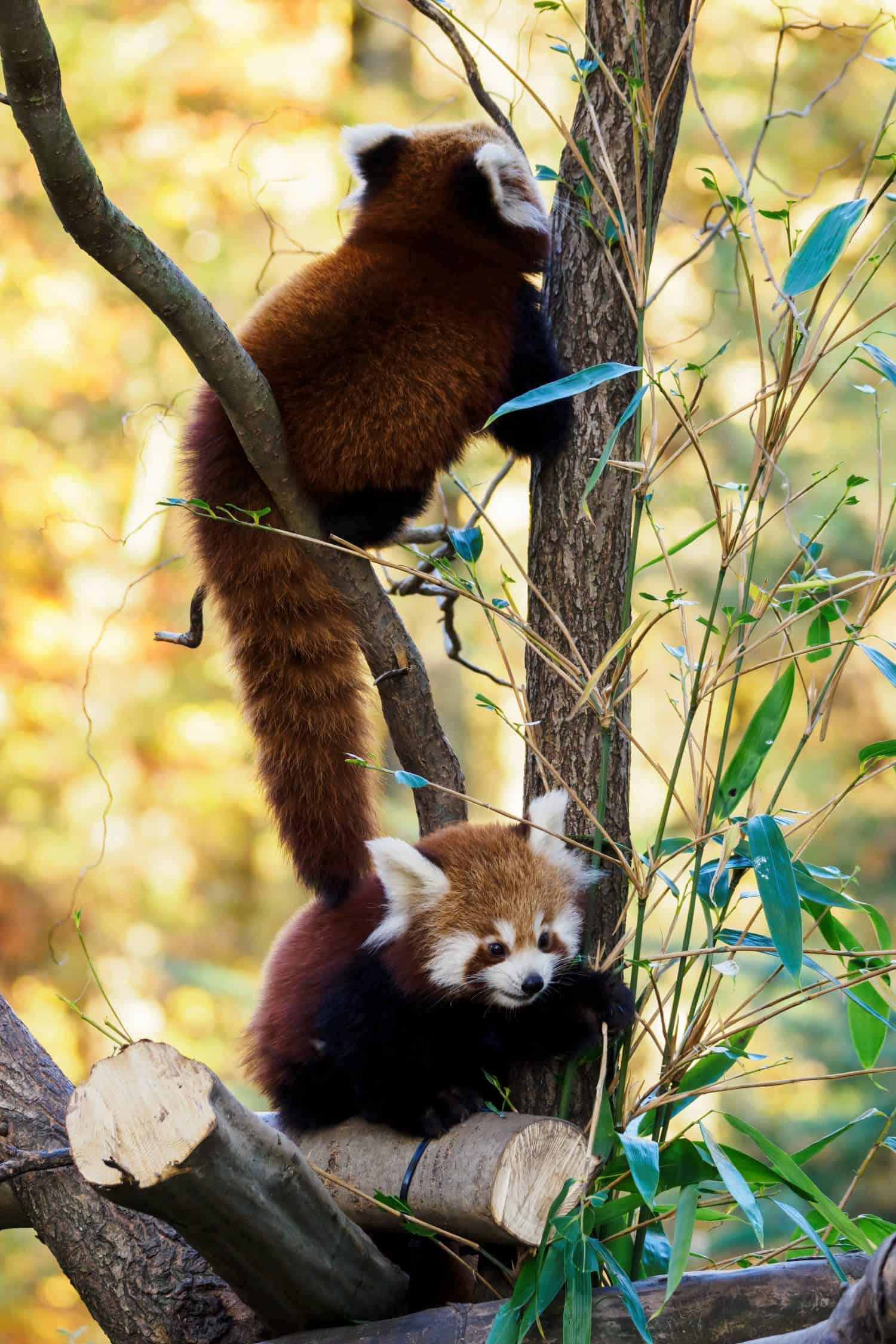
Measuring 12 to 20 inches, a red panda’s tail is nearly as long as their entire body.
©Lapis2380/Shutterstock.com
These concerns don’t erase the potential conservation value of coordinated breeding programs, but they do highlight that breeding red pandas in captivity cannot replace protecting wild, intact mountain forests where wild red pandas live.
Protecting the Panda Behind the Symbol
Red pandas are amazingly well-adapted for life in the Himalayan canopy. They can climb headfirst down trunks, grip bamboo with a false thumb, and sleep through freezing temperatures wrapped in their bushy tails. However, none of these physical adaptations can protect them from the loss of their forest habitat.
The future of the species relies on reconnecting split habitats, restoring forest corridors, stopping poaching and snares, managing feral dogs, and partnering with local communities. International Red Panda Day celebrates these animals while highlighting their critical needs. Supporting community-based groups like the Red Panda Network and Rainforest Trust funds ground-level patrols, restoration, and education. Red pandas thrive only when the cool, green mountain canopy is intact. Protecting them means safeguarding an entire biodiversity hotspot for generations to come. Their survival ultimately depends on protecting remaining forests and reconnecting the red pandas’ broken habitats.
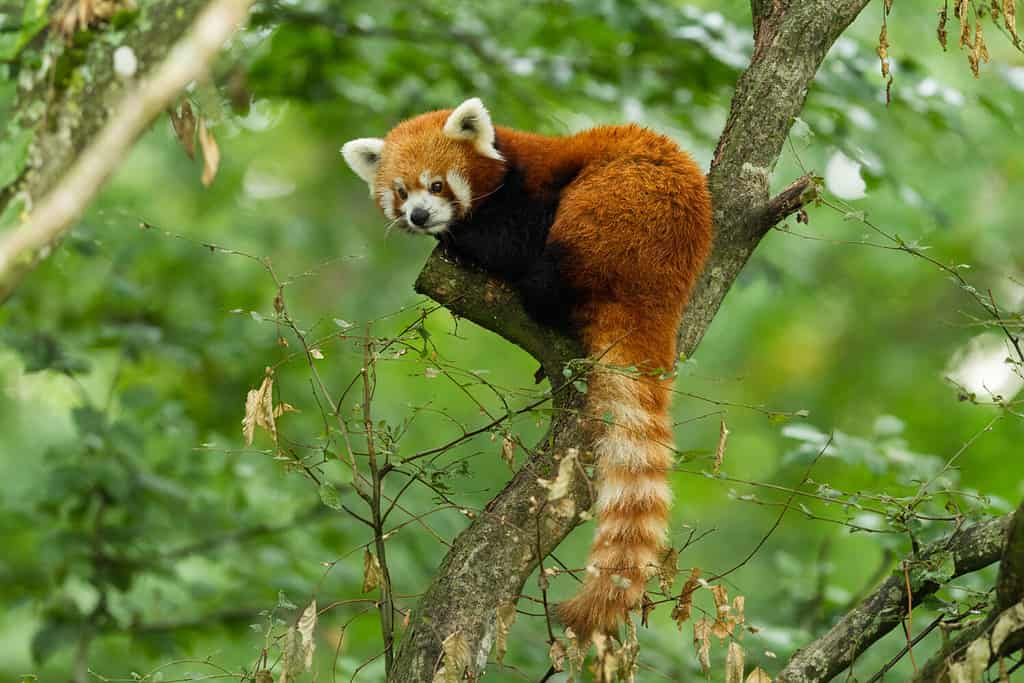
Red pandas usually grow 22 to 24.6 inches long and weigh 8 to 17 pounds.
©AB Photographie/Shutterstock.com