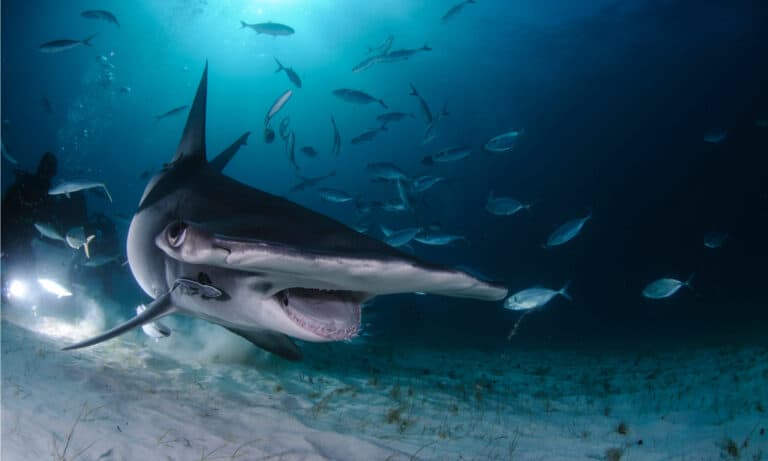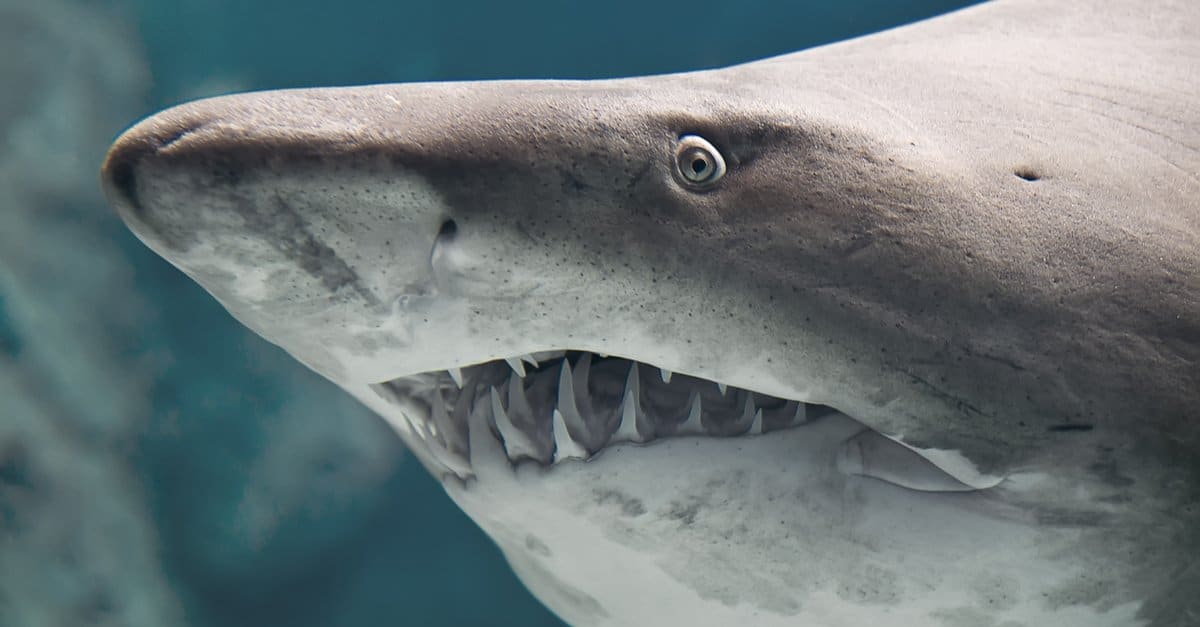

When we think about sharks, most of us instantly think of the ocean. However, some shark species live in freshwater environments. Some sharks spend their entire lives in freshwater, while others transition between marine and freshwater habitats. However, the most fascinating aspect is their ability to adapt to environments that would typically challenge their physiology. Discover how sharks can live in freshwater and learn about five shark species that make rivers, lakes, and estuaries their homes.
How Do Sharks Live in Freshwater Habitats?
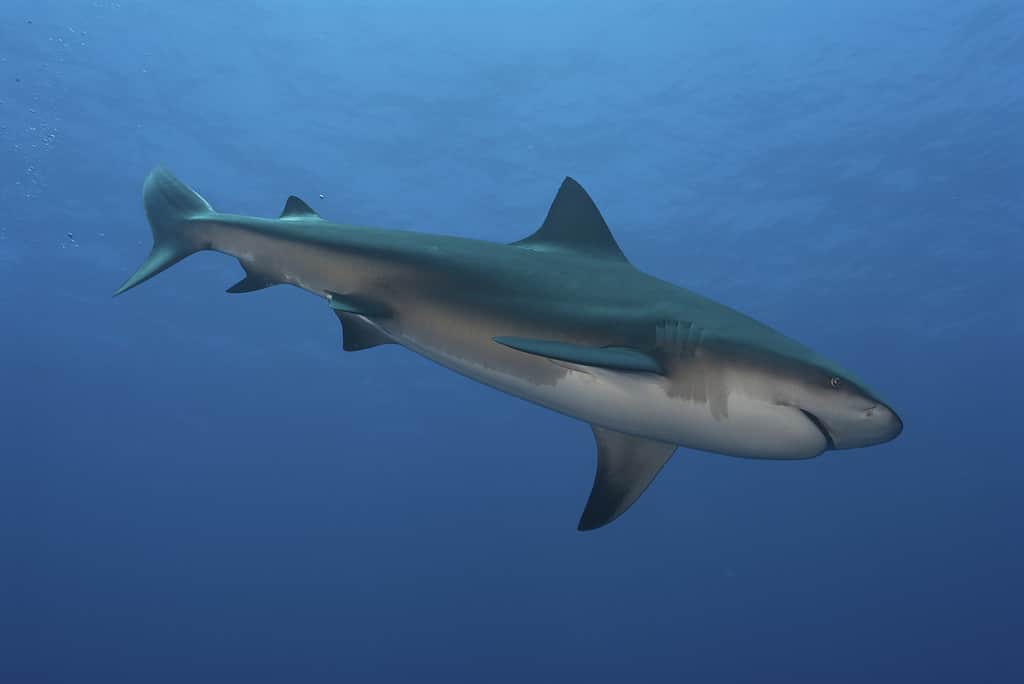
Bull sharks regularly transition from saltwater to freshwater habitats.
©iStock.com/FionaAyerst
Researchers estimate that only around 5% of elasmobranches, which include sharks, skates, and rays, can live in freshwater environments. One reason is that it is harder for sharks to float in freshwater. Sharks lack swim bladders, which are gas-filled organs that help other fish stay afloat. However, sharks have large, fatty, oil-filled livers containing squalene, which is lighter than water. Since their livers can be as much as 25% of their weight, this helps the shark remain buoyant. However, in freshwater, sharks are two to three times less buoyant. Researchers believe freshwater sharks must compensate by fattening their livers as much as physiologically possible. They also need to move faster to create more lift, although this requires them to exert up to 50% more energy.
Another reason why most sharks live in marine environments is osmoregulation. Osmosis is the movement of water into and out of cells. Sharks still need fresh water to prevent their cells from becoming dehydrated. This requires the proper amounts of salt and water inside their bodies to balance the salt in their environment. They produce large amounts of the chemical urea and trimethylamine-N-Oxide (TMAO) to help maintain the salt content in their blood. Since the inside of the body is as salty as the outside, osmosis will not take place, and the shark’s cells will not lose too much water. Their kidneys and rectal glands also filter out excess salt. Freshwater sharks have adaptations to lower their urea content and remove excess water by producing large amounts of diluted urine.
5. Ganges Shark
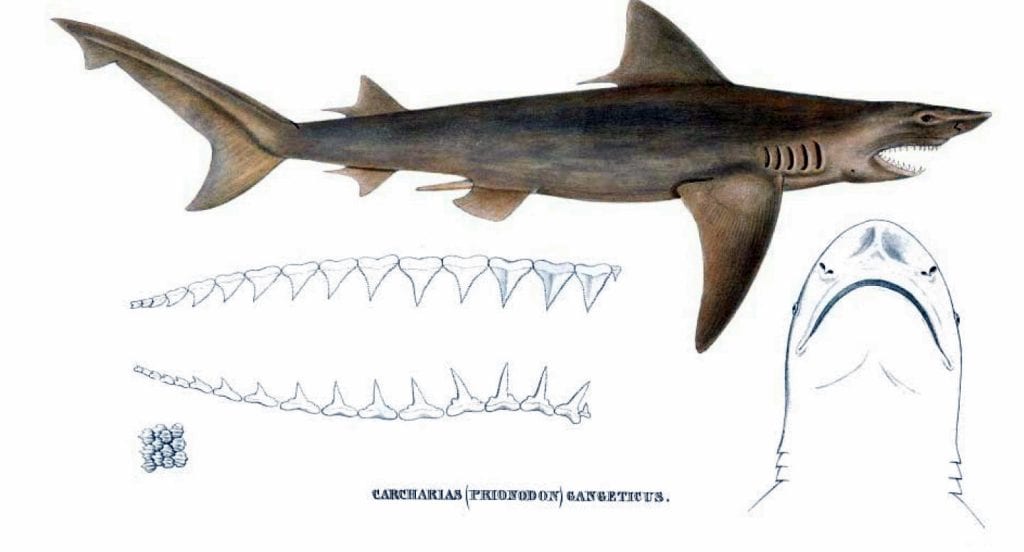
The Ganges shark is found in the rivers of Bangladesh, India, and Malaysia.
The rare, endangered Ganges shark (Glyphis gangeticus) inhabits the rivers and estuaries of India and Bangladesh. However, some sources suggest they can also be found in Malaysia and other locations in the Indo-West Pacific region.
They are gray-brown with stocky bodies, broad, rounded snouts, and small eyes. Ganges sharks reach up to 9 feet long. Little is known about their behavior, but their small eyes suggest they have adapted to turbid water with low visibility. They are believed to spend most of their time swimming along the river bottom, scanning the water above for prey.
4. Bull Shark
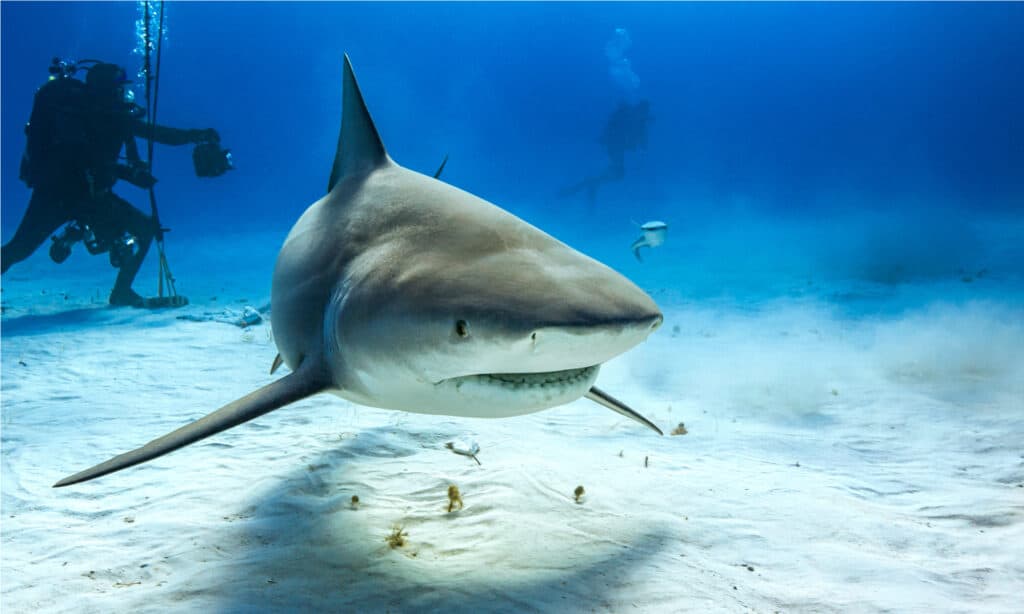
The bull shark is believed to be responsible for at least 100 attacks on humans.
©Carlos Grillo/Shutterstock.com
The bull shark (Carcharhinus leucas) is equally at home in freshwater and saltwater. They can be found in coastal areas all over the world, but they have also been recorded in rivers thousands of miles inland. In the U.S., they have been observed in the Mississippi River and the Chesapeake Bay area, including the Potomac River. They have also been documented in the Amazon River and Lake Nicaragua.
Bull sharks are gray to dark gray with lighter underbellies. They have bluntly rounded snouts and stocky bodies reaching a maximum of around 13 feet long. These opportunistic feeders are considered one of the most dangerous sharks to humans.
3. Northern River Shark
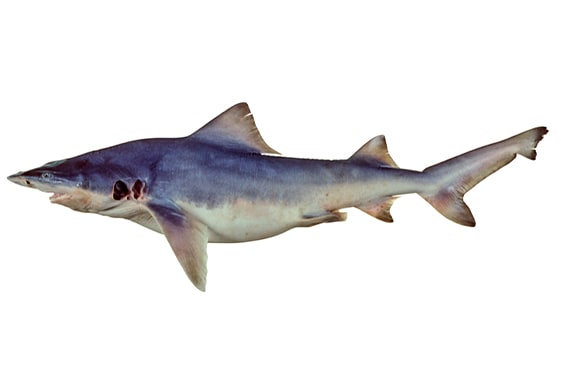
Northern river sharks are considered an endangered species in Australia.
©CSIRO National Fish Collection, CC BY 3.0 <https://creativecommons.org/licenses/by/3.0>, via Wikimedia Commons – Original / License
Although their distribution is uncertain, mature northern river sharks (Glyphis garricki) are generally believed to remain in coastal environments. However, newborns and juveniles regularly travel into freshwater or brackish water habitats. Young northern river sharks have been observed in tidal rivers, estuaries, and coastal bays in Australia and Papua New Guinea.
These rare, endangered sharks have stocky bodies, wide, flat heads, small eyes, and rounded snouts. They can reach up to 10 feet in length. Northern river sharks prefer areas of turbid water with silty and muddy bottoms. Due to low visibility, they rely on electrical impulses to find their prey instead of sight.
2. Speartooth Shark
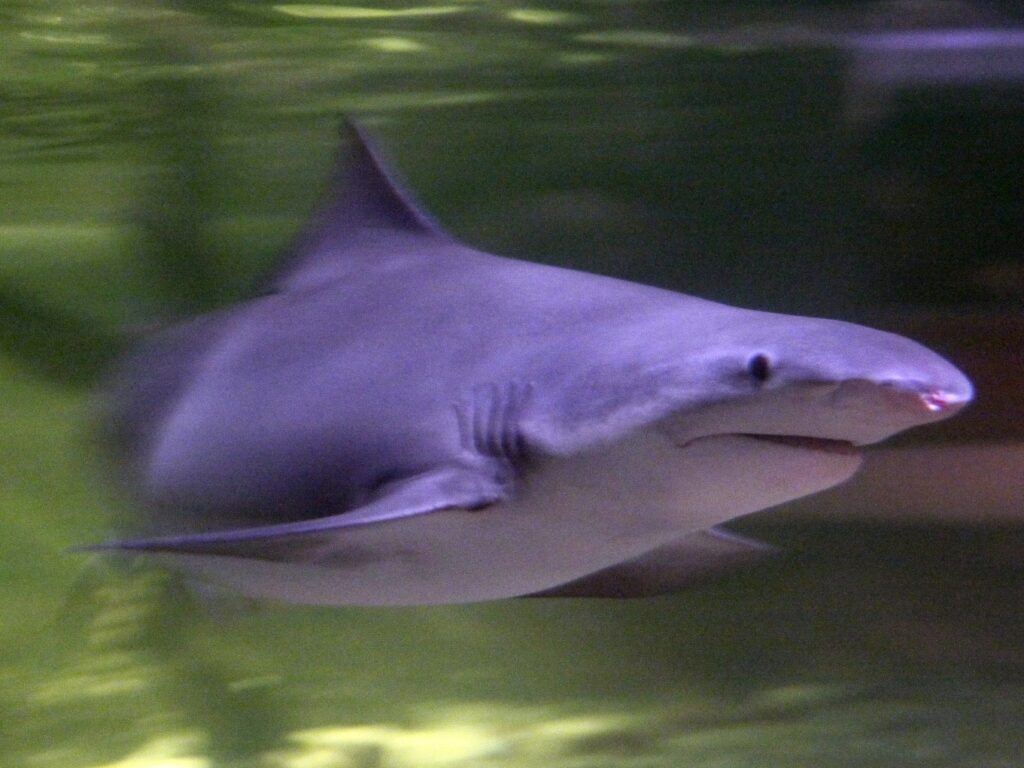
Speartooth sharks have been tracked moving with the tides.
The speartooth shark (Glyphis glyphis) is a rare, critically endangered shark found in the tidal regions of tropical river systems in Australia and New Guinea. Only juveniles have been captured in the rivers, suggesting the sharks may move to estuaries and coastal waters upon maturity. These sharks have also been documented to move with the tides. They swim upstream on the incoming tide and downstream on the outgoing tide.
Speartooth sharks have gray, streamlined upper bodies with white underbellies. They have wide, flat heads with rounded snouts. Very little is known about the biology of these rarely seen sharks, but they are believed to reach a maximum length of around 10 feet.
1. Pondicherry Shark
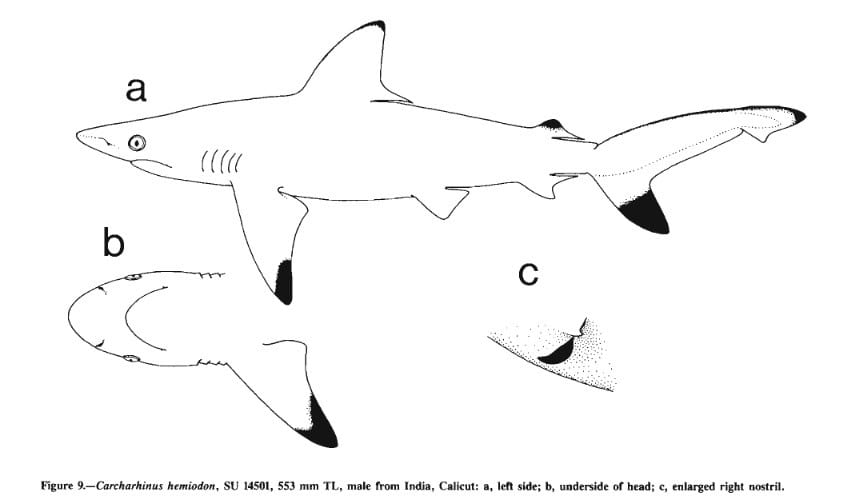
The pondicherry shark is a small shark, reaching a maximum of 3.3 feet.
Pondicherry sharks (Carcharhinus hemiodon) are one of the rarest and most endangered sharks in the world. Historically, they have been found in coastal waters from Oman to southern China. These sharks were reportedly observed in the Indus River in Pakistan during the 1950s and 1960s. There are also contemporary reports of the shark in freshwater habitats in Sri Lanka.
Pondicherry sharks are small and stout, reaching no more than 3.3 feet in length. They have long, narrowly rounded snouts and large, round eyes. Their upper bodies are gray and they have paler underbellies. They are also reported to have black tips on their fins. Very little is known about their ecology due to outdated records and a lack of recent sightings.