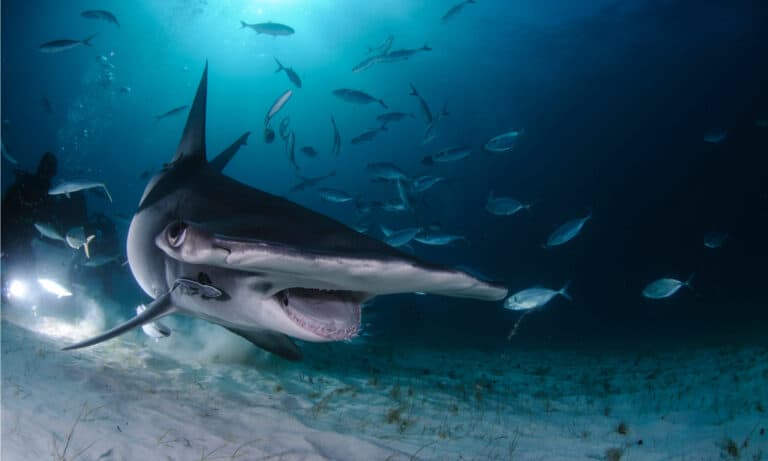

When it comes to sharks, marine biologists who specialize in sharks can immediately tell the difference between male and female sharks. However, those who do not study sharks for a living may not know how to distinguish the sexes. So, let’s take a look at the five key differences between male and female sharks.
Difference #1: Anatomy
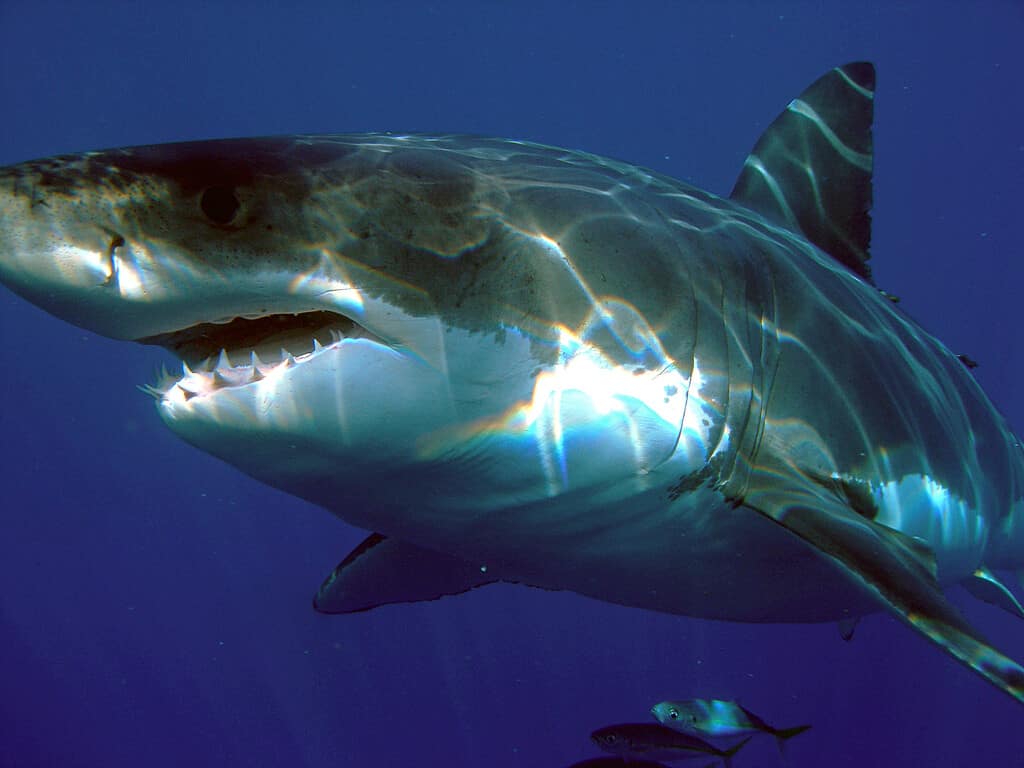
Male and female sharks have internal and external sex organs.
According to the University of Florida’s Florida Museum, there’s a very easy way to identify whether or not a shark is male or female — the external sex organs. Male sharks have two claspers, which are external, retractable appendages that develop from their pelvic fins. Both sexes have a cloaca, but the female shark’s is used in reproduction.
When sharks mate, the male inserts one of his claspers into the female’s cloaca to release the sperm. The sperm then fertilizes the egg once it passes through the female shark’s reproductive tract. Internally, males have testes and siphon sacs that produce and transfer sperm, while females have ovaries that produce eggs and oviducts that lead to the cloaca.
Difference #2: Size
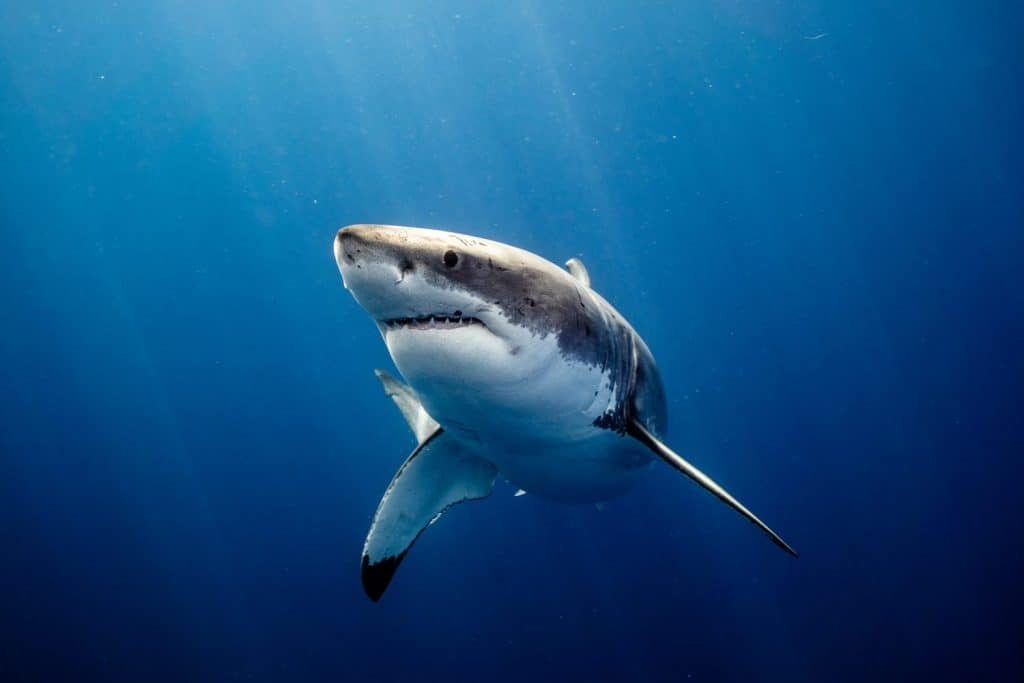
Female great whites can reach up to 16 feet, while males only reach 11-13 feet.
©Jsegalexplore/Shutterstock.com
Another obvious distinction is the size difference between male and female sharks. Sharks exhibit sexual dimorphism. In many species, including humans, females are generally smaller than males. However, in sharks, females are typically larger than males.
Several shark species also have significant differences between the sexes. For example, female great whites can grow 15-16 feet long, while males only grow 11-13 feet long. Females also grow more slowly than males, which is influenced by their diet, habitat, and reproductive methods.
Difference #3: Hunting and Diet
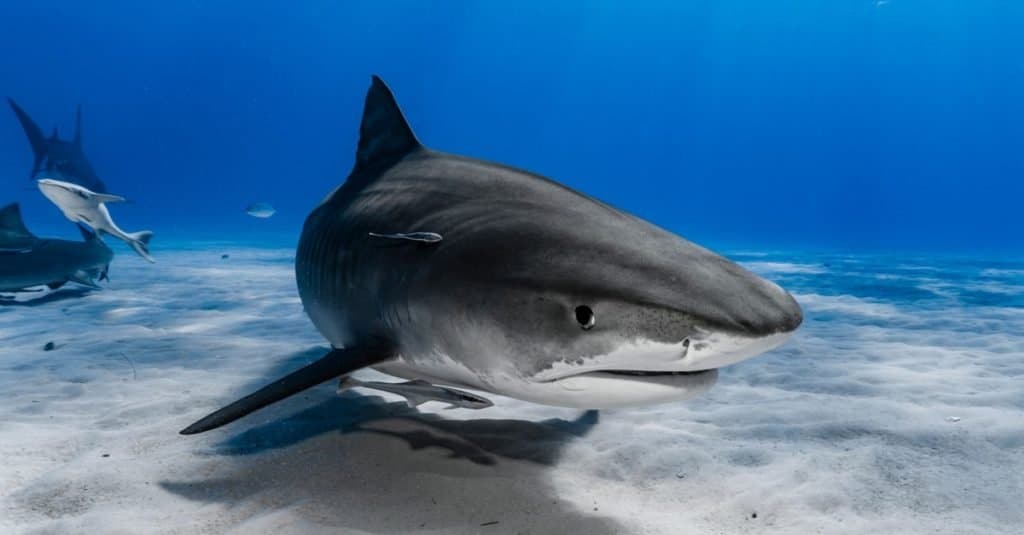
Male and female tiger sharks have different diets.
©kaschibo/Shutterstock.com
As mentioned above, one reason female sharks grow more slowly than males is their diet. So, females and males of the same species, such as tiger sharks, may have different diets. Females tend to hunt larger animals, such as sea lions and large fish, to obtain enough energy and nutrition to support developing pups.
Males typically hunt smaller prey, such as small fish, crabs, lobsters, and other small marine animals. However, both male and female sharks are generally opportunistic feeders.
Difference #4: Migration

Female sharks generally migrate to pupping grounds, while males migrate for food or mates.
©wildestanimal/Shutterstock.com
Migration patterns also differ between the sexes. Female sharks migrate to nurseries and pupping grounds to have their young. Some species, such as bull sharks, migrate to the same nurseries where they were born.
Males typically migrate to search for food or mates. However, both sexes may undertake long-distance migrations for feeding, mating, or to find warmer waters in winter and cooler waters in summer.
Difference #5: Social Activities
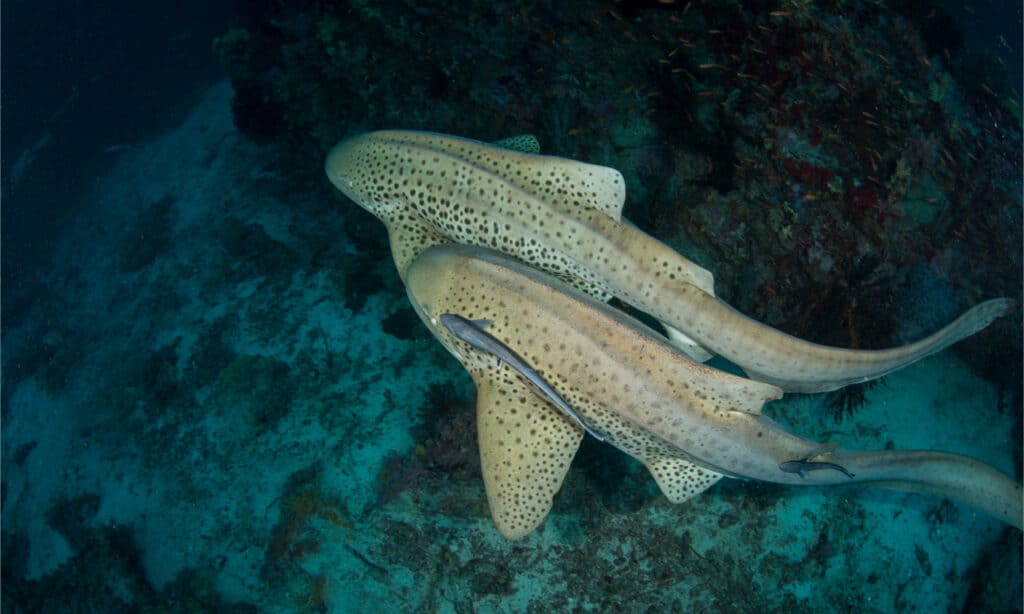
Male sharks become more aggressive during the mating season.
©John Back/Shutterstock.com
Last but not least, male and female sharks may behave differently during social interactions and mating. Male sharks become more aggressive and lively during courtship and mating because they are competing with other males and trying to impress the females. The aggressive behavior, which may include chasing and biting — called “love bites” — is intended to ensure the female submits to the male’s dominance. Female sharks also develop thicker skin so the bites do not result in significant injury.
While females are generally less aggressive, in some species — particularly great whites — females may dominate males. In other species, when male aggressiveness occurs, females may either bite back or retreat. During pregnancy or while raising young, female sharks also tend to be more solitary than at other times.