
Quick Take
- Scientists assumed the largest male belugas dominated all mating, but the genetic data told a completely different story. See the genetic surprise →
- Studying whales in near-zero visibility Arctic water sounds impossible, but researchers found a surprisingly inventive solution. Discover the inventive methods →
- For an isolated population of only 2,000 whales, inbreeding should be inevitable. Yet these belugas somehow sidestep it entirely. See how inbreeding is avoided →
- The mating secret keeping one beluga population thriving may finally explain why some endangered whale groups fail to recover despite years of conservation efforts. Explore the conservation implications →
Beluga whales are often called the “canaries of the sea” because they are incredibly vocal and communicate in close-knit pods through a constant mix of whistles, clicks, and chirps. However, because they live beneath thick Arctic ice, their family lives have long been a mystery.
A 13-year genetic study of more than 600 belugas in Alaska’s Bristol Bay finally uncovered one of their secrets: instead of pairing for life or allowing a few dominant males to monopolize breeding, these belugas frequently switch mating partners throughout their lives.
Researchers believe this flexible mating strategy keeps their genetic diversity high, protecting isolated whale populations from the dangers of inbreeding. In other words, these whales seem to rely on flexibility rather than fidelity to protect their genetic future.
Why Scientists Turned to Bristol Bay
The 13-year genetic study focused on the Bristol Bay beluga population, which includes about 2,000 whales living in Alaska’s muddy, salmon-rich waters. Unlike the nearby endangered Cook Inlet population, the Bristol Bay belugas are thriving and stable. This made them the perfect group for scientists to study natural beluga behavior and genetic health without the complicating factors of a population in decline.

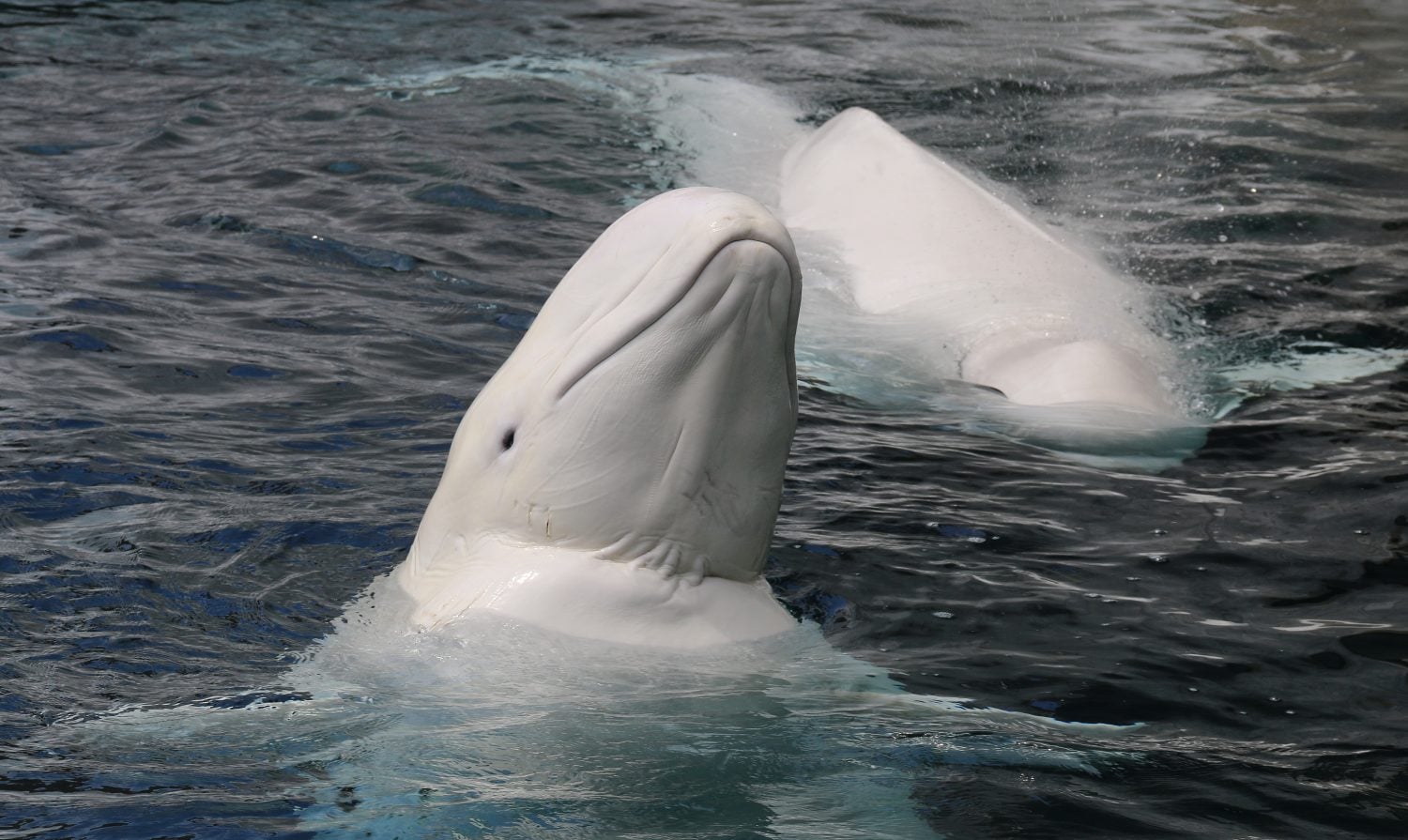
Beluga calves stay by the side of their biological mothers.
©CampCrazy Photography/Shutterstock.com
Belugas themselves are well adapted to life in the Arctic. Adults can grow up to 22 feet long and weigh up to 3,500 pounds. Their distinct, rounded forehead — known as a melon — helps them navigate and communicate underwater. As apex predators, they serve as an “indicator species” for the overall health of the Arctic ecosystem. They also hold deep cultural significance for local Indigenous communities.
How Scientists Built a Beluga Family Tree
Bristol Bay’s muddy, low-visibility waters make it incredibly difficult to study belugas through traditional visual observation. Because the whales reveal very little of their bodies at the surface, researchers had to use innovative methods to map their family tree.
Led by Dr. Greg O’Corry-Crowe of Florida Atlantic University, the team partnered with the Alaska Department of Fish and Game and local Alaska Native subsistence hunters to gather data using specialized tools. Using biopsy poles and floating crossbow arrows, the team collected tiny skin samples from 623 individual belugas without harming them. Scientists analyzed the tissue to identify 516 unique genetic profiles. From these data, they estimated a total local population of roughly 1,928 whales (excluding calves). The team expanded the research by using ultrasound technology to check body condition, gathering respiratory “blow” samples, and even measuring hearing ability with suction-cup electrodes that monitored brain-wave responses to sound.
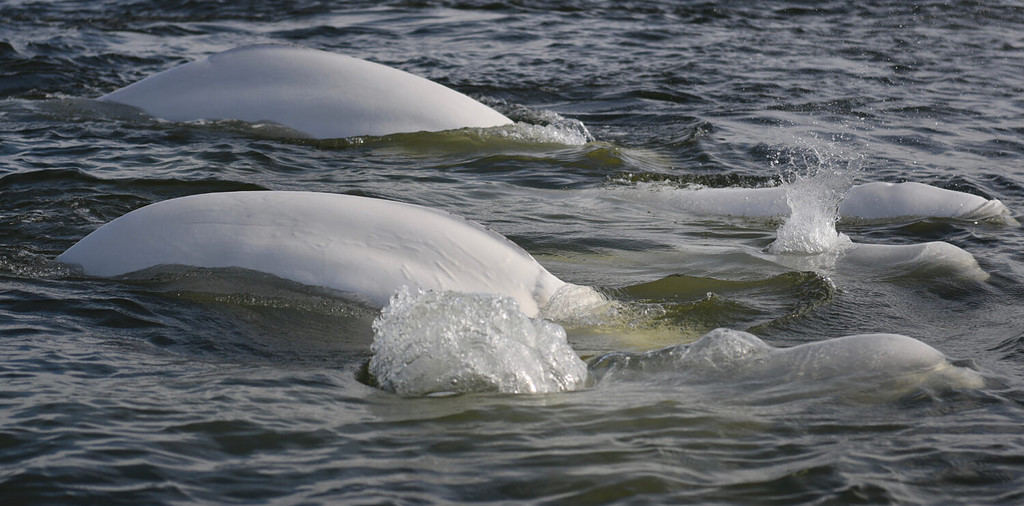
Belugas live in the freezing waters of the Arctic and are very difficult to track and study.
©YVETTE BARNETT/Shutterstock.com
Why Belugas Keep Changing Partners
The genetic data revealed that beluga whales do not follow traditional animal mating patterns. Instead of remaining with one partner or allowing a few dominant males control reproduction, both male and female belugas regularly switch partners throughout their lives.
The clearest evidence came from looking at the DNA of whale siblings. Siblings within the population almost always shared only one parent, indicating that most were half-siblings rather than full siblings. This pattern shows that lifelong monogamy is uncommon and rules out a strict system in which a few dominant males monopolize all breeding opportunities.
By constantly reshuffling partners, the Bristol Bay belugas distribute reproduction among many different individuals, helping to keep the entire population genetically healthy.
The Genetic Advantage of Flexibility

Belugas can live for up to 80 years, though most live between 30 and 50 years.
©Christopher Meder/iStock via Getty Images
For an isolated group of only 2,000 whales, inbreeding poses a serious threat that can lead to genetic diseases. Yet, the Bristol Bay belugas display remarkably high genetic health. By frequently changing partners, the whales prevent any single lineage from dominating, which lowers the risk of close relatives breeding with one another and ensures the population stays genetically diverse.
Because male belugas are significantly larger than females, scientists previously assumed that a few massive males aggressively controlled large groups of females. The data disproved this. The vast, three-dimensional nature of the ocean makes it nearly impossible for one male to successfully guard multiple females at once. Belugas can live for more than 90 years. Instead of competing for a harem in a single season, males succeed by being patient — securing just a few matings each year over many decades.
Females benefit greatly from this flexibility. By switching partners over their long lifetimes, they ensure their calves have a wide variety of fathers. This reduces genetic risk and increases the overall survival odds of their offspring.
What This Discovery Means for Conservation
Understanding how belugas reproduce is about more than a matter of curiosity — a species’ mating habits directly affect its population growth, genetic health, and ability to recover from the population declines.

Even though male belugas are up to 25 percent larger than females, they do not fiercely fight or completely dominate mating within a single season.
©Luna Vandoorne/Shutterstock.com
Scientists plan to use the healthy Bristol Bay belugas as a baseline to study struggling groups, like the endangered Cook Inlet belugas. Comparing the two populations could help explain why some whale groups thrive while others fail to recover despite conservation efforts.
However, researchers caution that mating habits might differ depending on where the whales live. To see if other populations follow the same rules, scientists are now using drones to capture direct aerial footage of beluga mating behavior in different regions.
Belugas have evolved an elegant solution to a massive survival challenge. By playing the long game and constantly changing partners, these Arctic whales successfully protect their genetic diversity — and their future — even within a small, isolated population.