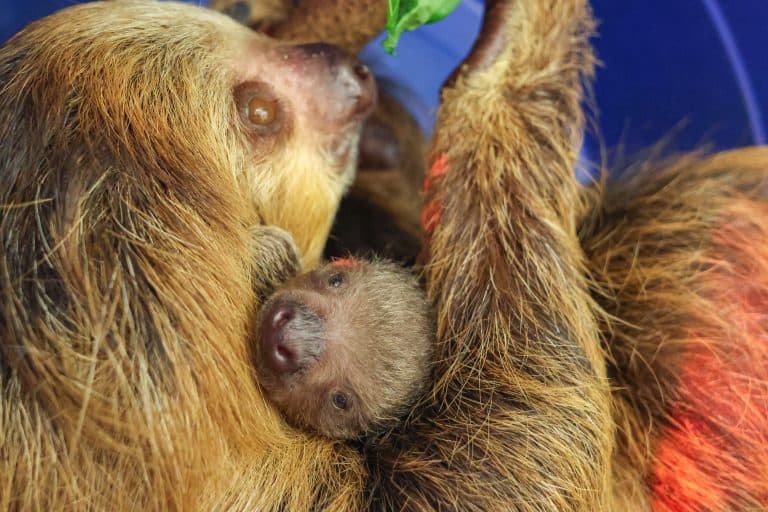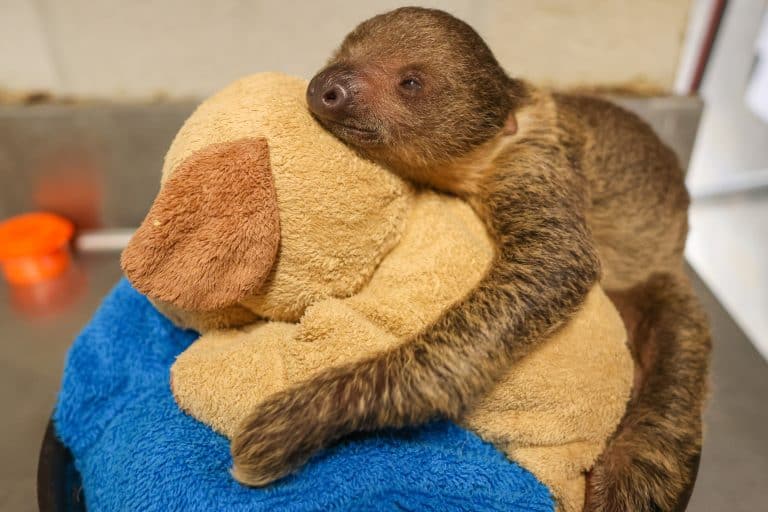

Baby sloths are often thought of as furry, lazy creatures that love to sleep. Baby sloths stay with their mothers for varying periods depending on the species. Two-fingered sloths stay with their mothers for a year. Three-fingered sloths typically stay with their mothers for about five to six months. While it is true that these animals lack the energy needed for strenuous activity, they are far from boring. Continue reading to learn five astounding sloth pup facts with some adorable pictures.
Two-fingered sloths are generally thought to remain with their mothers for a full year.
1. Baby Sloths Only Poop Once a Week

Sloth pups travel to the forest floor once a week to have a bowel movement.
©Kristen Pareti/Shutterstock.com
Baby sloths only defecate once a week. Every time they have a bowel movement, they can lose up to approximately one-third of their body weight. The difference is so dramatic that an observer would see the sloth’s stomach visibly shrink. Sloths are arboreal animals, meaning they make their homes in trees. Other arboreal species, like monkeys, poop from their arboreal abodes. However, sloths descend to the forest floor before defecating.
Even though baby sloths instinctively travel to the base of the trees for potty time, it is a dangerous situation. Since they are slow-moving, small creatures, they are vulnerable to many predators. Sloths are at a significantly increased risk of predation when they descend to the forest floor to defecate.
2. Sloth Babies May Spend Their Entire Lives in One Tree
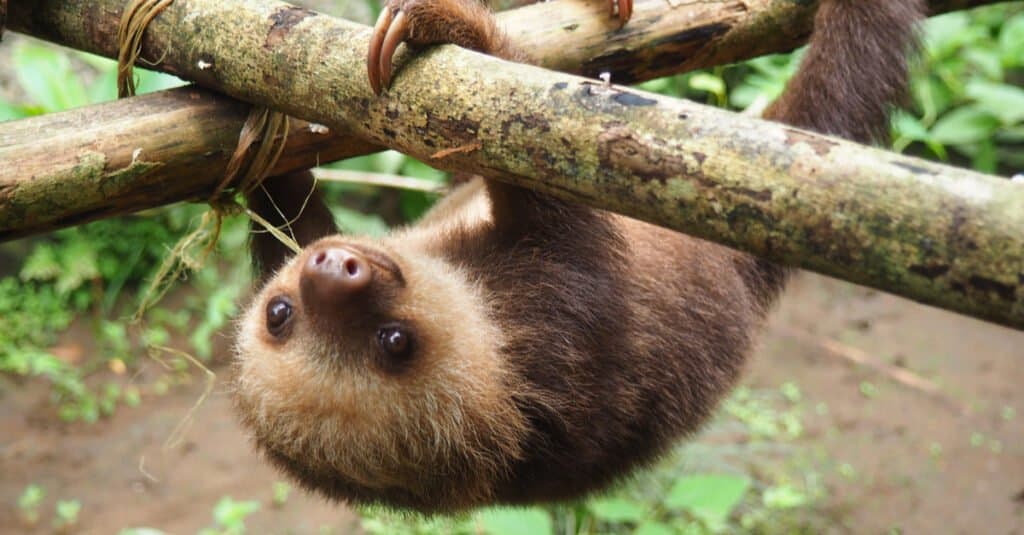
Sloths may never venture away from a single tree.
©Kristel Segeren/Shutterstock.com
Sloths are incredibly slow-moving creatures. One of the main reasons is that it takes a tremendous amount of energy for a sloth to do even the simplest of tasks. For example, it can take up to a month for food to pass through a sloth’s digestive system.
Because sloths use much of their energy traveling to the base of trees to defecate once a week, they have little energy left. Traveling any further would use up even more energy, leaving them with very little for daily tasks like eating and climbing.
For their first year of life, they reside in the same tree as their mothers. They cling to her fur for protection and start sampling leaves at approximately a week old. After their first birthday, the young sloths venture off on their own to a new tree. However, that tree is usually just one or two trees away from where their mother resides.
3. Only the Strongest Twin Pup Survives
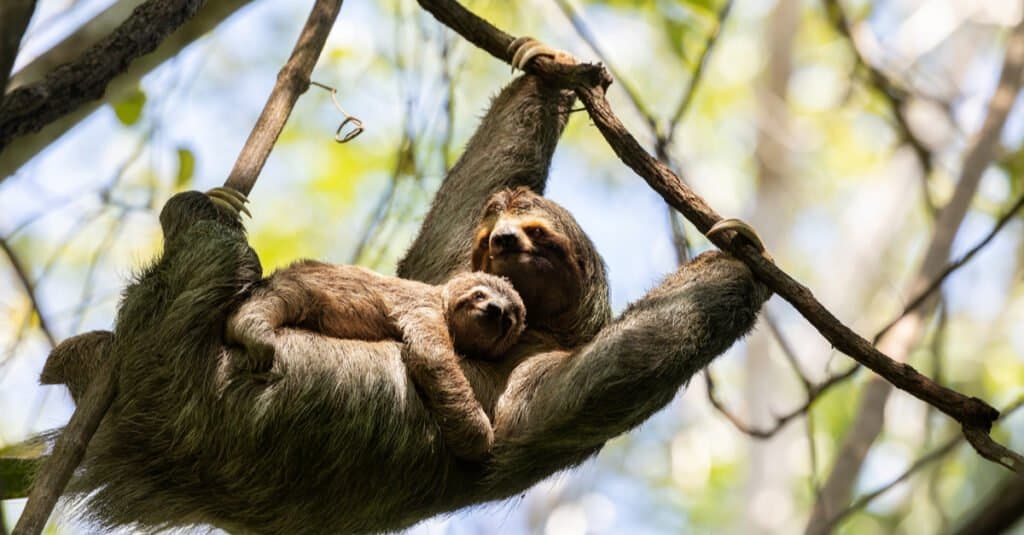
Mother sloths can only care for one baby at a time.
©Manamana/Shutterstock.com
Sloth births are almost always singletons, and twin births are extremely rare. In the event of twins, it is unlikely that both would survive, as the mother is typically only able to care for one pup at a time.
4. Sloth Pups are Born Almost Completely Developed
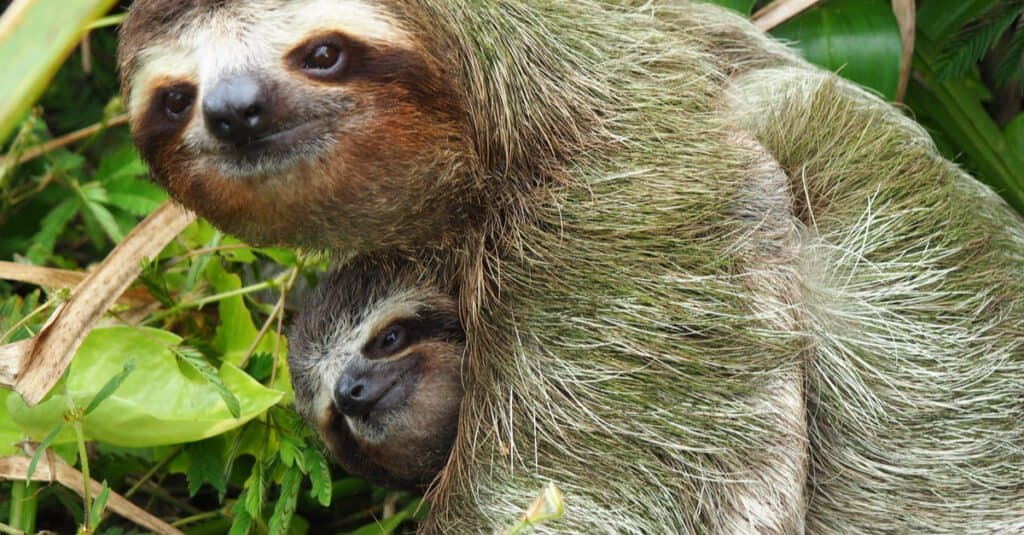
Sloth pups are able to cling to their mothers immediately after birth.
©Kristel Segeren/Shutterstock.com
When baby sloths are born, their eyes are open, and they have a complete set of teeth and sharp claws. They can instinctively climb upon birth. Perhaps the most critical task for a sloth pup is to rely on its mother for survival. Since adult sloths have little energy, babies cling tightly to the chest of their mother. Sloth pups have extraordinary gripping power from the moment they are born. This allows them to remain as safe as possible from predators by staying snug against their mother’s chest.
5. Mother Sloths Raise Their Babies Alone
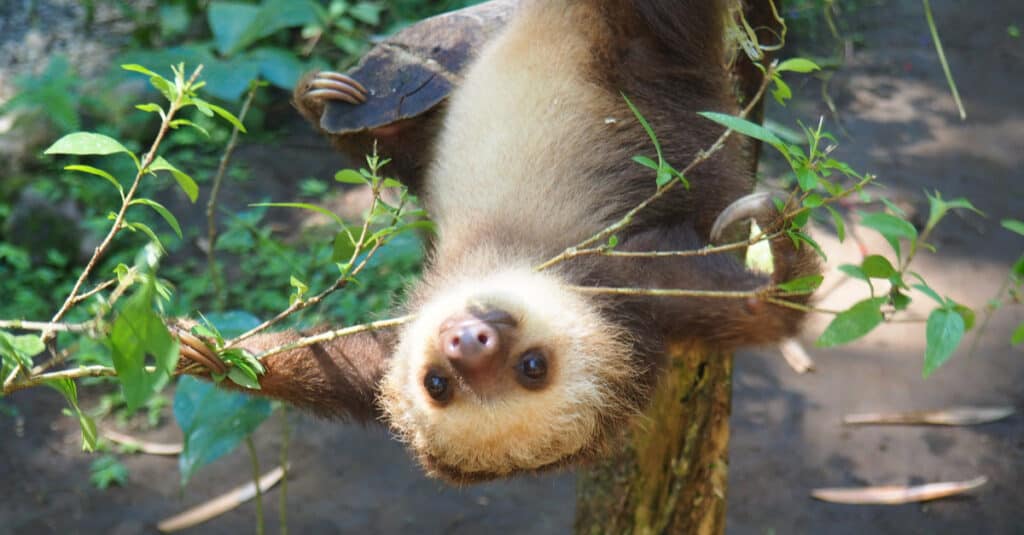
Mothers are solely responsible for raising sloth pups.
©Kristel Segeren/Shutterstock.com
Like many species of mammals, fathers do not participate in raising their young. This means that the mother solely cares for her young for the first year of a baby sloth’s life. Sloth pups spend the majority of their time clinging to their mother’s chest. From this position, they can nurse without expending too much energy. Unlike some other mammals, female sloths do not store large amounts of breast milk. Instead, they produce small amounts of milk several times a day to conserve energy.