
Baby cats are well known for their playful, energetic demeanors. They make adorable pets and are widely loved for their independent and sometimes mischievous behavior. While a cat is technically an adult after their first birthday, their behavior may continue to be kittenish or adolescent for several more months. Some cats may maintain their playful energy and behaviors well into adulthood. Continue reading to learn five amazing facts about kittens.
1. A Wild Monkey Adopted a Baby Cat
A kitten in Bali was adopted by a monkey.
©iStock.com/Nils Jacobi
A wild long-tailed macaque in Ubud, Bali, adopted a tiny kitten when it was abandoned in the forest. The monkey carefully took care of the kitten and introduced it to other members of his family. He also cuddled, carried, and protected the tiny feline.
2. Kitten Siblings Can Have Multiple Fathers
Multiple tomcats can be responsible for a single litter of kittens!
©iStock.com/RalchevDesign
When female cats are ready to mate, they go into a heat cycle. During heat, the female cat calls out to tomcats to mate with her. Cats are induced ovulators, meaning that mating triggers their bodies to release eggs.
However, most female cats must mate multiple times during a heat cycle to successfully ovulate. In some cases, it can take three or four matings before an egg is fertilized. This means that for the 1-4 days a cat is in heat, she will mate multiple times, potentially with several different males.
Cats can also ovulate multiple times in a single heat cycle. As a result, some eggs might be fertilized by different males. Ultimately, this means that a single litter of kittens can trace back to more than one biological father. This phenomenon is called superfecundation.
3. Kittens Feed On the Same Teat Every Time
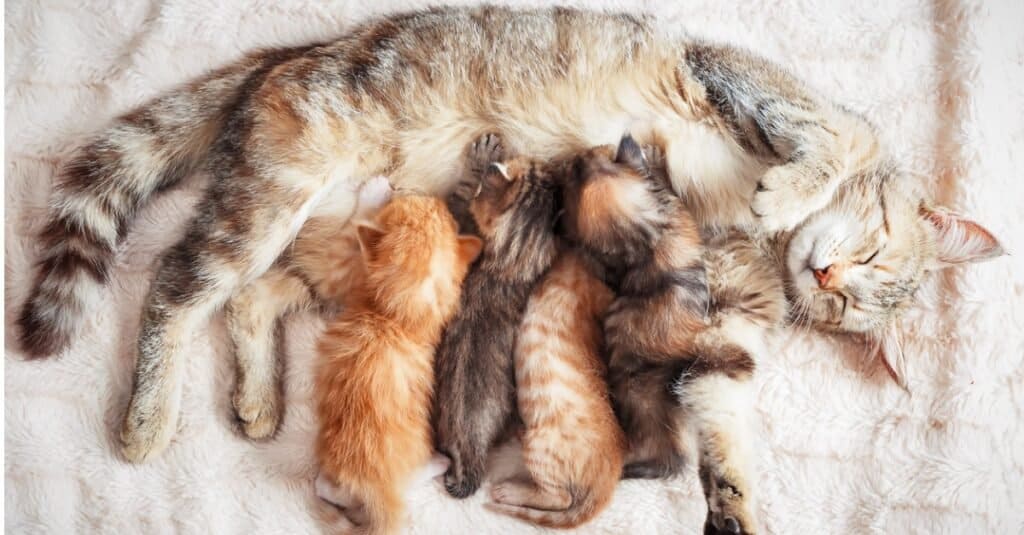
A kitten will latch on to the same teat every time it nurses.
©iStock.com/bozhdb
As mammals, kittens survive solely on their mother’s milk for their first six to eight weeks. They nurse by latching onto the teats located on their mother’s abdomen.
Cats have eight teats to accommodate feeding all of their kittens simultaneously.
Each teat on While a cat is technically an adult after their first birthday, their behavior may continue to be kittenish or adolescent for several more months. Some cats may maintain their playful energy and behaviors well into adulthood. an adult female cat has a specific smell. Kittens memorize the scent of their chosen teat and return to nurse from the same one each time they are hungry. While nursing, kittens use their paws to knead their mother’s belly, which stimulates the flow of milk.
4. Not All Baby Cats Like Catnip
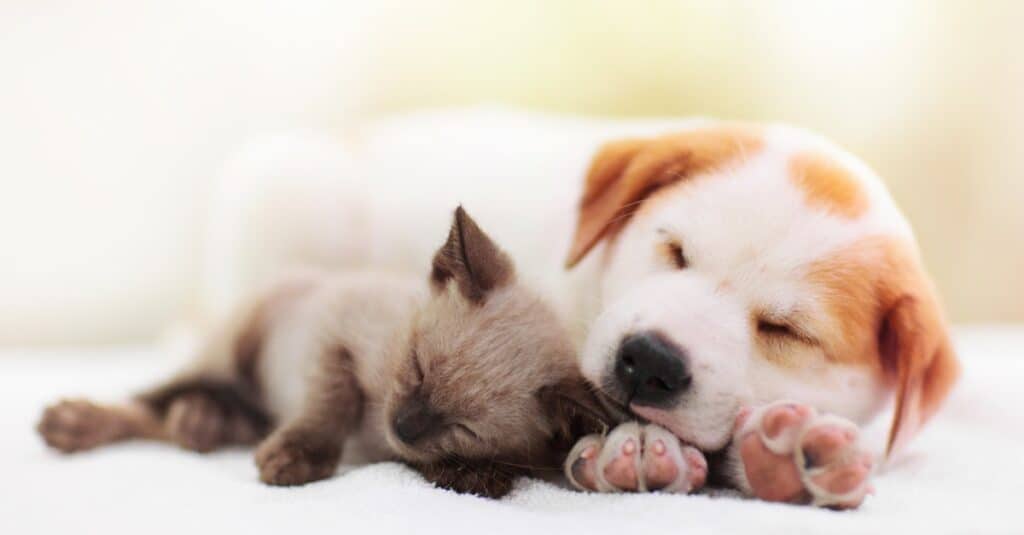
Between 30% and 40% of cats lack the gene that causes a response to catnip.
©iStock.com/FamVeld
Catnip is a plant in the mint family that some cats respond to. However, not all cats have a response to catnip. The plant stimulates cats when smelled or eaten. When smelled, it causes cats to roll around in it, rub against the plant, and salivate. When eaten, catnip has a calming effect.
A kitten’s response to catnip depends on its genetics. The gene responsible for sensitivity to catnip is inherited from the parents. The autosomal gene responsible for responding to catnip is inherited from the parents. When under three months old, kittens won’t respond to catnip at all. They may even display an aversion to the plant. Between 30% and 40% of adult cats do not respond to catnip when they reach adulthood.
5. All Kittens are Born with Blue Eyes
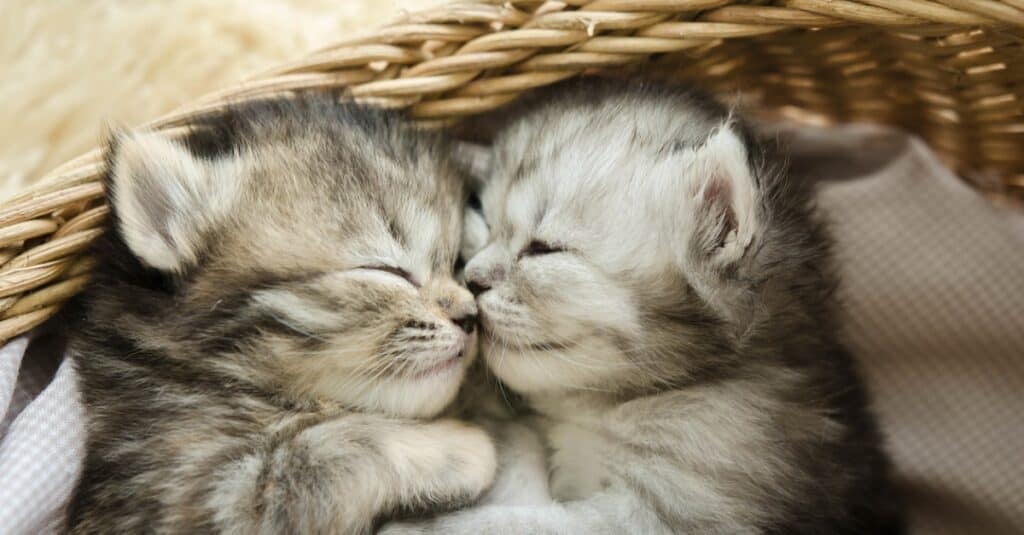
Kittens are born with blue eyes due to a lack of melanin in their body as newborns.
©iStock.com/anurakpong
For the first seven to ten days after birth, kittens keep their eyes shut. Once they open, the kittens reveal beautiful blue eyes. However, this blue eye color lasts for only about the first month of a kitten’s life. Around one month old, their bodies begin to produce melanin, the pigment responsible for eye color.
A cat’s eye color is genetically linked to its coat color. Cats can have blue, green, yellow, or brown eyes. Most white cats have gold, blue, green, or copper eyes, while cats with dark fur usually have greenish-yellow or gold eyes. Some breeds, such as the Tonkinese, always have blue eyes.