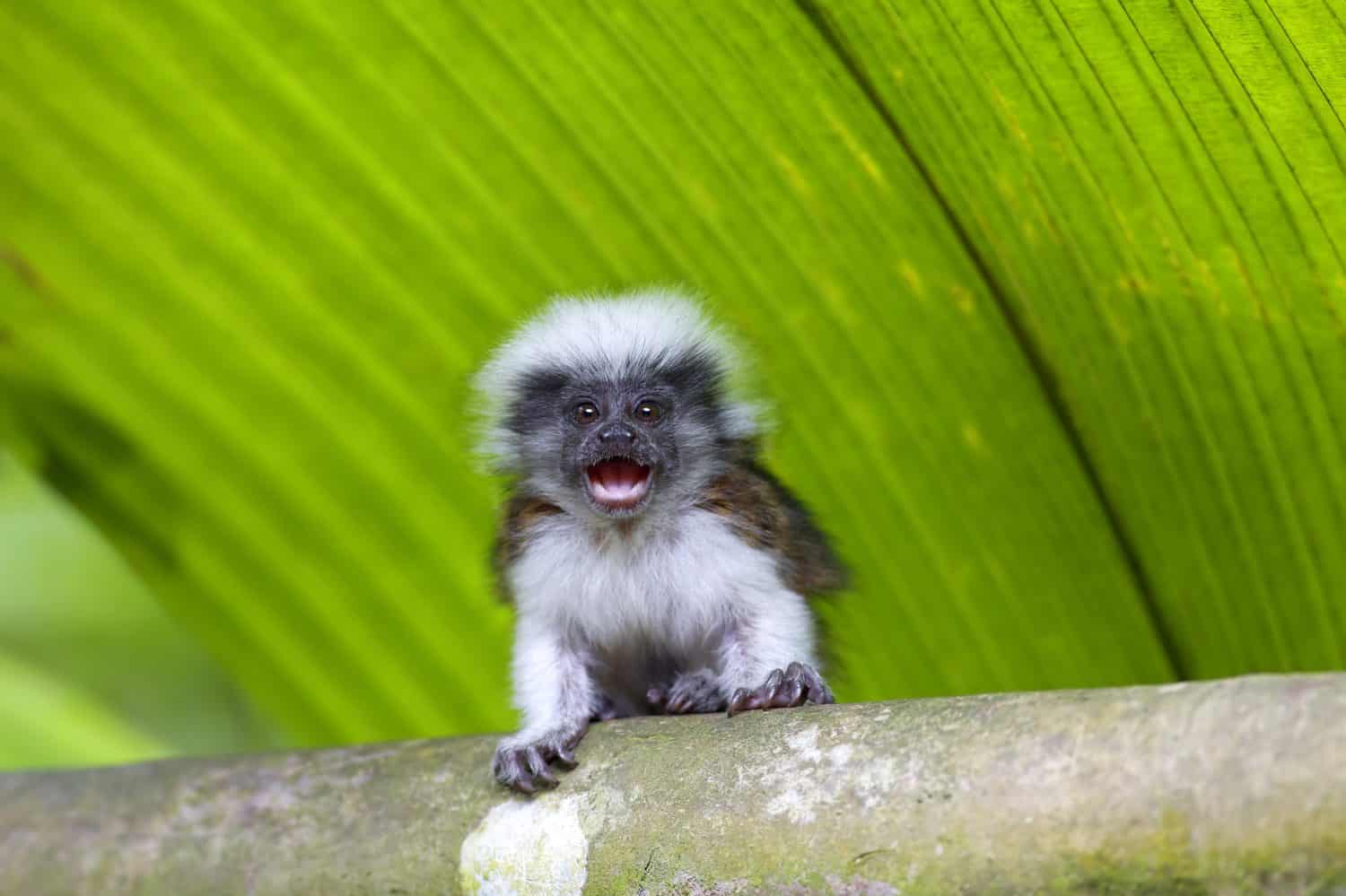

These cotton-top tamarin (Saguinus oedipus) babies are a major dose of cuteness, with their glorious, wild plumes of bright white hair atop their heads like tiny punk-rock stars. As you can see in this post, these bright-eyed babies are some of the most adorable — and smallest — primates you’ll ever see!
Cotton-Top Tamarins
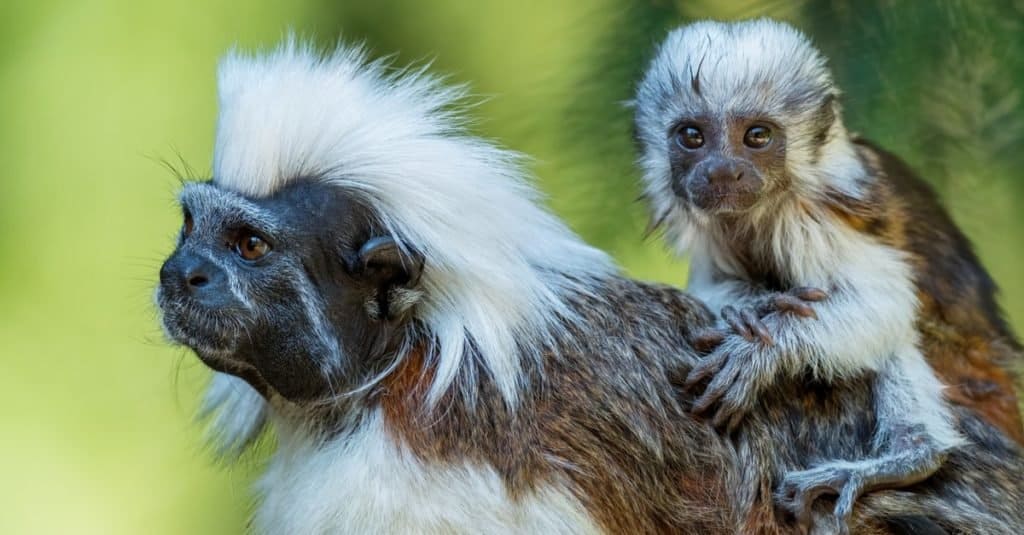
The Edinburgh Zoo has welcomed two sets of cotton-top tamarin twins recently: one pair in 2024 and another in 2025.
©David Havel/Shutterstock.com
These two cotton-top tamarin twins, Sol and Salento, are some of the latest — and most adorable — arrivals at the Edinburgh Zoo. Born on May 20, 2025, to parents Elf and Zecca, these tiny primates are impressively small. Newborn cotton-top tamarins weigh only about 40 grams (0.09 pounds) — roughly the same as a chicken egg — and measure just under 4 inches long. Although they have a lot of growing to do, they won’t get much bigger! Even as adults, cotton-top tamarins weigh only around 1 pound and measure 7 to 9 inches long, with a 10-inch tail.
The Cutest Monkeys in South America
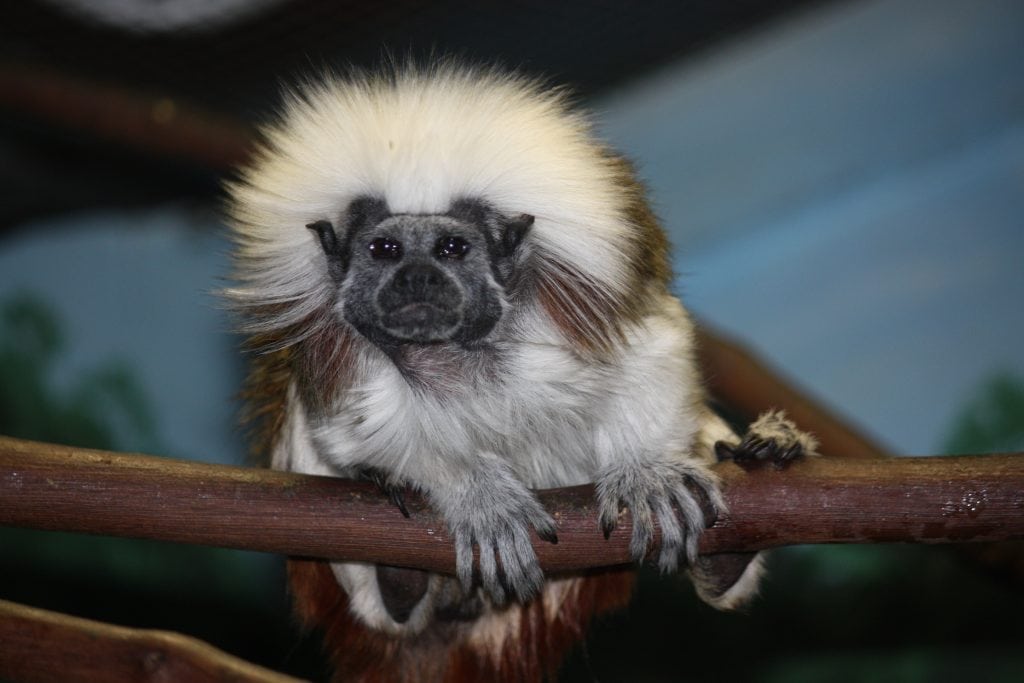
Cotton-top tamarins become independent when they are around five months old.
©Ltshears / CC BY-SA 3.0 / Wikimedia Commons – Original / License
Cotton-top tamarins are often called the “cutest monkeys in South America.” Their name comes from the striking, wild tuft of white hair atop their heads, which looks like a puff of cotton. Sadly, these adorably tiny primates are Critically Endangered. This is one of the reasons why the birth of Sol and Salento at the zoo is so important.
The tamarins at the Edinburgh Zoo are part of the European Endangered Species Programme (EEP). Each new birth helps increase the population of cotton-top tamarins in European zoos, boosting both the number of individuals and the genetic diversity of this managed population. These animals serve as a type of “insurance policy” for the species, helping to prevent cotton-top tamarins from going extinct in the wild.
In addition, the cotton-top tamarins serve as important animal ambassadors for their species, providing a personal connection for visitors to the Edinburgh Zoo. These cute animals are fun to watch, but they also help share the story of their wild counterparts, encouraging people worldwide to advocate for and help protect tamarins in the wild.
Wild cotton-top tamarins are only found in the tropical forests of northwest Colombia. Unfortunately, their population is rapidly declining due to habitat loss and the illegal pet trade. Agriculture, cattle ranching, and urban development are destroying these vital forest habitats at an alarming rate.
Tamarin Family Dynamics
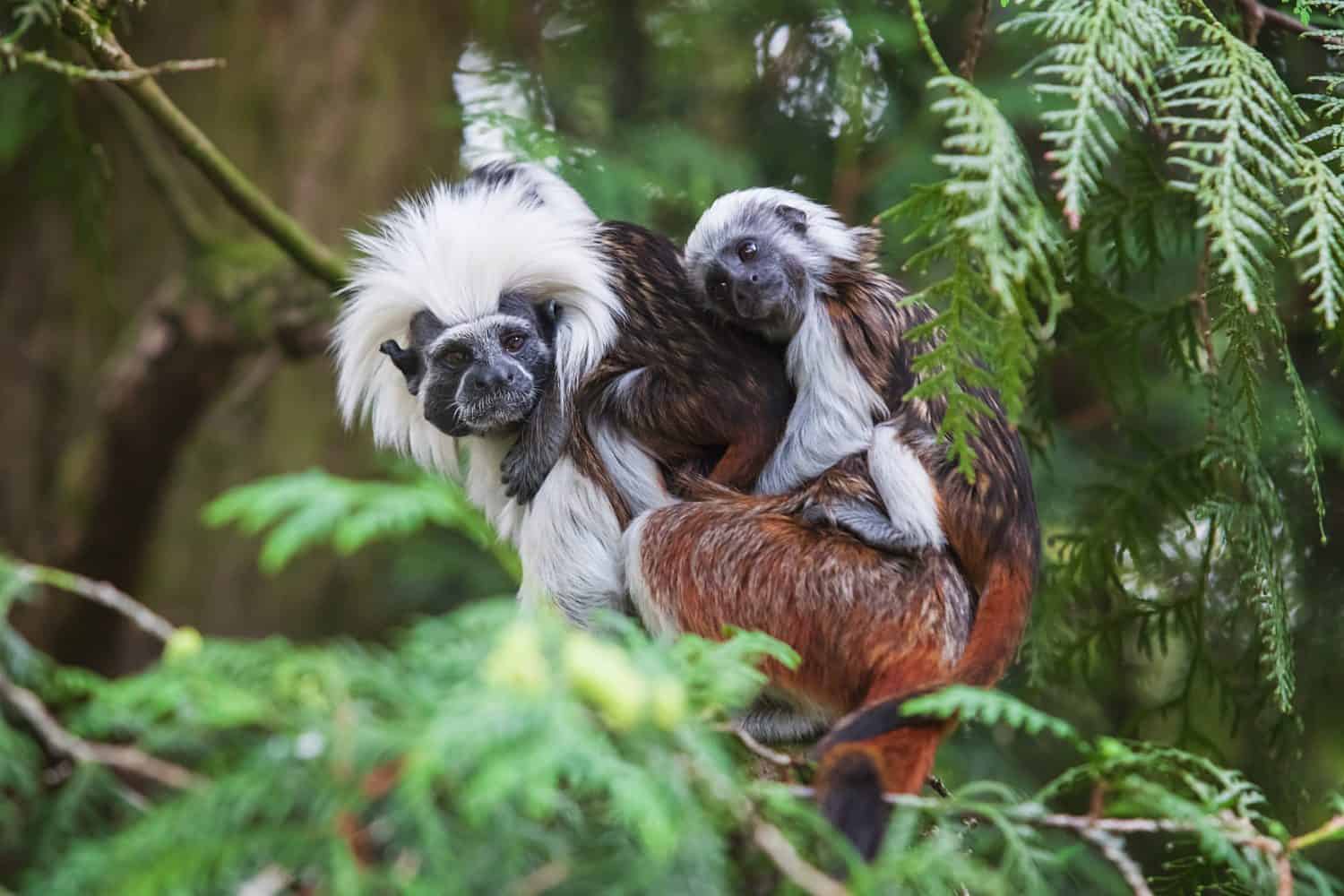
Cotton-top tamarins use a wide variety of vocalizations to communicate, such as chirps, whistles, and bird-like trills.
©Marten_House/Shutterstock.com
Cotton-top tamarins are excellent co-parents, with both the mother and the father taking turns carrying their young. For the first four months of life, parents carry the tiny babies, who cling tightly to their parents’ backs. As they grow older, they begin to walk and climb on their own. They also transition to solid food like fruit, nectar, sap, and insects.
Living in close-knit family groups, every tamarin helps raise the young. A tamarin family can include anywhere from two to ten individuals. However, usually only one male and one female in the group serve as the primary breeders. Instead of having their own young, the other group members act as caregivers, helping to raise the younger siblings. The entire group works together to share resources, provide childcare, groom one another, and serve as lookouts for predators.
Whether they are siblings, cousins, or even unrelated, everyone in the group supports and helps one another. As the family grows, this shared parenting system ensures that even when a new set of twins is born, there are plenty of adults to continue caring for the older youngsters. As they mature, young tamarins may eventually break away to form their own groups. However, many choose to stay with their parents and help raise the next generation.
Male Tamarin Parenting
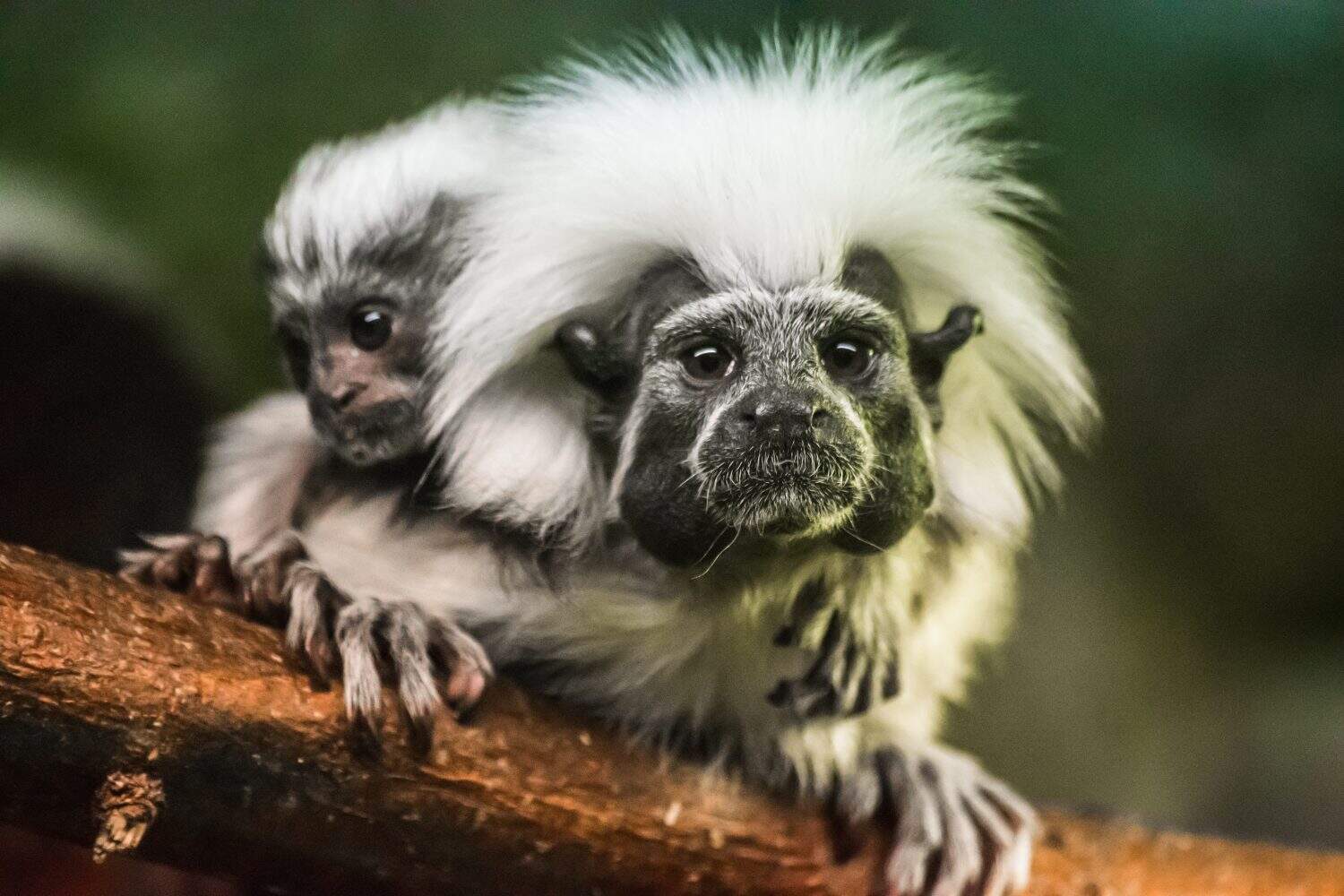
Cotton-top tamarins mainly eat fruit.
©Martin Leber/Shutterstock.com
Although both parents are deeply involved with their young, fathers often take on a larger share of the childcare. Researchers think this may be a way for males to impress female tamarins. However, it comes at a price, as being the primary carrier is physically demanding. Male cotton-top tamarins frequently lose 10 to 11 percent of their body weight while raising their young. They expend a lot of energy carrying the babies, which leaves them with less time and energy to find food for themselves.
Because fathers (and often older brothers) are the ones who most frequently feed and carry the babies, young tamarins develop a clear preference for them. When they feel scared, they turn to their father or older brother for safety.