Quick Take
- Two snakes of the same morph bred together can produce an entirely different morph, and the result is often more extreme than either parent. See the super anaconda →
- One morph looks so little like a snake from its own species that it was named after a completely different one. Explore the anaconda morph →
- The most visually striking morph in existence isn't a single genetic trait. It takes a very specific combination to achieve it. See the albino extreme red →
- White hognose snakes exist, but albino and leucistic are not the same thing, and a single feature makes the difference visible. Leucistic vs. albino explained →
A morph is a particular pattern or color trait. Once breeders have identified certain genetic lines that carry these morphs, they carefully select them for breeding. Hognose snake (Heterodon) color morphs are genetic variations that alter the wild type’s natural brown, tan, and olive patterns. Through selective breeding and naturally occurring mutations, these morphs produce striking alterations in pigmentation, ranging from bright yellow and caramel to vibrant red. Breeders can also combine these traits to create entirely unique appearances.
Base Morph (Normal or Wild Type)
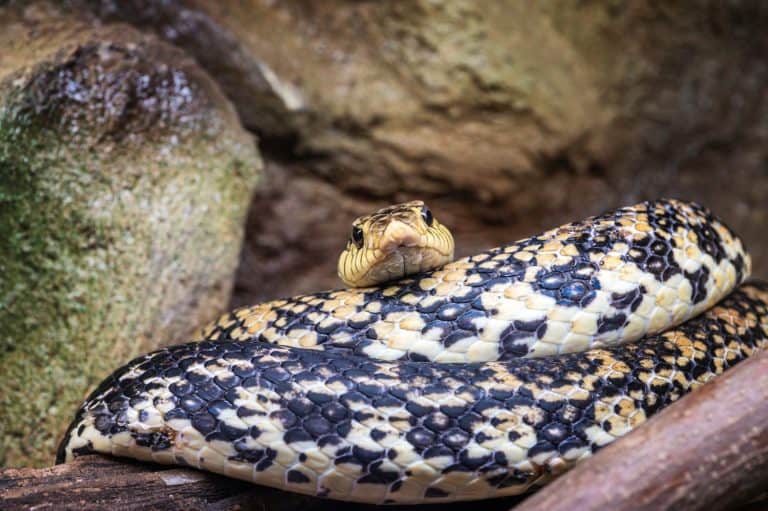
The base morph, or standard hognose snake coloring, is known as the wild type. This is how the snake typically appears in the wild, without human intervention. The wild type has a ground color of tan, brown, gray, or olive, with darker square blotches or bars running from head to tail. Anything significantly different from this standard coloration or pattern is considered a morph.
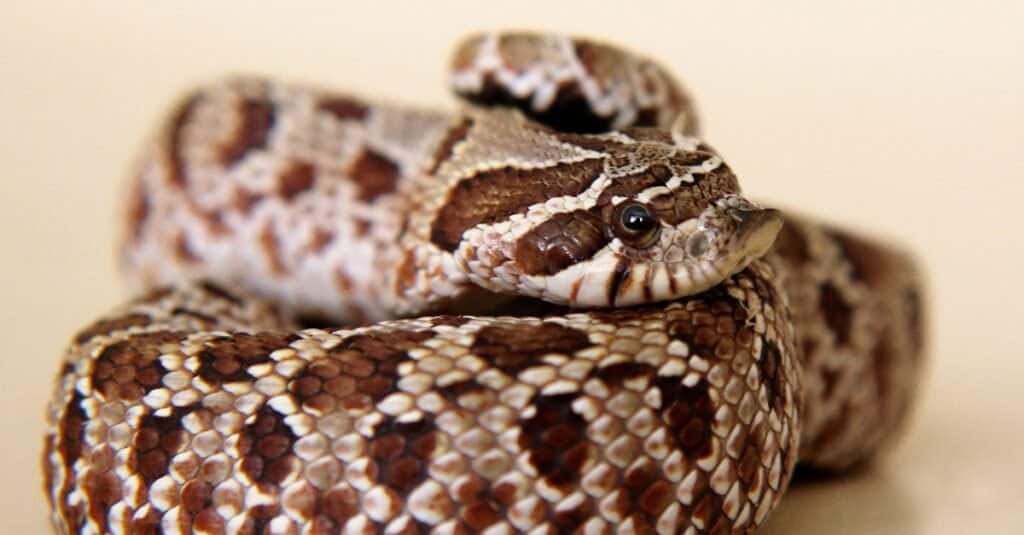
The western hognose snake has a thick body and is generally smaller than the eastern hognose, averaging 17 to 35 inches compared to the eastern’s 18 to 45 inches.
©iStock.com/Iuliia Morozova
Albino Morph
The albino hognose snake morph is defined by the complete absence of melanin. This lack of melanin (dark pigmentation) creates a snake with an overall red, orange, or yellow coloration across its body. Albino morphs are rare and highly prized.

The albino morph doesn’t produce melanin and has red or pink eyes and a white and orange body.
©Nynke van Holten/Shutterstock.com
Many albino morphs are combined with other traits to create even more unique colorations and patterns, and many of the following morphs are a subset of, or a cross with, the base albino morph.
Anaconda Morph
The anaconda hognose snake morph closely resembles an anaconda’s pattern, featuring widely spaced spots, a dark belly, and white sides. This morph results from an incompletely dominant trait, but when two anaconda morphs are bred together, the resulting snake is known as a super anaconda.

The anaconda morph resembles the patterning found on an anaconda.
©iStock.com/Florian DENIS
Super anacondas have light bodies with a few brown markings on their heads and an otherwise patternless body.
Axanthic Morph
The axanthic morph is a genetic trait that reduces yellow and red pigmentation, resulting in cleaner black-and-white coloration that occasionally borders on grey.

Axanthic morphs are well-known for their reduction of red pigmentation in snakes.
©Chase D'animulls/Shutterstock.com
Arctic Morph
The Arctic hognose snake morph features high-contrast coloring with darker spots and a lighter body. The snake’s body often appears white or tan, while the spots are dark brown. A super Arctic morph is created when two Arctic snakes are bred together.

©fivespots/Shutterstock.com
Super Arctic morphs are extremely high contrast, with almost white bodies and dark brown or black spots.
Caramel Morph
The caramel hognose snake morph is characterized by a reduction in melanin, but not its complete absence. The resulting snake is usually light yellow or tan with caramel markings across its body.
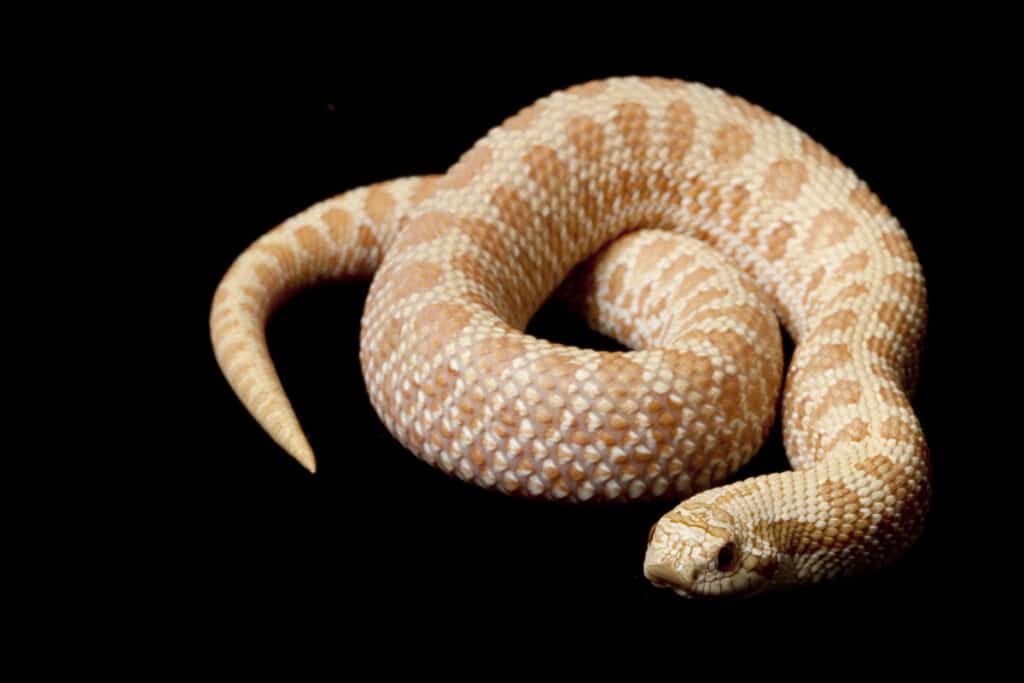
Caramel morphs have a beautiful caramel coloring across their bodies.
©fivespots/Shutterstock.com
Extreme Red Morph
The extreme red hognose snake morph features intense red pigmentation across the body and can display a variety of colors on its own, but when combined with an albino morph, it produces a white body with vivid, contrasting red spots. This combination is arguably the most visually striking morph discussed in this article.
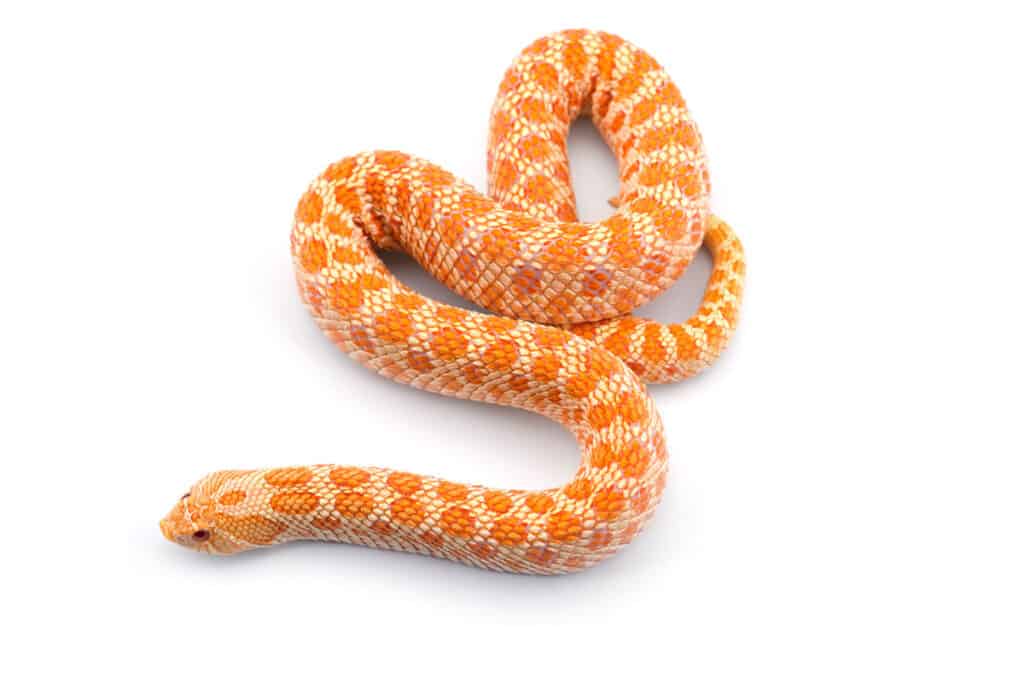
Extreme red morphs almost look like they have fire leaping up the sides of their body!
©PetlinDmitry/Shutterstock.com
Leucistic Morph
A leucistic morph typically results in a stark white body and dark eyes. The same is true for leucistic hognose snakes, though their rarity makes them quite expensive.

Leucistic morphs are stark white but have dark eyes.
©fivespots/Shutterstock.com