
Quick Take
- A completely white bald eagle spotted in southwest Missouri is a rare example of leucism, an unusual loss of pigmentation.
- Leucism can cause partial or complete loss of pigmentation and differs from albinism because it generally does not affect eye colour. Spot the key difference →
- Leucistic animals can otherwise be healthy and capable of normal behaviour, although unusual coloration can sometimes affect camouflage or make them more conspicuous. Discover the Missouri sighting →
- Although leucism is uncommon in birds and extremely rare in eagles, it can occur across mammals, reptiles, amphibians, fish, and other animals. Explore the giraffe dangers →
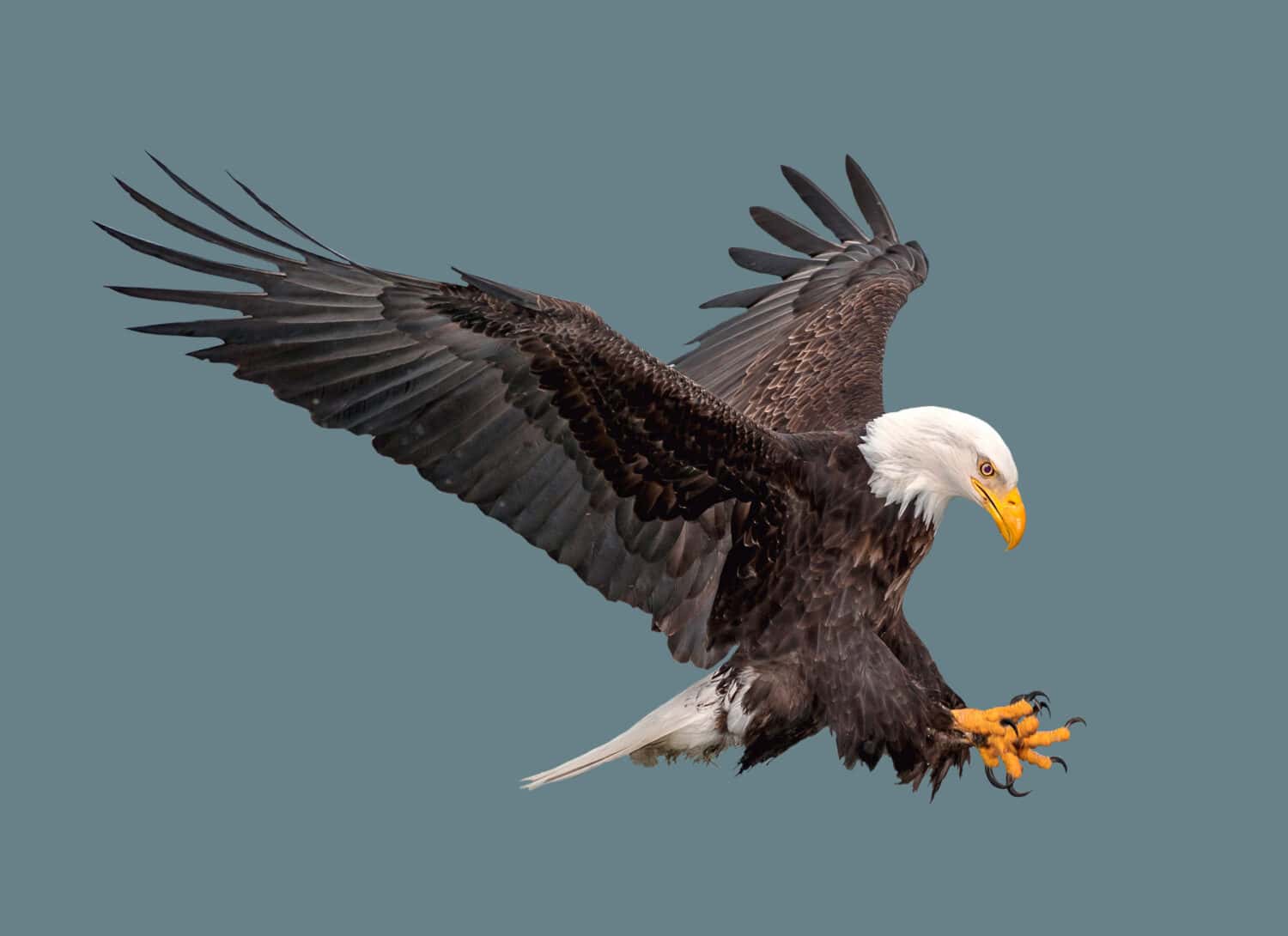
Bald eagles are iconic birds that are easily recognizable by their dark brown bodies, which contrast with their white head and tail feathers. However, a bald eagle was spotted in southwest Missouri that has a very different appearance. You can see in the Instagram post shown above that, with body of entirely white plumage, the bird is a rare example of leucism in eagles. Keep reading to learn what leucism is and why it causes animals to have such an unusual appearance.
Continue reading
What Is Leucism?
Instead of having their typical coloration, animals with leucism have a much paler appearance than normal – and sometimes completely white. Leucism is a rare genetic condition that affects pigmentation in skin, fur, or, in the case of birds, feathers. It is caused by a recessive gene, which means that animals need to receive a recessive gene from both parents in order to actually be leucistic.
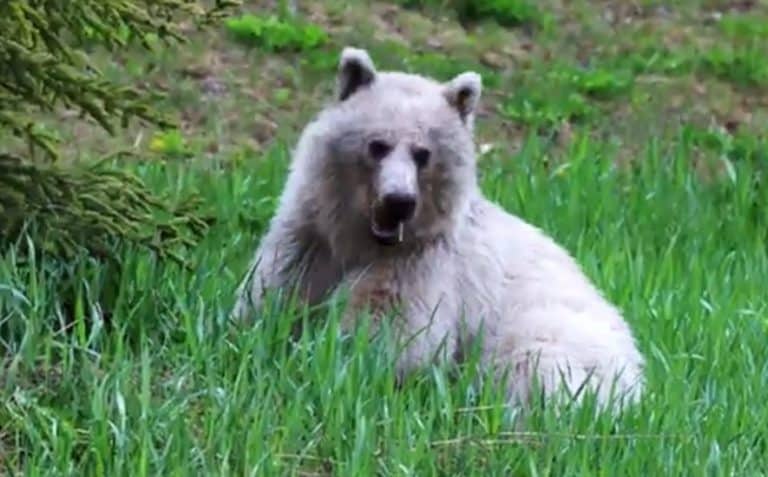
Leucism affects how the pigmentation cells develop and can cause either partial or total loss of pigmentation. With partial loss of pigmentation, the animal appears as a paler version of its regular color. The amount of pigmentation lost determines how much of the animal’s natural color remains visible. In cases of total pigmentation loss, the animal appears completely white.
White animals are often associated with albinism. However, leucism and albinism are not the same thing. Albinism causes a loss of melanin, which is the pigmentation that produces dark colors. Leucism is not restricted to melanin alone; instead, it causes a loss of several types of pigmentation. Crucially, leucism does not affect the color of the eyes, whereas albinism causes the red or pink eyes that are so often associated with albino animals.
Leucism in Eagles
The eagle photograph in the Instagram post above was taken in southwest Missouri by photographer Terry Nunn. The images show a bald eagle with white plumage, rather than the signature brown and black. Leucism is not common in birds; general estimates suggest that it affects just one in 30,000 birds. However, it’s considered to be extremely rare in eagles, making the sighting particularly unusual.
At the time of the sighting, the bald eagle was in a popular migratory area along with up to one hundred other eagles. Bald eagles often migrate into the state during the winter to take advantage of the rich feeding areas before moving on again in the spring.
Although leucism in bald eagles is extremely unusual, it doesn’t automatically mean that they are at a disadvantage. Leucism only affects the coloration of their plumage, so they still retain their sharp eyesight and excellent hunting abilities. However, it can potentially have an effect on camouflage. Bald eagles are apex predators and prey predominantly on fish, although they also prey on small mammals, reptiles, and even other birds. Bald eagles have a distinctive appearance, and their dark bodies typically allow them to blend into the landscape. However, a white or even paler-colored bird stands out against darker backgrounds, which can put it at a disadvantage when hunting because prey can spot its approach more easily.
Leucism in Other Animals
Leucism occurs in many other animals, including mammals, reptiles, amphibians, and even fish. It has been documented in a variety of species, although the frequency with which leucism occurs and how it appears vary considerably. Bengal tigers are one of the best-known examples of leucism. Some Bengal tigers exhibit leucism and are often known as white tigers. Leucistic tigers appear to have paler versions of their traditional orange coats, although their dark stripes are usually still visible.
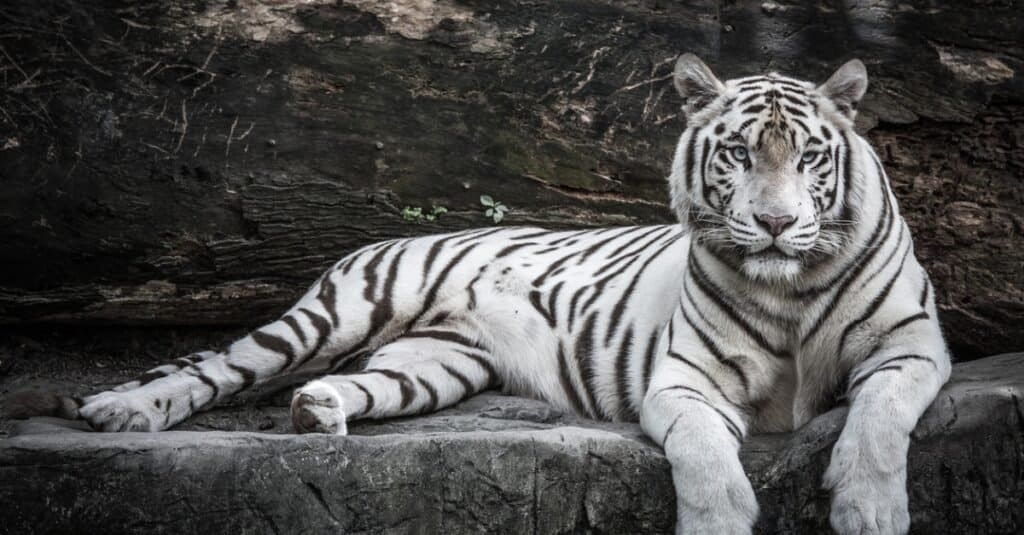
White Bengal tigers are an example of leucism.
©w1snu.com/Shutterstock.com
Leucism has also been observed in deer across several different countries. However, it is much rarer in giraffes, with only a small number of documented individuals. The appearance of leucistic giraffes can vary; some appear almost entirely white, while others retain some of their typical markings. However, leucism presents a different challenge in giraffes, as they are often targeted by poachers due to their rarity. Additionally, the unusual coloration means that leucistic animals are easier to identify and more closely monitored, and as a result, they become more well-known.