
Quick Take
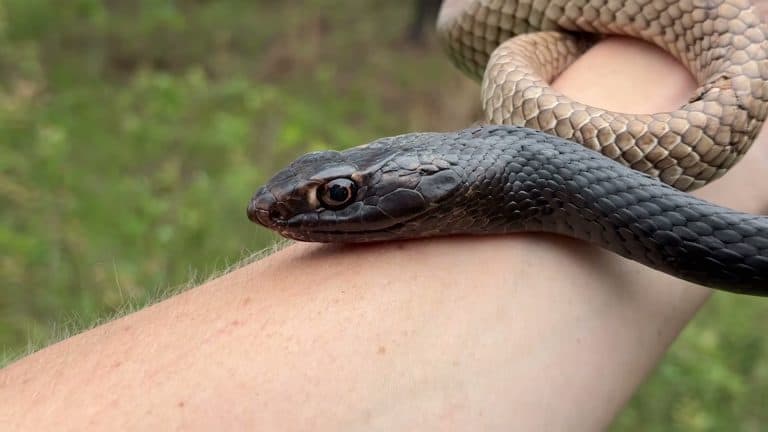
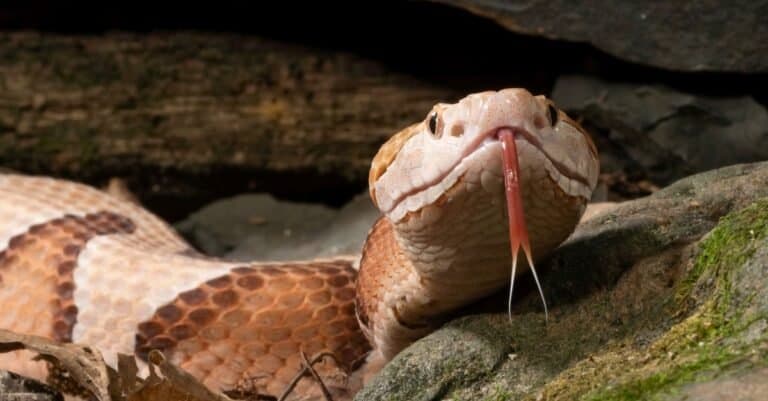
- One Wisconsin snake looks almost identical to a venomous species, though the dangerous lookalike doesn't even live in the state. Meet the cottonmouth lookalike →
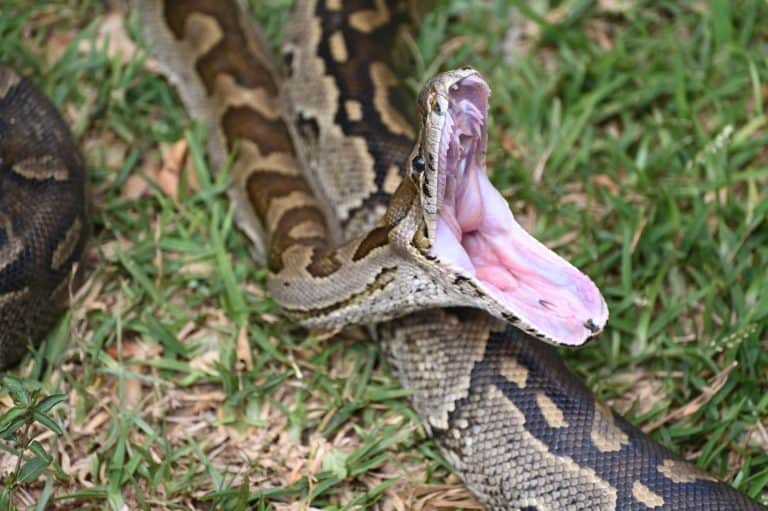
- Wisconsin's largest snake has the ability to climb trees and poles, and it is probably not the one you would expect. See Wisconsin's climbing giant →
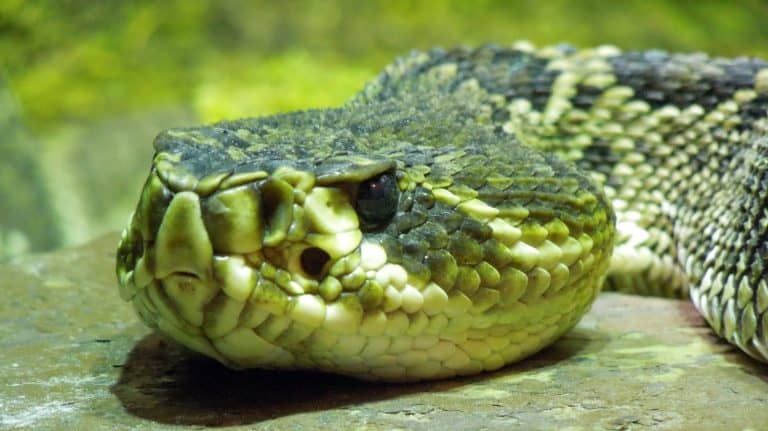
- The state hosts a venomous rattlesnake so rare and endangered that encountering one is almost impossible, though it still poses a real threat. Discover this endangered rattlesnake →
- More than half of Wisconsin's snake species are in serious trouble, and habitat loss is only part of the story. Check threatened species status →
Wisconsin is home to 21 or 22 species of snakes. While the vast majority of these reptiles are harmless and beneficial to their ecosystems, the state does host two venomous species: the timber rattlesnake and the Eastern massasauga rattlesnake. As a result of habitat loss and environmental pressures, 14 of these 21/22 species are currently listed as rare, threatened, endangered, or of special concern by the Wisconsin Department of Natural Resources as of 2026. Continue reading to learn more about 10 of the snakes that call Wisconsin home.
Smooth Green Snake
Smooth green snakes (Opheodrys vernalis) are found almost everywhere in Wisconsin except in the very Southern part of the state. These snakes are easy to spot because of their bright green color. They also have a very smooth appearance because of the way that their scales lay which is why this snake is called the smooth green snake.
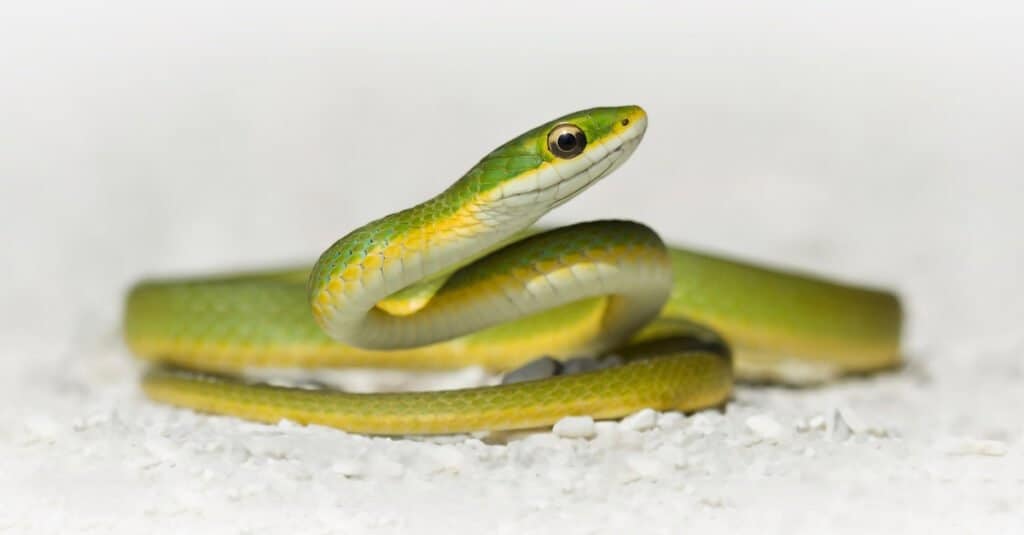
Smooth green snakes are found almost everywhere in Wisconsin except in the very southern part of the state.
©Kristian Bell/Shutterstock.com
Smooth green snakes have a solid, bright green color that usually stands out, but in the summertime, the vivid green Wisconsin vegetation can hide these small snakes. They are typically about 1 to 1.5 feet long.
Western Ribbon Snake
Western ribbon snakes (Thamnophis proximus) are found in the southern and central regions of Wisconsin. These snakes are about two feet long and have dark green or black scales with three yellow or orange-red stripes that run down the entire length of their bodies on their back and sides. Western ribbon snakes are harmless to humans.
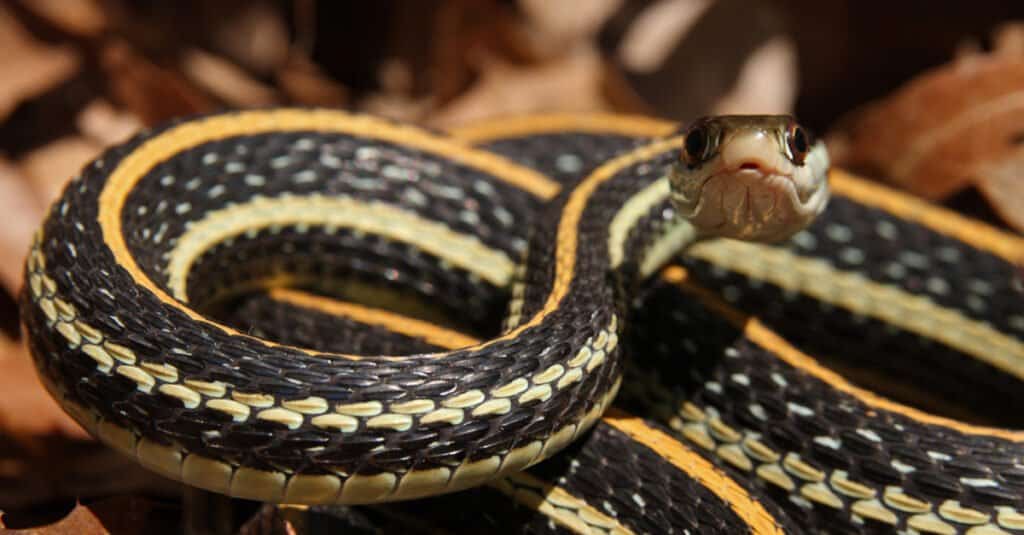
In Wisconsin, Western ribbon snakes are not widely distributed.
©Ryan M. Bolton/Shutterstock.com
Northern Ring-Necked Snake
Northern ring-necked snakes (Diadophis punctatus edwardsii) are small snakes, that are about two feet long. They can be found on the edges of forests near deciduous trees. During the winter Northern ring-necked snakes may take up residence in old tree stumps or other areas that will protect them from the cold and snow of a Wisconsin winter.
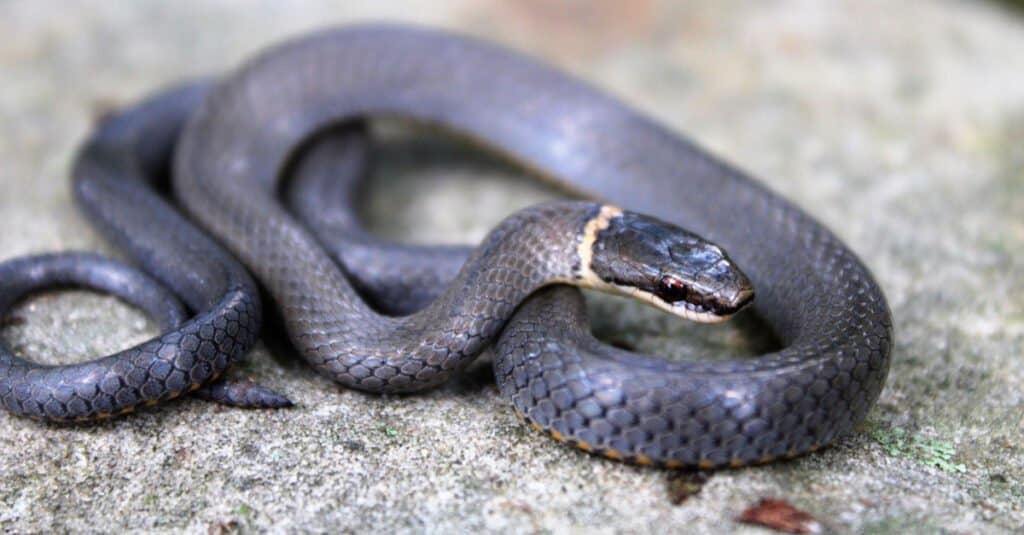
Northern ring-necked snakes live on the edges of forests.
©Tucker Heptinstall/Shutterstock.com
Bull Snake
One of the largest snakes in Wisconsin, bull snakes (Pituophis catenifer sayi) can grow up to eight feet long. Bull snakes are excellent climbers and will ascend trees, porch columns, and poles, among other things. Also known as gopher snakes, they prefer sandy soil that they can burrow into. In Wisconsin, you will typically find them near prairie bluffs and in the drier areas of the state.
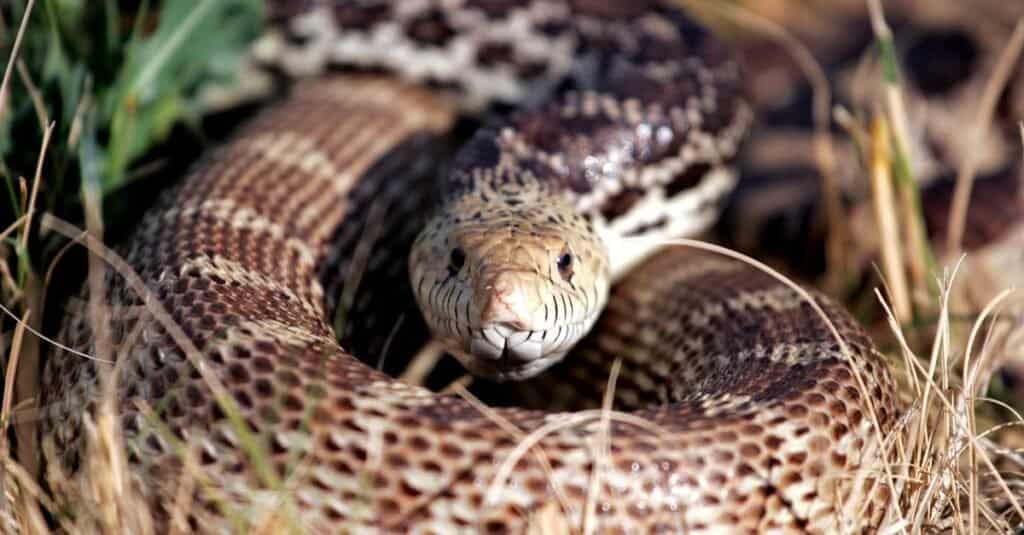
Bull snakes are not venomous but will often hiss or rattle their tails like a rattlesnake if they feel threatened.
©iStock.com/92968526
Milk Snake
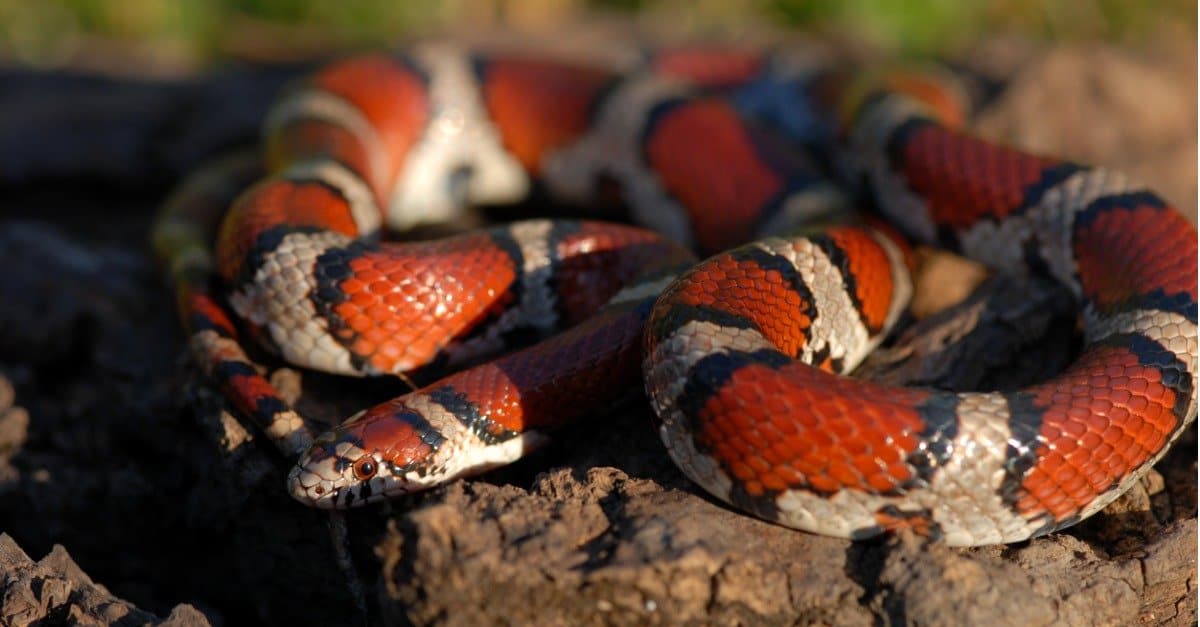
You will find milk snakes (Lampropeltis triangulum) across Wisconsin, except in the northern part of the state. Milk snakes have wide red bands, which can make them look like venomous coral snakes, although there are no coral snakes in Wisconsin. Milk snakes are not harmful to humans and are very often found on farms and in vacant buildings.
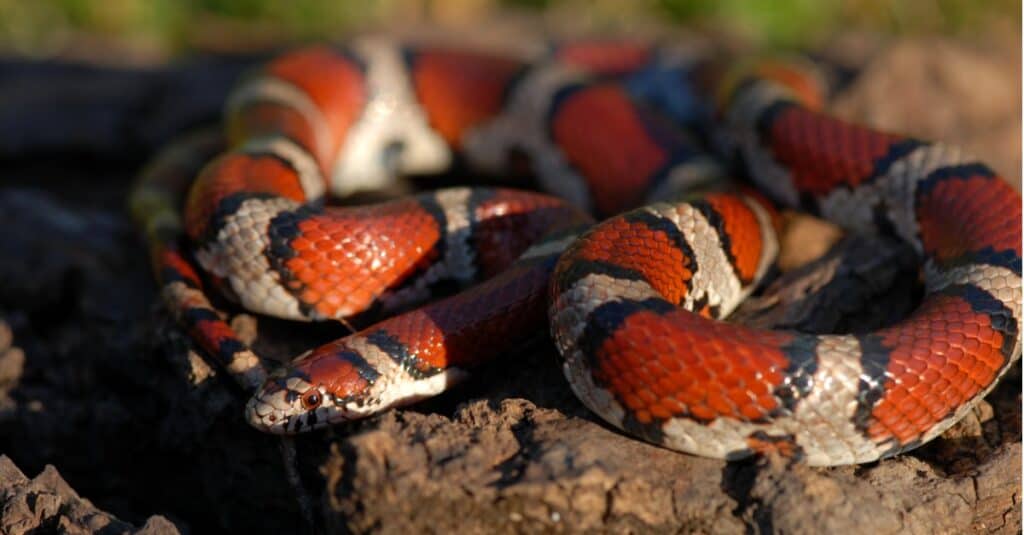
You will find milk snakes throughout the state of Wisconsin except in the north part of the state.
©iStock.com/Shoemcfly
North American Blue Racer
The North American blue racer (Coluber constrictor foxii) can grow to between five and six feet long. North American blue racers can move at speeds of about 3 to 4 miles per hour (mph), though some studies suggest they move in bursts at 7 to 7.5 mph over short distances. North American blue racers have blue-gray scales on top and a light cream or gray belly. The blue racer isn’t venomous, but it is a wild animal and should be admired from a distance.
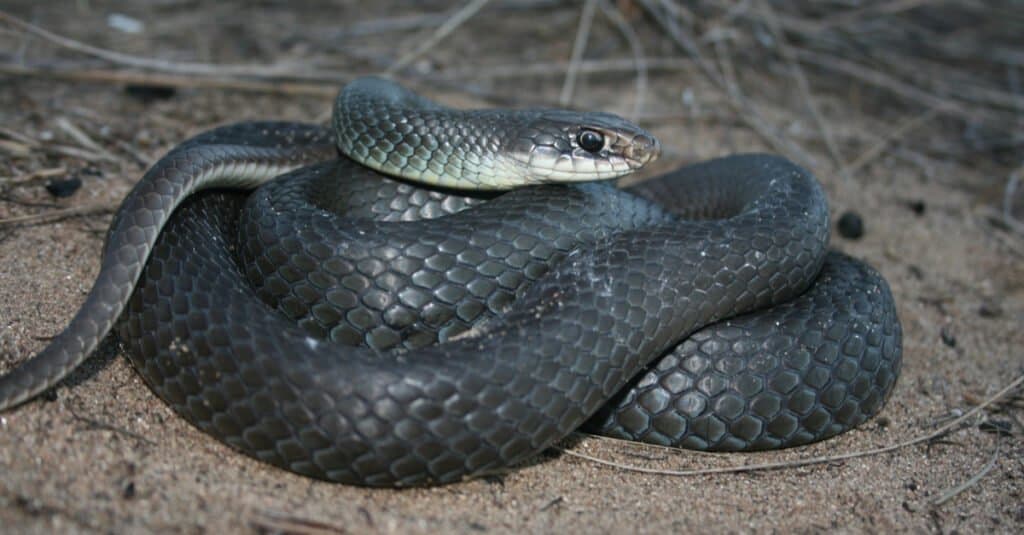
Blue racers have a distinctive blue-gray color and a light cream or gray belly.
©Psychotic Nature/Shutterstock.com
Queen Snake
Queen snakes (Regina septemvittata) are only two to three feet long. They prefer warm water streams and rivers to cold lakes. That’s because their primary food is crayfish that live in small streams and rivers. The color of a queen snake varies depending on its habitat. Queen snakes are brown, tan, olive, or gray to blend into the water and the shoreline. This allows them to hunt undetected by their prey.
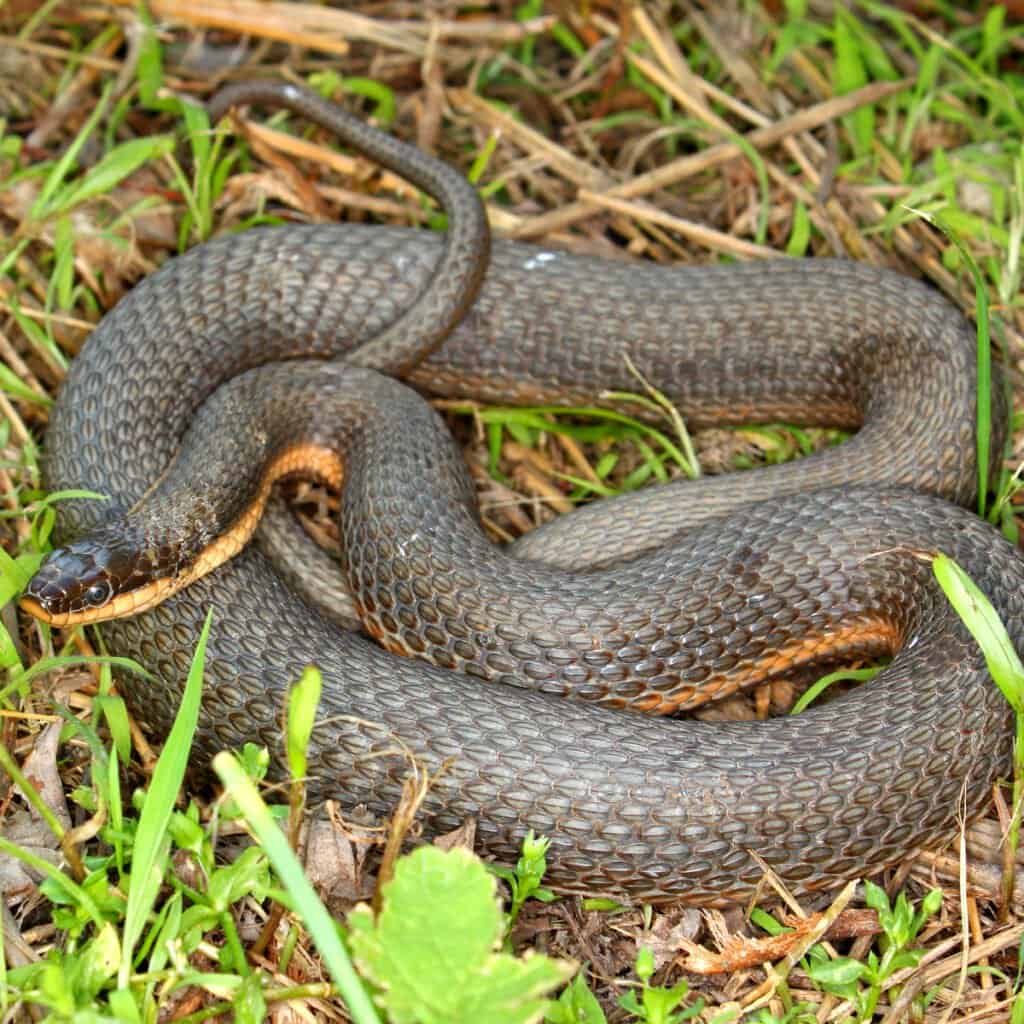
Queen snakes prefer warm water streams and rivers to cold lakes as they mainly eat crayfish that live in small streams and rivers.
©Jason Patrick Ross/Shutterstock.com
Common Water Snake
The common water snake (Nerodia sipedon) is found throughout the state of Wisconsin. Common water snakes are heavy-bodied. They may only be a few feet long, but they have thick, heavy bodies. They eat crawfish, frogs, and other amphibians. The common water snake is often mistaken for the venomous cottonmouth snake, which is not present in Wisconsin.
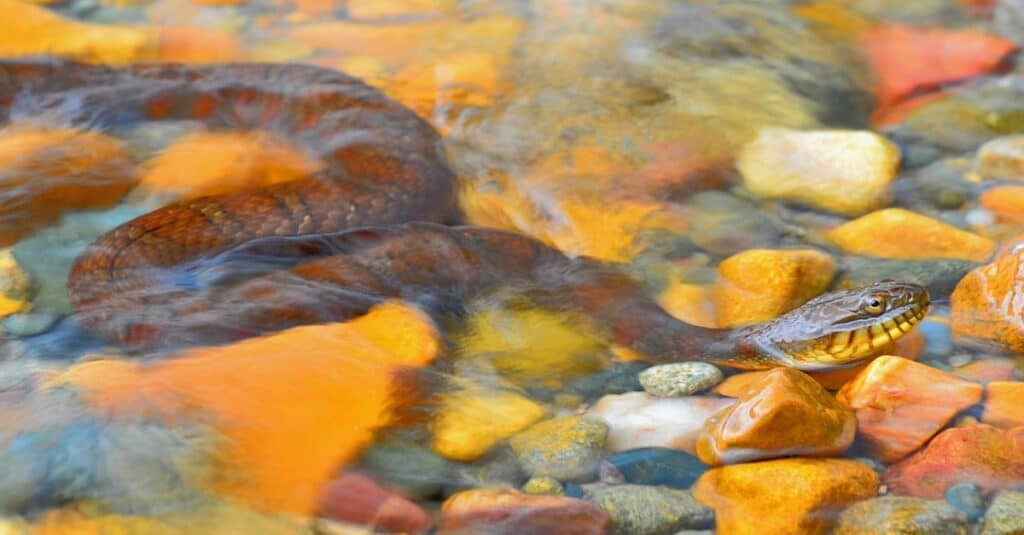
The common water snake is often mistaken for a venomous Cottonmouth snake.
©iStock.com/Doug Gordon
Eastern Massasauga Rattlesnake
The Eastern massasauga rattlesnake (Sistrurus catenatus) is a small pit viper of 2 to 3 feet. It has a light gray or tan background color marked with large, dark brown, chocolate-colored blotches across its back, alongside a distinctly heart-shaped head, vertical pupils, and a small tail rattle.
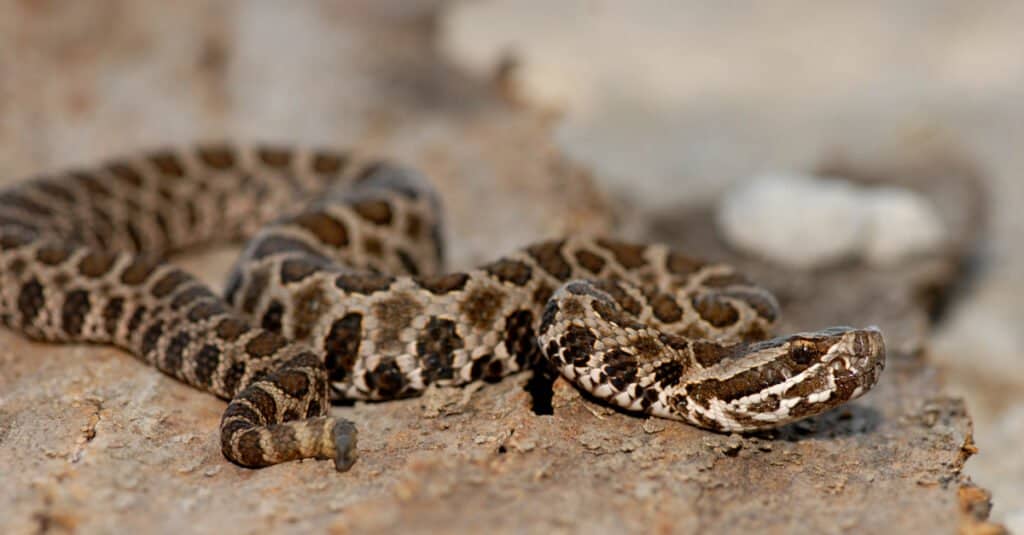
Eastern massasauga snakes are relatively short and wide.
©Rusty Dodson/Shutterstock.com
This incredibly rare and endangered snake is found in wetland habitats and currently persists in a small number of isolated sites across Wisconsin. While its bite is toxic to humans, the Eastern massasauga rattlesnake is small and has short fangs that inject very little venom. As a result, bites are rare, and fatalities from bites are even rarer.
Timber Rattlesnake
In Wisconsin, timber rattlesnakes (Crotalus horridus) are found among the unglaciated bluffs and forested valleys of the southwestern and western portions of the state. Timber rattlesnakes are large, heavy-bodied pit vipers that typically measure 3 to 5 feet in length. While their venomous bites are potentially dangerous and can be fatal if left untreated, these snakes are incredibly shy, reclusive, and non-aggressive by nature. Because they prefer to retreat or give a warning rattle rather than strike, bites are exceptionally rare. The last confirmed human death from a rattlesnake bite in Wisconsin occurred in 1900, and fatalities have been exceptionally rare since then.
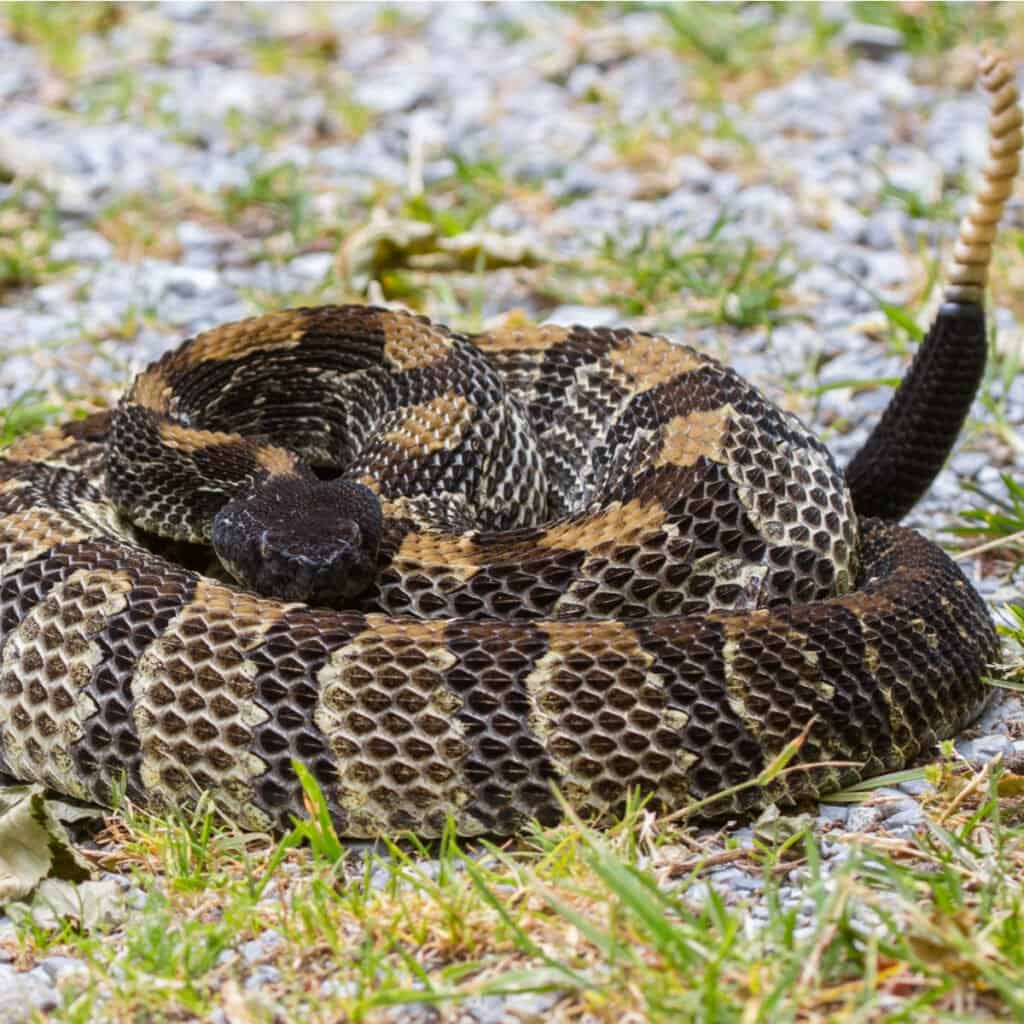
Timber rattlesnakes bites are venomous, but not usually deadly.
©Frode Jacobsen/Shutterstock.com