
Quick Take
- A scientist spent seven years trying to prove that a snake in his own care was a new species, and what finally convinced him was an unexpected twist. See the seven-year journey →
- This snake looks identical to a known species on the outside, but flipping it over reveals something unusual that gives it away. Spot the hidden differences →
- Egg-eating snakes can swallow eggs larger than their own heads without cracking them, and the anatomy that makes this possible is stranger than you'd expect. Discover the strange anatomy →
- For every snake species scientists know about, at least two more are hiding in plain sight, and some will vanish before anyone finds them. Explore hidden species →
Until recently, there were 18 known species of egg-eating snakes and one subspecies, all in just two genera. That number has just increased by one, thanks to a new egg-eating snake species discovered in an Ethiopian forest, which was just a juvenile at the time of discovery.
Continue reading
New Egg-Eating Snake Species Discovered in Ethiopia
In the Horn of Africa, an egg-eating snake species was living in plain sight in the Harenna Forest. Initially mistaken for a juvenile of another egg-eating snake species, no one paid special attention to the female snake. However, as she matured, it became clear she was unlike other snakes previously identified.
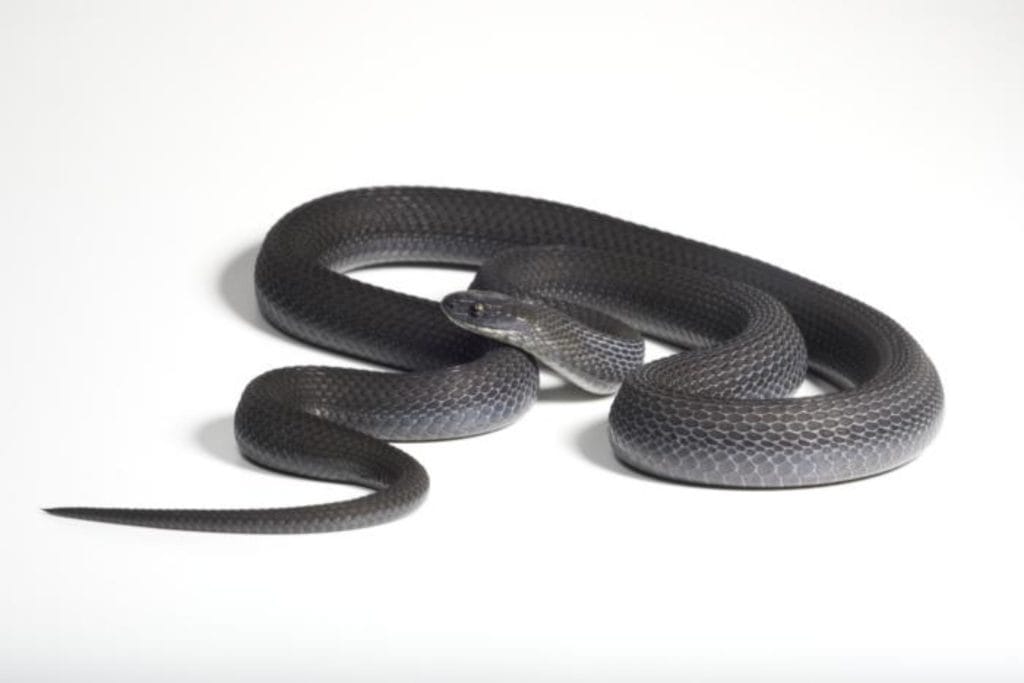
Dasypeltis albigularis is a previously undiscovered species of egg-eating snake.
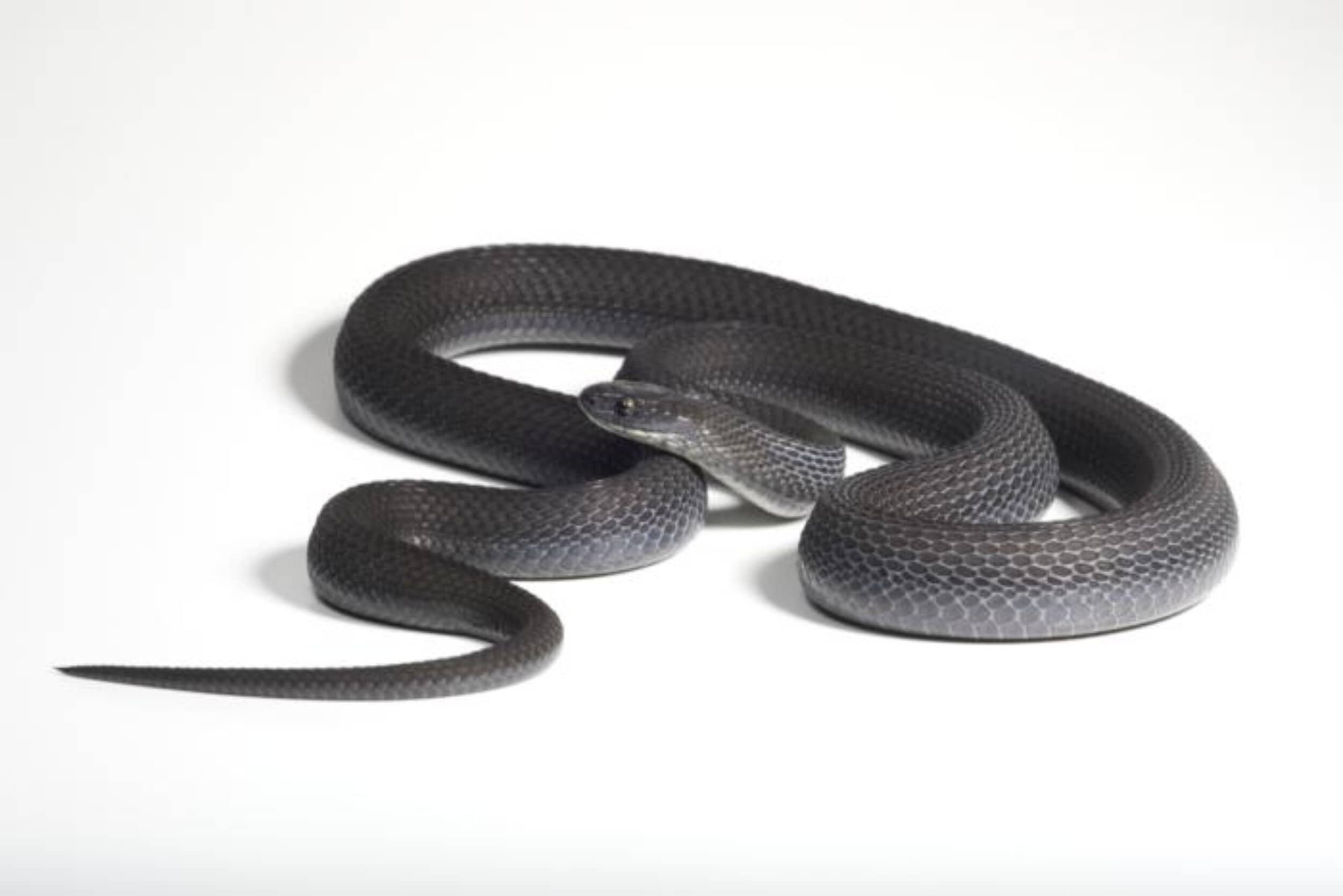
According to a new study published in Herpetozoa, researchers initially believed the snake was Dasypeltis atra, or the Montane Egg-eater. This was because the juvenile snake looked remarkably similar to Dasypeltis atra. Both are black snakes that exclusively eat bird eggs found in East African forests.
It was not until Arthur Tiutenko of Friedrich-Alexander-Universität Erlangen-Nürnberg and colleagues at Ludwig-Maximilians-Universität Munich and the National Museum in Bloemfontein conducted genetic analysis that they discovered a previously undescribed species.
How Researchers Discovered This Was a New Species of Egg-Eating Snake
Initially, Dr. Tiutenko did not know he was in the presence of an unidentified snake. The juvenile snake he acquired appeared to be a Dasypeltis atra. It was not until the snake began to age that Dr. Tiutenko thought it was a new species.
“I received a juvenile female of an egg-eater that appeared to me to be an already known species, and I started looking for a male to breed it,” Dr. Tiutenko said in a press release. “As she grew to adult size, I noticed morphological differences.”
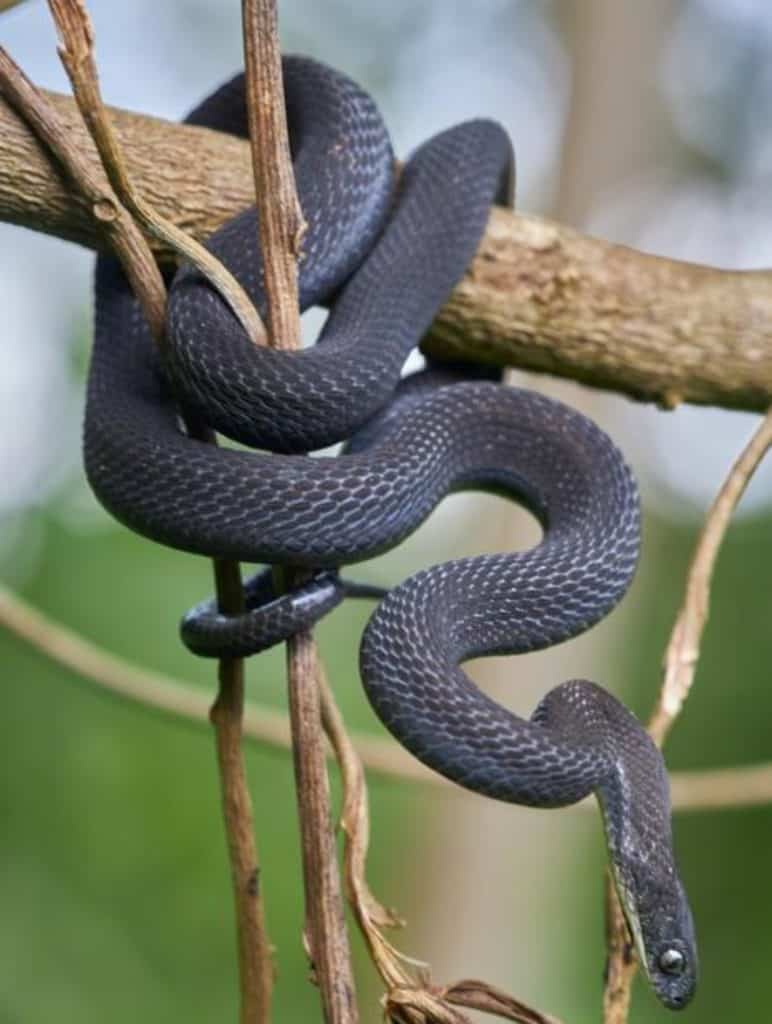
It took researchers seven years to prove, using DNA sequencing and captive breeding observations, that Dasypeltis albigularis was a new species.
However, the scientist did not identify the snake as a new species overnight. Instead, it took breeding with Dasypeltis atra to create a hybrid species that ultimately showed the different characteristics inherited from both species. It also took “drawing on morphological comparisons, DNA sequencing, and captive breeding observations” to determine that the snake, received as a juvenile, was indeed an undiscovered species.
How Do Egg-Eating Snakes Swallow Eggs Whole?
Egg-eating snakes do not look large enough to swallow entire eggs. Yet not only do they do this, but they also manage it without cracking the egg. How is this accomplished?
Mammals have a jaw hinged in a fixed way that allows the mouth to open only to a certain degree. Egg-eating snakes also have a hinge on the jaw, but it is flexible. Additionally, these snakes’ quadrate bone is only loosely attached. This combination lets the jaws open far beyond the head’s diameter, allowing large prey, like eggs, to fit into the mouth.
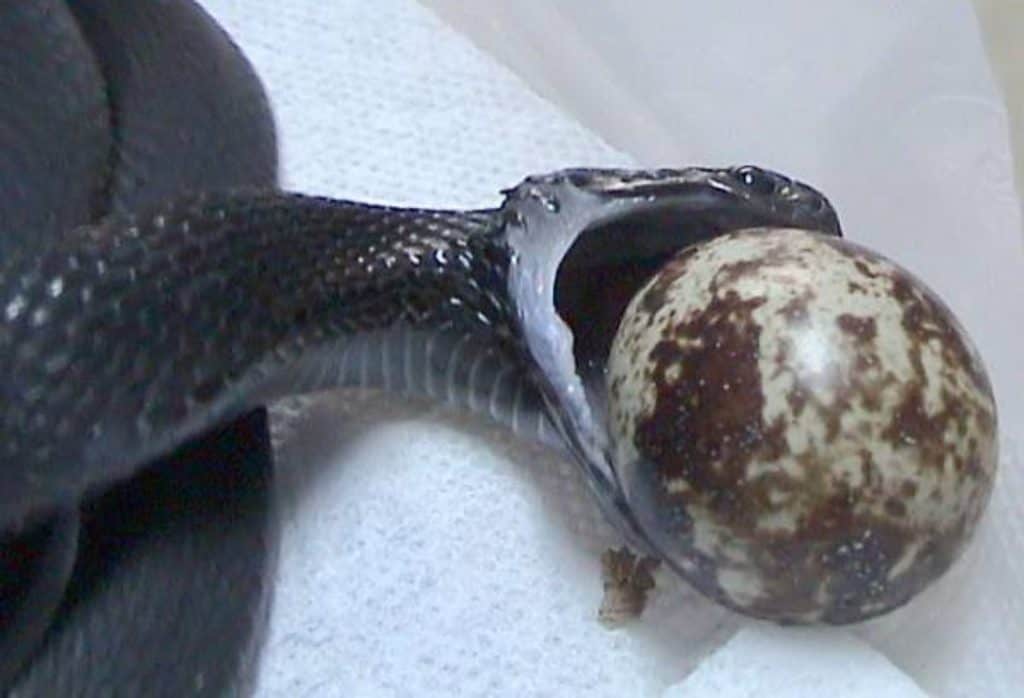
Egg-eating snakes have flexible jaw hinges that let them swallow large eggs.
©Dawson at en.wikipedia, CC BY-SA 2.5 , via Wikimedia Commons – Original / License
Once the egg is securely in the mouth, the egg-eating snake’s throat begins to contract. These contractions help the egg to move smoothly down into the esophagus.
The esophagus can expand quite a bit. Because of this, the esophagus doesn’t tear when the egg moves through it, and the egg does not break. The egg only breaks after it is through the throat. However, the snake does not consume the shell. Instead, the snake regurgitates the shell, allowing egg-eating snakes to repeat the process until full.
Differences Between the New Species of Egg-Eating Snake and Known Species
Dasypeltis albigularis may share similarities with other egg-eating snakes in its family, but it also has striking differences. These differences help identify the snake, which is especially useful because it looks identical to other species.
Unlike other, similar-looking egg-eating snakes, Dasypeltis albigularis has white to light blue skin under the black scales. It also has a white throat area and underside. According to the press release, this feature is noted in its scientific name. “Albus” means white, and “gula” means throat, roughly translating to “white-throated.”
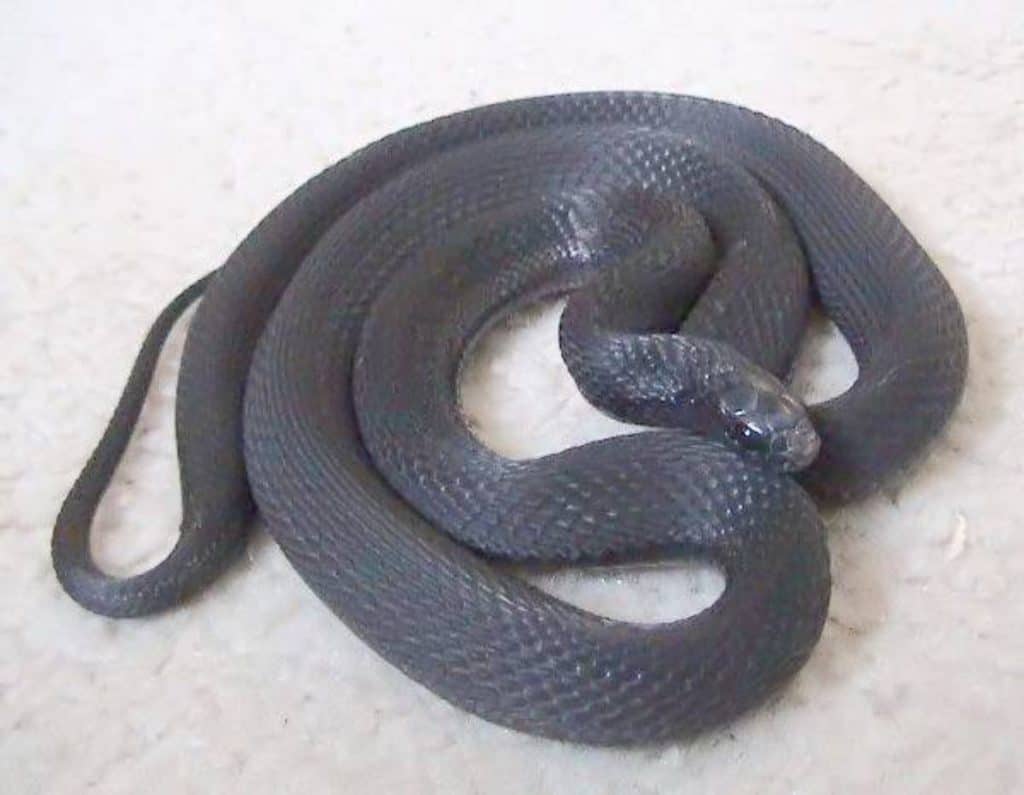
Dasypeltis albigularis, similar-looking to this Dasypeltis atra, has a few differences from other egg-eating snakes that make it unique.
©The original uploader was Dawson at English Wikipedia., CC BY-SA 2.5 , via Wikimedia Commons – Original / License
Another difference between Dasypeltis albigularis and other egg-eating snakes is that it cannot create a sizzling sound with its scales. It uses this sound to keep predators at bay by warning them that the snake is dangerous. This matters because these snakes are not venomous.
The snakes rub their rough scales together to create the loud rasping noise. This is known as stridulation. The sound often makes predators think twice before approaching, helping egg-eating snakes survive in hostile environments.
It is not yet known what Dasypeltis albigularis does as a defensive tactic. Consequently, much remains unknown about the snake, despite seven years of work to establish it as a new species.
Why So Many Snake Species Remain Unknown
For every new snake species discovered, two more are believed to remain unidentified. This means that with 4,259 known snake species, at least twice that many remain unrecognized.
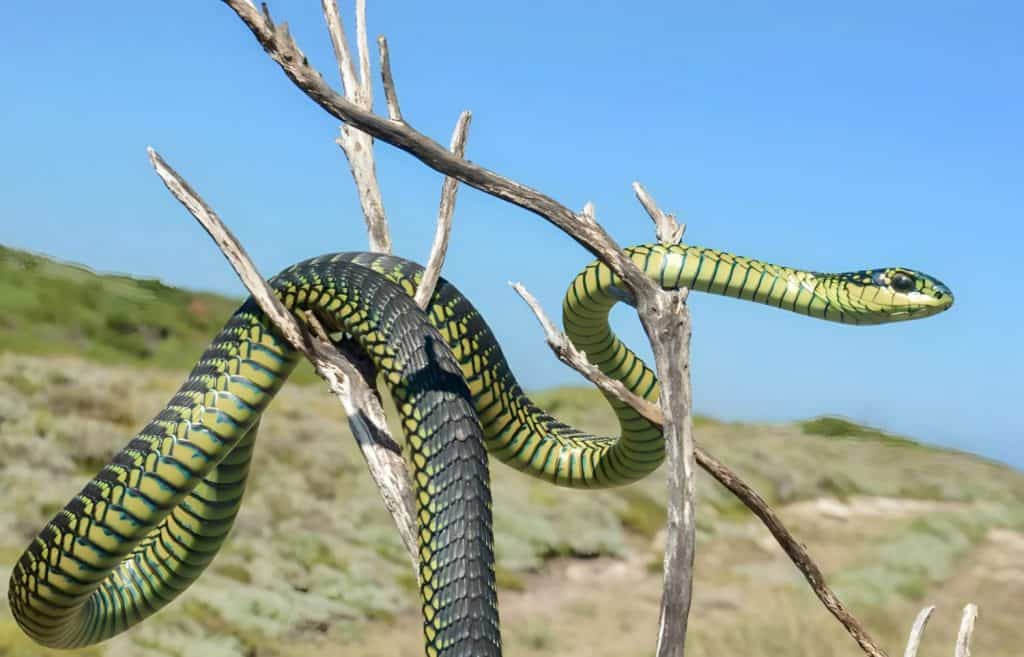
Many snakes remain unidentified because they resemble other snakes, live in isolated areas, or go extinct before they are discovered.
©Md_Tahmid_Hasan/Shutterstock.com
There are many reasons why so many snake species remain unknown. Some of the most common reasons include:
- Many species look alike while being genetically distinct from one another
- Some snakes live in isolated areas that are hard to access for most people
- Some snakes are strictly nocturnal, making them rarely seen
- Aquatic snakes can be difficult to spot when in the water
Additionally, one of the most troubling reasons is that some snake species go extinct before scientists ever identify them. As a result, many feel that the race is on to identify as many different snake species as possible before it is too late.
It is always remarkable to identify a new species. It shows just how much more there is to learn about the planet and the animals that inhabit it. Here’s hoping scientists and researchers get the opportunity to do just that before habitats once hospitable to these animals are lost.