
Quick Take
- A scientist watched a black snake transform before his eyes, and that very change is what gave the species its name. See the transformation →
- Refusing to kill his discovery, one researcher waited seven years to officially name it, and the solution he found was unexpected. Discover the ethical dilemma →
- This snake swallows eggs whole without teeth, and what happens inside its body to process them is stranger than you'd expect. Explore the egg-eating process →
- It can't make the one sound most egg-eating snakes rely on to survive. So how does it avoid predators? See its survival strategy →
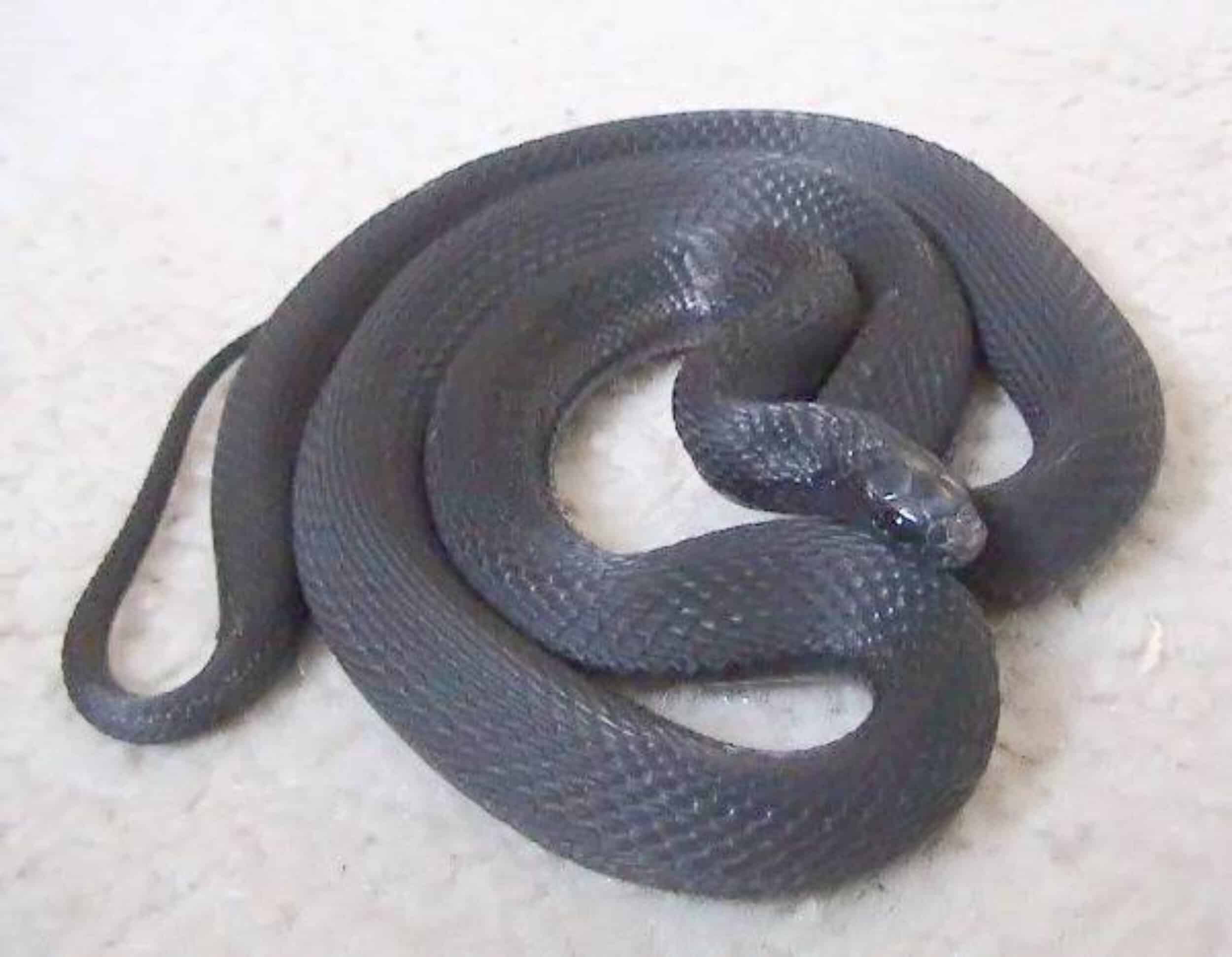
The egg-eating snake family recently gained a new member, raising the total number of exclusive egg-eating snake species from 19 to 20. The new black snake discovered in Ethiopia eats only bird eggs, like others of its genus. However, unlike most others, it undergoes a distinct metamorphic transformation.
Newly Discovered Ethiopian Snake Only Eats Bird Eggs
The higher elevations of East Africa are home to a variety of animal species. It is also where one of the newest snake species has been found, the white-throated egg-eater.
According to a recent study published in Herpetozoa, a species of never-before-identified egg-eating snake was discovered in Ethiopia’s Harenna Forest. The white-throated egg-eater, or Dasypeltis albigularis, was first witnessed by study author Arthur Tiutenko of Friedrich-Alexander-Universität Erlangen-Nürnberg in 2019.
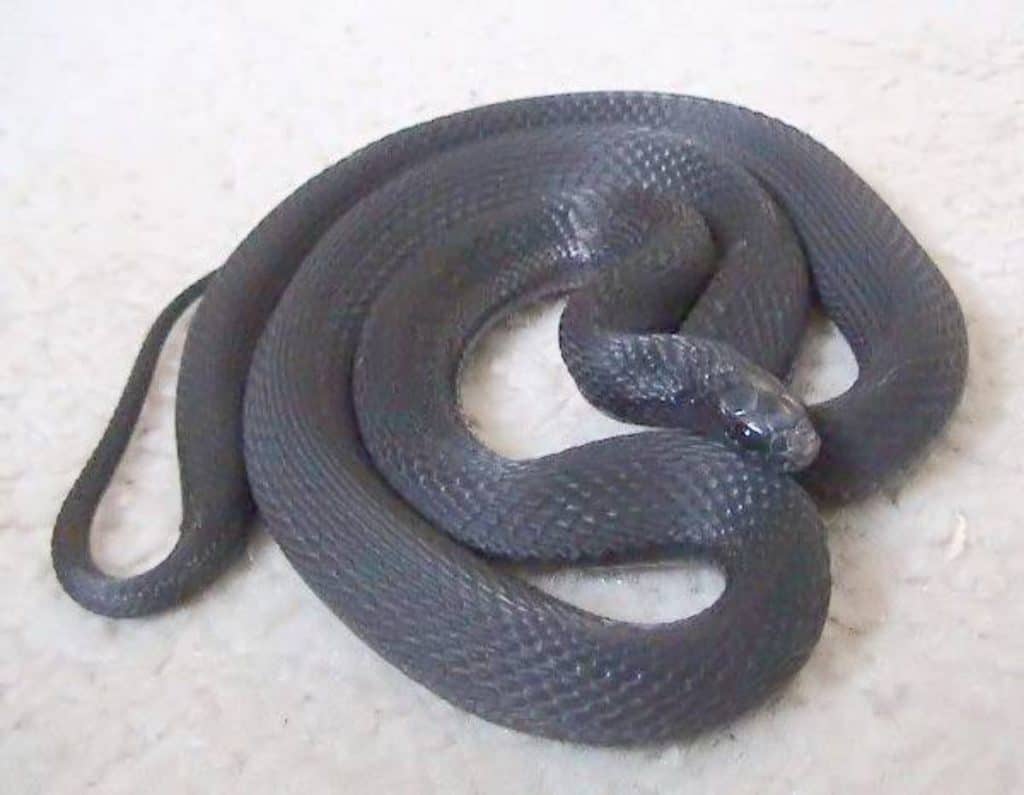
Initially, the white-throated egg-eater was thought to be the montane egg-eater shown here.
©The original uploader was Dawson at English Wikipedia., CC BY-SA 2.5 , via Wikimedia Commons – Original / License
When Tiutenko received the snake in 2019, the juvenile female was all black. It was not until the snake got older and larger that Tiutenko began to notice changes in its appearance.
“I received a juvenile female of an egg-eater that appeared to me to be an already known species, and I started looking for a male to breed it,” Tiutenko explained in a press release. “As she grew to adult size, I noticed morphological differences.”
Tiutenko then bred the female with a male snake that looked strikingly similar to confirm that the female was indeed a different species. As a result, the baby snakes had characteristics of both species. Tiutenko and his team at Ludwig-Maximilians-Universität Munich and South Africa’s National Museum in Bloemfontein officially declared a new snake species. Yet, it would take years from the time of discovery to officially name the snake.
Why Did It Take Years to Officially Describe the Snake After It Was Discovered?
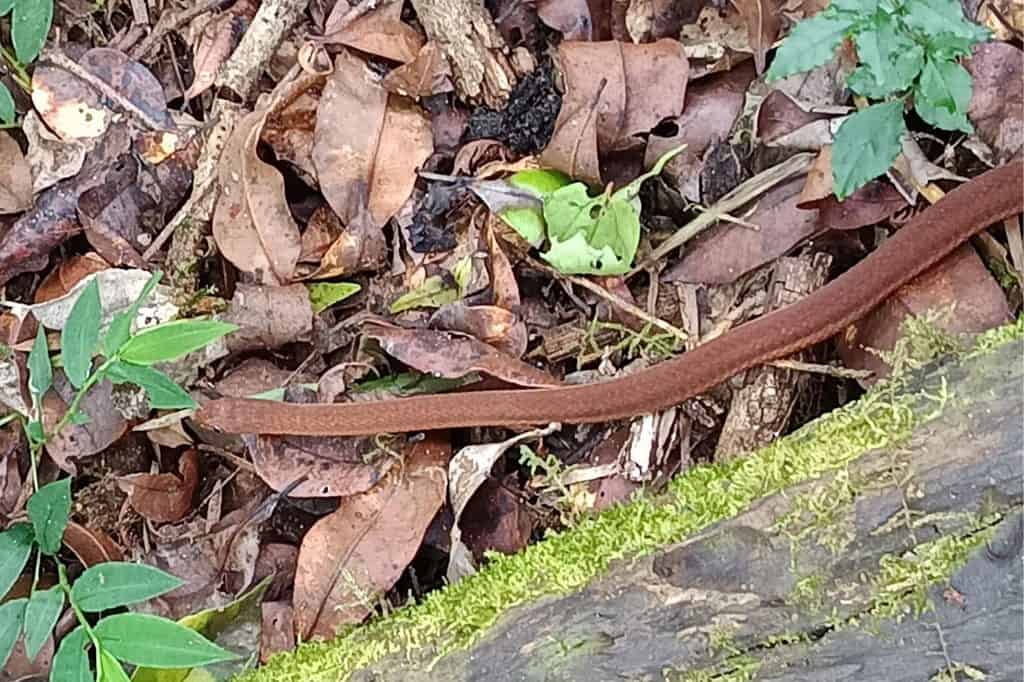
Tiurenko and his colleagues did not want to euthanize the snake just to put it into a museum collection.
To describe a snake as a new species, a specimen must be deposited in a museum collection. Tiutenko had ethical issues with euthanizing the snake for this purpose. If he had waited for the snake to die of natural causes, it would look very different from what the paper describes. Consequently, Tiutenko waited 7 years for a deceased snake before making a deposit into a museum collection.
“As soon as I found a dead specimen killed by local villagers,” Tiurenko explained to Mongabay, “I could designate it as holotype and proceed with the publication.”
Just like that, seven years later, scientists named a new species of snake.
How the White-Throated Egg-Eater Eats Eggs
Like other species in the genus Dasypeltis, the white-throated egg-eating snake does not crack the bird eggs before eating them because it lacks teeth. Instead, it swallows the egg whole. After the egg is swallowed, the work of consuming it begins.
The eggs that egg-eating snakes eat are often much larger than their heads. This requires the snakes to have flexible jaws to swallow them. Once swallowed, the lower jaw then moves the egg down the esophagus. Thanks to an extendable trachea, the snake can still breathe.
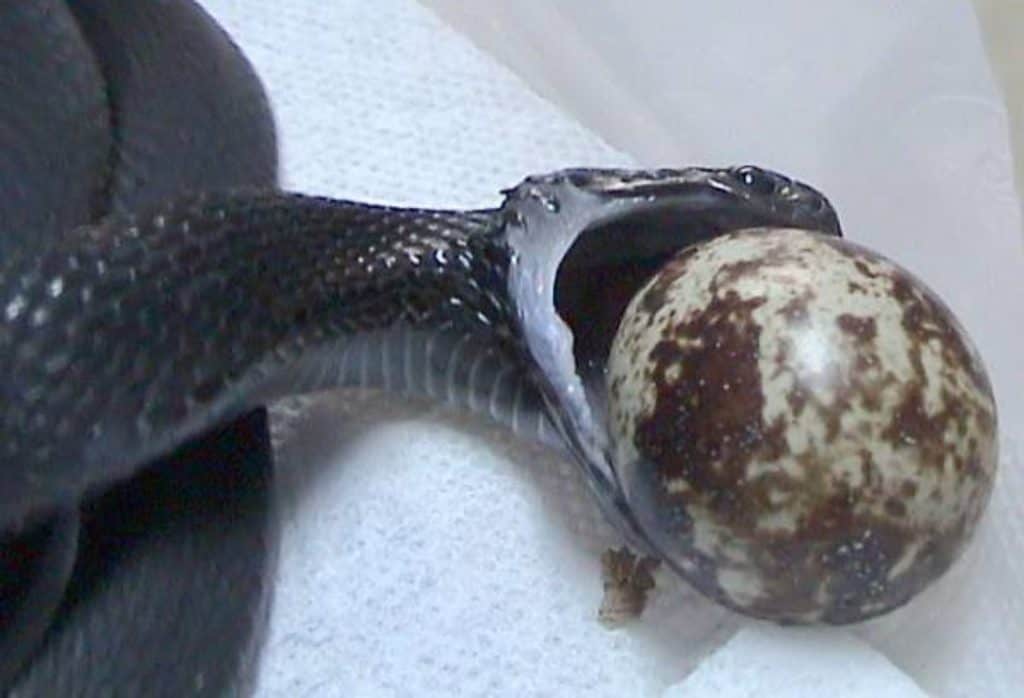
Like the montane egg-eater shown here, the white-throated egg-eater uses bony spines in its cervical vertebrae to extract nutrients from the egg.
©Dawson at en.wikipedia, CC BY-SA 2.5 , via Wikimedia Commons – Original / License
Once the egg reaches the neck, the snakes use internal “downward-projecting bony spines from the cervical vertebrae” to crack the eggs. Only the nutritious part of the egg moves to the stomach, while the eggshell is internally compacted and then regurgitated.
Snakes can continue swallowing eggs and regurgitating shells until they are full. An unattended bird nest is an easy meal for egg-eating snakes.
Differences Between the White-Throated Egg-Eater and Montane Egg-Eater
The white-throated egg-eater and the montane egg-eater look incredibly similar. The distinct differences are only apparent when the two are side by side.
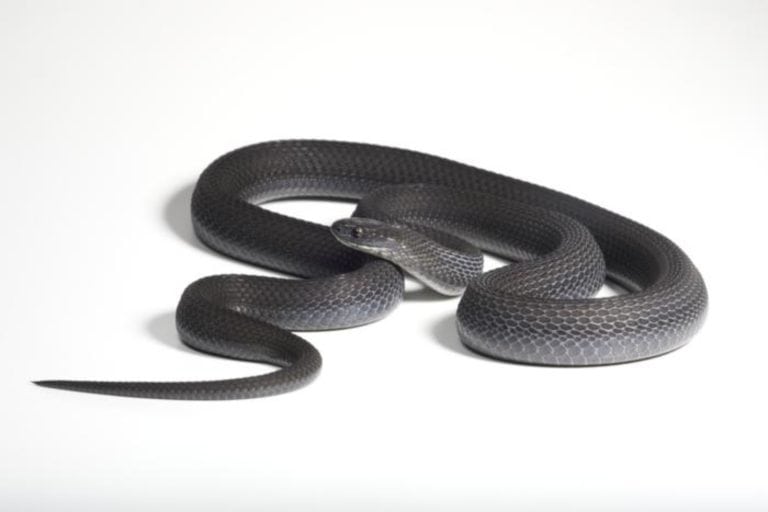
According to the study, the white-throated egg-eater has dark gray to black colored scales. As it moves, the blue-tinted skin between the scales shows. Most striking, however, is its white throat and underbelly, which led to the species’ name.
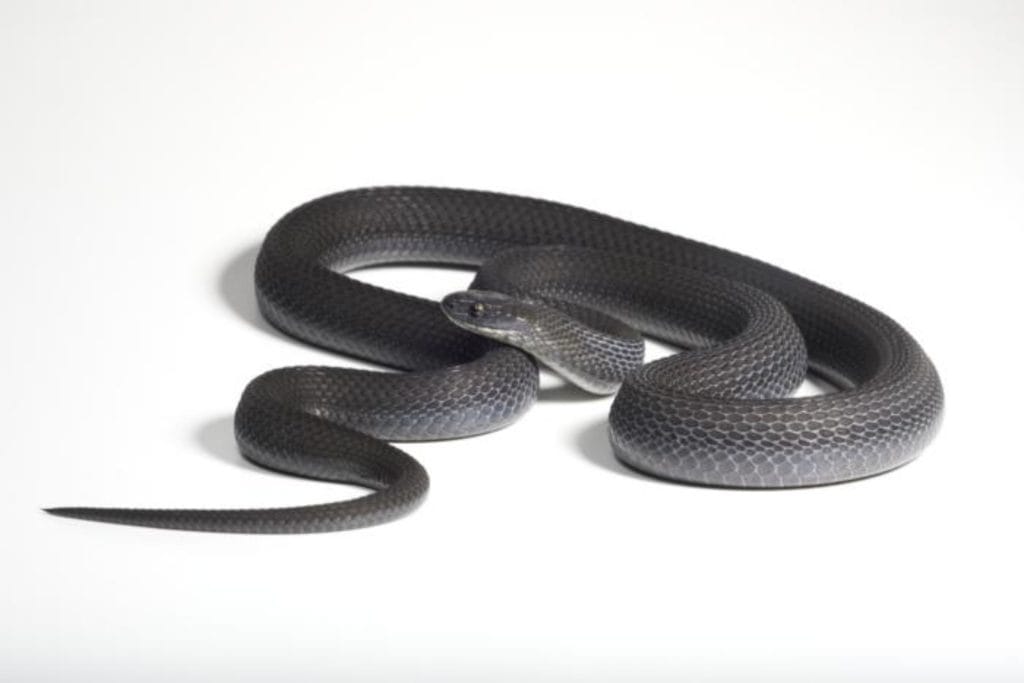
Dasypeltis albigularis, or the white-throated egg-eater has a white throat and underbelly, unlike the montane egg-eater.
In contrast, the montane egg-eater is all black. There are no color variations from the skin to the scales. But unless the two snakes are together for a comparison, it would be difficult to tell them apart without examination.
Additionally, the two snakes live in different regions of Africa. The white-throated egg-eater lives in Ethiopia, while the montane egg-eater lives in countries like Kenya and Tanzania. Both snakes are harmless, only consuming bird eggs, and have no desire to come into contact with or bite people.
Does the White-Throated Egg-Eater Have Defensive Strategies?
Egg-eating snakes are non-venomous and do not pose a threat to people. While some such snakes have defensive strategies that make them appear threatening to potential predators, this is not the case for the white-throated egg-eater, whose defensive strategies are limited.
Other egg-eating snakes can make a rasping or hissing noise by rubbing their scales together, mimicking the sound of venomous snakes. However, the study states that white-throated snakes cannot do this.
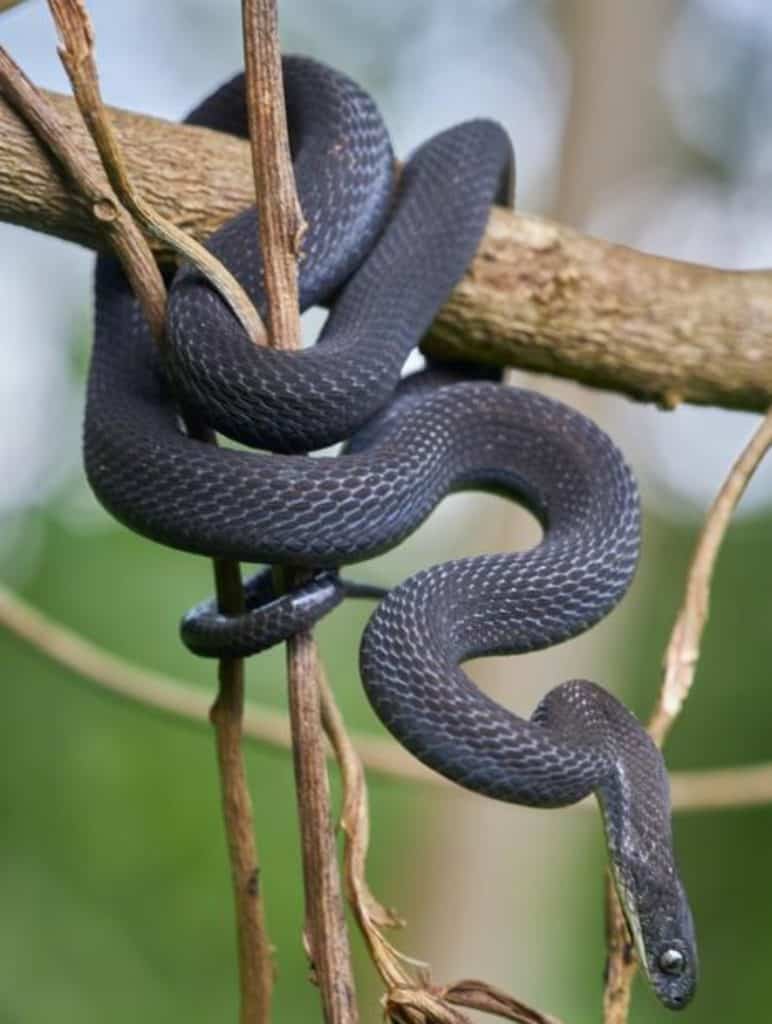
White-throated egg-eating snakes do not rub their scales to create a rattling noise. Their best camouflage is their dark coloration, which makes them look like a venomous snake.
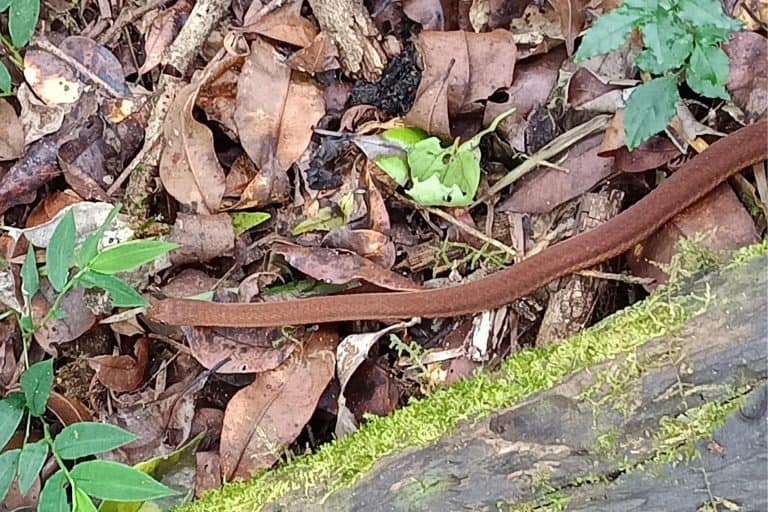
What white-throated egg-eating snakes do have in their favor is their coloring. By looking like a cobra with their dark coloration, some predators will think twice before approaching. Additionally, their dark scales allow them to blend into the undergrowth of coffee plants, where they can stay safe until danger passes.
As species like the white-throated egg-eating snake continue to be discovered, they highlight how little people know about species living in remote locations. It begs the question of how many more are out there waiting to be identified, and the truthful answer is that people will likely never know.