
Quick Take
- Scientists discovered this octopus in 1998 but couldn't formally name it until 2005, and the reason is exactly what you'd expect from an animal this deceptive. Discover its origin story →
- Picking which animal to impersonate is a split-second decision, and the logic behind that choice reveals something surprising about how this octopus understands its enemies. See how it chooses disguises →
- Color-changing skin is only the starting point, and what actually makes the disguise work exposes a deeper kind of intelligence most people don't expect from an octopus. Explore the biology behind it →
They say imitation is the best form of flattery, but in the animal kingdom, it can also be the best method of survival. A defenseless animal can impersonate its venomous neighbor, which is sometimes the only thing standing between it and becoming prey.
It’s a dog-eat-dog world out there, and one species has perfected mimicry to the point that it even uses it as a hunting strategy. From seaweed to jellyfish, there are few things this marine creature can’t imitate.
The Ocean’s Master of Mimicry
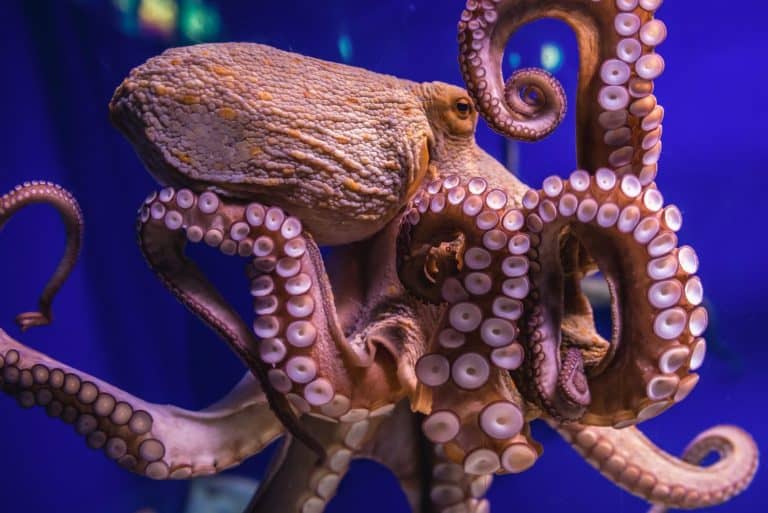
The mimic octopus (Thaumoctopus mimicus) is aptly named. It was first discovered in 1998, and its range extends through the Indo-Pacific Ocean. However, given its extraordinary shapeshifting abilities, it wasn’t formally described until 2005. Even in 2026, scientists are still unsure if we’ve seen the full range of this octopus’s talents.
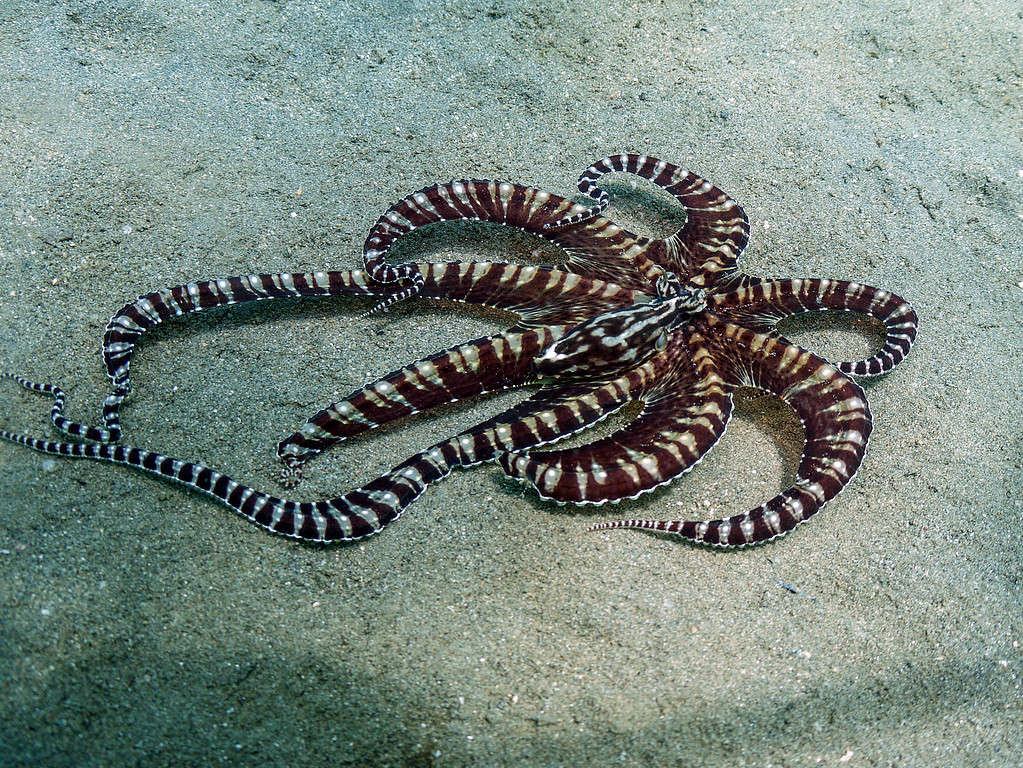
The mimic octopus mimics sea snakes by isolating tentacles and hiding the rest of its body beneath the sand.
©Jenhung Huang/iStock via Getty Images
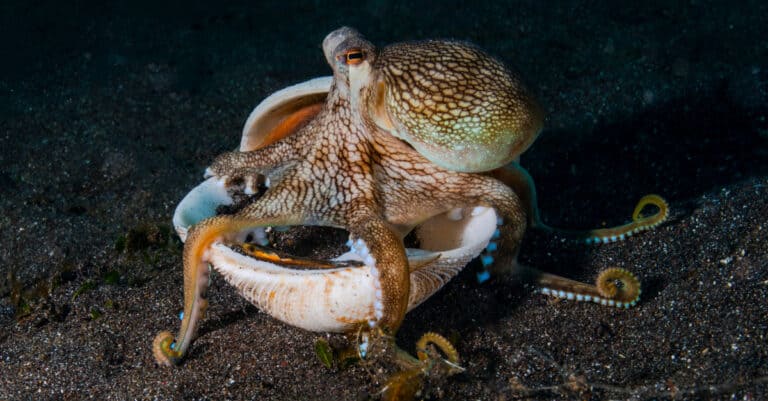
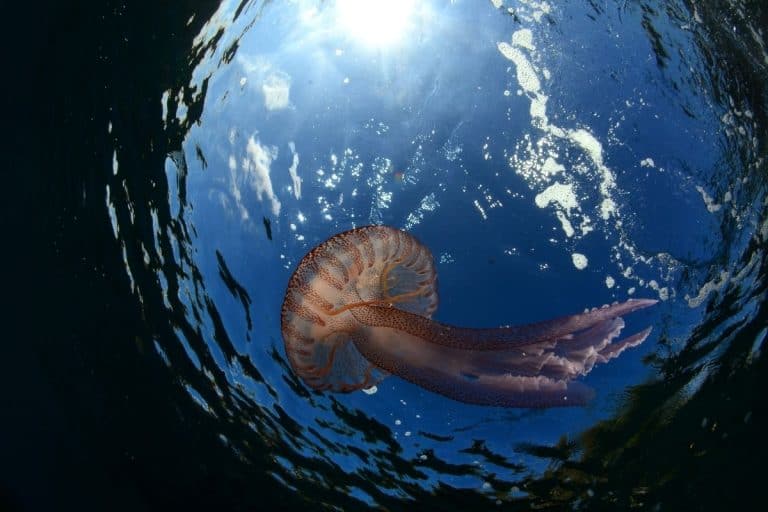
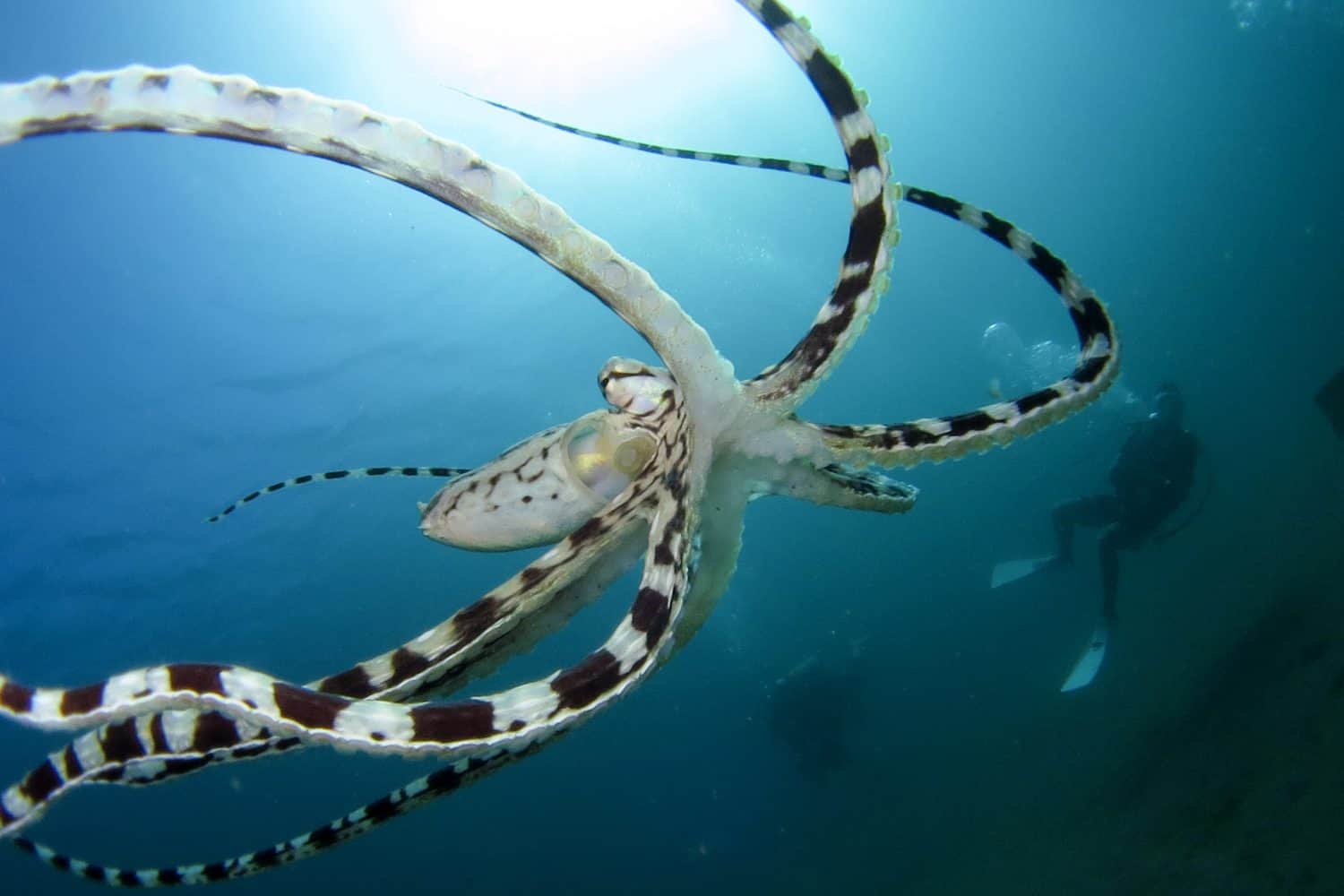
When a predator comes sniffing around, the mimic octopus doesn’t panic. It doesn’t frantically search for a hiding spot or aggressively spew black ink. Instead, it carefully, quietly shifts into something else. It might change its color, burrow in the sand, and become a bright green piece of seaweed swaying in the current. Or, it might flash dramatic warning colors and change its movements to imitate those of a venomous, undulating jellyfish. In some cases, divers have observed a mimic octopus turn itself into a sea snake, flat fish, and even a lionfish.
Some observers have mistaken the mimic octopus for stingrays, crabs, or shrimp, only to discover that it was actually the octopus’s long, color-changing arms. Its mimicry goes beyond simple color changes and demonstrates just how intelligent this species can be when it comes to survival.
How Does a Mimic Octopus Imitate Other Animals?
The animal that a mimic octopus imitates dictates how it changes its body. To mimic a sea snake, the octopus tucks its arms into the sand, waving only two arms above the seabed. As it does, the color of its body rapidly changes to resemble the dual-banded pattern of the venomous species. When imitating a flatfish, it presses its arms close to its body to create a flat, streamlined shape. It swims parallel to the sandy ocean floor, altering its color to match the flatfish’s camouflage.
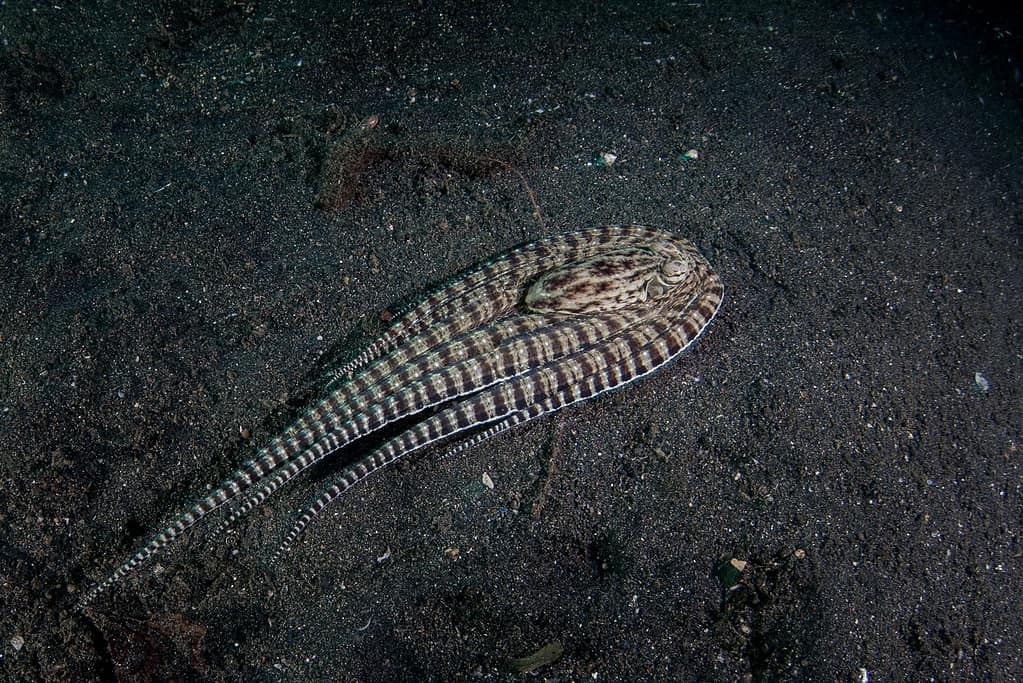
If you look quickly, you might mistake a flattened mimic octopus for a venomous flatfish.
©Velvetfish/iStock via Getty Images
Millions of chromatophores cover the mimic octopus’s skin, helping it change color. As they expand and contract, the color patterns change, which provides versatility when it comes to mimicking certain marine life. After changing its appearance, the octopus relies on its ability to mimic the physical attributes and movements of the nearest venomous animal. It learns these behaviors through observation; some become ingrained as muscle memory, while others are performed instinctively in response to threats.
Some scientists believe mimicry is passed down through centuries of genetics. This evolutionary defense mechanism is so instinctual to the mimic octopus that it allows the animal to make a decision in a matter of seconds. The octopus’s choice of which animal to mimic is influenced by its awareness of which predators pose the greatest threat to its own predators. Experts believe this is purely the result of evolution and trial and error.