
Quick Take
- Most crabs can actually walk forward, so the question is why they don't. Why sideways wins →
- Not every animal called a crab is actually a crab, and that distinction changes everything about how they move. What counts as a crab →
- One crab species carries a claw so oversized it rivals the rest of its body, yet feeding has almost nothing to do with it. See the fiddler crab's claw →
- Crabs aren't the only animals that ditch forward movement, and the other example is nothing like a crab. Meet the other sideways movers →
Watch a crab scurry across the beach, and you’ll probably notice something unusual. Instead of moving straight ahead like most animals, it takes off sideways, sometimes at a speed that seems almost impossible for such a small creature. It might look like an awkward way to get around, but there’s actually a fascinating biological explanation for this distinctive movement. And surprisingly, not every crab follows the same rule. Some can walk forward, climb rocks, and even swim using specially adapted legs. So why do most crabs move sideways, and what makes this unusual approach so effective?
Why Do Crabs Walk Sideways Instead of Forward?

For many crabs, moving sideways is the quickest and most efficient way to get around.
©Shannon West/Shutterstock.com
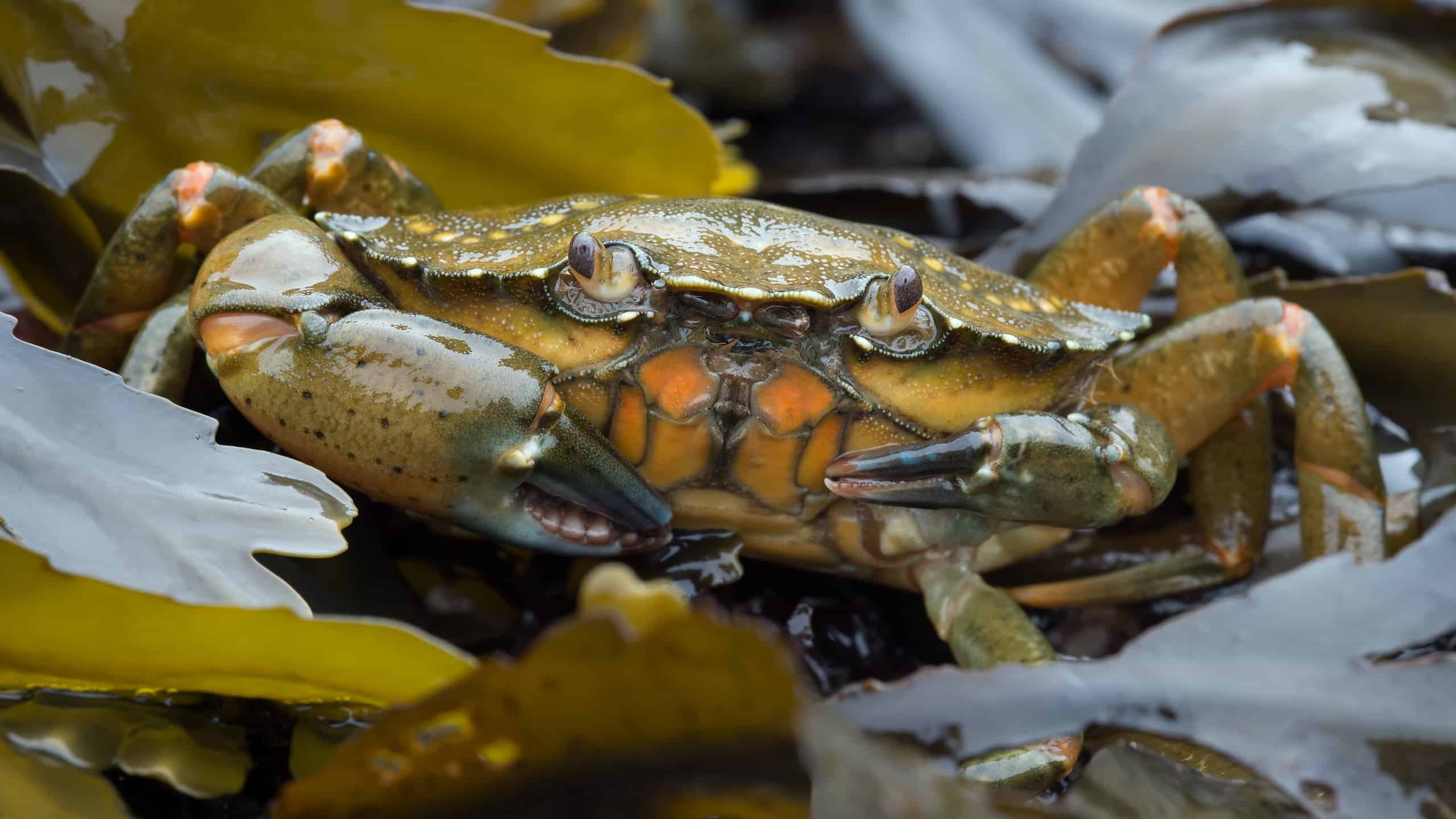
The answer comes down to anatomy. Most true crabs have relatively wide, flattened bodies with walking legs extending from either side. Unlike human legs, which are particularly well suited for moving forward and backward, a crab’s leg joints are arranged in ways that make side-to-side movement especially effective.
When a crab walks sideways, its legs work together in a coordinated pattern, pushing against the ground and propelling its body laterally. This allows many species to move quickly without having to constantly reposition their bodies. The arrangement is particularly useful when navigating beaches, rocky shorelines, and other environments where moving quickly can mean the difference between escaping a predator and becoming dinner.
Interestingly, this distinctive movement is connected to the evolution of the crab’s body shape. Compared with lobster-like crustaceans, true crabs have a greatly reduced abdomen that’s tucked underneath their broad protective shell. Their compact bodies and specialized limbs help explain why sideways movement became such an effective way of traveling.
So although walking sideways might seem strange from our perspective, it’s actually a remarkably efficient adaptation. For many crabs, moving in this direction is simply the easiest way to get where they need to go.
What Exactly Makes a Crab a Crab?
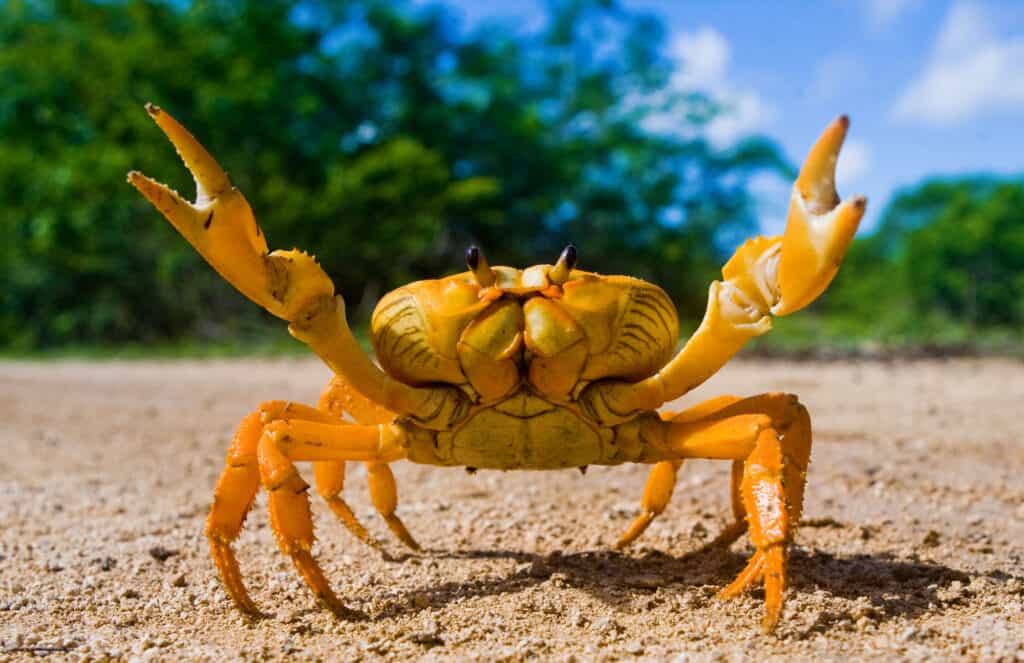
Crabs are decapod crustaceans with specialized legs, claws, and protective exoskeletons.
©iStock.com/ANDREYGUDKOV
Before getting into the exceptions, it helps to understand what makes a crab different from other crustaceans. True crabs belong to a group called Brachyura, which is part of the larger decapod order that also includes lobsters and shrimp. Decapod literally means “ten-footed,” referring to the five pairs of limbs these animals possess.
In most true crabs, the front pair of limbs has developed into claws, also known as chelipeds. These powerful appendages serve several purposes, including capturing food, defending against predators, and competing with other crabs. The remaining four pairs are generally used for movement, although some species have specialized legs for swimming or other activities.
Crabs are also protected by a hard outer covering called an exoskeleton. Unlike mammals, which have internal skeletons, crabs rely on this external structure for support and protection. As they grow, they must periodically shed their old exoskeleton in a process called molting.
With thousands of species inhabiting oceans, rivers, forests, and coastlines around the world, crabs have evolved an extraordinary variety of shapes and behaviors. Some are excellent swimmers, others are skilled climbers, and many spend much of their lives navigating the seafloor.
How Fast Can Crabs Move Sideways?
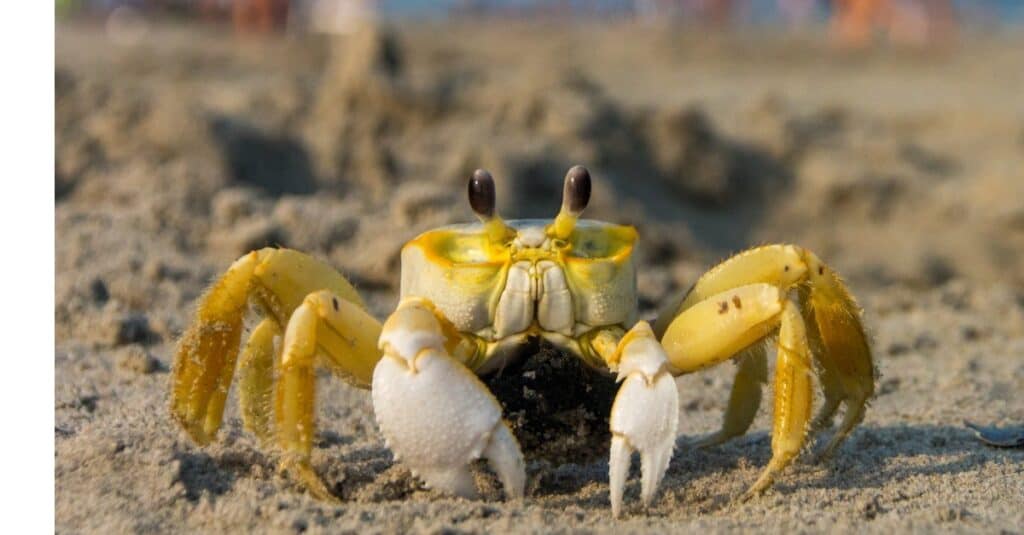
Ghost crabs are among the fastest-moving crabs, using their specialized legs to race across sandy beaches.
©iStock.com/Jonathan Mauer
Anyone who has tried to photograph a crab on the beach knows how quickly these little creatures can disappear. Some species are surprisingly fast, particularly when they sense danger. Among the most impressive are ghost crabs, which inhabit sandy beaches in tropical and subtropical regions around the world.
Ghost crabs have long, slender legs and relatively lightweight bodies that allow them to sprint across the sand. Their speed is especially important because beaches offer relatively little protection from predators such as birds, mammals, and larger marine animals. When threatened, a ghost crab can race toward its burrow or another hiding place in a matter of moments.
The ability to move sideways also allows crabs to change direction without having to turn their entire bodies first. That’s particularly useful when a predator approaches unexpectedly. Rather than spending precious time rotating its body, a crab can often move rapidly in either lateral direction.
Of course, not every crab is built for speed. Large, heavily armored species may move much more slowly, while others rely on camouflage, defensive claws, or hiding places to avoid danger. But for fast-moving shoreline species, the sideways scuttle is one of their most useful survival tools.
Can Crabs Actually Walk Forward?
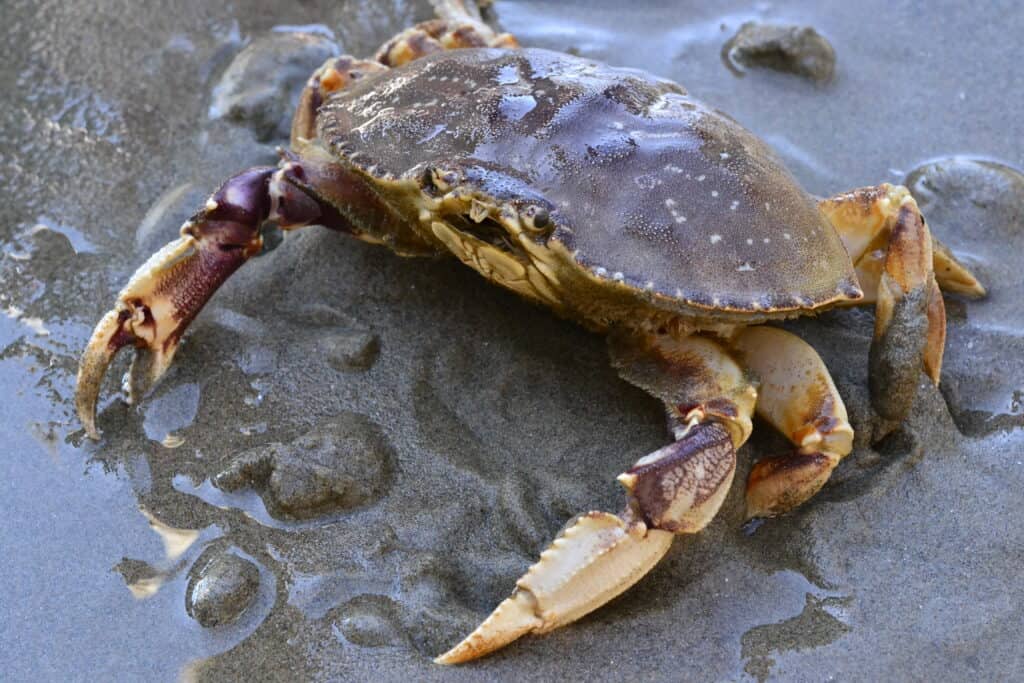
Crabs aren’t physically incapable of moving forward, although sideways travel is often more efficient.
©Jennifer Nicole Buchanan/Shutterstock.com
Here’s where things get interesting. Despite what many people believe, crabs aren’t limited to moving sideways. Most can walk forward or backward when necessary, although doing so is often slower or less efficient than traveling laterally.
The difference comes down to how their legs are arranged and how their joints move. A typical crab’s walking legs extend outward from its body, making it easier to generate force in a sideways direction. Moving directly forward requires a different pattern of leg movements, which may not allow the same speed or efficiency.
Consider a Dungeness crab, for example. These large crustaceans are commonly found along the Pacific coast of North America. Like many true crabs, they generally travel sideways when moving across the seafloor, but they can adjust their direction and position as needed while searching for food or navigating obstacles.
And that distinction is important. A crab isn’t choosing to walk sideways because it doesn’t know how to go forward. Its anatomy simply makes one direction better suited to the way it normally travels. Depending on the species and situation, crabs can display a surprising amount of flexibility in how they move.
Do All Crabs Walk Sideways?

Hermit crabs are among the crab-like crustaceans that commonly move forward rather than sideways.
©Lauren Suryanata/Shutterstock.com
Not quite! Although sideways movement is common among true crabs, some crab-like crustaceans are much more comfortable moving forward. One familiar example is the hermit crab, which typically carries an empty snail shell to protect its soft abdomen.
Hermit crabs belong to a different group of decapod crustaceans called Anomura. Unlike true crabs, many hermit crabs have elongated or asymmetrical bodies adapted to living inside borrowed shells. Their leg arrangement and body structure allow them to move forward while carrying their portable homes.
Spider crabs provide another interesting example. Some species use their long legs to walk forward and carefully navigate complex surfaces, including rocks and underwater structures. Rather than relying on speed, their movement is often deliberate and suited to climbing or maneuvering through difficult terrain.
Certain decorator crabs also use a wider variety of movements. These unusual animals attach pieces of algae, sponges, or other materials to their bodies for camouflage, allowing them to blend into their surroundings as they move along reefs and the seafloor.
Even more surprisingly, not every animal commonly called a crab is closely related to true crabs. King crabs, for example, belong to the same broader group as hermit crabs. Scientists have found strong evolutionary evidence linking king crabs to hermit crab ancestors, illustrating just how complicated the crab family tree can be.
How Do a Crab’s Legs Actually Work?

Male fiddler crabs have one dramatically enlarged claw, which they use for signaling and competing with rivals.
©Mike Raube-Boyer/Shutterstock.com
To understand why crabs move the way they do, take a closer look at their legs. A typical true crab has five pairs of limbs, giving it ten in total. The front pair forms its claws, while the remaining four pairs help support and move the body. Each walking leg contains several segments connected by joints that allow the animal to lift, extend, and push against the ground.
When walking sideways, crabs coordinate the movements of their legs to maintain support while propelling themselves across the surface. Different legs take turns lifting and pushing, creating the distinctive scuttling motion that makes crabs so recognizable.
Some species have taken these adaptations even further. Blue crabs, for example, have paddle-shaped rear legs that help them swim through the water. Other crabs have pointed walking legs that provide traction on rocks, mud, or sand. These specialized structures reflect the environments in which different species have evolved.
One especially interesting example is the fiddler crab. Males of many fiddler crab species possess one enormously enlarged claw, sometimes approaching the size of the rest of the animal’s body. Rather than using this oversized claw primarily for feeding, they wave it to attract mates and communicate with competing males. Their smaller claw is responsible for much of their feeding.
Despite the impressive differences between species, the basic principle remains the same: a crab’s limbs are adapted to the demands of its environment. For many true crabs, that means moving sideways is an especially effective solution.
Are Crabs the Only Animals That Move Sideways?
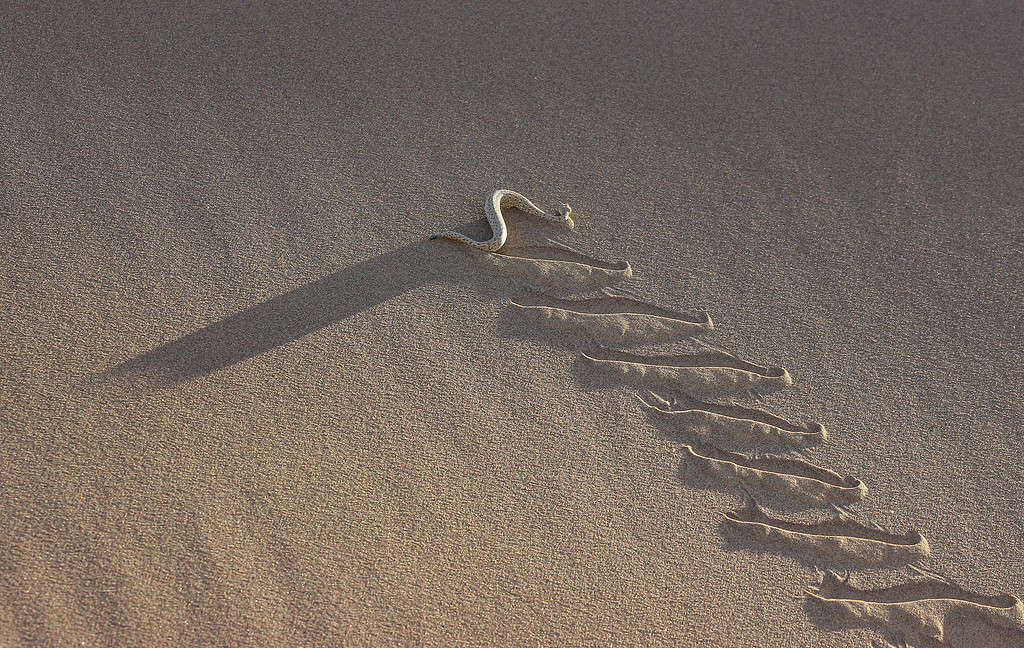
Péringuey’s adders use a specialized form of movement called sidewinding to travel across loose desert sand.
©Chantelle Bosch/Shutterstock.com
Crabs may be famous for their sideways movements, but they aren’t the only animals that have developed unusual ways of getting around. Certain desert snakes use a fascinating technique known as sidewinding, which allows them to travel across loose, unstable surfaces without relying on the same movements used by most other snakes.
One example is the sidewinder rattlesnake, which inhabits deserts in the southwestern United States and northwestern Mexico. Rather than sliding its entire body along the ground, the snake lifts portions of its body and places them farther along its path, creating an unusual looping motion.
Another species that uses this technique is Péringuey’s adder (Bitis peringueyi), a small venomous snake native to the Namib Desert of southwestern Africa. This desert specialist uses sidewinding to travel across loose sand and can even bury much of its body beneath the surface while waiting for prey.
Although both crabs and sidewinding snakes move in unusual directions, the mechanics are very different. Crabs rely on the arrangement and coordinated action of their jointed legs, while snakes move through muscular movements of their flexible bodies. Both demonstrate how evolution can produce remarkably different solutions to the challenge of getting from one place to another.
Ultimately, there’s nothing accidental about a crab’s sideways walk. It’s the result of millions of years of evolutionary adaptations that have helped these remarkable crustaceans survive in environments ranging from sandy beaches to rocky reefs. And while their movements might look a little strange to us, for most crabs, sideways is simply the way to go.