
Quick Take
- One snake on this list fakes its own death so dramatically that it deserves an Oscar, and it turns out to be friendlier than you would expect. Meet the dramatic faker →
- The world's most popular pet snake curls into a ball when scared, and that defensive quirk is exactly what makes it a beginner's best friend. See the ball-curling behavior →
- One snake on this list looks venomous, is technically venomous, yet is still recommended as a first-time pet. Here is why that is not a contradiction. Understand the mild venom →
- A Georgia breeder accidentally created a snake so rare it may redefine what "friendly" even looks like. See the rare lavender python →
I love hugging my friend’s big fluffy Bernese mountain dog, but would I love hugging my friend’s pet snake? I’m not so sure. I know there are a few snakes that I would not want to hug, like a massive boa constrictor. However, boa constrictors are actually one of the most popular pet snakes, so maybe they are friendlier than you think. Some big-eyed smiley snakes do score points for cuteness, and one even plays dead when it gets frightened. Check out 10 of the friendliest snakes in the world.
10. Rough Green Snake (Opheodrys aestivus)
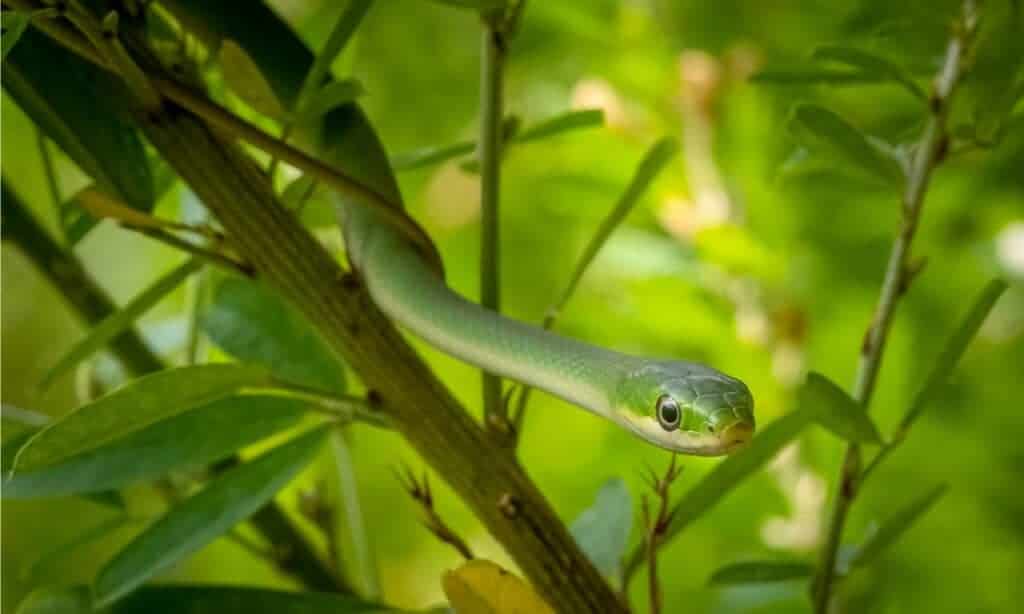
On the cuteness scale, these get a 10. Rough green snakes are small, gentle, nonvenomous, arboreal snakes native to the Mid-Atlantic and Southeast. They favor dense vegetation, often near water. These bright green snakes look like they are always smiling, and their big, black eyes give them a cartoonish look. They are slender snakes about the width of a finger and average 2-3 feet in length.
Rough green snakes are shy, timid snakes that are not aggressive, but they also do not seem to enjoy being handled. As a pet, they are recommended for experienced snake owners or as a snake to watch versus handle. Smooth green snakes are a very similar cousin.
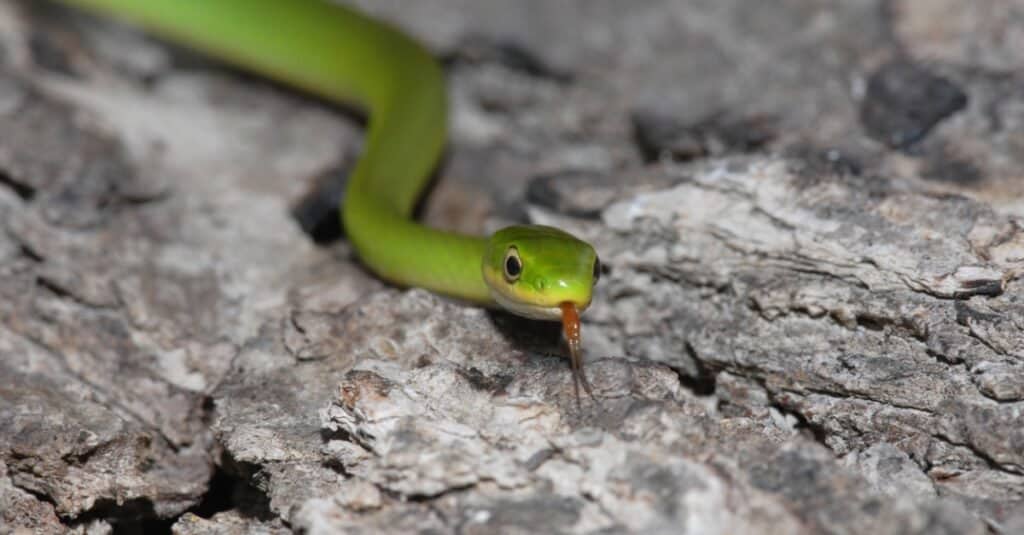
Rough green snakes look like they are always smiling.
©iStock.com/Shoemcfly
9. Ring-Necked Snake (Diadophis punctatus)
As one of the smallest snakes on the list, ring-necked snakes score big points for cuteness. These snakes are tiny, only measuring 10 to 15 inches. They are so small, they can curl up in your hand. Native to much of the United States, you could find one in woodlands or wooded hillsides, but you’d be up late looking for it, as this species is nocturnal.
They get their name from the orange ring around their neck that looks like a collar. The topside of their bodies is typically grayish-black, and they have yellowish-orange bellies. They do lose some points on the friendliness scale because they are mildly venomous, but the venom isn’t harmful to humans.
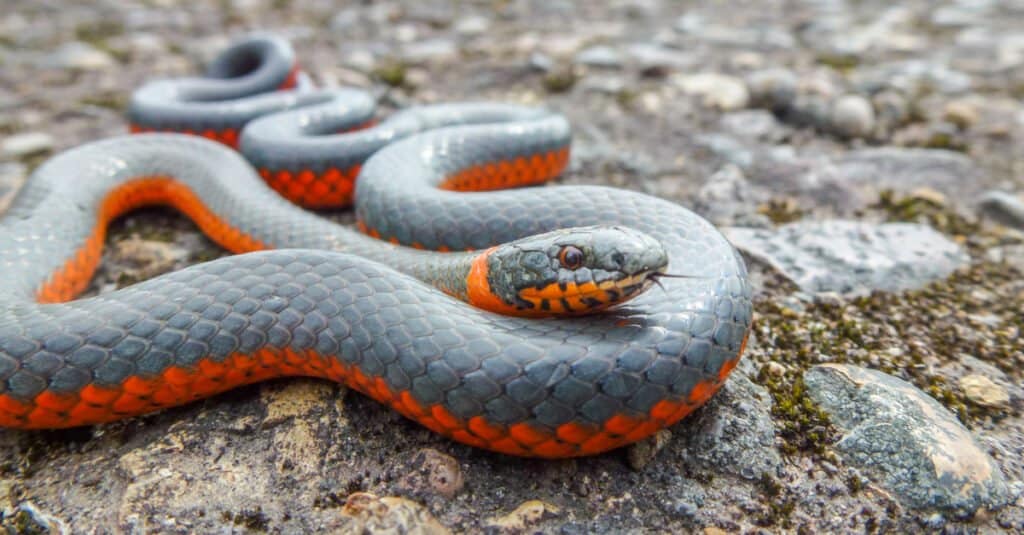
Ring-necked snakes are small snakes that look like they have a collar.
©Tom Fenske/Shutterstock.com
8. Western Hognose Snake (Heterodon nasicus)
The western hognose snake uses its turned-up nose as a shovel to dig through dirt. These are heavier-bodied snakes that measure 14-36 inches, with males being smaller. They can be a wide variety of colors, often seen in shades of brown, grey, or olive with dark, square blotches on their backs and glossy, black bellies. They live in grasslands, prairies, and open plains from south-central Canada, down through the central U.S., and south into central Mexico.
Western hognose snakes produce a small amount of venom to subdue their prey, but it’s not dangerous to people. They are friendly, docile, and rarely aggressive. However, if they feel threatened, they will initially act like a cobra, hissing and lunging but not biting. If that doesn’t work, they dramatically play dead, rolling on their backs, writhing around, and freezing with their mouths open and tongues hanging out. Now that is Oscar-worthy performance.
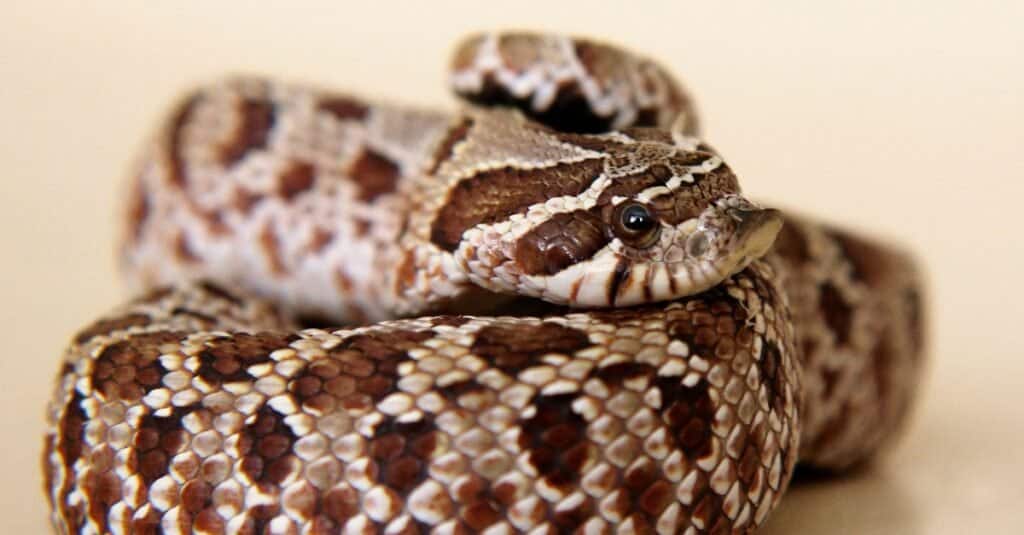
The hognose snake is a friendly snake that has a cute turned-up nose.
©iStock.com/Iuliia Morozova
7. Garter Snake (Thamnophis sirtalis)
Garter snakes are one of the most common nonvenomous snakes in North and Central America. These snakes live in many different habitats from forests and grasslands to wetlands and suburban backyards. They are friendly snakes, often recommended as great pets because they are easy to handle. Although wild garter snakes may release a foul odor if they feel threatened, captive-bred snakes are easier to handle and can be tamed if handled regularly.
Garter snakes are small- to medium-sized snakes that can reach 1.5 to 4 feet long. They have oval-shaped heads and large, round eyes. These snakes have slim bodies with stripes down both sides. They can be a wide variety of color patterns, depending on where they are found.
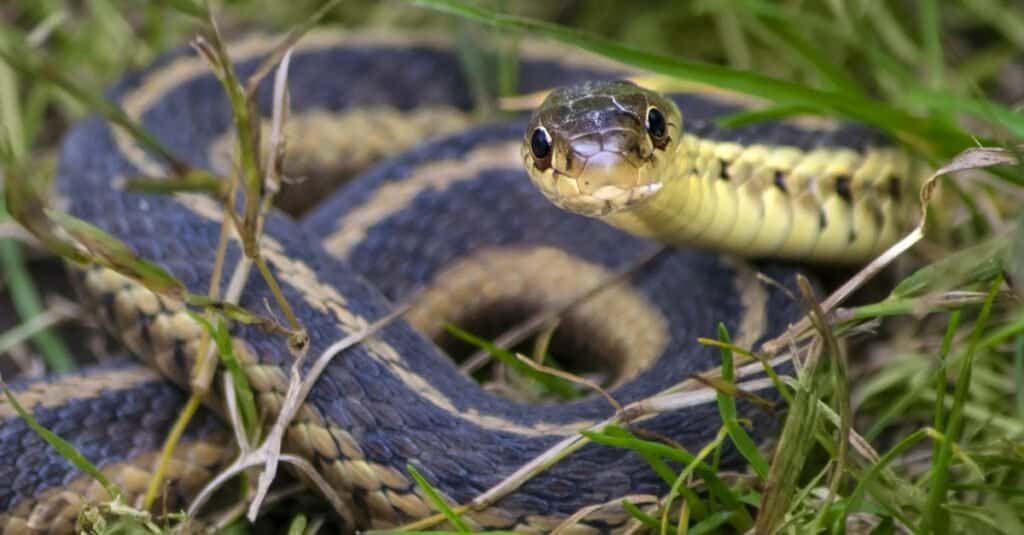
Garter snakes generally don’t mind being handled and make good pets.
©K Quinn Ferris/Shutterstock.com
6. California Kingsnake (Lampropeltis californiae)
The California kingsnake is one of the friendliest snakes because it is curious, active, and docile. They become even calmer with repeated gentle handling. It is one of the top five recommended pet snakes for first-time snake owners, although they can be a little nippy when they are juveniles. These nonvenomous constrictor snakes are native to the forests, brushlands, deserts, and wetlands of the western U.S. and northern Mexico.
California kingsnakes grow to be 2.5-4 feet long. They are narrow snakes with heads about the same size as their necks and big, round eyes. These kingsnakes have smooth, glossy scales and are generally dark brown or black with alternating white or cream bands.
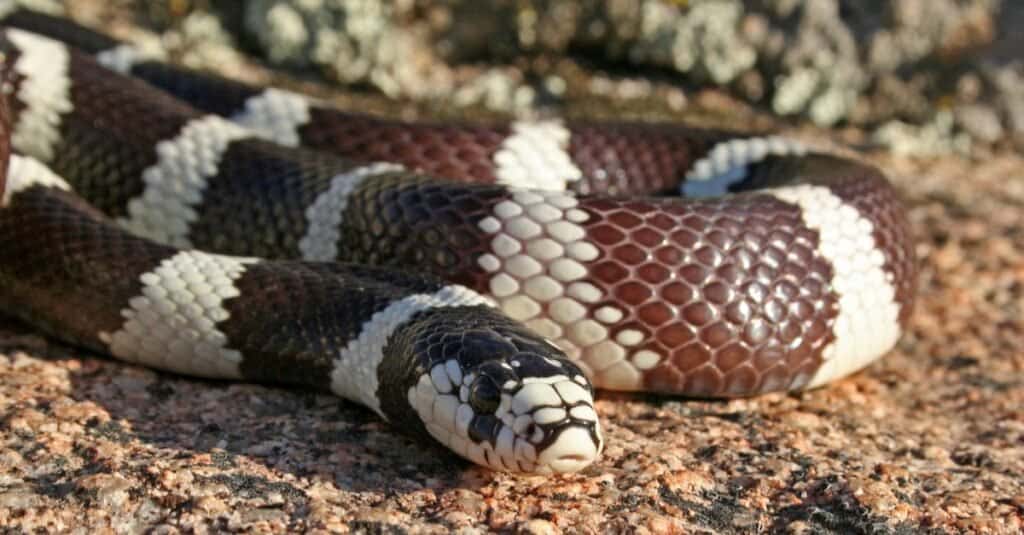
California kingsnakes live throughout most of California and much of the Southwest.
©Creeping Things/Shutterstock.com
5. Milk Snake (Lampropeltis triangulum)
Milk snakes are nonvenomous constrictors that are widely distributed across North America and down through Central America to northern South America. They can adapt to a wide variety of habitats, including open woodlands, prairies, brushlands, rocky hillsides, mountain foothills, and agricultural areas. They generally have red, black, and yellow or white banding that mimics the venomous coral snake. However, there are many regional variations. Some also have blotched patterns of cream, tan, or grey base colors with copper, brown, or reddish-brown blotches outlined in black.
The most popular subspecies of pet milk snakes in the U.S. are the Honduran milk snake (Lampropeltis triangulum hondurensis) and the eastern milksnake (Lampropeltis triangulum). They are typically very calm and are tolerant of gentle handling. These snakes also have relatively easy care requirements, making them good first snakes. Most pet milk snakes also remain at a manageable size of between 2 and 4 feet, although Honduran milk snakes may reach up to 5 feet in length.
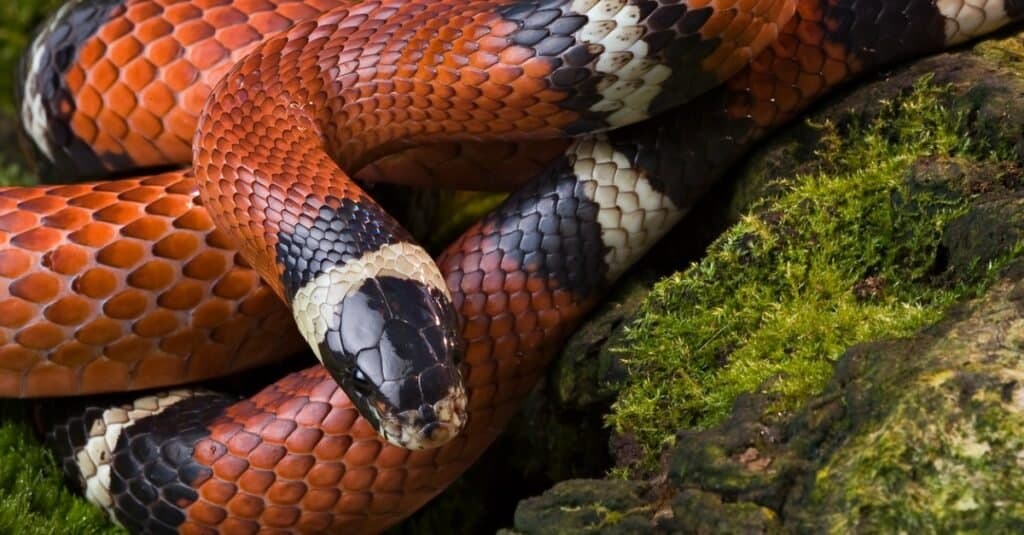
Milk snakes are popular pets due to their manageable size and docile temperaments.
©iStock.com/wScottLoy
4. Rosy Boa (Lichanura trivirgata)
Rosy boas are small constrictors that only get to be 3.5 feet long. They have calm temperaments and rarely bite or get defensive, but they can have a strong feeding response. Regular handling helps them to be even more docile. They are native to rocky deserts, scrublands, shrublands, and granite outcroppings in the southwestern U.S. and northwestern Mexico.
Rosy boas’ colors vary widely by geographic region, but many are light-colored snakes, with three dark, narrow stripes running down their body lengthwise. Some snakes, especially in the Baja California peninsula, have pink, salmon, or rose-colored stripes. These snakes have pale bellies, often with a rosy-pink tint.
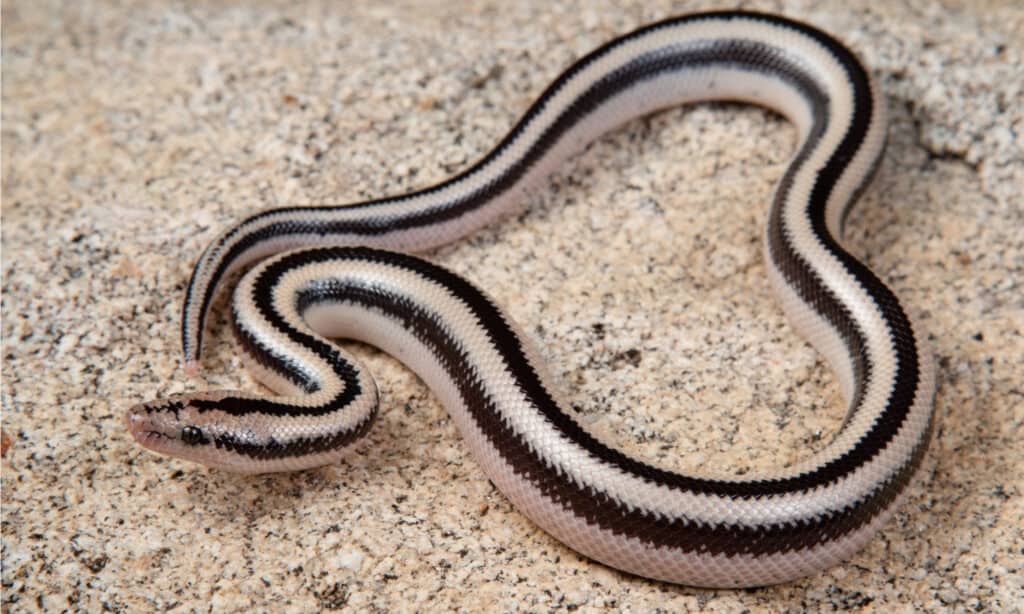
Rosy boas can be a wide range of colors, but many snakes have pink, salmon, or rose coloring.
©Nathan A Shepard/Shutterstock.com
3. Pygmy Python (Antaresia perthensis)
The pygmy python is the smallest python in the world. As adults, they typically don’t get longer than 2 feet. Most are brick-red with faint crisscross markings. These nonvenomous constrictors are native to hot, dry, rocky regions of northwestern Western Australia.
They do have a curious, friendly nature but need gentle handling and patience. Socializing a pygmy python can take anywhere from a few weeks to a year. Juveniles can be quick and nippy, but they settle down with age and regular, gentle handling. They are rarely aggressive, and bites are nearly always accidents during feeding.
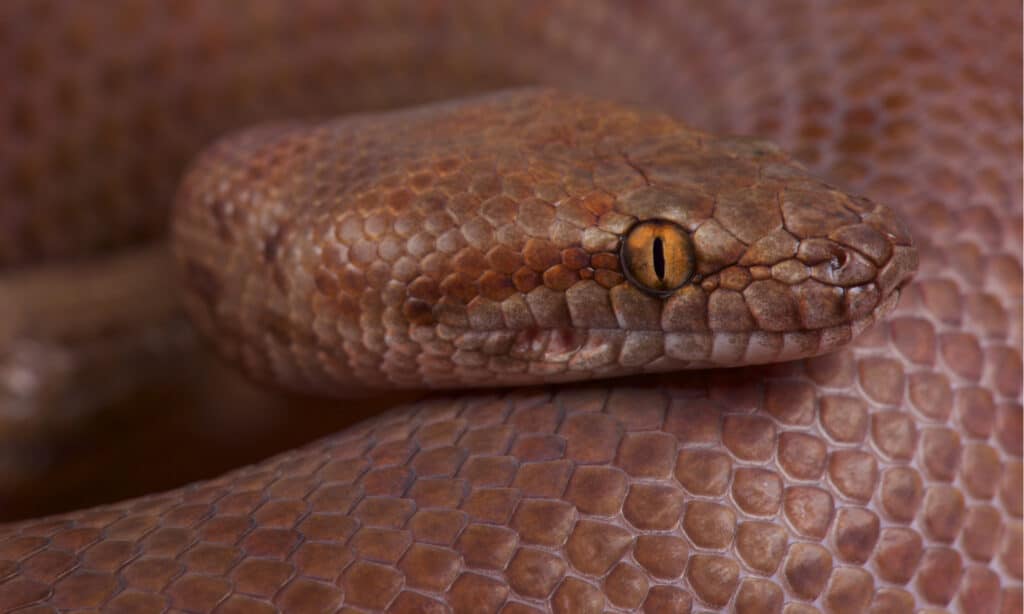
The title for smallest python in the world belongs to the pygmy python.
©reptiles4all/Shutterstock.com
2. Ball Python (Python regius)
The ball python is often cited as the most popular pet snake in the world. It is a heavy-bodied constrictor snake that can measure up to 5 feet long. These snakes are tan colored with dark brown markings. They are native to the savannas, shrublands, grasslands, and tropical forests of West and Central Africa, but the majority of pets are captive bred, as they are more docile.
These snakes are known for having a calm, patient temperament. In fact, they are generally a good choice for first-time or beginner pet snake owners as they are typically very tolerant of being handled. When scared, they roll themselves into a ball, which is where they got their name.
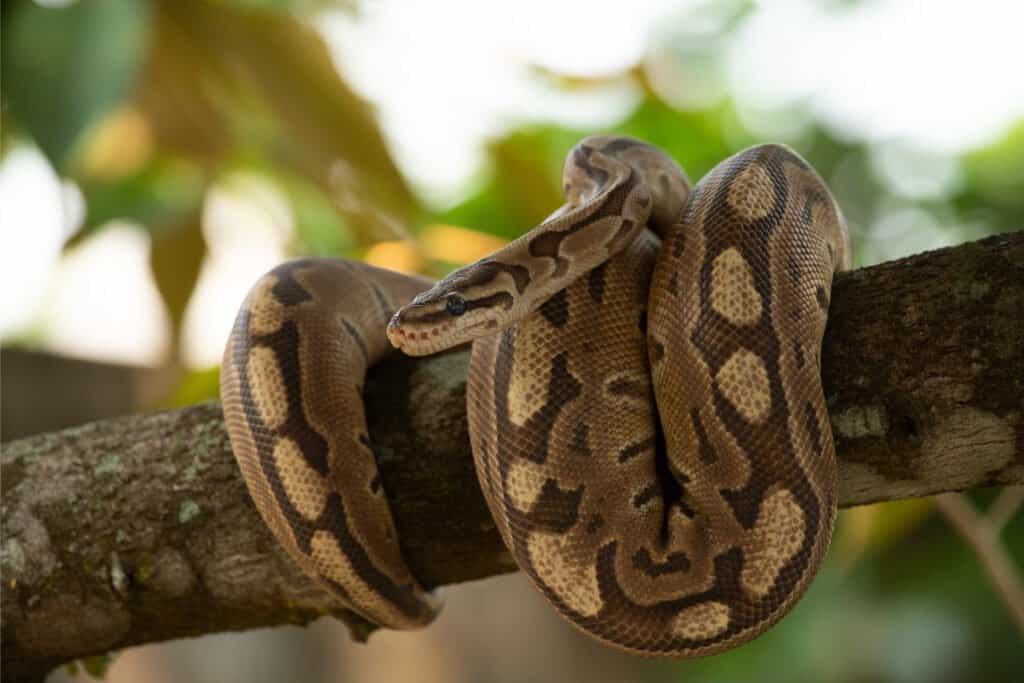
Ball pythons are widely considered to be the most popular pet snake.
©BikerPhoto/Shutterstock.com
1. Corn Snake (Pantherophis guttatus)
The friendliest snake in the world is the nonvenomous corn snake. They would be voted “best personality” in the yearbook of snakes. Corn snakes are very docile and tolerate handling well. Because they are easy to take care of, they are one of the most popular pet snakes. They can be found in pine wood forests, meadows, and rocky hillsides throughout the Southeast and as far north as southern New Jersey.
Corn snakes are orange or yellowish-brown with reddish markings on their backs and dark-outlined scales on their pale bellies. They have big, round eyes. These snakes can measure 4-6 feet long as adults. When it comes to the cute factor, search “corn snakes in hats” for entertaining photos of cute snakes in top hats, cowboy hats, sombreros, and more.
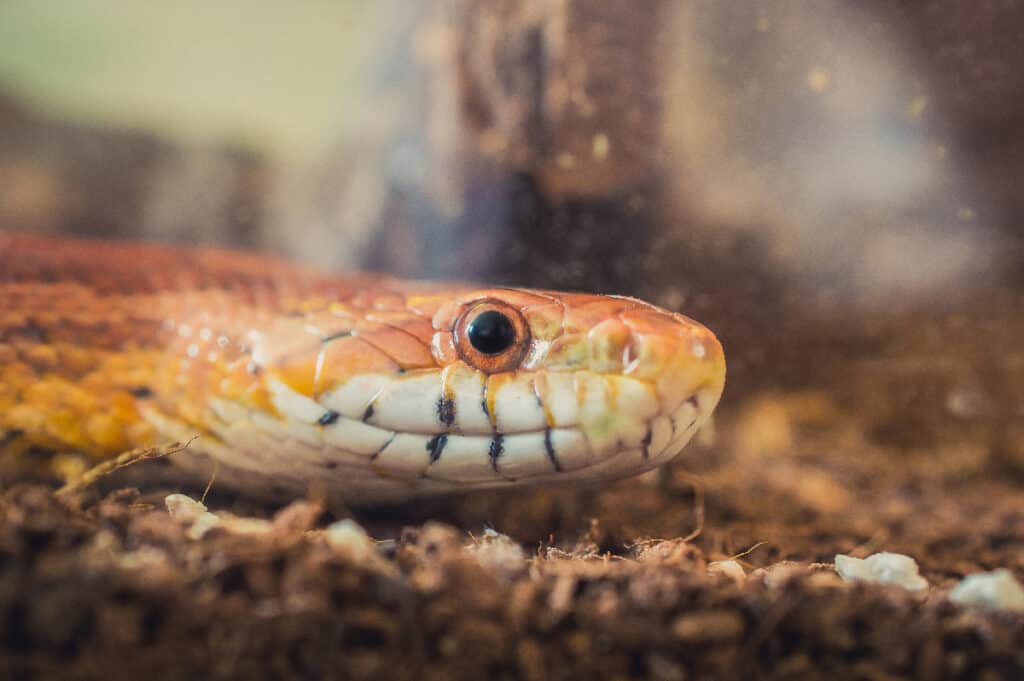
The friendliest snake in the world is the corn snake. They have the best personality and are popular pets.
©iStock.com/Tamascsere
Is This Ball Python the Friendliest Snake in the World?
A snake breeder in Georgia accidentally bred a python that has a design on its back that looks like three smiley emojis. Justin Kobylka has been breeding snakes for years and didn’t quite expect this extremely rare outcome. The snake is a lavender albino piebald ball python, and it turned out to be all white with yellowish-orange markings on its back and head. Three of the markings look just like smiley faces, no doubt making this ball python one of the friendliest snakes in the world.