
Knowing the differences between venomous and nonvenomous snakes can save lives. Pit vipers (Crotalinae) are the most widespread venomous snakes in North America, and highly venomous coral snakes (Micruroides and Micrurus) are also native to the Southern United States. Corn snakes (Pantherophis guttatus), garter snakes (Thamnophis), and rat snakes (Colubrinae) are examples of common nonvenomous snakes in North America. All snakes, regardless of whether or not they are venomous, play a crucial role in their native ecosystems by keeping the populations of the species they prey on at sustainable numbers. Continue reading to learn about the five main differences between venomous and nonvenomous snakes.
Venom
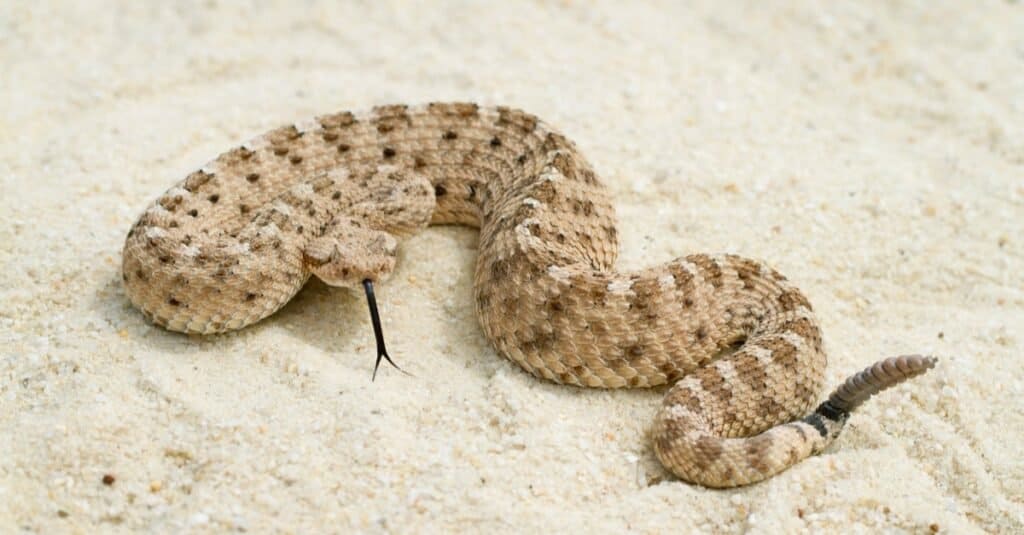
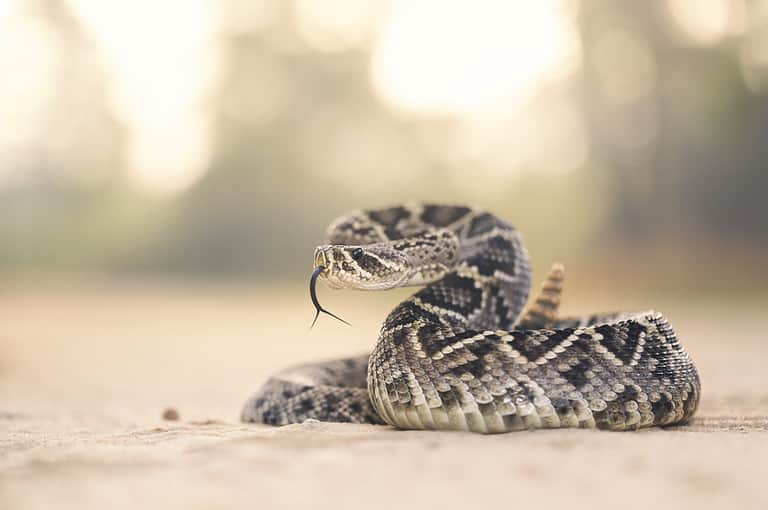
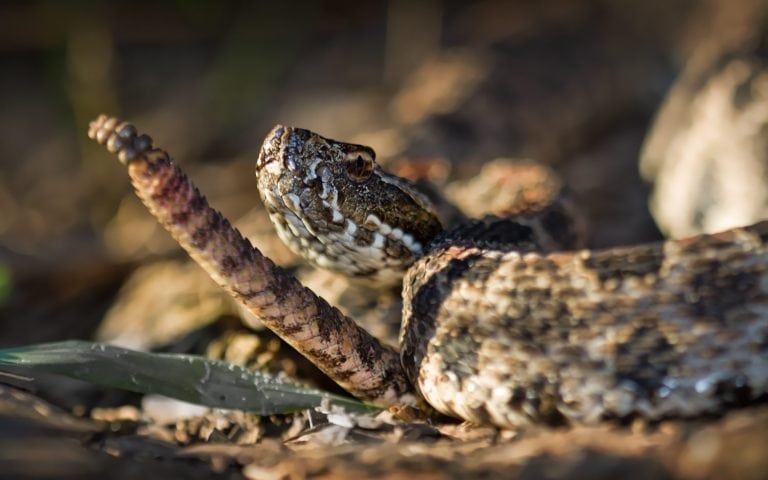
Venomous snakes often have a rattle on the end of their tails.
©Mark_Kostich/Shutterstock.com
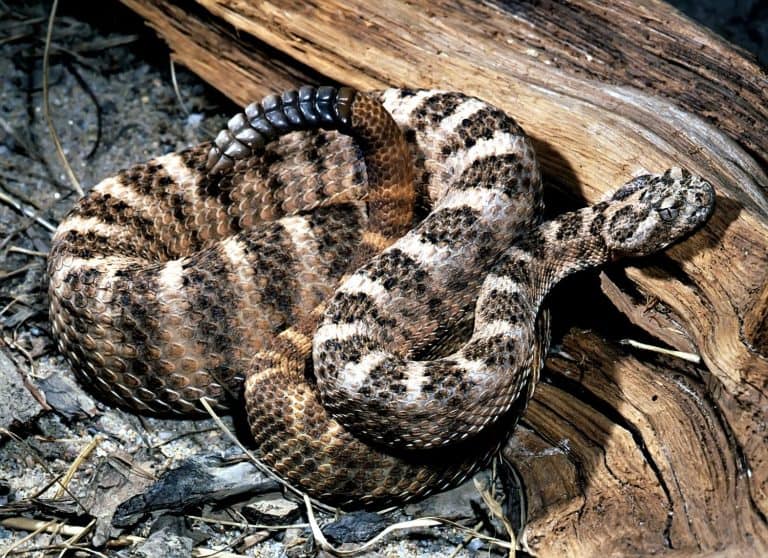
Snake venom is saliva that contains zootoxins. These toxins include neurotoxins, cardiotoxins, myotoxins, cytotoxins, sarafotoxins, and hemotoxins. Neurotoxins and hemotoxins are the two most common toxins present in snake venom. Venom type and potency depend on the species. In North America, the tiger rattlesnake (Crotalus tigris) is considered to have one of the most potent venoms, with a strong neurotoxic component. However, despite the high potency, the venom yield is low and therefore not dangerous to humans. Some snakes considered nonvenomous to humans, such as certain colubrids like garter snakes, can possess mild venom that is generally harmless to people. Additionally, they are more likely to bite than venomous snakes. While nonvenomous snakes are generally not dangerous to humans, their bites can still cause pain, minor injury, and infection.
Head Shape
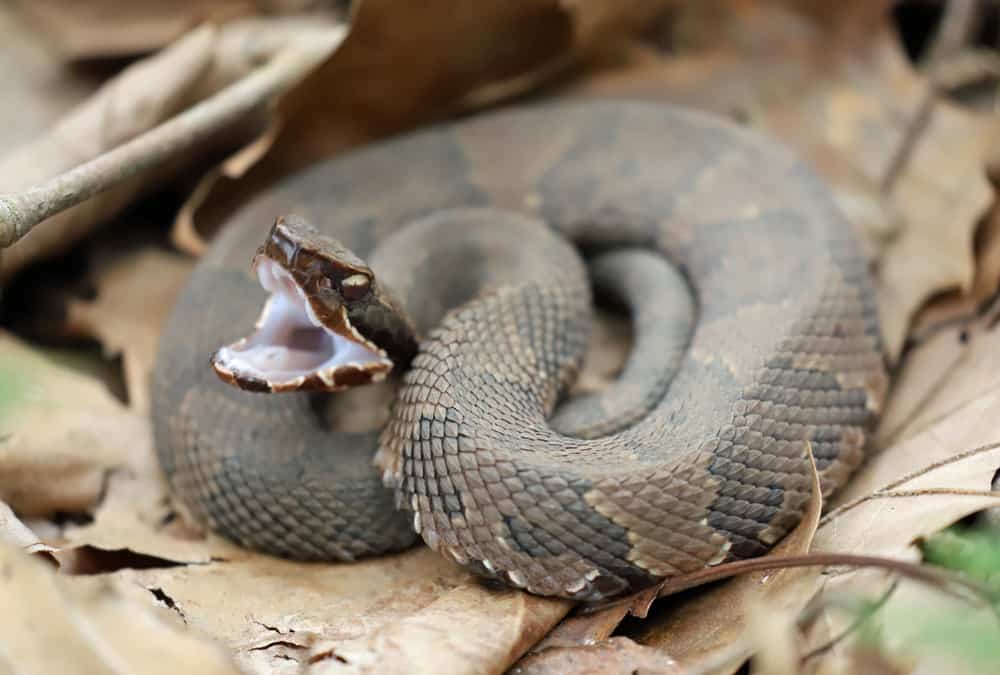
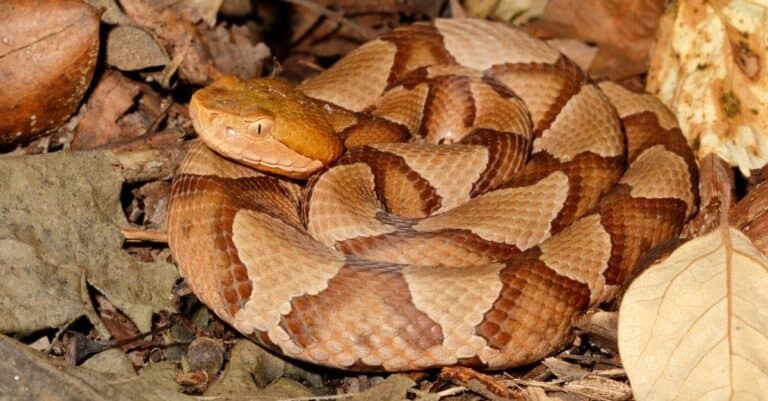
Venomous snakes often have triangular heads with thin necks.
©KF2017/Shutterstock.com
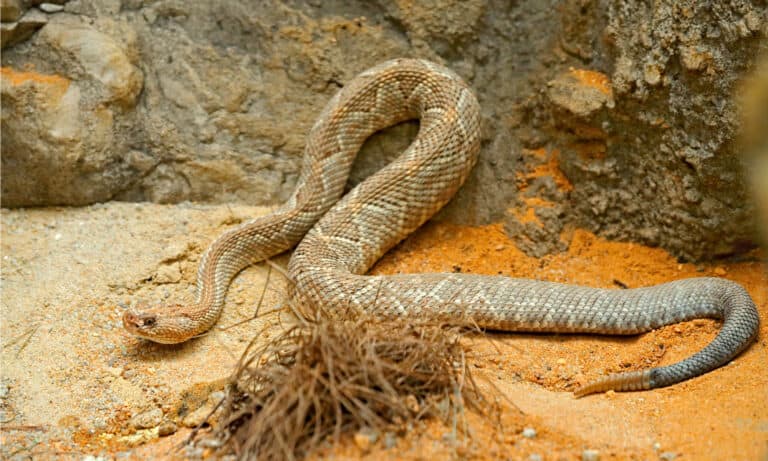
Venomous snakes often have a triangular head with a thinner neck, while nonvenomous snakes have a more rounded head that is of similar width to their neck. However, nonvenomous snakes will sometimes mimic venomous snakes as a defense mechanism by flattening their heads to appear bigger. This can make it difficult to determine whether or not a snake is venomous. Therefore, it is important to examine other aspects of a snake.
Pupil Shape and Presence of Loreal Pits
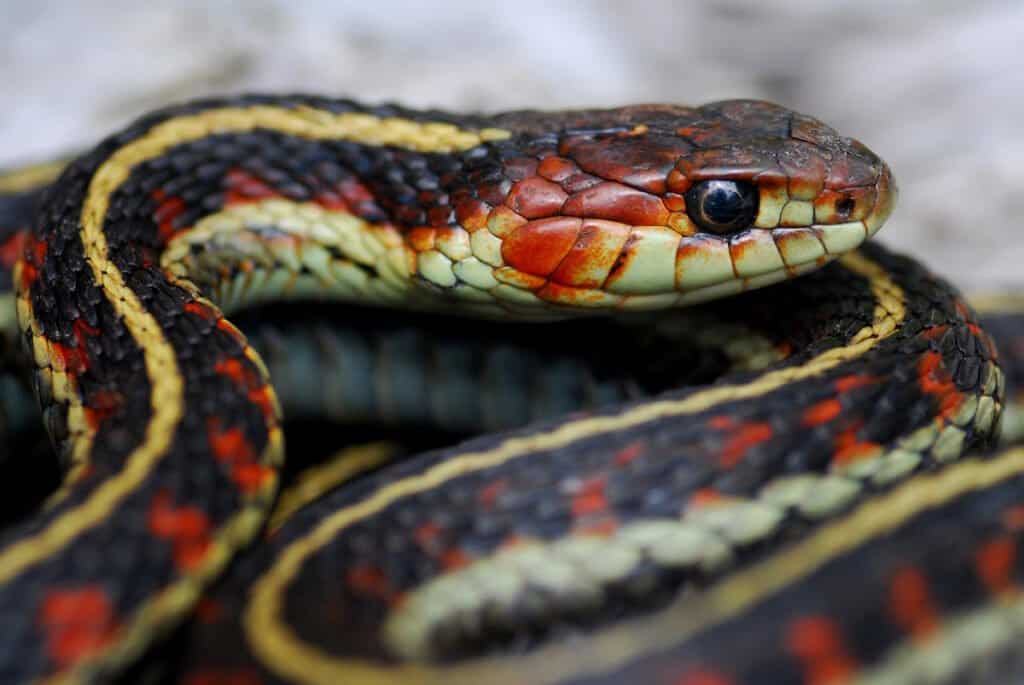
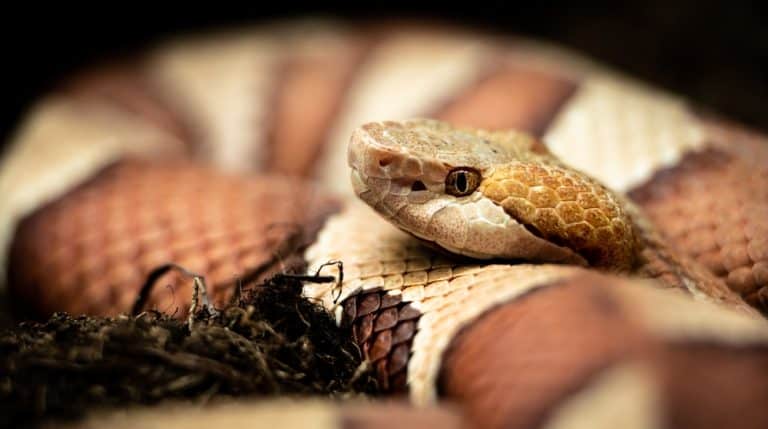
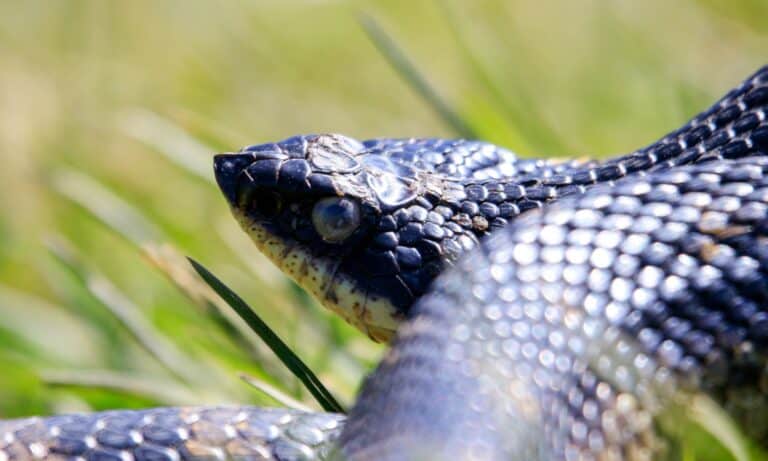
A difference between some venomous and nonvenomous snakes is their pupil shape.
©Jason Mintzer/Shutterstock.com
Typically, venomous pit vipers have vertical pupils similar to those of cats. Nonvenomous snakes often have round pupils. Caveats to this are boas (Boidae) and coral snakes. Boas are nonvenomous yet often nocturnal and have vertical pupils, while venomous coral snakes have round pupils and may be diurnal, depending on the species.
Another key distinction is the presence of loreal pits. Loreal pits are external openings located behind the nostrils that are connected to the pit viper’s internal heat-sensing pit organs. The external loreal pits aid in thermoregulation, while the internal pit organs essentially allow pit vipers to see in infrared. However, snakes that are not pit vipers can have pit organs but not loreal pits, and many venomous snakes have neither.
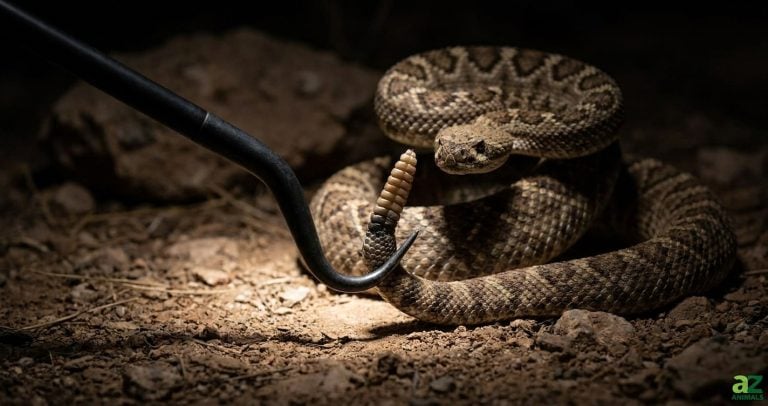
Presence of a Rattle
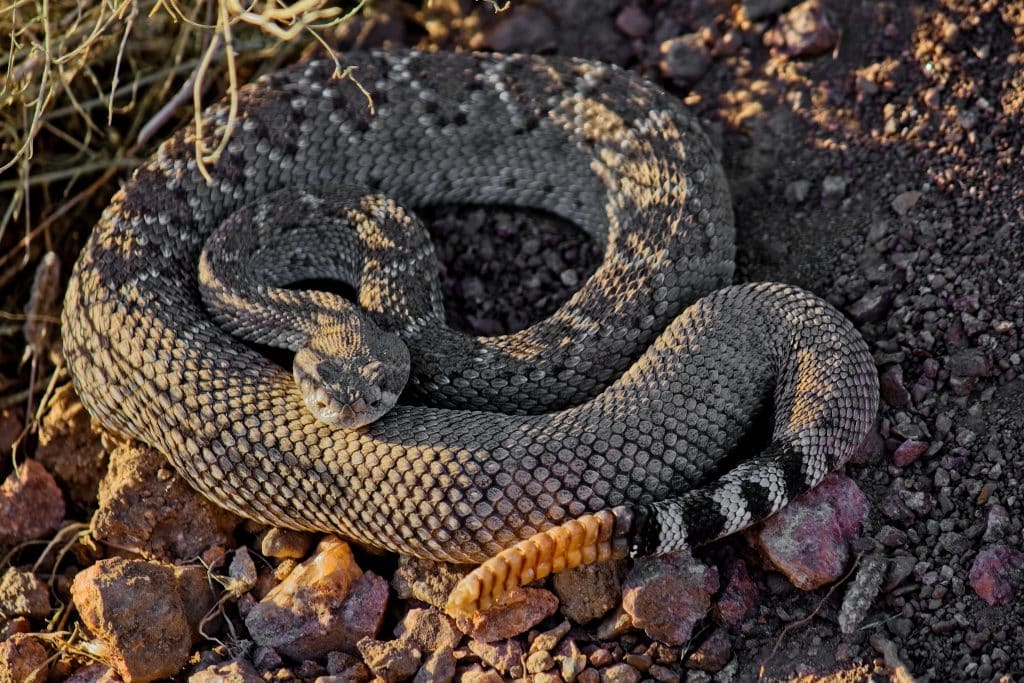
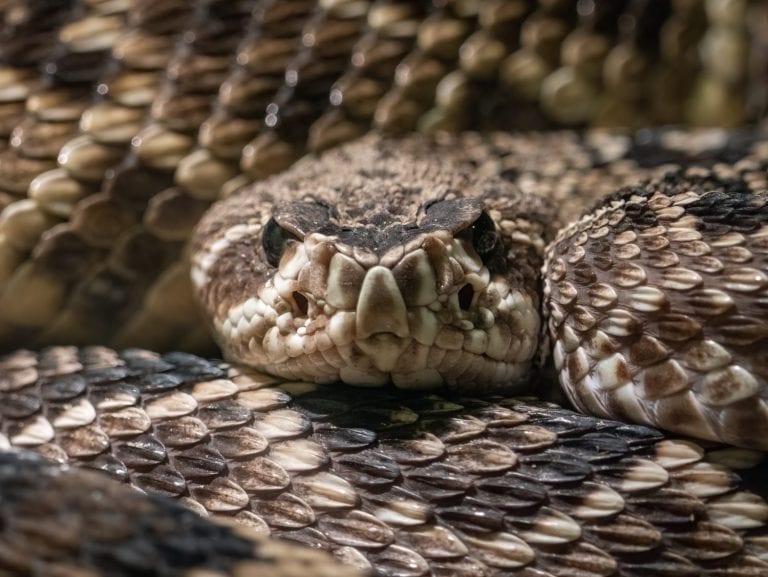
A close-up of a western diamondback rattlesnake (Crotalus atrox).
©Wirestock Creators/Shutterstock.com
In North America, if a snake has a true rattle, it is definitely venomous. However, not all venomous snakes have a rattle. Only pit vipers of the Crotalus and Sistrurus genera are rattlesnakes, with most sources recognizing between 32 and 44 species. Rattles are made of keratin, structured in hollow, interlocking segments. The shaker muscles, which cause the rattle to vibrate, are among the fastest muscles in any animal, contracting up to 50 times a second. However, nonvenomous snakes can mimic the sound of a rattle by rustling their tail tip in dry leaves or against the ground. They can also mimic rattles by quickly vibrating their tail tips back and forth.
Markings and Color
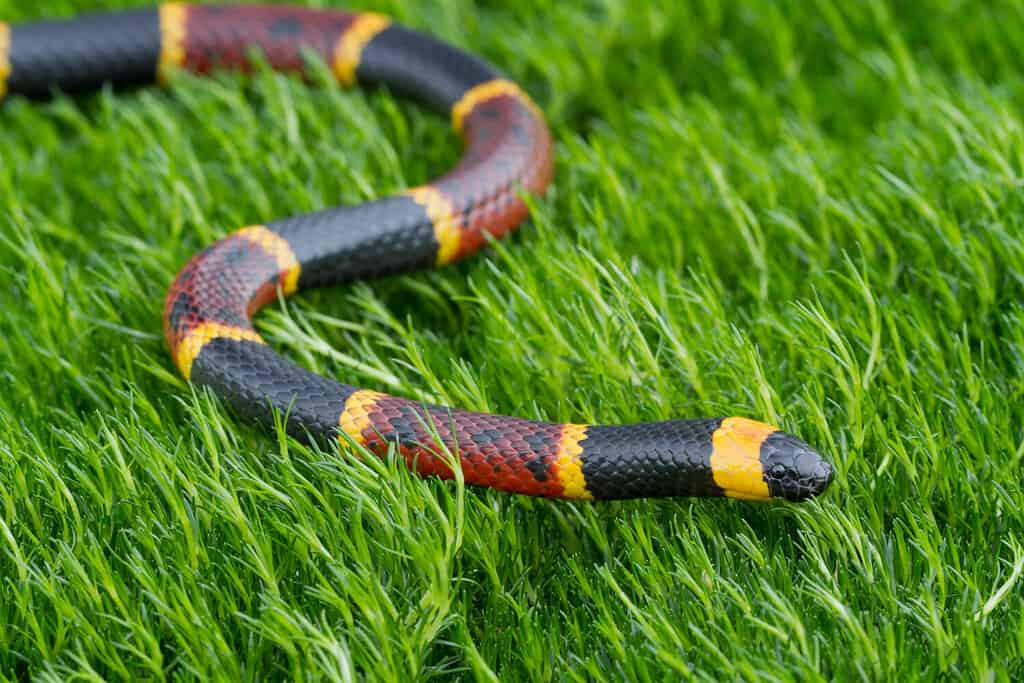
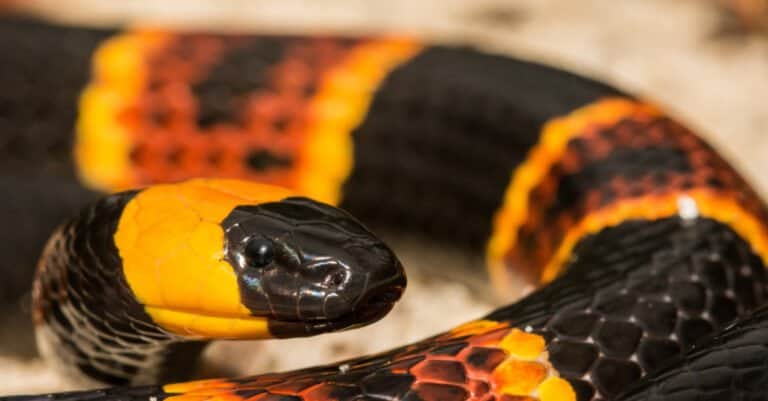
Eastern coral snake (Micrurus fulvius).
©Mark_Kostich/Shutterstock.com
The final key difference between venomous and nonvenomous snakes is their markings and colorings. There are always exceptions to this rule, including aberrant patterns, patternless snakes, or sometimes albinism. However, learning the particular markings of snakes helps determine whether or not a snake is venomous. For example, the adage red on black, friend of Jack; red on yellow, kills a fellow, is a way to remember the different but similar patterns of the nonvenomous milk snake (Lampropeltis triangulum) and the venomous Eastern coral snake (Micrurus fulvius).
Location
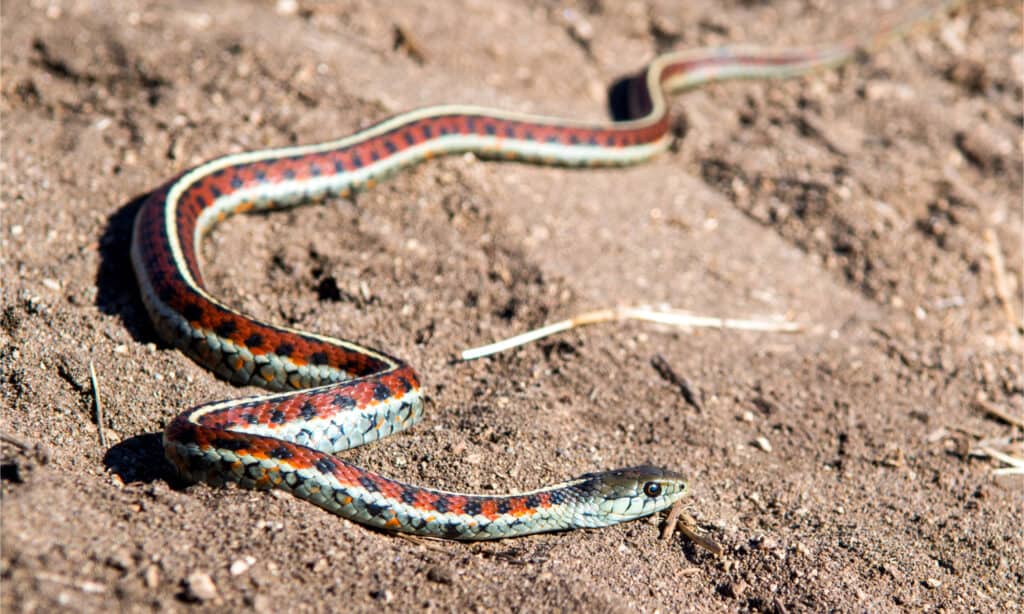
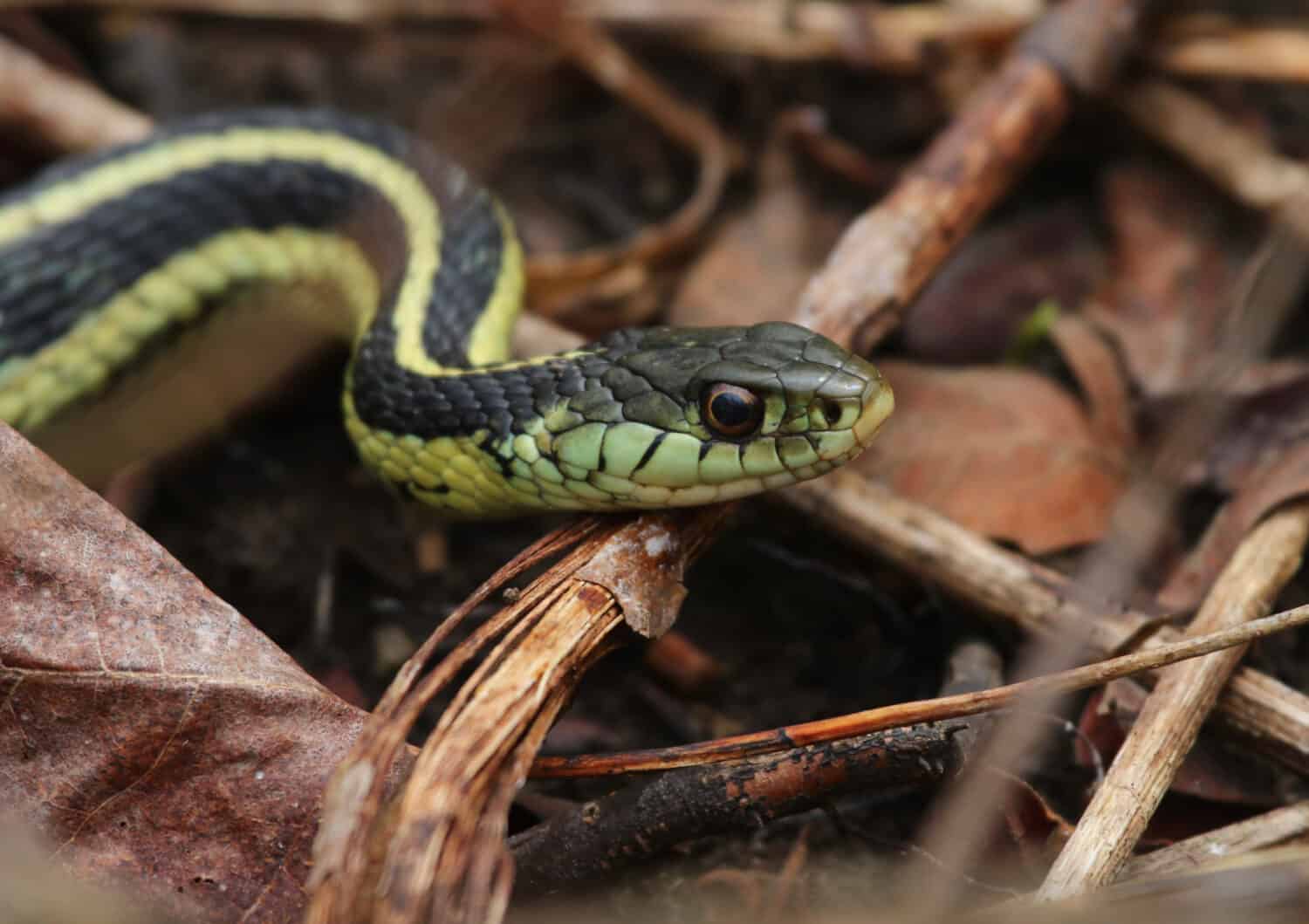
The California red-sided garter snake (Thamnophis sirtalis infernalis) is found only in California.
©Simone O/Shutterstock.com
Herpetologists often use location to help determine a snake’s species, as the native range of each species is limited to specific regions. For example, coral snakes are not found in Michigan unless they have escaped captivity. In the northernmost reaches of North America, there are no snakes, as the climate is far too cold for cold-blooded reptiles to survive. Websites like iNaturalist.org are a great resource for determining what snake species are present in an area.