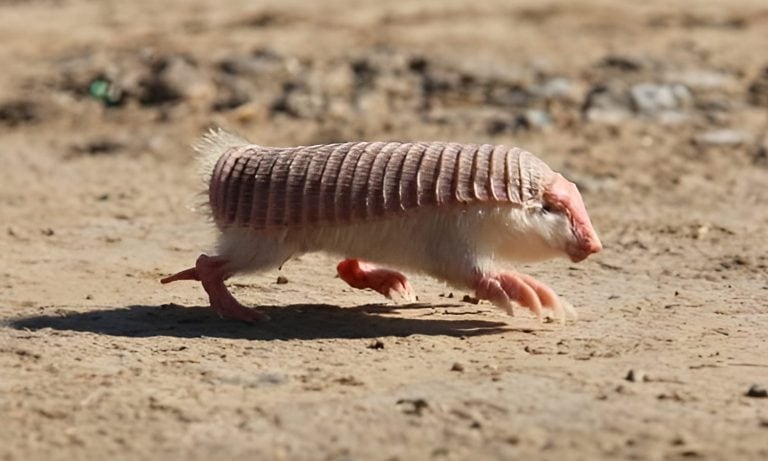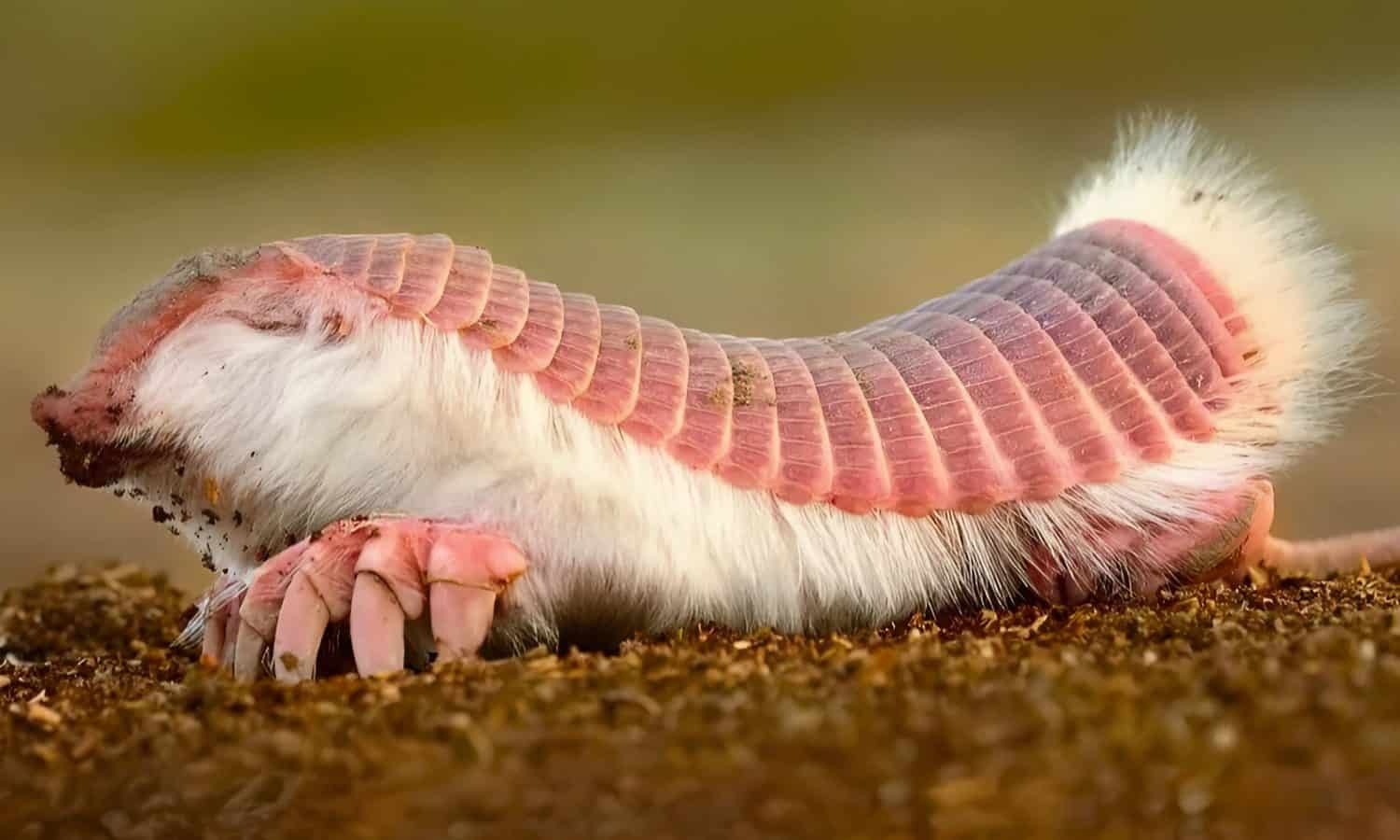

Some creatures, like birds, have names that don’t really make sense. They don’t speak to their attributes or their appearance. Luckily, the pink fairy armadillo doesn’t have that problem. It’s an armadillo, it’s very pink, and it has a distinctly dainty appearance, like a fairy. This smallest armadillo species also kind of looks like a sushi roll.
When one thinks of an armadillo, one imagines a scaly, medium-sized, almost prehistoric-looking creature capable of curling into a defensive ball. Defense for the pink fairy armadillo, however, is less circular and more dirt-worthy. Let’s learn more about this fascinating little creature that looks like a sushi roll.
Meet the Pink Fairy Armadillo
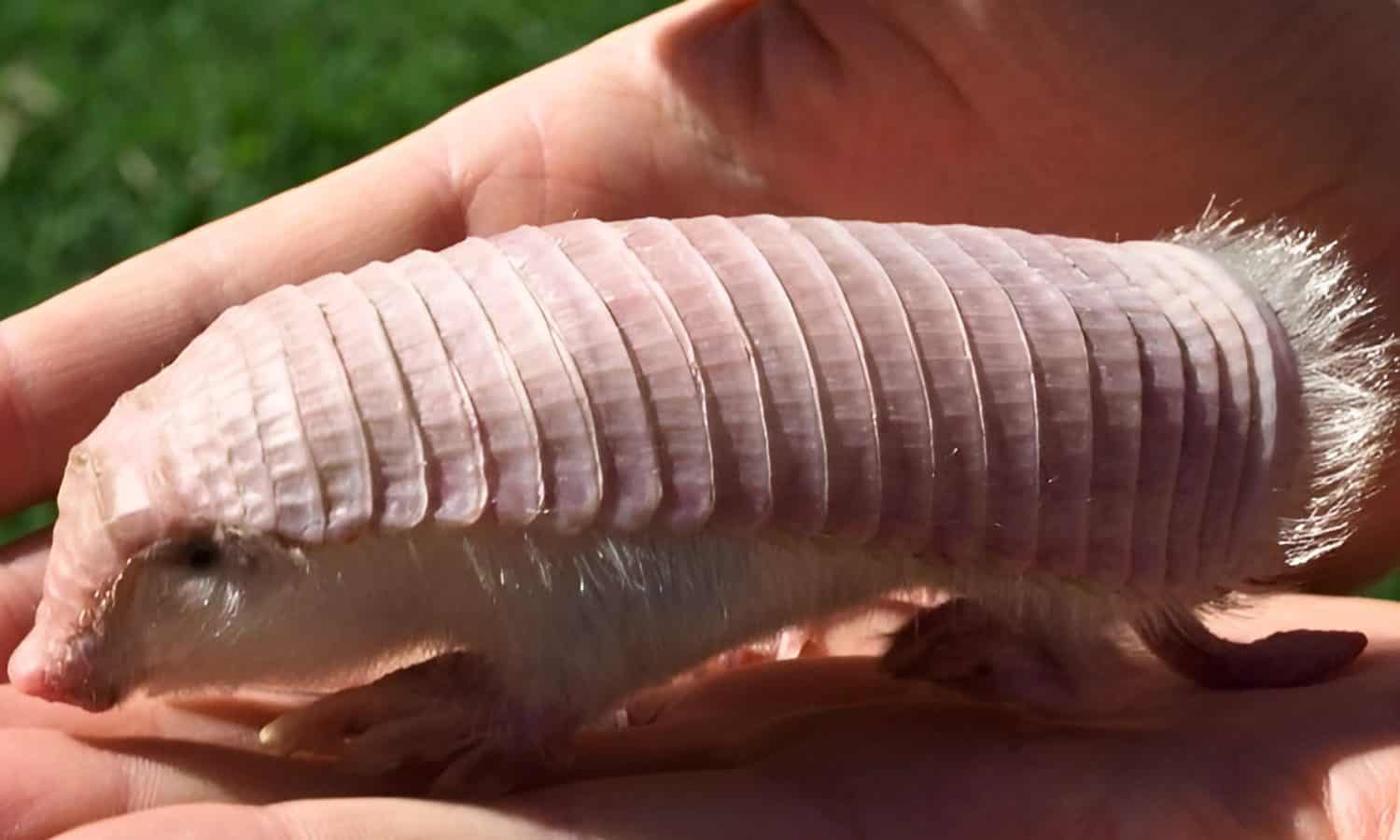
Despite being first described in 1825, little is known about this armadillo’s conservation status or captive habits.
©Harsha_Madusanka/Shutterstock.com
The pink fairy armadillo is small, typically weighing around 4.2 ounces with a length between 3.5 and 4.5 inches. Despite being described by the famous paleontologist and anatomist Richard Harlan in 1825, the pink fairy armadillo (Chlamyphorus truncatus) remains a bit of a mystery. They have the least molecular data available among any armadillo family, and their conservation status remains uncertain. Furthermore, these little sushi rolls do not do well in captivity. Wild-caught fairies tend to die within several days of transport from their habitat to animal facilities.
That said, scientists do know some things about this tiny armadillo. They have small eyes, silky, off-white fur, hidden ears, and flexible dorsal shells attached to their bodies via membranes. At their back ends, they have spatula-shaped tails that stick out from under the vertical plates affixed to the rear end of their pink shells. While its relative, the greater fairy armadillo, is found in shrub and grasslands around Bolivia and Paraguay, pink fairy armadillos are found exclusively in the desert scrublands of central Argentina.
There, they live solitary and nocturnal lifestyles. They are generalist insectivores, typically subsisting on ants and larvae. When those grubs aren’t available, pink fairies will eat worms, snails, or other insects. If insects are scarce, they are known to eat plant leaves and roots. The select few that have survived in captivity have been witnessed accepting more diverse foods such as watermelon and avocado.
What Makes This Creature Unique?
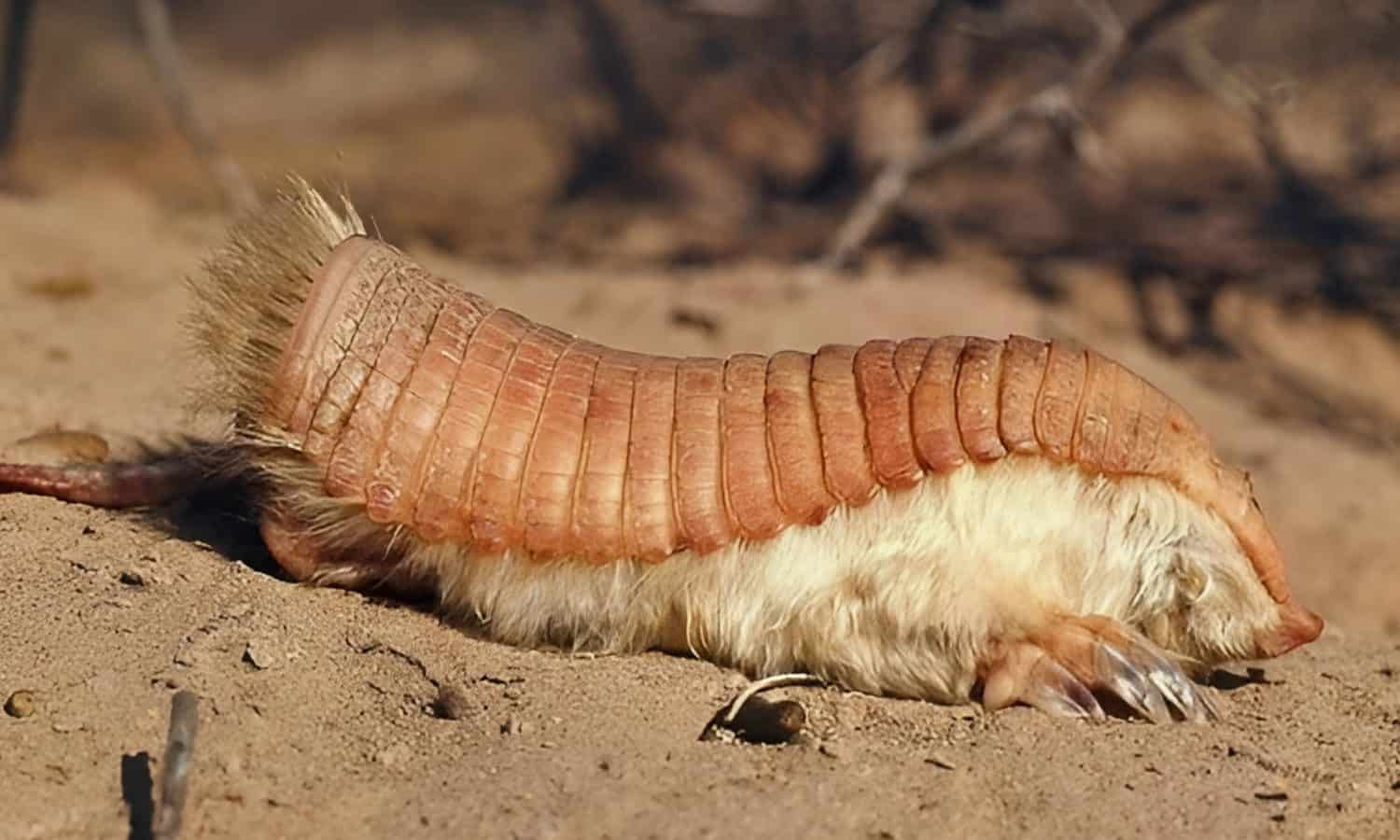
This little piece of sashimi is an expert burrower, capable of disappearing underground in seconds.
©Harsha_Madusanka/Shutterstock.com
Armadillos are known for their scaly, leathery shells, and pink fairy armadillos are no exception. Their shells, however, are much softer and more flexible, attached to their bodies by only a thin membrane along their spines. This soft shell protects the creature, covering its body in armor when it curls up into a ball. Unlike other armadillos, which have full armor, pink fairies have exposed hair.
This silky soft hair helps them thermoregulate in the chaotic climate of central Argentina. Plus, it conserves heat to get them through the freezing nighttime temperatures. This soft shell, full of blood vessels that fill or empty to thermoregulate, gives these sushi rolls their pink color.
While they lack visible ears and solid eyesight, pink fairy armadillos make up for it with massive sets of claws on their front and hind limbs. They use them to dig holes in compact soil with incredible speed. These claws are so big that they prevent the armadillos from walking well on hard surfaces, but they give them their nickname “sand-swimmer.” They can dig underground as fast as fish can swim in water. Whether it’s the arrangement of their hair, their pelvic structure, or their sushi roll-shaped body that reduces drag, every part of them contributes to burrowing.
Conservation Status
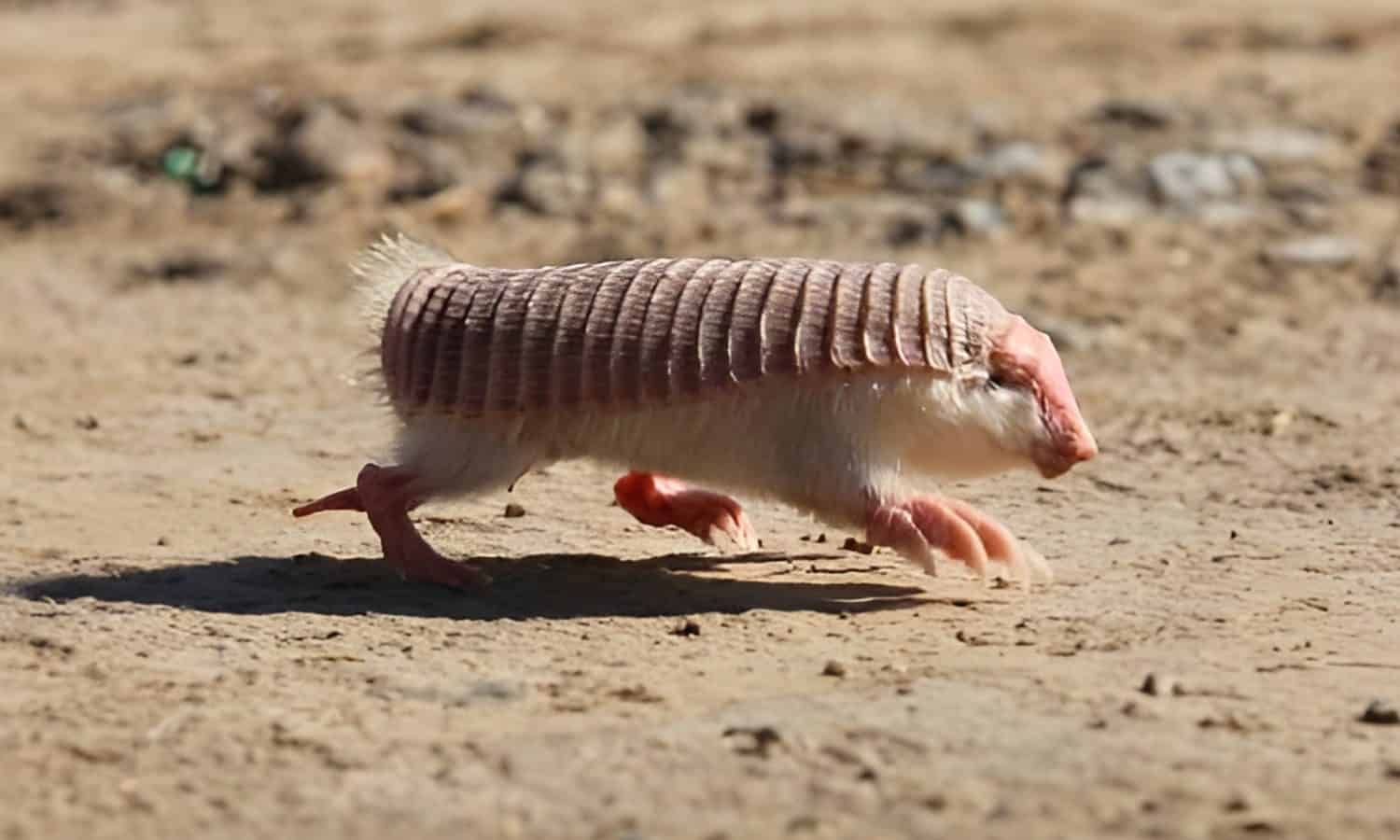
The total population of pink fairy armadillos is unknown due to their elusive nature, their tendency to live underground, and their stress responses to transportation.
©Harsha_Madusanka/Shutterstock.com
They may be one of the most unique animals on earth, but they are hard to track. Though pink fairy armadillos were placed on the IUCN Red List in the Near-Threatened category in 2006, that status quickly changed. By 2008, these enigmatic sushi rolls were moved to the Data Deficient category. Simply too little was known about their history or population dynamics. Furthermore, they are difficult to observe in the wild; most of their activity happens at night and underground.
Pink fairy armadillos are delicate, too. As previously mentioned, they don’t do well when transported out of their natural habitat. Highly affected by stress and specialized for a certain climate, pink fairy armadillos often die during transportation. Indeed, very few, if any, pink fairy armadillos have survived for more than a few months in captivity, with most dying within days or weeks of capture.
Although they are hard to track and even harder to transport, hope remains for these elusive creatures. They can still be found, if rarely, in several areas with specific legislation in place to protect them, including Lihué Calel National Park. Perhaps the inability to track them is a good thing, as it might give pink fairy armadillos a better chance at thriving on their own terms.