
Quick Take
- One spider on this list shares the brown recluse's six-eye arrangement and packs its own venom, though it neutralizes prey in a way no other spider does. See the spitting spider →
- A study found 158 species regularly mistaken for the brown recluse, though most people can't name a single one of them. Explore the lookalike problem →
- One lookalike is more than just a doppelgänger. It is a true biological cousin of the brown recluse with nearly identical venom. Meet the closest cousin →
- The most common spider in your home might be the one people panic about most, and it's almost certainly not what they think it is. See the most common culprit →
Because people tend to assume any brown house spider is the infamous brown recluse (Loxosceles reclusa), dozens of harmless species are frequently misidentified as brown recluses, with one study (Vetter, 2005) documenting 158 recognizable species that are regularly mistaken for the brown recluse in the United States. With that in mind, continue reading to learn about eight spiders that look like a brown recluse.
Brown Recluse Spider: Overview
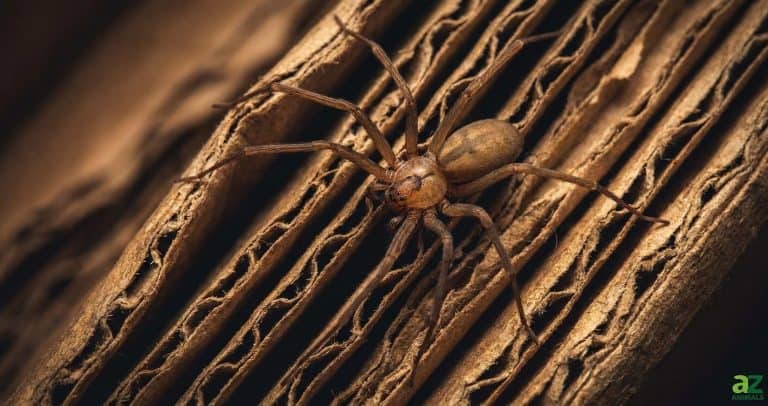
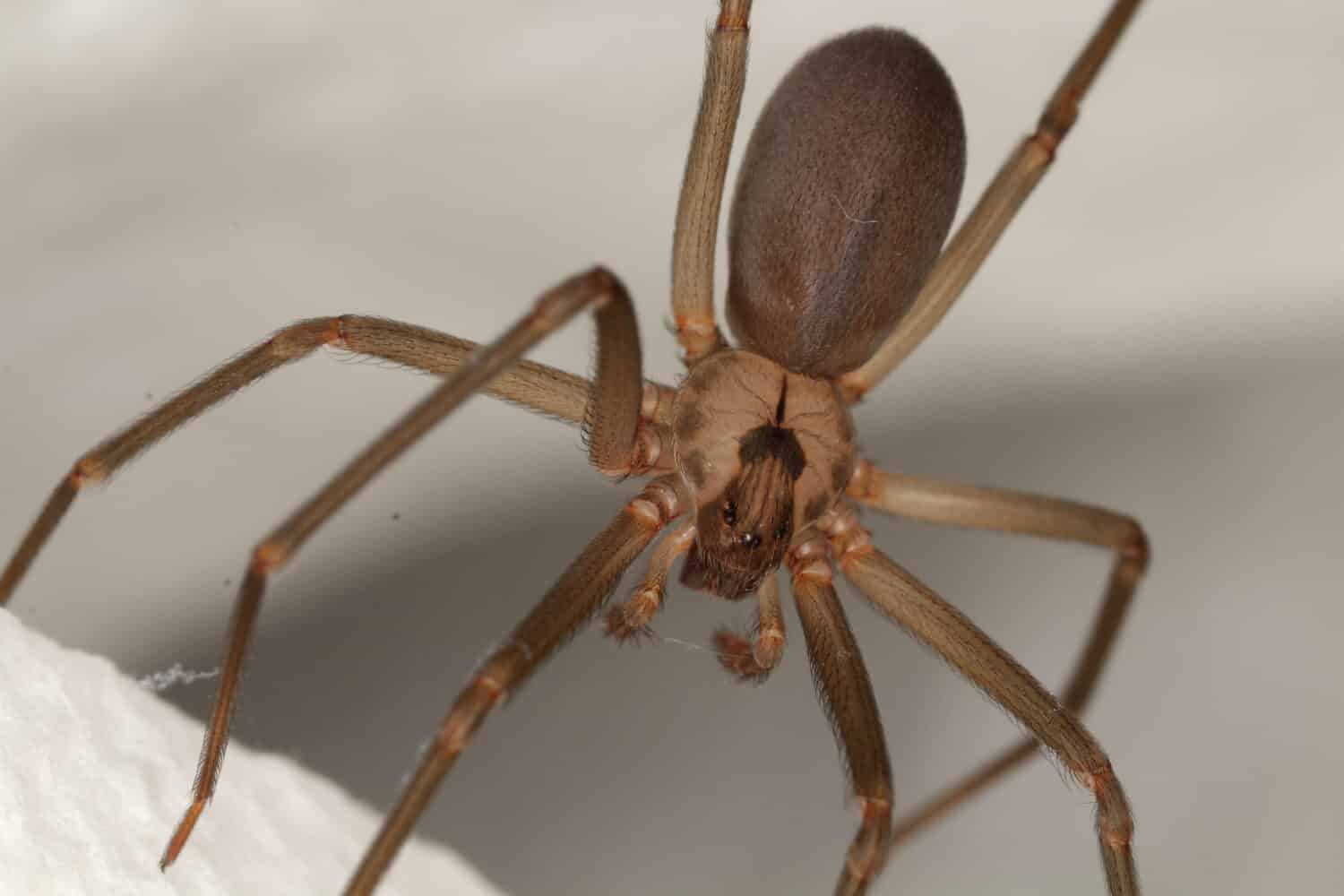
The brown recluse spider is a brown-colored spider with six eyes arranged in three pairs (dyads) rather than the typical eight eyes found in most other spiders. It is approximately 0.35 inches long, with male and female brown recluse spiders appearing similar. The brown recluse’s most notable characteristic is the distinct violin-shaped marking on its cephalothorax.
Brown recluse spiders are nocturnal hunters that build irregular, loose webs primarily for shelter rather than for trapping prey. They actively hunt insects and other small arthropods. Brown recluse spiders are carnivorous, with a diet consisting of insects, millipedes, and mites.
Brown recluse spiders can be found beneath rocks or in the bark of dead logs and trees. They can also be found in human dwellings, where they live within walls and behind or underneath objects.
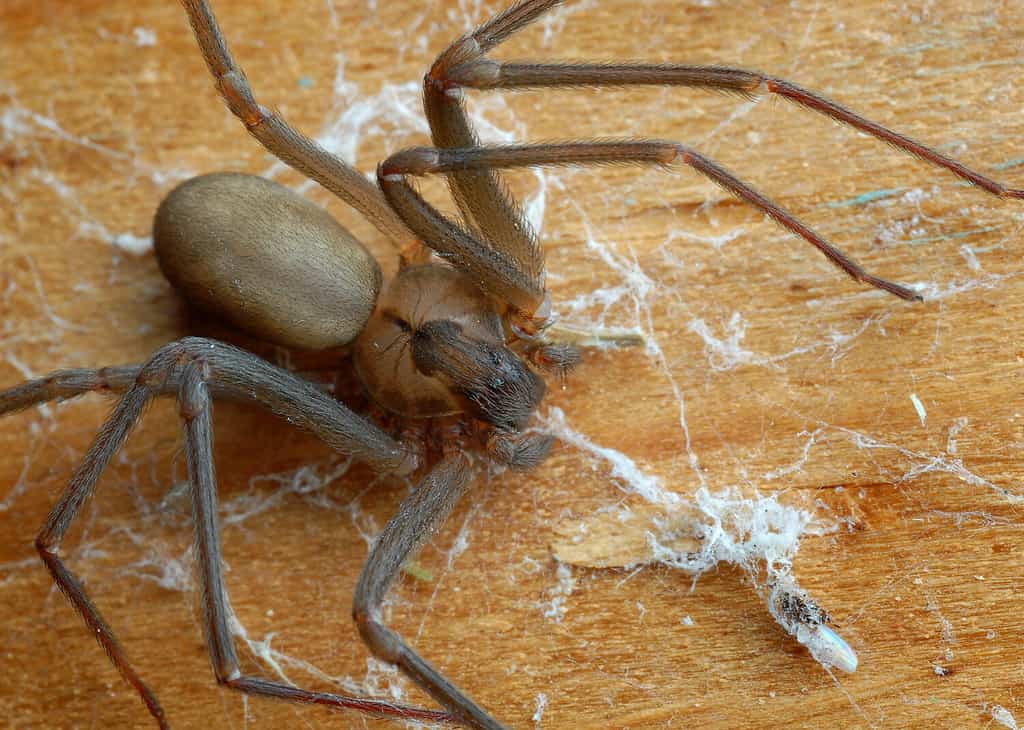
One of the most dangerous spiders in the United States is the brown recluse. This spider possesses venom that can cause a condition called necrosis.
©Miles Boyer/Shutterstock.com
The brown recluse spider is one of the most notorious spiders in the United States, thanks to its reputation as a dangerous spider. For the record, although all brown recluses are capable of inflicting a medically significant bite, the vast majority of recluse bites do not require medical intervention. Experts estimate that 9 out of 10 brown recluse bites cause nothing more than mild inflammation and heal on their own without significant tissue damage or medical intervention.
Southern House Spider
One of the spiders that gets confused for the brown recluse is the Southern house spider (Kukulcania hibernalis), specifically male Southern house spiders. Males frequently get misidentified as brown recluses due to similar coloring and anatomy. However, when compared, male Southern house spiders are generally bigger and do not feature the recognizable violin mark on the cephalothorax.
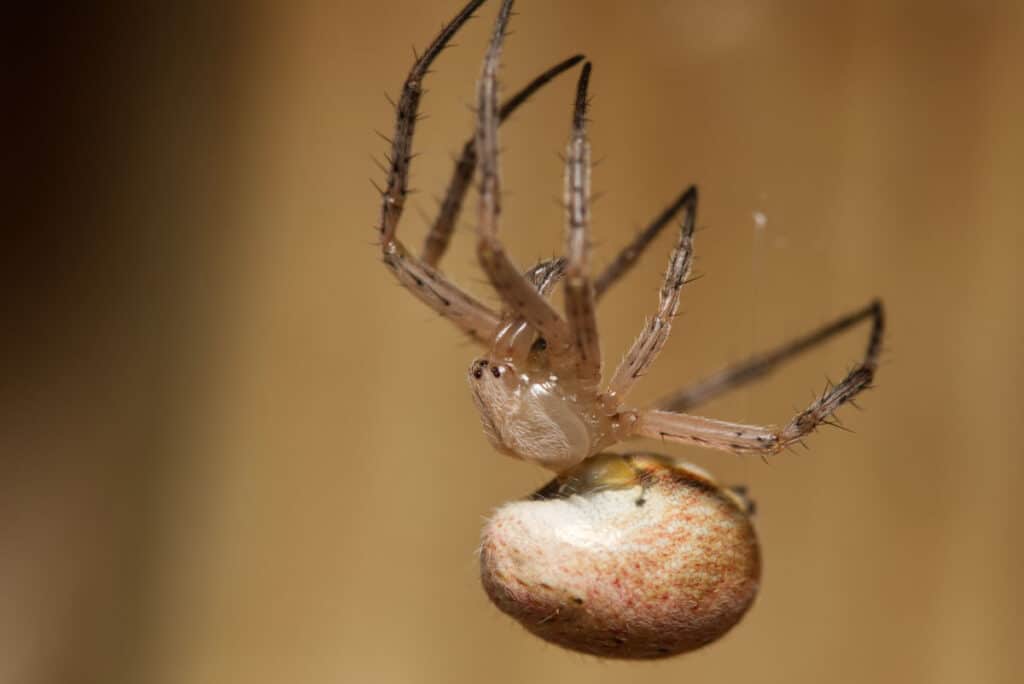
Due to their similar markings and colorings, male Southern house spiders often get mistaken for brown recluses.
©Kala Stuwe/Shutterstock.com
Female Southern house spiders are dark gray, with a leg span of approximately 2 inches.
Found primarily in the Southern United States, these spiders inhabit areas close to human dwellings, where they construct their webs in the eaves of homes and farm buildings.
The primary diet of the Southern house spider consists of insects, which they trap in their expansive webs.
Despite their resemblance to the more dangerous recluse spider varieties, Southern house spiders pose no threat to humans. They rarely bite, and their venom is not medically significant.
Common House Spider
From a distance, it’s easy to mistake the common house spider (Parasteatoda tepidariorum) for a brown recluse due to similarities in color and size, including nearly identical leg spans, a double-segmented body, and a pair of stubby appendages equipped with tiny fangs.
The average common house spider and the brown recluse are similar in overall size, but their body proportions differ. The female common house spider has a bulbous body about 1/3 inch long, while the brown recluse has a slightly longer, flatter body measuring up to 1/2 inch. Despite the recluse’s slightly larger body, both species have a total leg span of about 1 inch.
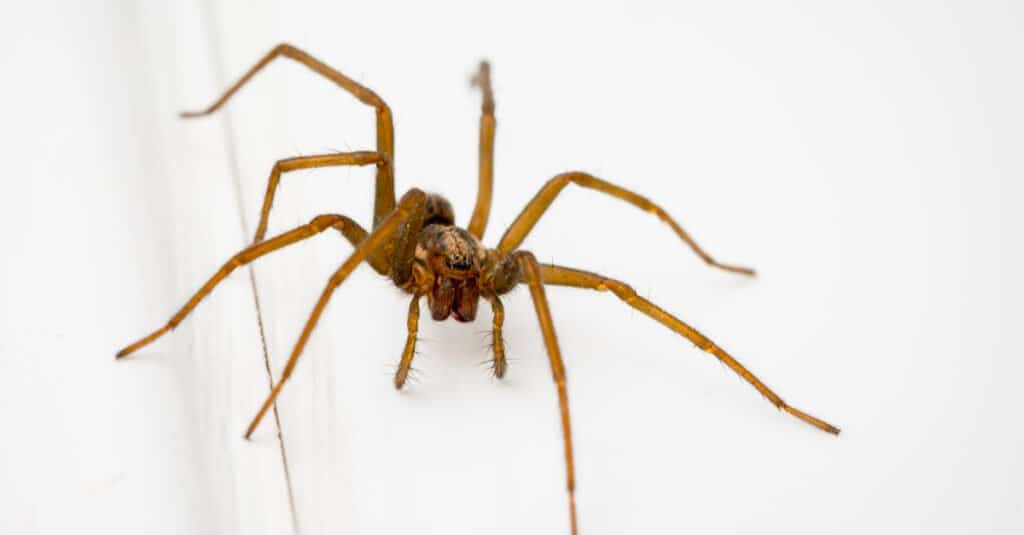
The common house spider, which has a similar coloring and size to the brown recluse, is not dangerous to humans.
©Sample Stars/Shutterstock.com
These common house spiders are brown, with some featuring white or brown patterns on their backs. There is a distinct color differentiation between the males and females. Males have slightly orange-hued legs, while females display a more yellow tint.
Common house spiders are highly adaptable and can establish residence in a diverse range of environments. Their habitat spans from gardens and yards to indoor spaces such as basements and attics, and even extends to artificial structures like sheds and barns. Common house spiders feed mostly on various pests commonly found within homes.
Spitting Spider
A spitting spider (Scytodes thoracica) and the brown recluse spider share similar coloring and leg spans. Like the brown recluse, spitting spiders have six eyes instead of eight.
To accurately differentiate between the two, closely inspect their legs and body. Spitting spiders have a dual-color pattern on their limbs and body, in contrast to the monocolored legs of the brown recluse.
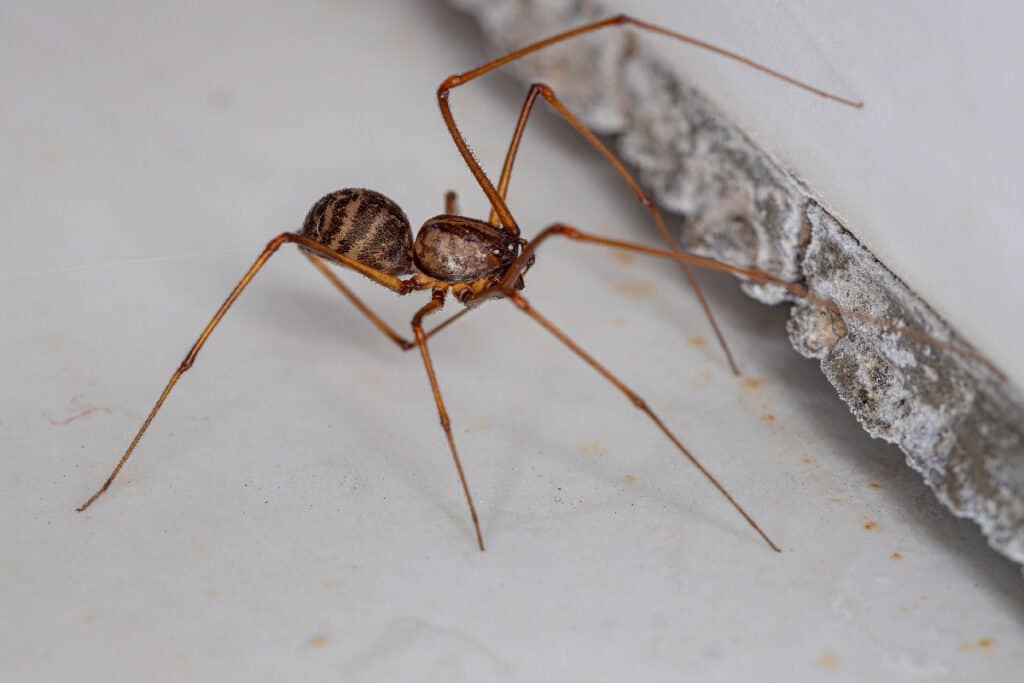
Another brown spider that can be mistaken for the brown recluse is the spitting spider, which has dual-color patterns.
©iStock.com/ViniSouza128
The spitting spider earned its name for its ability to spray a venom-laced silken fluid onto its prey. They are generally small, with a total leg span of approximately one inch.
Spitting spiders frequently inhabit secluded spots such as cabinets, basements, and closets. Although some members of this species make webs, the majority are active hunters that follow a specific hunting protocol: detecting, ejecting venom, biting, enveloping, and then consuming their prey.
Despite their venomous nature, spitting spiders are not considered dangerous to humans. Their bites are rare and not medically significant.
Arizona Brown Spider
The Arizona brown spider (Loxosceles arizonica) and the brown recluse are very close cousins. They belong to the same biological genus, Loxosceles, which is commonly known as the recluse spider genus.
Because they belong to the same genus, they share many physical traits, behaviors, and similar types of potent venom. The brown recluse predominates in the Midwest and Southern U.S., while the Arizona brown spider is uniquely adapted to the desert Southwest.
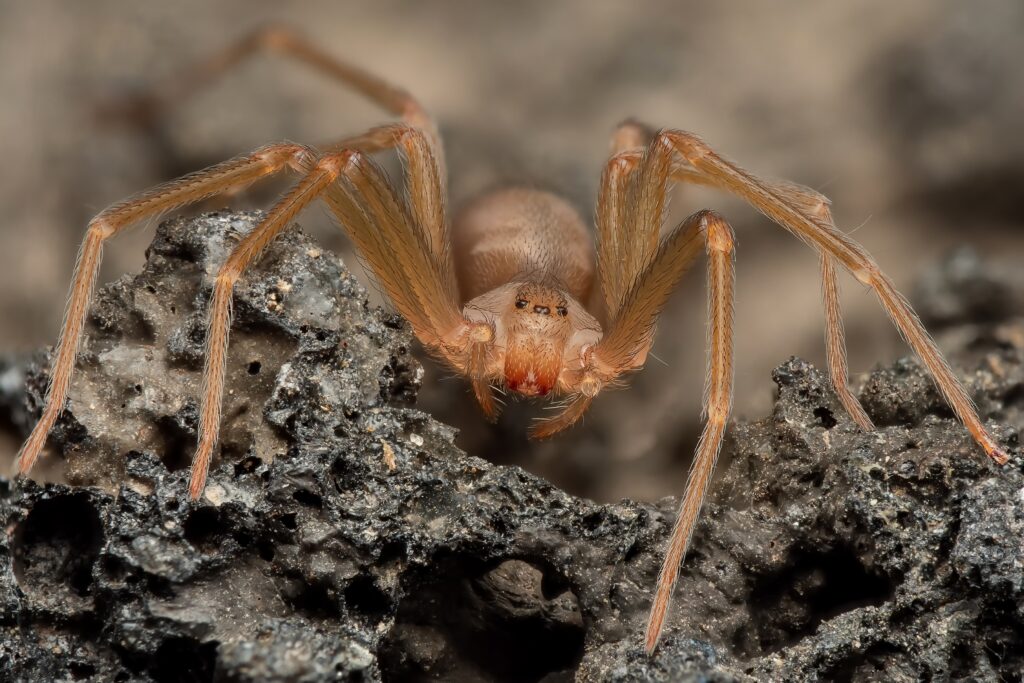
The Arizona brown spider has the nickname “violin” or “fiddle” spider.
©Macrolife/Shutterstock.com
However, the Arizona brown spider is slightly smaller than the brown recluse with a total leg span of 1 to 1.5 inches. Arizona brown spiders also have a faint, violin-like marking on their cephalothorax, which is less prominent than that of the brown recluse.
These shy spiders usually hide in the debris in the desert or near homes in quieter or outlying regions. Their diet consists primarily of ants, particularly carpenter ants.
Although they aren’t brown recluses, their bites are similar to those of the brown recluse. Like the brown recluse, their venom can cause necrosis, or tissue death.
Woodlouse Spider
Woodlouse spiders (Dysdera crocata) are often confused with brown recluses due to their similar shapes. However, several notable differences make them easy to tell apart. The woodlouse spider has a lighter, cream-colored abdomen and a glossy exterior, while its orange-brown legs are noticeably shorter than those of the brown recluse.
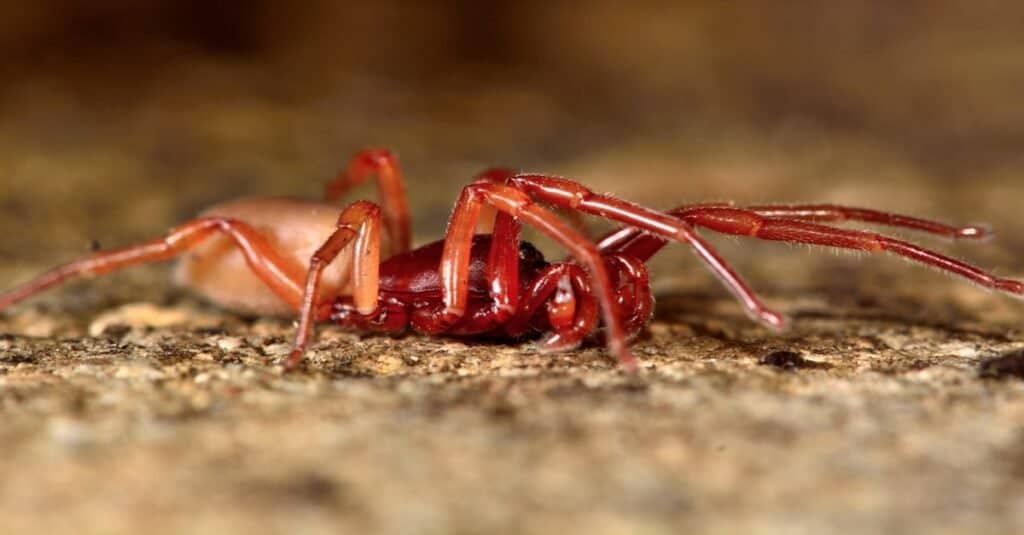
Woodlouse spiders are often mistaken for brown recluse spiders.
©IanRedding/Shutterstock.com
The average leg span of a woodlouse spider is 1 to 1.2 inches, with females being larger than males.
Woodlouse spiders usually make their homes in areas concealed by natural elements such as rocks, firewood stacks, mulch, tree bark, and dense vegetation. If they find their way into homes, they tend to settle in lower ground areas or beneath the floorboards in various rooms.
Rather than building webs, they venture out at night, exploring warm, moist locations in pursuit of wandering woodlice.
Despite their somewhat frightening appearance, their bites are not considered medically significant and don’t pose a serious threat to humans
Hobo Spider
Hobo spiders (Eratigena agrestis) are brown, with patterns on their back, a characteristic that often leads to confusion with the brown recluse spider. The body of the spider is relatively small, measuring about half an inch, with a leg span of one to two inches.
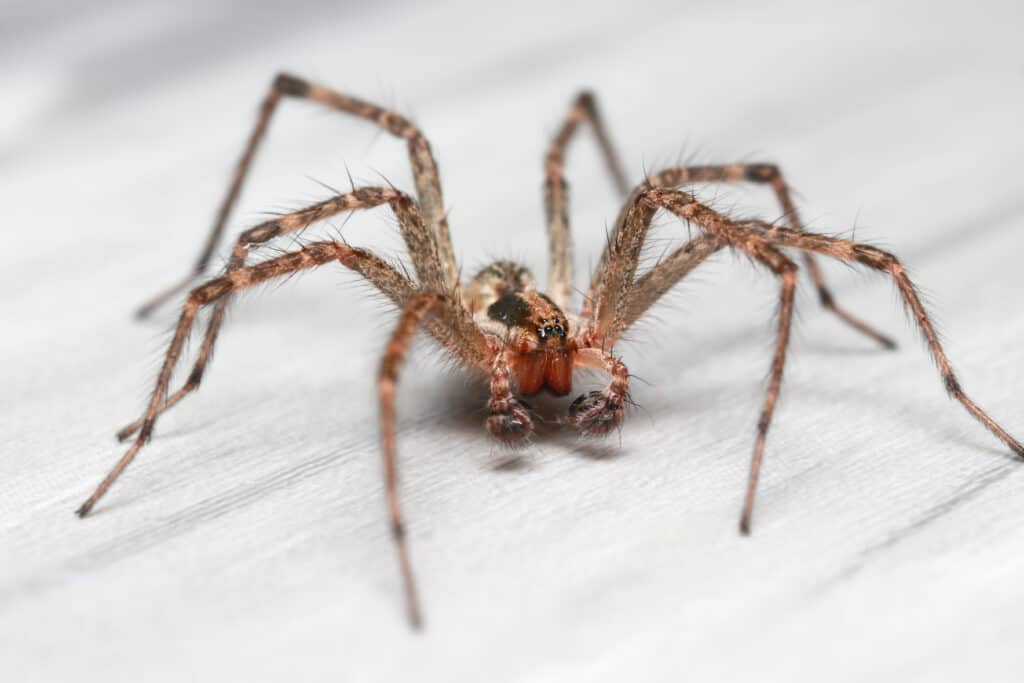
Hobo spiders construct funnel-like webs in which they wait to ambush unsuspecting prey.
©SNEHIT PHOTO/Shutterstock.com
These spiders tend to occupy areas where they can easily construct tunnels or funnels, utilizing available gaps or hollows for this purpose. Given their limited ability to climb, they mainly stay close to the ground.
A distinctive characteristic of the hobo spider is its knack for crafting funnel-shaped webs that effectively trap insects. They often conceal themselves within these webs, waiting to ambush unsuspecting insects like house flies, cockroaches, and ants that wander too close.
Hobo spiders are not a significant threat to humans. Their venom isn’t medically significant, and they don’t exhibit aggressive behavior.
Rabid Wolf Spider
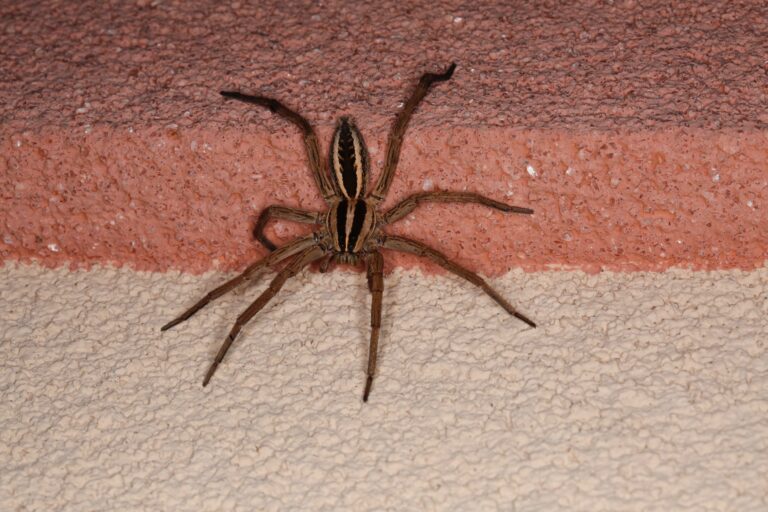
Often mistaken for the brown recluse due to their similar coloring, rabid wolf spiders (Rabidosa rabida) don’t have the violin-like marking commonly found on brown recluses. Instead, they have banded patterns on their legs and tend to be much larger.
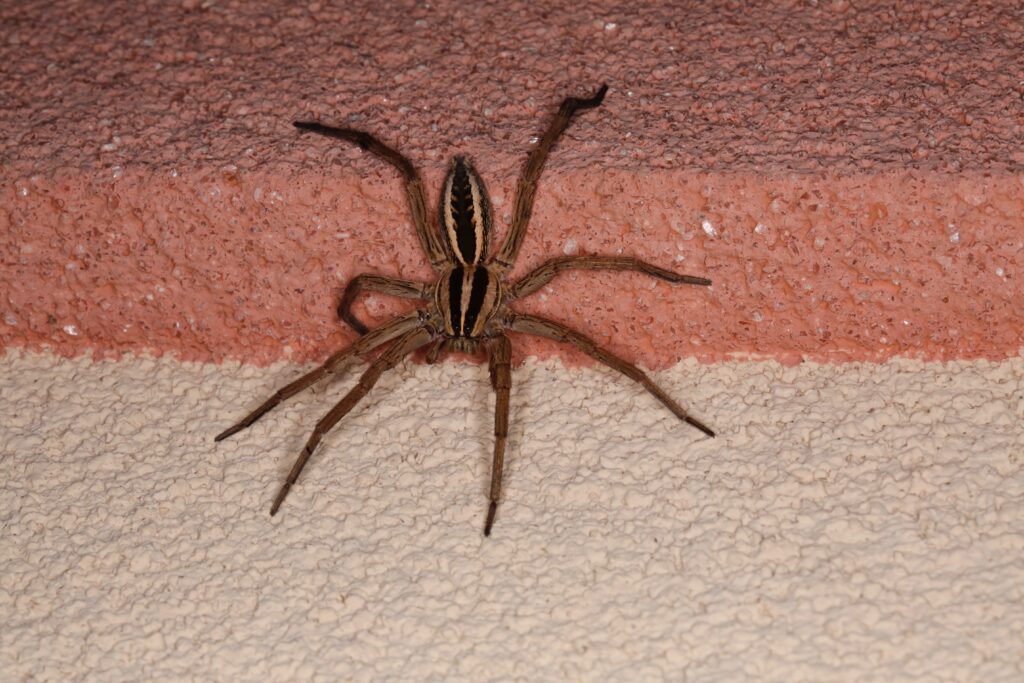
Rabid in name only, rabid wolf spiders are not carriers of rabies.
©Cathleen Wake Gorbatenko/Shutterstock.com
Rabid wolf spiders are pale brown with dark brown streaks along their flanks, coupled with two broad dark brown lines on their head region and a dark central stripe on their belly. The females are generally larger, their bodies measuring between 0.63 and 0.83 inches, while the males are slightly smaller, ranging from 0.43 to 0.47 inches in size.
Rabid wolf spiders are found in cotton fields and forested regions, where they nestle in debris.
Unlike many spider species, rabid wolf spiders don’t rely on webs to trap their prey. They are agile predators that actively seek out and pursue their meals, which usually consist of smaller creatures such as crickets, ants, grasshoppers, and even other spiders.
While they may look fierce, rabid wolf spiders are not known to be aggressive, resorting to biting only if they feel cornered and endangered. Although their bites can cause discomfort, their venom is not considered medically significant to humans.
Cellar Spider
Cellar spiders (Pholcus manueli) share the same light brown color and a similarly patterned thorax with the brown recluse, which can be confusing. However, one glaring difference is the cellar spider’s notably long and slender legs.
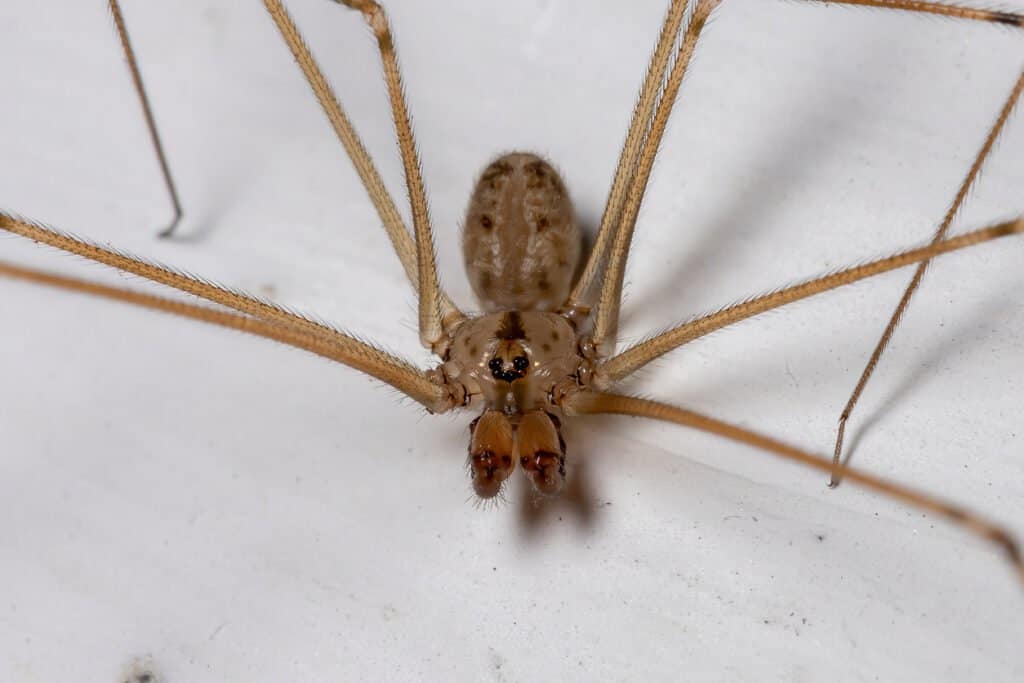
One of the most common spider species you’ll find in a home is the cellar spider, which is often confused for brown recluses.
©iStock.com/ViniSouza128
Cellar spiders possess elongated, oval bodies with colors ranging from pale yellow to light brown or even gray. The females are typically about 0.25 to 0.31 inches in body size, with a leg span of between 1.75 and 2 inches.
Cellar spiders dwell in dark and secluded places like basements, storage facilities, garages, and caves. They feed on other small arthropods, including various insects and spiders. Cellar spiders can overpower prey considerably larger than themselves, such as wolf spiders and crane flies.
Although cellar spiders are venomous, they aren’t considered a threat to humans because they seldom bite, and even when they do, there is no cause for concern.