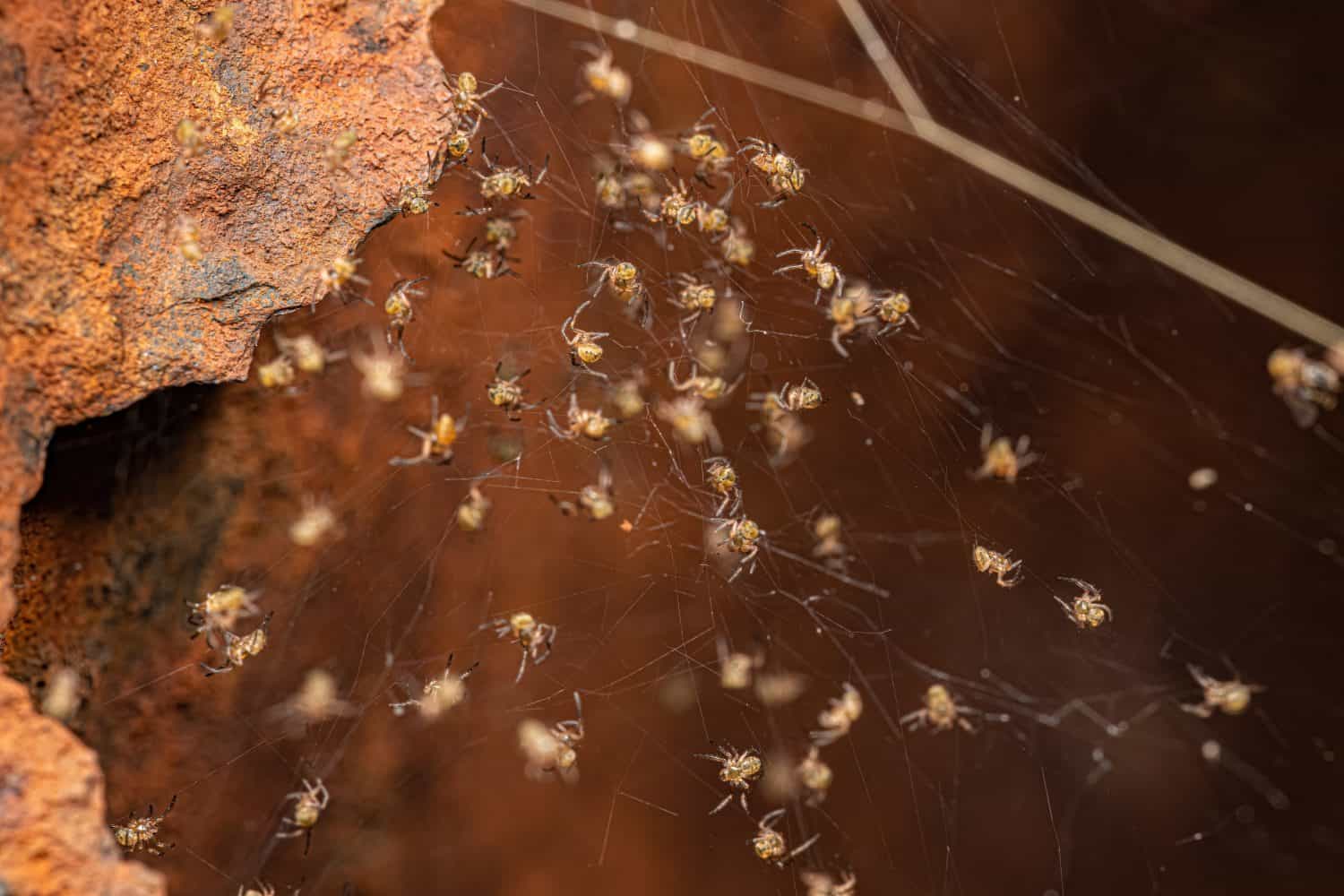

Quick Take
- Spiders are notorious loners, yet an entire colony of these Madagascar spitters shares meals without a single conflict. The reason why reshapes what we thought about spider evolution. See the colony's peace →
- Their signature hunting weapon becomes exponentially more dangerous when used in a group, and the way these spiders coordinate the attack is what truly sets them apart. Watch the coordinated hunt →
- True sociality has emerged in 0.1% to 0.24% of spider species, and this outlier evolved it through a path its closest relatives never completed. Explore the evolutionary rarity →
- Adults and juveniles from multiple generations share the same permanent structure, a living arrangement that defies nearly everything known about spitting spider biology. Meet the multigenerational colony →
Spiders are often known as being aggressive, solitary, and even cannibalistic — hardly the kind of animals you would expect to live together peacefully. But one extraordinary species from Madagascar turns that stereotype on its head.
Officially described in 2006, Scytodes socialis lives in the dry deciduous forests of Madagascar and does something almost unheard of for spiders. Instead of living alone, these spitting spiders build permanent communal web complexes. Multiple adults and juveniles live in the same shared space without showing aggression toward one another. Even more surprising, they hunt together and peacefully share the meal afterward.
The species’ name, socialis, reflects exactly what makes these creatures so unusual. While almost every type of spitting spider lives alone, this species evolved a socially cooperative lifestyle that sets it apart from its relatives.
A Peaceful Colony Under One Web
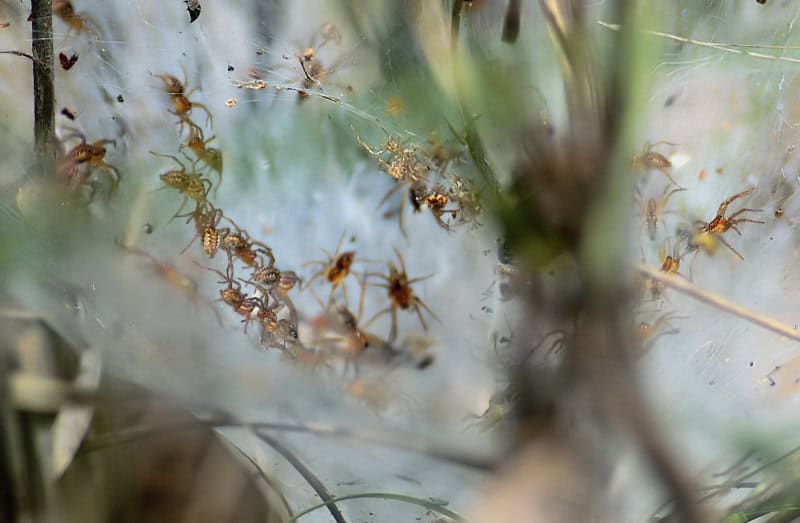
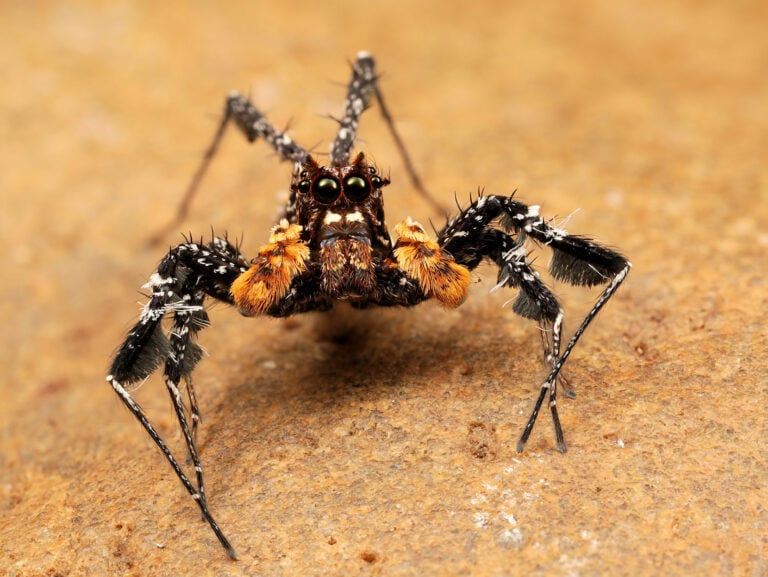
Madagascar’s social spitting spiders live in colonies with two to 30 other individuals.
©Yathin S Krishnappa / CC BY-SA 3.0 / Wikimedia Commons – Original / License
Unlike most spitting spiders, which typically live alone and do not build traditional prey-catching webs, Scytodes socialis creates complex, interconnected webs that serve as permanent homes for entire colonies. These shared webs can house anywhere from two to thirty spiders spanning multiple generations.
Adults and juveniles live side by side in these shared webs with an unusual level of tolerance. Instead of showing the aggression and cannibalism common in other Scytodes species, these colony members coexist peacefully, creating one of the most socially cooperative lifestyles known among spiders.
Teamwork Makes the Meal
Like its relatives, Scytodes socialis captures prey by spitting a sticky, venomous silk from its fangs. This adhesive hardens quickly on contact, pinning the prey in place before the spider moves in to bite. However, what happens next truly sets this species apart from the next.
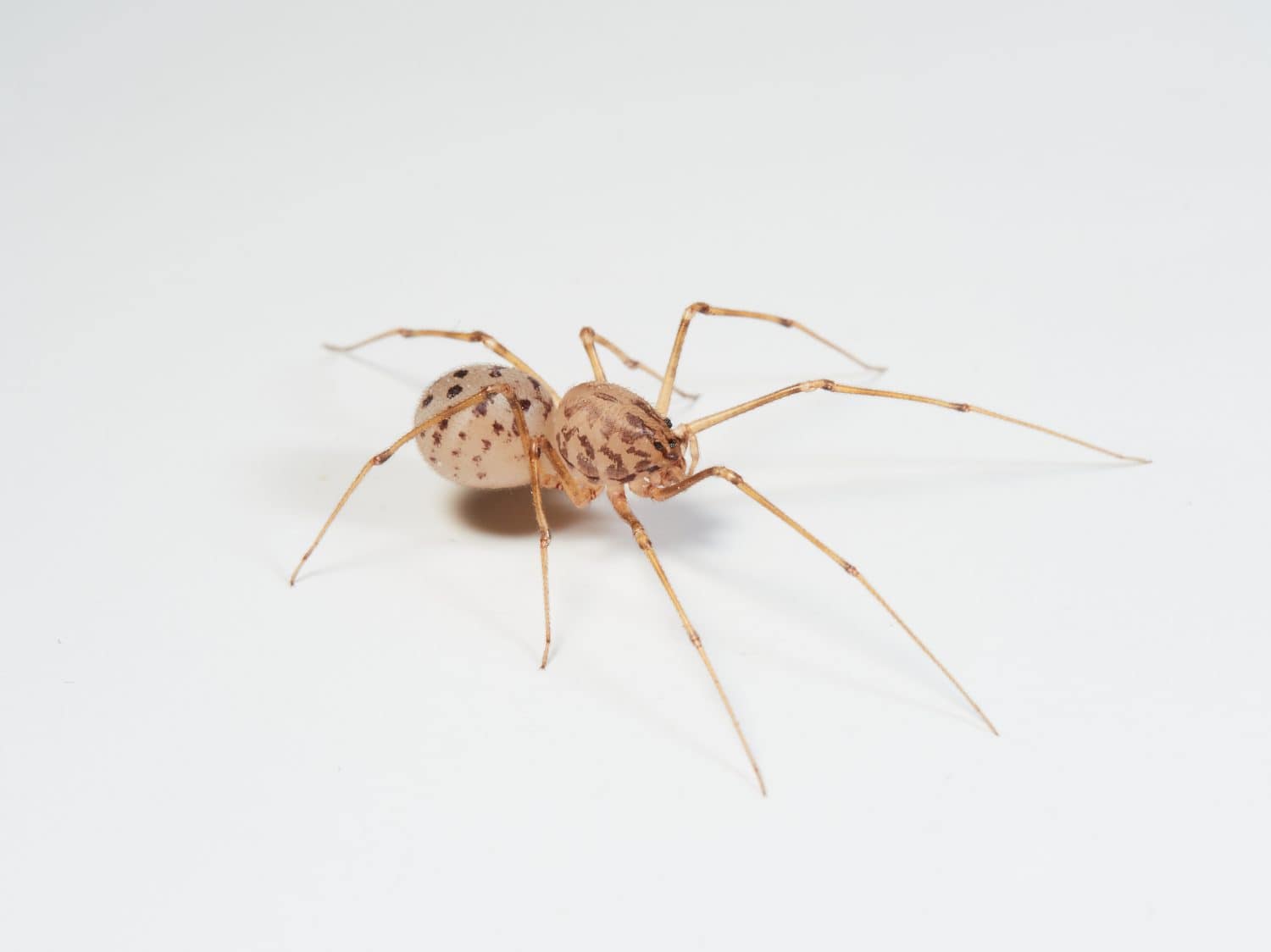
Spitting spiders typically have long legs and pale tan or yellowish bodies.
©Macronatura.es/Shutterstock.com
Instead of hunting alone, multiple colony members often work together to subdue large prey. Several spiders may simultaneously spit on, bite, and immobilize the same insect. This cooperation allows the colony to overpower prey much larger than any single spider could handle alone.
Once the hunt is over, the cooperation continues. Rather than fighting over the prize, the spiders gather around the captured prey and voluntarily share the meal, feeding peacefully alongside one another.
Rethinking Spider Social Behavior
True sociality is exceptionally rare among spiders, occurring in only about 0.1 to 0.24 percent of described species. Most social spiders evolved from species that practice extended maternal care, where family groups stay together only temporarily before scattering.
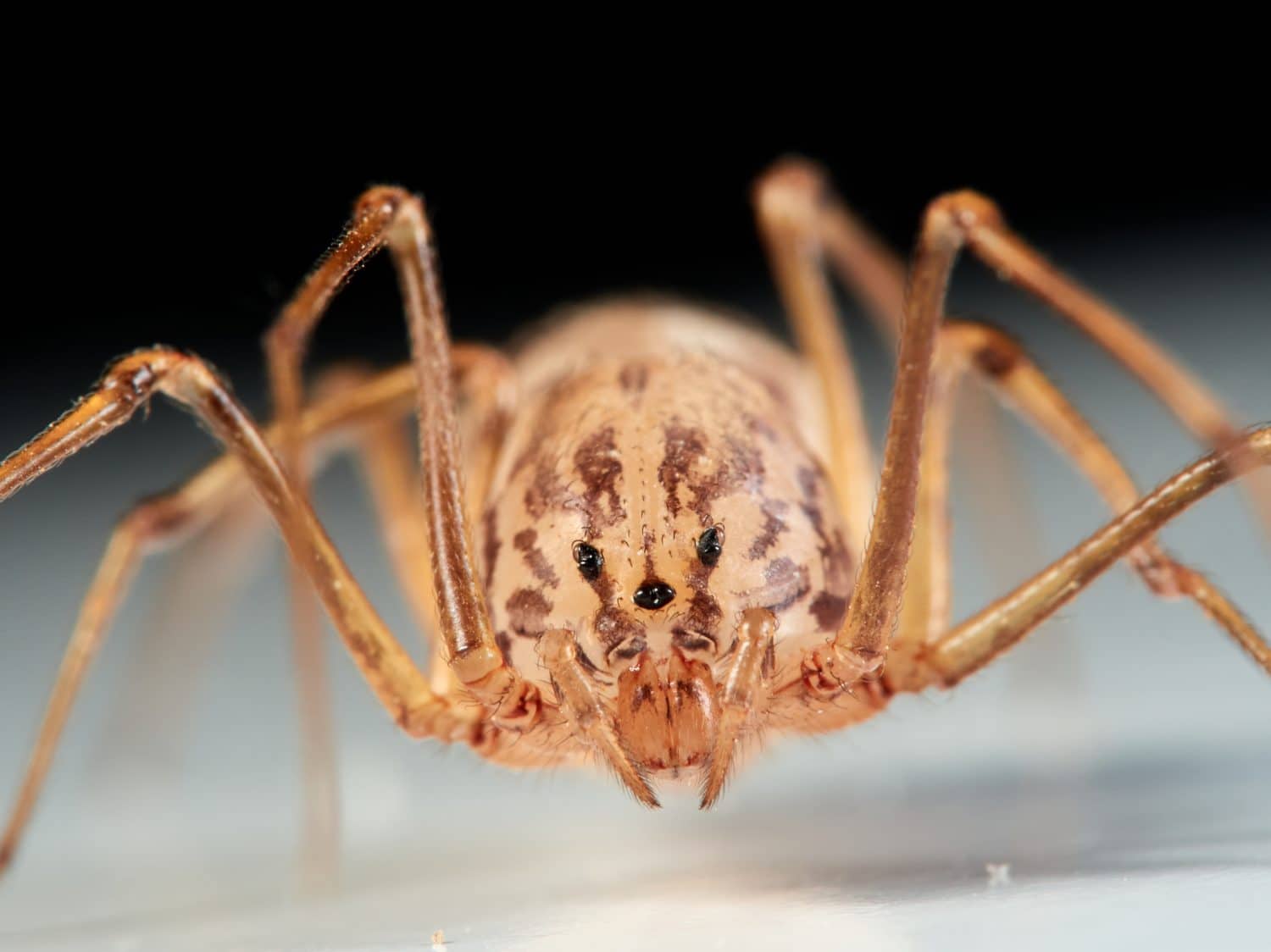
Spitting spiders can pin down prey from a distance thanks to their ejectable venom.
©Macronatura.es/Shutterstock.com
Although extended maternal care has been observed in a few other spitting spiders, such as Scytodes fusca, Scytodes socialis takes this behavior a major step further. Its permanent colonies, cooperative hunting, and peaceful food sharing provide researchers with a rare opportunity to study how complex social behavior evolves from simpler ancestral lifestyles.
For an animal group known for going it alone, Scytodes socialis offers a striking reminder that even spiders can thrive through cooperation.