
Quick Take
- Spiders avoid getting stuck in their own webs with the help of multiple evolutionary adaptations.
- These include anti-stick leg structures and carefully designed sections of dry silk.
- While many spiders use silk for building webs, some spiders only use silk for egg sacs and safety lines.
- Healthy spiders never run out of silk.
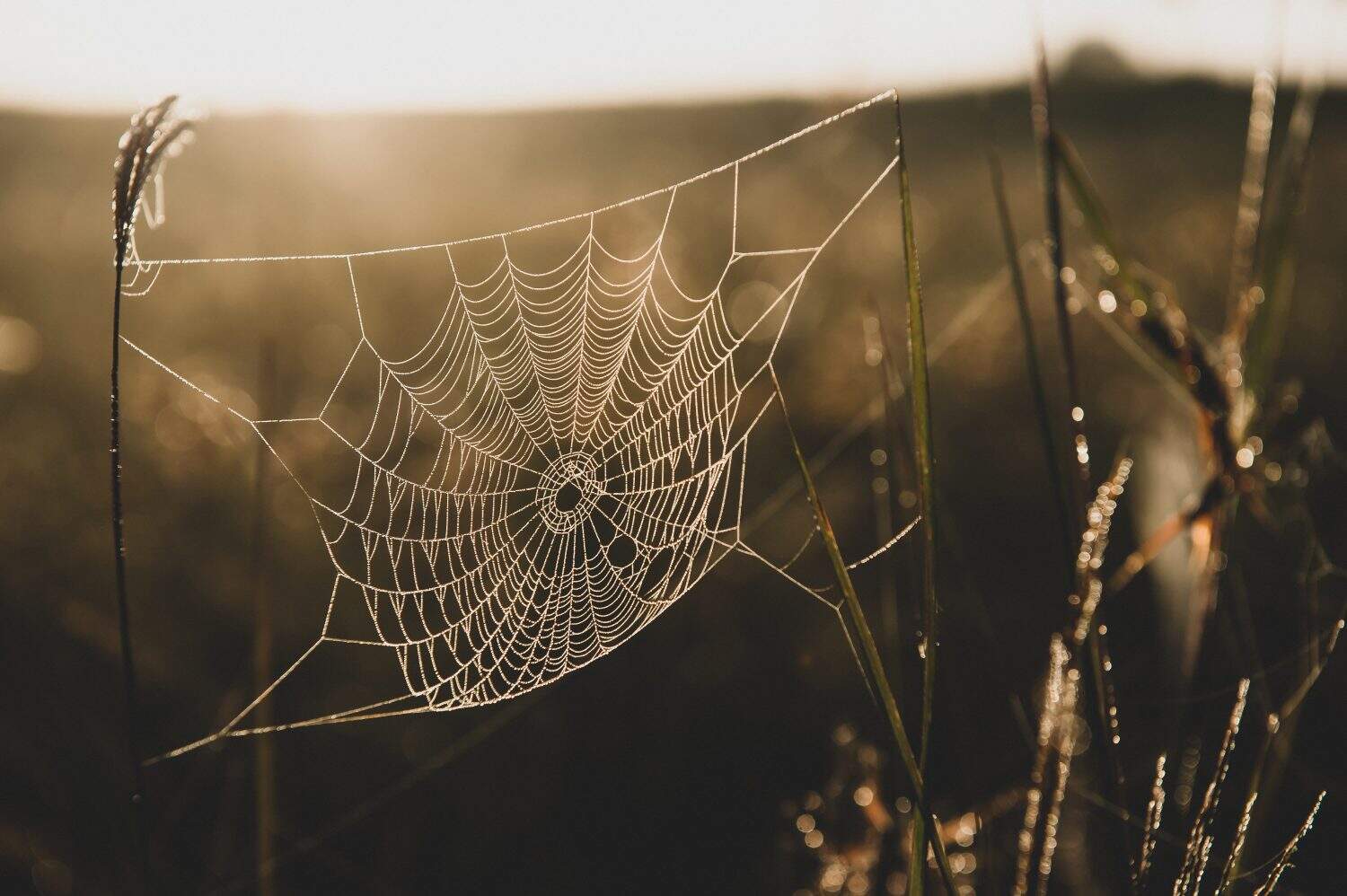
Spider webs are nature’s perfect traps: sticky and delicate, yet strong enough to catch insects many times larger than the spider that built them. Watching flies or moths struggle helplessly in silk often raises a simple but fascinating question: if the web is so adhesive, why doesn’t the spider get stuck in it too? The answer lies in a mix of biology, chemistry, and instinct that allows spiders to move across their own sticky webs with surprising ease.
In this article, we’ll explore the adaptations that keep spiders from becoming victims of their own engineering. Spiders have evolved multiple mechanisms to safely navigate their webs, like specialized leg features and non-stick coatings. These unique features reveal how sophisticated these natural architects truly are.
Spiders
©Heather Ruth Rose/Shutterstock.com
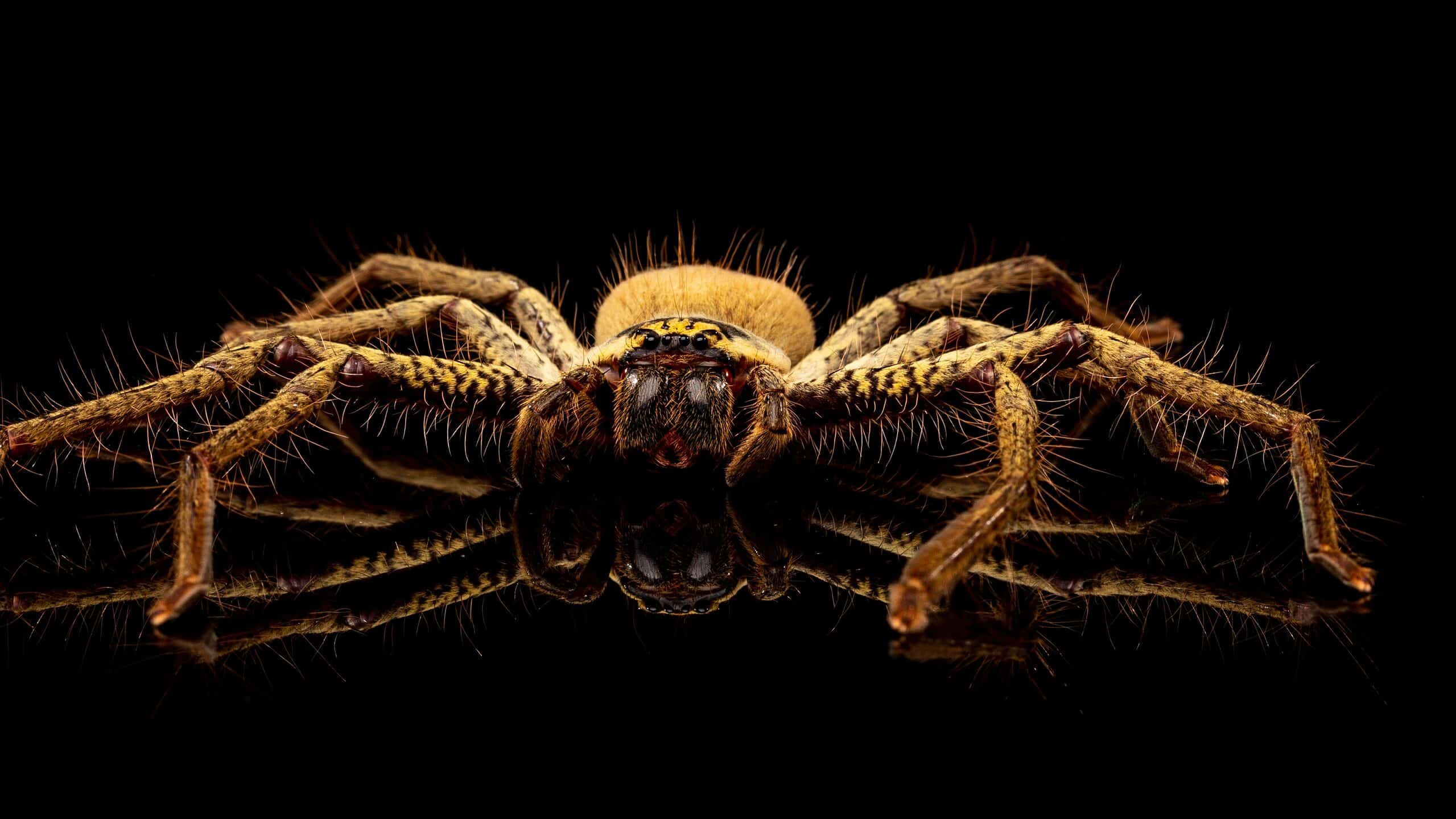
Spiders are eight-legged arachnids that live across almost all of Earth aside from Antarctica. As of 2022, there are nearly 50,000 species of spiders living across nearly every major biome. Spiders range from incredibly tiny – the smallest spider is a fraction of the size of a pinhead – to giant spiders that can measure a foot across.
Why Don’t Spiders Get Caught in Their Own Webs?

©Violart/Shutterstock.com
The main reason that spiders don’t get caught in their own webs is that their legs have special, non-stick adaptations.
First, they sport bristle-like anatomical structures known as setae on the ends of their legs that help reduce their contact with their sticky webs. Recent research has also revealed that spiders have a special non-stick chemical coating on their legs that helps them navigate their webs without getting tangled.
Other Non-Stick Features
©CsaboPhoto/Shutterstock.com
Along with these specialized features, spiders also have innate instincts that help them navigate their webs. They are able to weave non-sticky portions that they can use to travel around the web. In areas where the webs already have their signature glue-like coating, the spider understands how best to contract its legs and walk so as to avoid sticking to the web.
How Do Spiders Avoid Running Out of Webbing?
©JorgeOrtiz_1976/Shutterstock.com
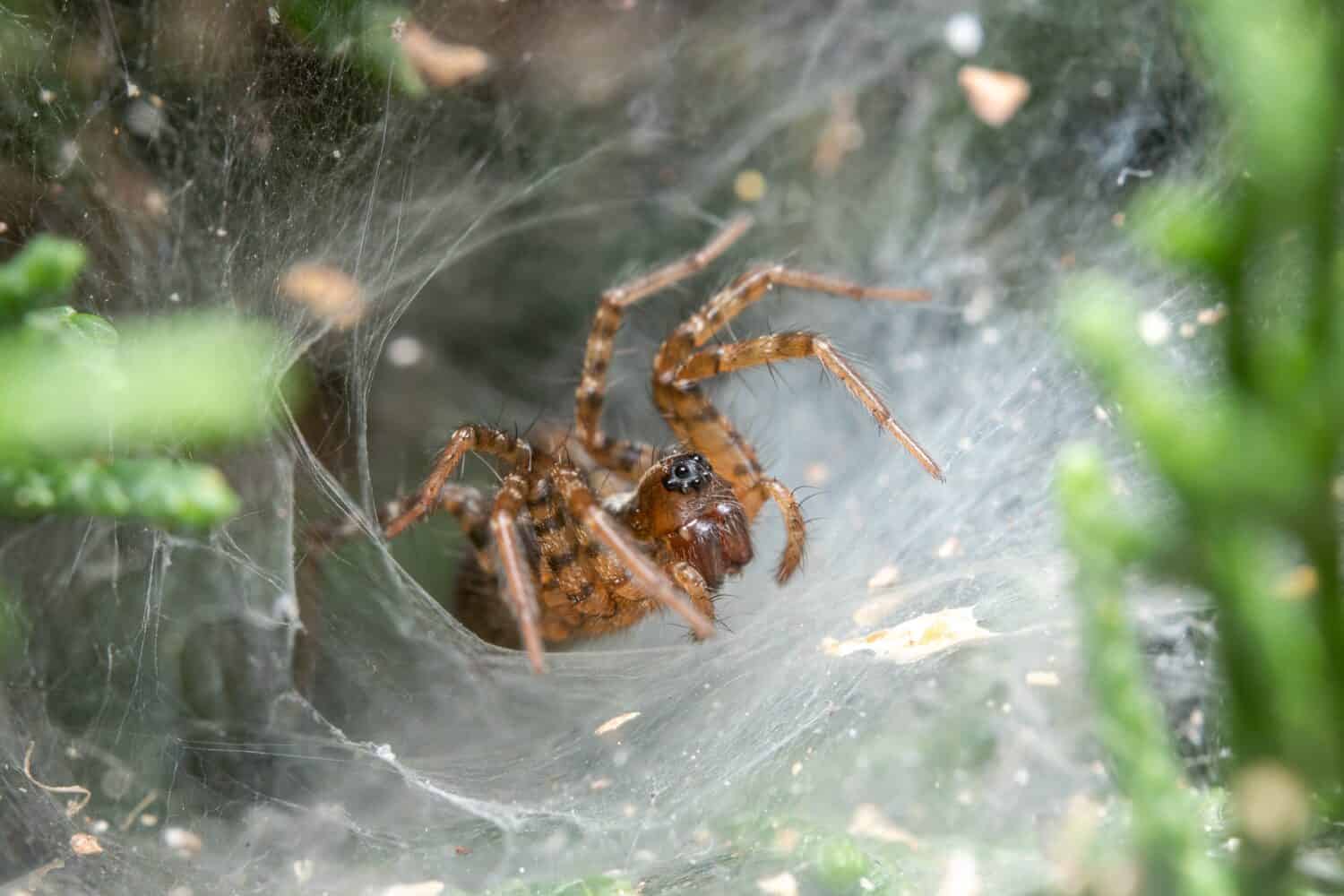
Healthy spiders can continually produce silk from specialized glands, though production depends on proper nutrition.
There are two main anatomical structures responsible for producing those beautiful webs that spiders are so well-known for. The first is an internal gland, and the second is spinnerets.
A spider’s silk begins in these internal glands as a liquid. This liquid hardens into a solid form. The spinnerets are connected to these internal glands, and these are what allow the spiders to control those wispy strands of silk and construct webs.
Because the spider is constantly able to produce silk, so long as it is healthy, it will not run out of web.
Do All Spiders Build Webs to Catch Their Prey?
©iStock.com/Utpal Biswas
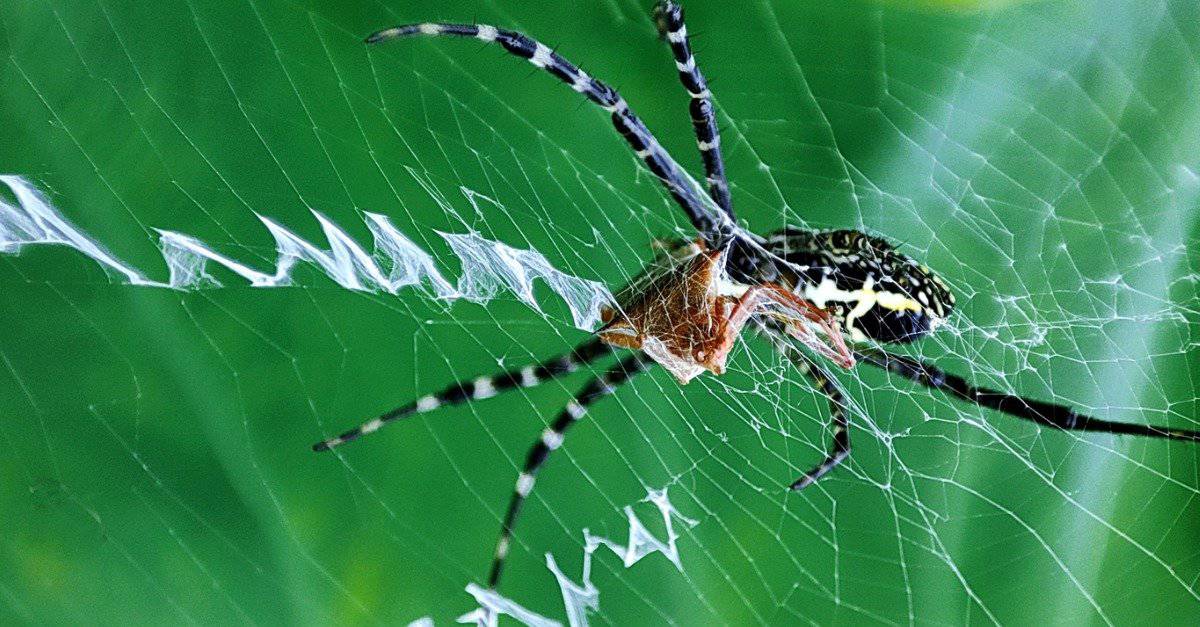
Web-building is likely one of the most well-known hunting strategies of spiders. However, it isn’t the only way that they secure their next meal.
In order to better understand this answer, it’s important first to know exactly what a web is. Different species of spiders can weave silk in different ways. However, not every structure made of spider silk is a web. Some spiders use their silk in different ways, such as to create egg sacs or draglines. While these may occasionally be used to capture prey or otherwise benefit the spider, they’re not webs.
So, while around half of the known species of spiders use a web to capture their prey, not all of them do. Some spiders use their silk in a different way to capture prey. Other spiders, like the wolf spider, don’t spin webs to catch prey, though they still produce silk for egg sacs and safety lines.
Wolf spiders are named for their characteristic of actively hunting down prey. Trap door spiders, on the other hand, prefer the element of surprise and will ambush prey that wanders too close. However, neither of these species uses a web to catch their prey.
Why Do Spiders Stay in Their Webs?
©Frank Buchter/ via Getty Images
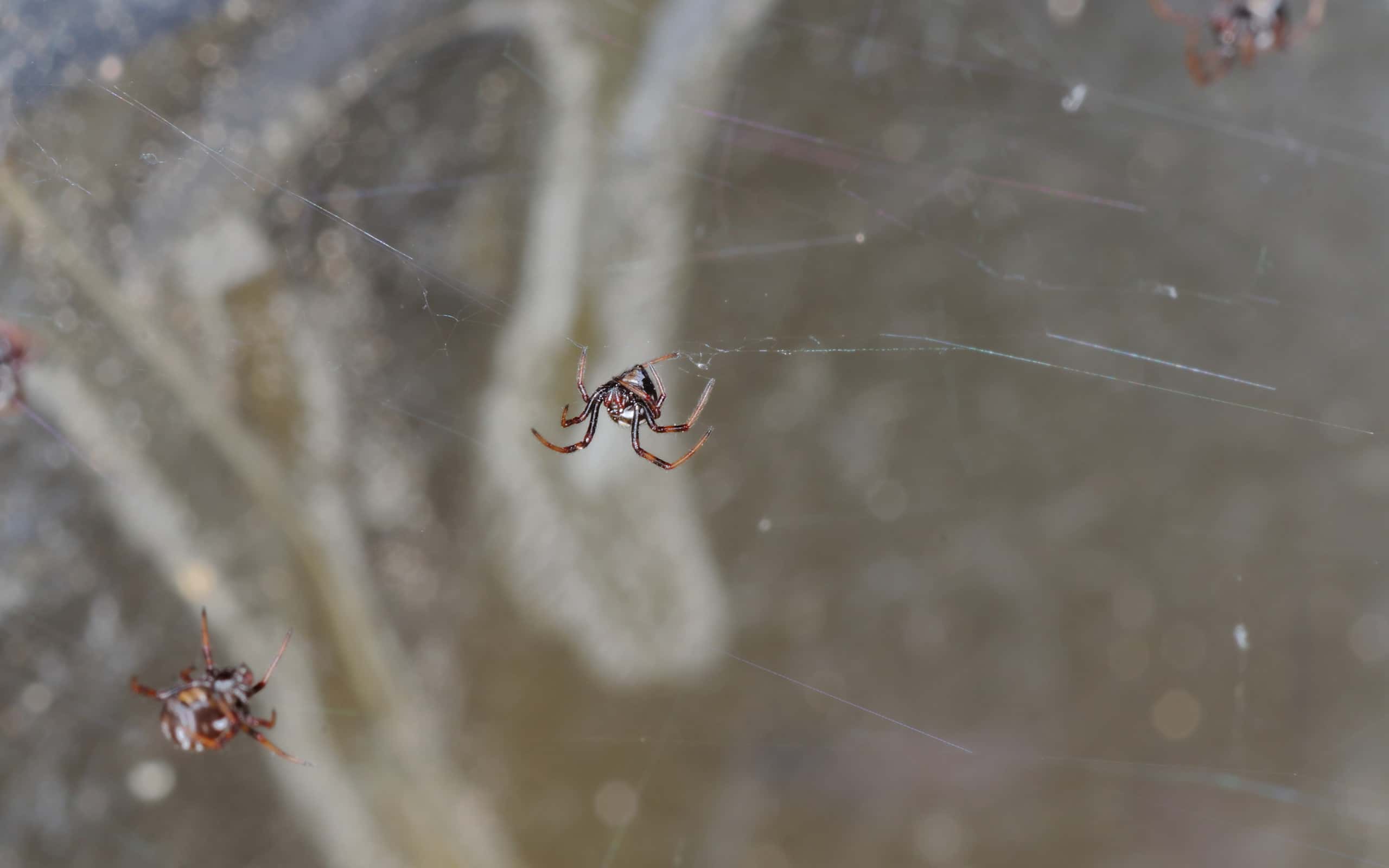
Web-spinning spiders can remain motionless for long periods of time. In fact, chances are, if you’ve ever had a garden spider appear near your house, you’ve been able to watch it sit still for up to hours at a time. However, why do spiders stay in their webs, and why do they sit still?
Most of the time, if you see a spider sitting still in its web, it is waiting for food. When an insect lands in a spider’s web, they are able to sense the vibrations through the strands of silk. This alerts them that dinner has arrived. And once their web is complete, their main goal is survival, which involves waiting for food.
Other spiders may sit motionless as well, even if they’re not in a web. Like with the trad door spider mentioned above, this spider will sit still in their home so as not to startle away any prey that may be nearby. This allows them to ambush the insect or other animal and capture their prey.
Will a Spider Steal Another Spider’s Web?
©thatmacroguy/Shutterstock.com
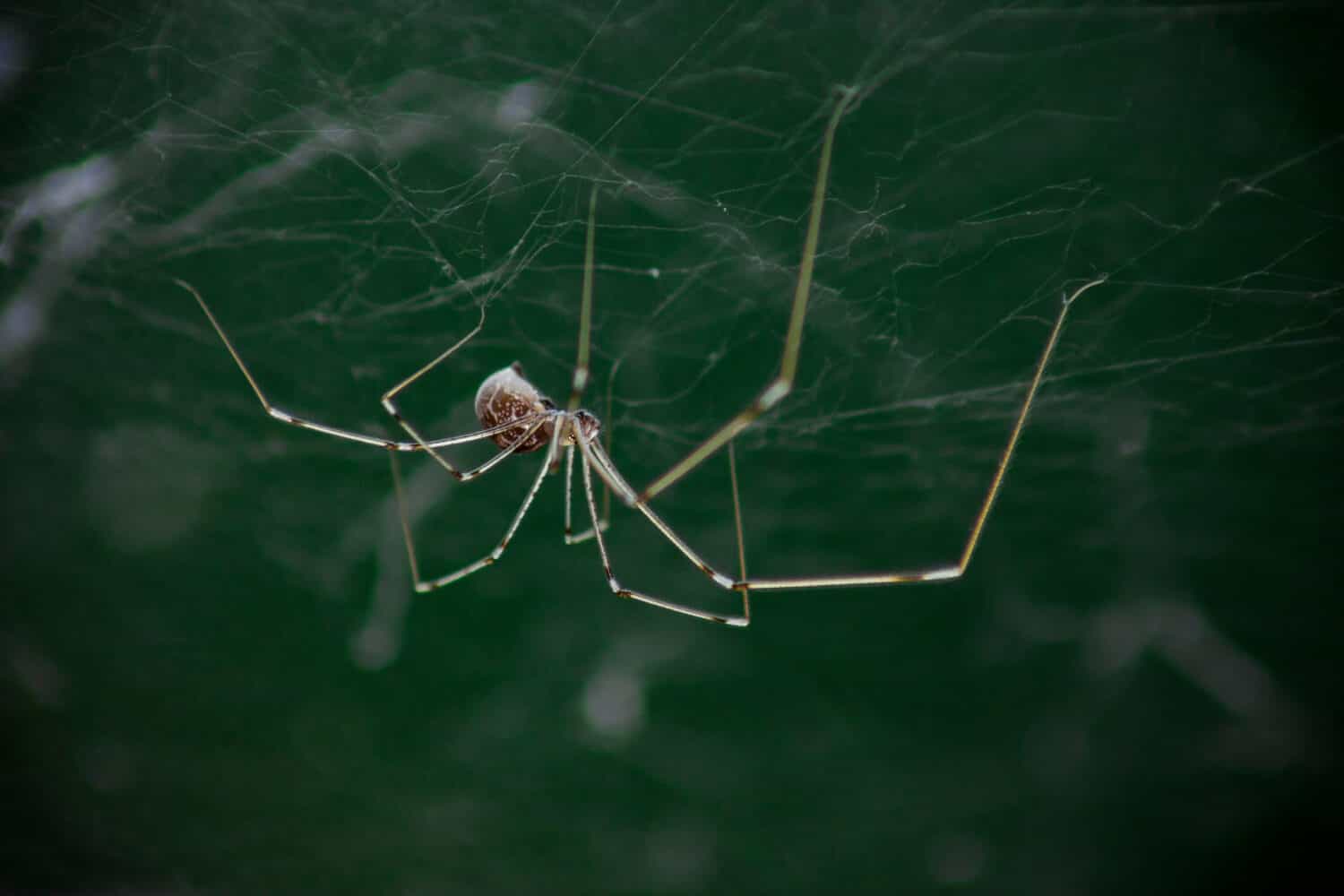
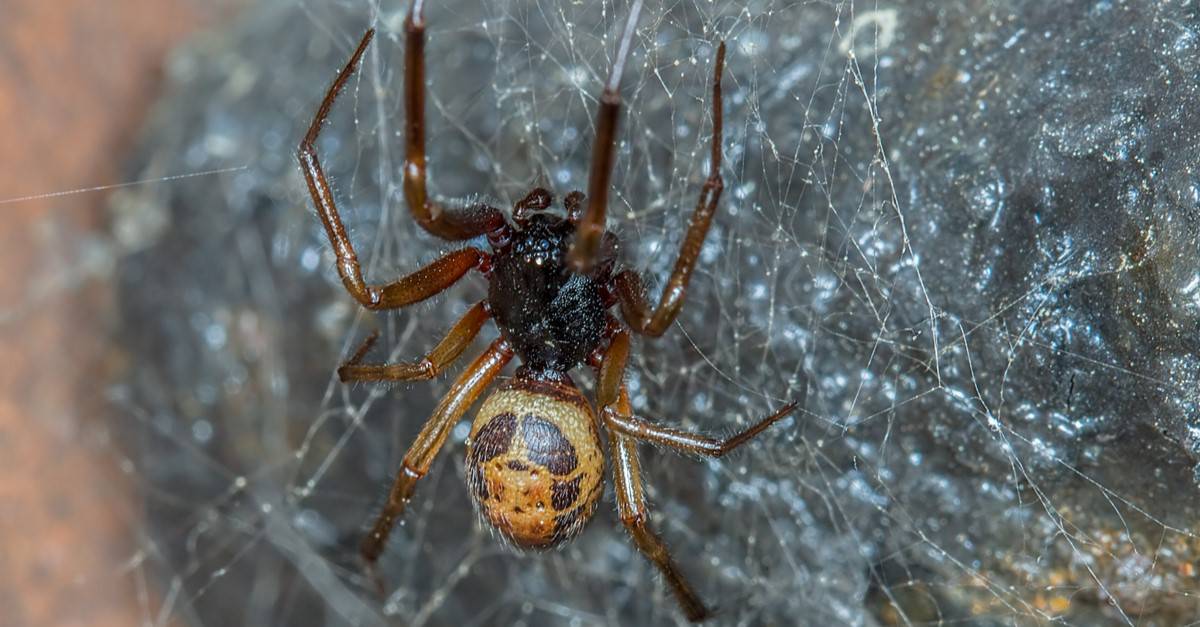
Not all spiders are willing to build their own webs despite having the ability to do so. Take the cellar spider, for instance. Do you remember how we mentioned above that spiders can sense when the prey has landed in the web due to movement?
Cellar spiders will approach a web they’re interested in and trigger this reaction. When the owner of the web arrives, expecting a meal, the cellar spider turns the tables by covering the resident spider in silk and then eating it.
Once the cellar spider has eaten the previous resident of the web, it will take over the silk structure — as well as any prey that it had been saving in the web.