
Quick Take
- Not all giant spiders are equally dangerous, and you might be surprised by how little threat the biggest ones actually pose. See the largest spider's venom →
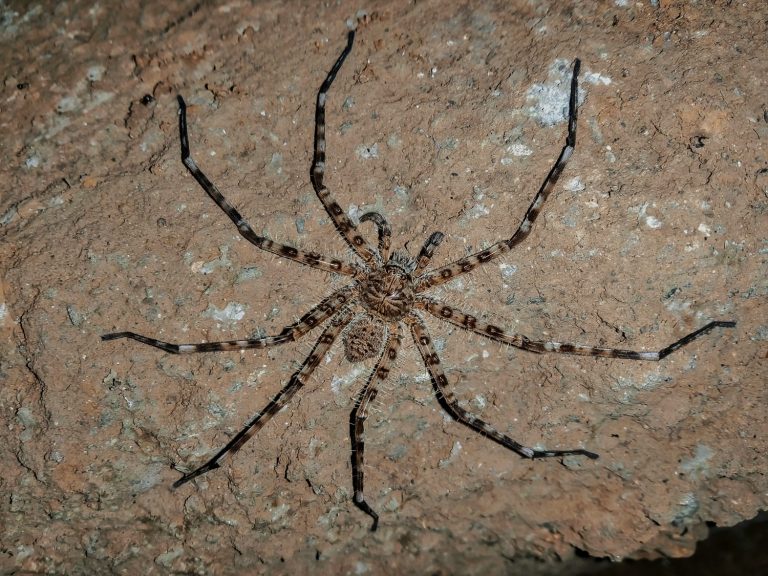
- One spider on this list lives almost exclusively in caves and has a body barely the size of your thumb, and it still claims the top spot. Meet the cave-dwelling champion →
- Some of the most visually stunning spiders here rely on a completely different defense strategy than their South American cousins, one that makes them far more dangerous to encounter. Explore the ornamental's defense →
- Several spiders on this list are named "bird eaters," yet what they actually hunt tells a very different story. See what bird eaters really hunt →
Whether you are a spider fan or you have arachnophobia, you may want to know just how big the biggest spiders in the world are and where they live — even if it is only to avoid them. There are multiple ways to determine a spider’s size. Weight, body length, or leg span may be measured to determine how large a spider is. However, leg span is the standard metric used to measure large spiders such as tarantulas and huntsmen spiders.
The diagonal leg span (DLS) measures from the tip of a spider’s front leg to the tip of its back leg on the opposite side when its legs are stretched out. The DLS measurement at maturity has been used to determine the rankings of the biggest spiders in the world. Read on to learn about these incredible spiders, including their habitats, how to identify them, where they can be found, and whether or not they are dangerous to humans.
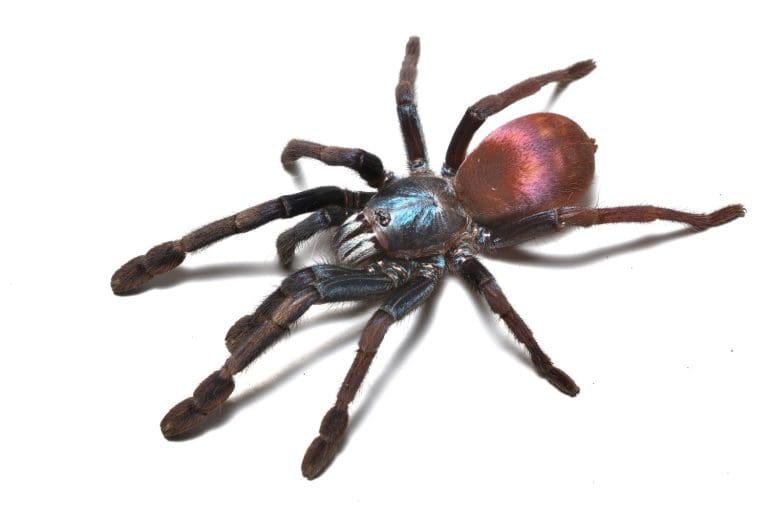
10. Colombian Lesserblack – 7 to 9 Inches
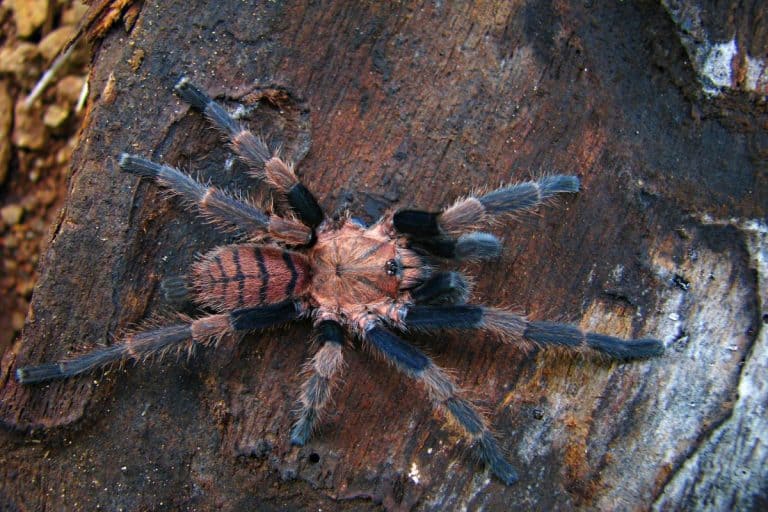
Colombian lesserblack tarantulas (Xenesthis immanis) are large, vibrantly colored terrestrial spiders with a body length of around 2.75 inches and leg spans of 7-9 inches. They typically have a black base color with a pinkish-purple starburst on the carapace and reddish hair on the abdomen. These tarantulas may also have bright pink hairs with a blue sheen on their femora.
These spiders are found in rainforests or high elevation montane forest habitats in the Andes Mountains in west-central Colombia and northwestern Venezuela. They are terrestrial and semi-fossorial, typically remaining in the leaf litter of the forest floor. However, they may also use natural cavities to make their retreats, as well as spaces under roots and logs. They typically hunt large insects and small vertebrates such as frogs and lizards. These spiders use urticating hairs (barbed bristles) to defend against threats. Their venom is only for subduing prey and poses no threat to humans.
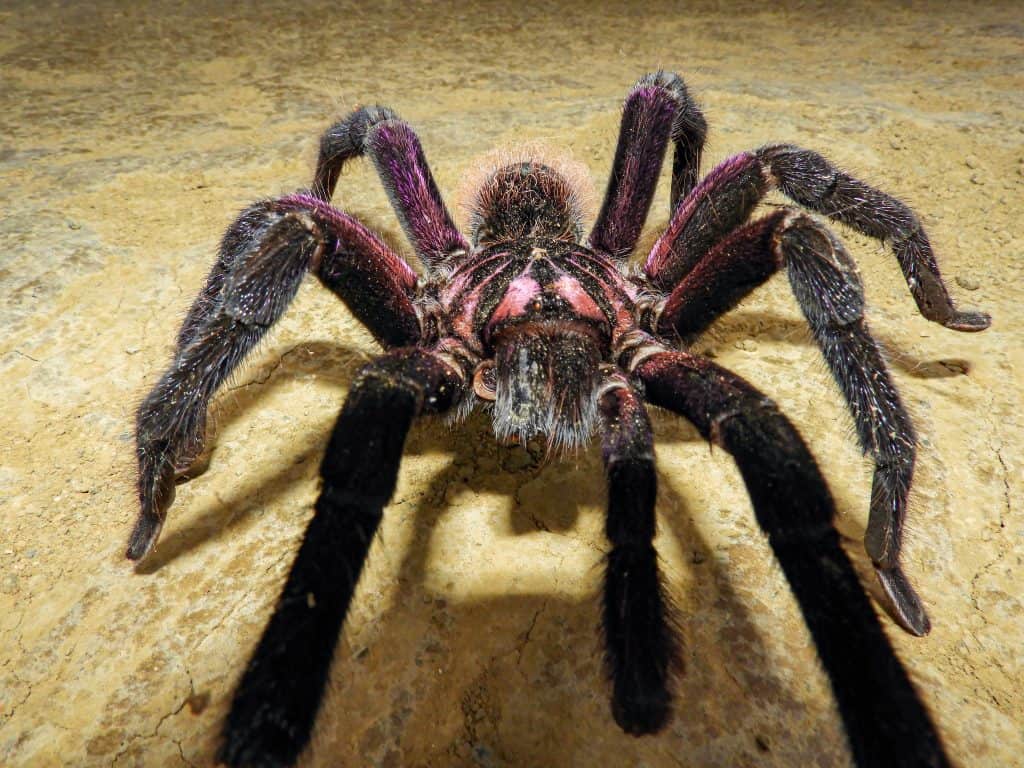
The Colombian lesserblack tarantula is a large spider known for its bright pink and black coloration.
9. Bolivian Blueleg – 8 to 9 Inches
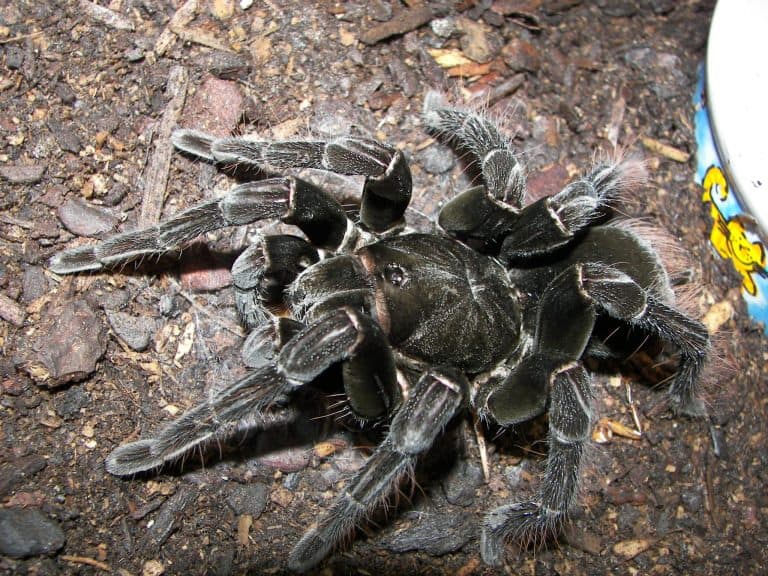
The Bolivian blueleg (Pamphobeteus antinous) is found in the rainforests of Peru and Bolivia. They have total body lengths that exceed 3 inches and leg spans of 8 to 9 inches. Males have violet-blue, iridescent patches of hairs on the three inner leg segments, pedipalps, chelicerae (mouthparts), and the thorax. Their other hair is dark brown. However, adult females are charcoal grey to black with long, white hairs.
This tarantula inhabits the Amazon rainforest regions of Peru and Bolivia. They are terrestrial and fossorial, excavating deep, silk-lined burrows under roots, rocks, logs, or other forest floor debris. They are ambush hunters, typically feeding on insects and other invertebrates. These spiders have urticating hairs to defend against threats, but their venom is very mild and is not life-threatening to humans.
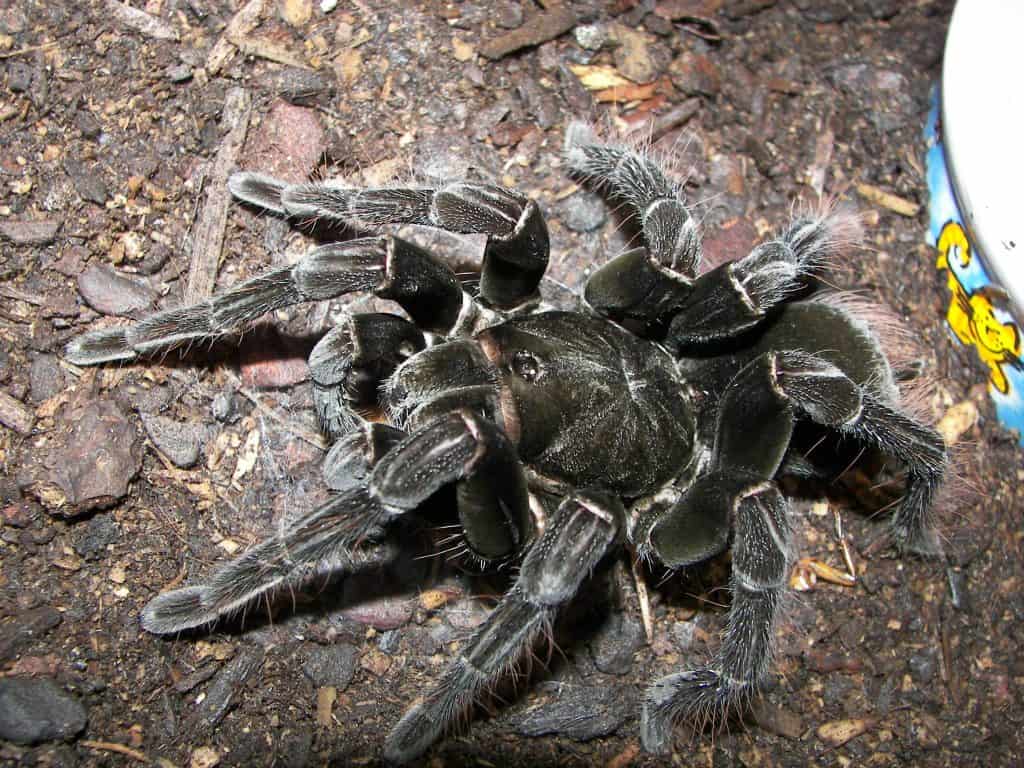
The female Bolivian blueleg lacks the blue legs of the male and is almost entirely black.
8. Sulawesi Black – 8 to 9.5 inches
The Sulawesi black, or Sulawesi giant black earth tiger (Lampropelma carpenteri), is an Old World arboreal tarantula with a body length of over 3 inches. Its leg span is generally 8-9 inches, with some reports indicating they can reach up to 9.5 inches. These spiders are overall shades of grey and black with a striated carapace and a tiger-striped abdominal pattern. Females can have a violet sheen in some lighting, especially after molting.
These spiders are found in humid, old-growth forests in Borneo, Malaysia, and Sulawesi, Indonesia. They build their silk-lined retreats in tree hollows or behind loose bark. They typically feed on large, tree-dwelling insects and other invertebrates. Old World tarantulas lack urticating hairs, so they depend on strong venom for defense. The Sulawesi black is fast and skittish, and its venom is considered medically significant. Bites can cause intense local pain, swelling, and painful, persistent muscle cramps.

The Sulawesi black tarantula can have a leg span of up to 9.5 inches.
7. Fringed Ornamental – 8 to 10 Inches
Fringed ornamentals (Poecilotheria ornata) are large, Old World arboreal tarantulas that can reach a total length of over 3 inches and leg spans of 8 to 10 inches. These tarantulas are dark grey with a yellow-green and purple sheen and dark-and-light geometric patterns on the carapace and abdomen. Their legs have alternating dark and light bands with long, reddish-brown hairs.
These tarantulas can be found in the humid tropical rainforests of central and southern Sri Lanka. They live up high in the canopy in natural tree cavities and behind loose bark. They construct vertical funnel webs to line their retreats. These webs also help them sense the vibrations of passing insects or other prey. Fringed ornamentals do not have urticating hairs they can fling as defense, but they are fast and have strong venom that is medically significant to humans. Bites can cause severe pain, nausea, muscle cramping, and vasodilation, which can cause low blood pressure.
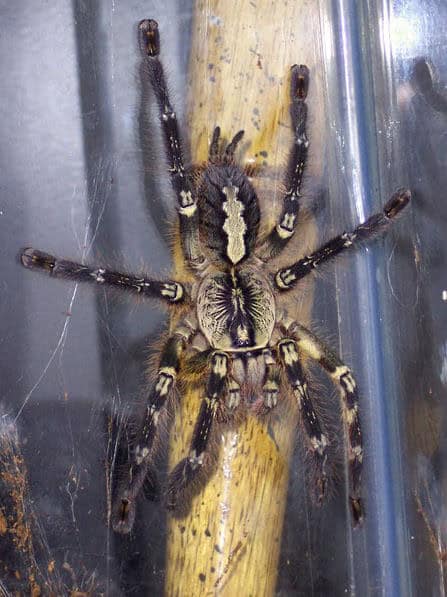
Fringed ornamental spiders can reach leg spans of up to 10 inches.
6. Red Slate Ornamental – 8 to 11 Inches
The red slate ornamental (Poecilotheria rufilata) is a large, arboreal tarantula found in the tropical rainforests and high-elevation forests of the Western Ghats region of India. These tarantulas have a body length of over 3 inches. They can reach leg spans of 8 to 10 inches, with some large females growing up to 11 inches. They can be mossy to yellow green with a slate-grey base, yellowish longitudinal stripes on their legs, and rust-colored hairs on their legs and abdomens. Red slate ornamentals also have intricate geometric markings on their abdomens.
As an Old World tarantula, it does not have urticating hairs for defense. Like other Old World tarantulas, it relies on speed and potent, medically significant venom. A bite from this spider can cause significant local pain, nausea, muscle cramps, headaches, and sweating. They can typically be found in tree hollows or behind loose bark high in the canopy. These spiders build funnel-like webs for protection and to help the spider hunt. when insects or other prey walk across the webbing, the vibrations alert the spider that it is time to strike.
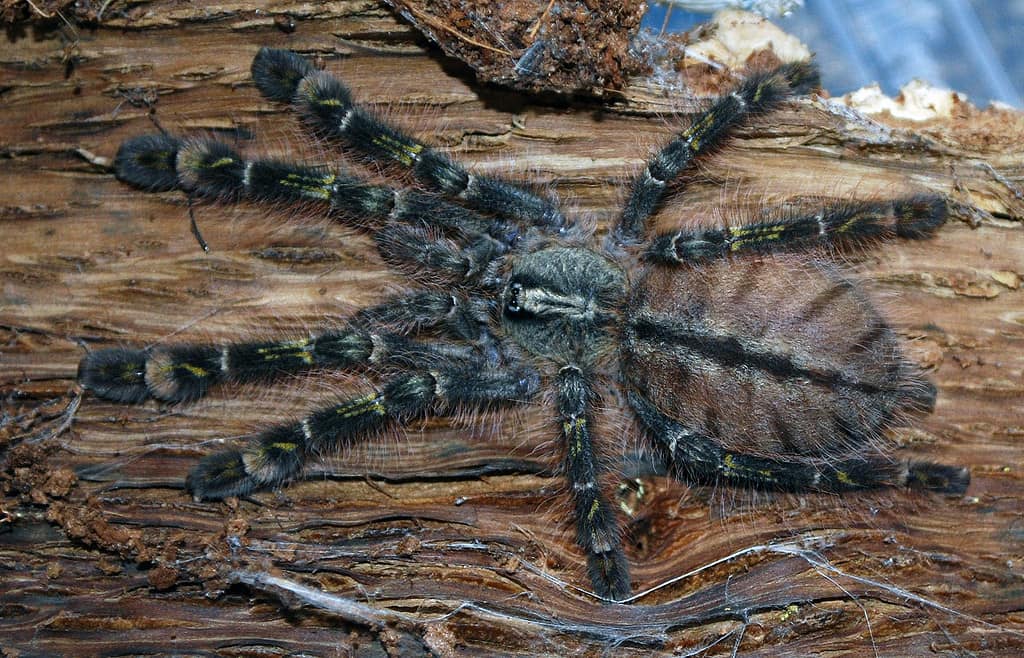
Slate-red ornamental tarantulas are among the largest arboreal tarantulas on Earth.
©B a y L e e ' s 8 Legged Art / CC BY-SA 2.0 – Original / License
5. Brazilian Salmon Pink Bird Eater Spiders – 10 to 11 Inches
The Brazilian salmon pink bird eater (Lasiodora parahybana) has a 10- to 11-inch leg span and a body length of 3.5–4 inches. These heavy-bodied spiders can weigh over 3.5 ounces. The salmon pink bird eater has a dark brown to black body with bright salmon-colored hairs on its legs and abdomen. It also has longitudinal stripes on its legs.
Brazilian salmon pink bird eaters are endemic to the forests of northeastern Brazil. These spiders live in burrows on the forest floor when they are young, but as they mature, they spend more time in the open, taking shelter in dense leaf litter, under rocks, or in logs. They do not actually eat birds; they typically feed on large insects and other invertebrates on the forest floor, as well as small rodents, lizards, and amphibians. Brazilian salmon pink bird eaters will defend themselves with their urticating hairs, but their venom is weak and not medically significant to humans.

The Brazilian salmon pink bird-eating spider has salmon pink hairs on its legs and abdomen.
©Vladimir Wrangel/Shutterstock.com
4. Pinkfoot Goliath Bird Eater – 10 to 12 Inches
Spiders in the Theraphosa genus are among the largest spiders in the world. The pinkfoot Goliath bird-eating spider (Theraphosa apophysis) has a body length that can exceed 4 inches. It generally reaches a leg span of between 10 and 11 inches, although some large specimens may reach up to 12 inches. This spider has a brown body with long, reddish-orange hairs on its legs and abdomen and longitudinal stripes on its legs. Juvenile spiders have pale pink tips at the end of their legs, but the pink fades as they continue to molt. Unlike other Theraphosa spiders, pinkfoot Goliath males have tibial apophyses, which are projections or hooks located on the front legs. The hooks are used during courtship to hold back the female’s fangs.
These spiders can be found in the tropical rainforest regions of Colombia, Venezuela, and Brazil. Pinkfoot Goliath bird eaters may excavate deep burrows in the rainforest floor, which they line with silk. They can also be found under rocks or roots. These spiders do not typically eat birds, but instead hunt for prey such as large insects and invertebrates. They are quick to defend themselves by shooting the urticating hairs on their abdomen at threats. Bites are painful due to their large fangs, but their venom is not life-threatening to humans.
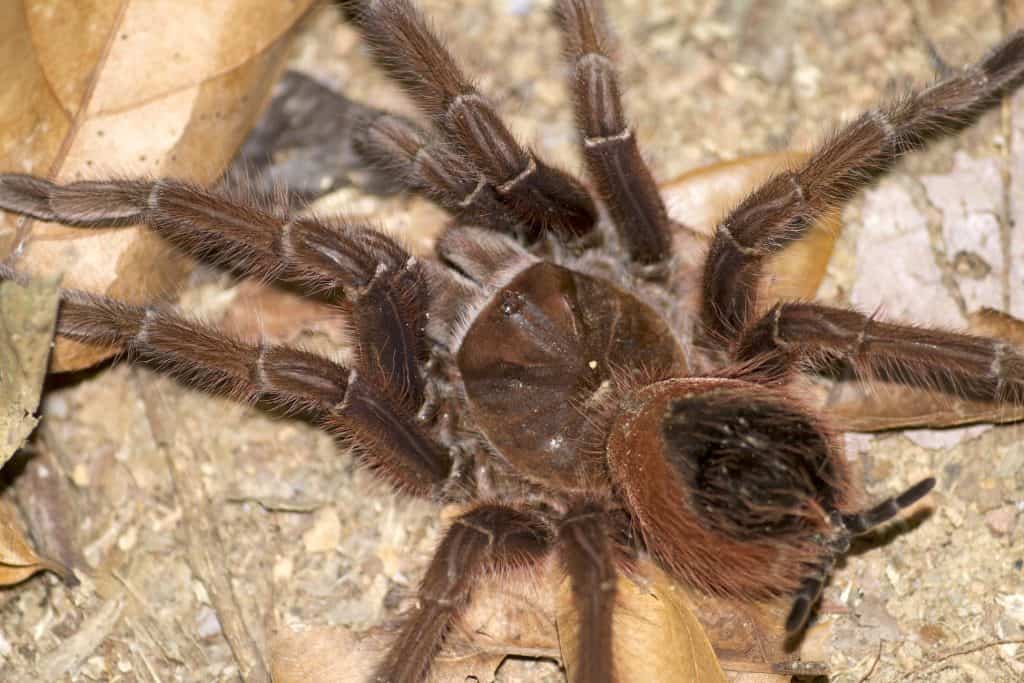
The Goliath pinkfoot has pink at the tips of its legs as a juvenile.
3. Burgundy Goliath Bird Eater – 11 to 12 Inches
Theraphosa stirmi, known as the burgundy Goliath bird-eating spider, has a body length greater than 4 inches and can reach leg spans of 11 to 12 inches. They are a rich burgundy-brown with reddish hairs on their legs and abdomen post-molt, but they have very little hair on the patella. These spiders also have pale stripes running down their legs. Hobbyists report that this Theraphosa species is known to have a more defensive temperament than other Goliaths, but they are not truly aggressive toward humans.
The burgundy Goliath bird eater can be found in hot, humid, tropical lowland rainforests and swampy regions of Brazil and Guyana. The spiders primarily live on the forest floor beneath the thick canopy. They are opportunistic burrowers, digging underground retreats lined with silk, which help them stay cool. They also hide in leaf litter, in fallen logs, or under exposed tree roots and rocks. Burgundy Goliath bird eaters are hunters and will consume almost anything they can catch. These spiders are highly defensive when they feel threatened and will throw urticating hairs or bite. Their venom is not medically significant, but bites are painful and leave a wound.

The burgundy Goliath bird eater is a rich, burgundy-brown color post-molt.
©Dan Olsen/Shutterstock.com
2. Goliath Bird Eater – 11 to 12 Inches
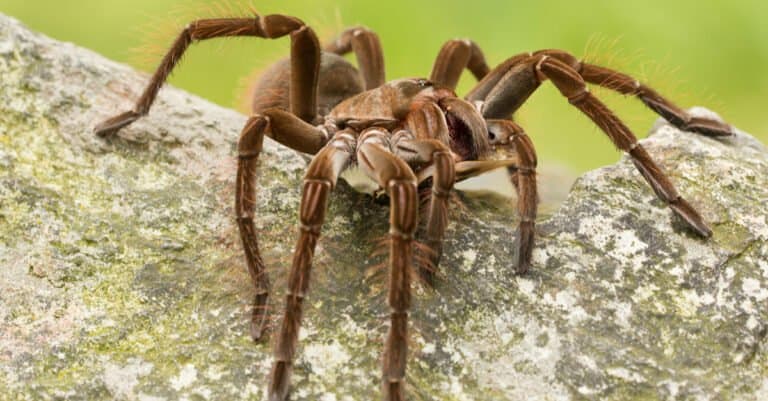
The Goliath bird eater (Theraphosa blondi) is the largest spider in the world by mass, weighing up to 6 ounces. It measures 4.75-5.1 inches in body length and has a leg span of 11 to 12 inches. These spiders are shades of light brown to dark brown with long, reddish-orange hairs on their legs and abdomens. They may also have light-colored longitudinal stripes on their legs. Although other Theraphosa spiders are often comparable in total length or leg span, the Goliath bird eater tends to have a larger, heavier body on average.
These nocturnal arthropods live in silk-lined burrows in the rainforest regions of Venezuela, Brazil, and Guyana. They can also sometimes be found beneath roots or rocks. As with other Theraphosa spiders, Goliath bird-eating spiders do not build a web to trap prey, nor do they regularly eat birds; instead, they hunt for insects and other invertebrates, as well as rodents, lizards, and amphibians. Their venom has low toxicity to humans. However, these spiders can also leave painful wounds from their 1 to 1.5-inch fangs.

The Goliath bird-eating spider is the largest spider in the world by mass and body size.
©juerginho/Shutterstock.com
1. Giant Huntsman Spider – 12 Inches
The largest spider in the world by leg span is the giant huntsman spider (Heteropoda maxima), with a leg span of approximately 12 inches. Although Goliath bird-eating spiders can also reach 12-inch leg spans, giant huntsman spiders tend to have longer leg spans on average. However, their bodies are much smaller, measuring only up to 1.9 inches. These spiders are a lighter greyish-brown with darker brown markings on the carapace and abdomen. The legs have alternating color bands and the chelicerae are a dark reddish-brown.
Giant huntsman spiders are native to Laos. They are believed to be primarily cave dwellers due to their leg span, pale coloring, and special hairs on the metatarsus of the male’s second legs. While there is no evolutionary reduction in their eyes, researchers have found that some large Heteropoda species can also be found in cave entrances. So these spiders may not live deep within the caves where vision is less necessary. These spiders are active hunters that feed on insects, small rodents, and reptiles. Like most spiders, the giant huntsman has venom to subdue prey, but it is not considered dangerous or medically significant to humans.

The giant huntsman spider is native to cave habitats in Laos.
©Nikhil Guhagarkar/Shutterstock.com