
Quick Take
- The gap between North Carolina's state record albacore and the all-time world record is far wider than most anglers would guess. See the world record →
- The canned tuna sitting in your pantry comes from a fish capable of putting up a fight that draws sport anglers offshore, and the numbers behind its global catch share might surprise you. Explore the economic impact →
- Albacore schools can swallow multiple tuna species at once, which means a single cast could land you something entirely unexpected. Learn about schooling behavior →
- Albacore's health reputation isn't as clean-cut as the "solid white" label suggests. There's a catch worth knowing before you open another can. Check the mercury concerns →
Albacore tuna is one of the most popular fish species in the country. You’ll find cans lining the shelves of your local grocery store. Although commercial fishermen bring in most of the fish that eventually end up on our tables, sport fishermen also travel out to the open ocean to catch these hard-fighting fish. Take a look at the largest albacore ever caught in North Carolina and see how it compares to the world record.
All About the Albacore Tuna
Albacore tuna (Thunnus alalunga) have a wide distribution throughout the world’s oceans. These fish may be found in the temperate waters of the Atlantic, Indian, and Pacific Oceans, as well as in the Mediterranean Sea. Albacore tuna are highly migratory and can swim extremely long distances.
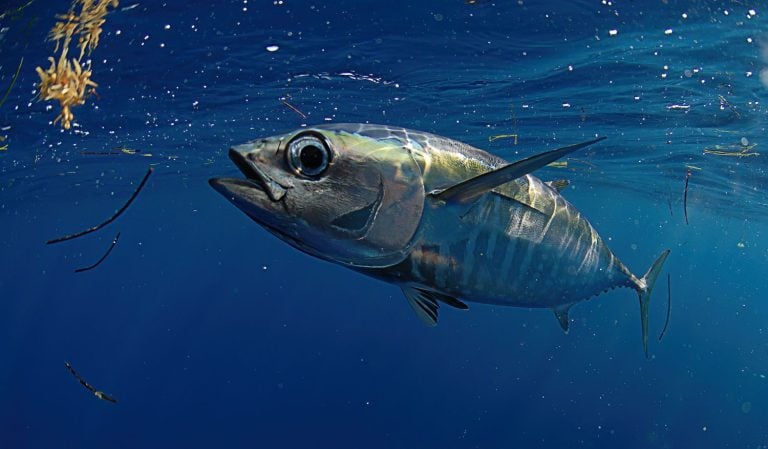
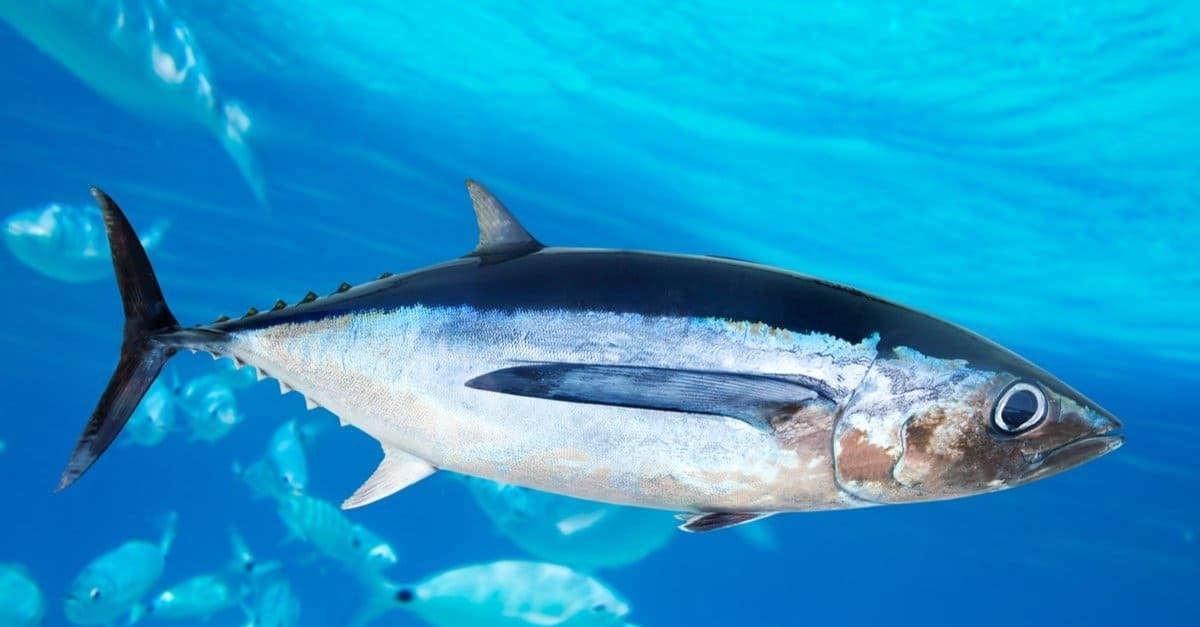
These tuna have dark blue backs, silver sides and bellies, long pectoral fins, conical snouts, and large eyes. They grow relatively quickly, reaching over 4 feet in length and weighing up to 88 pounds. In the Atlantic, they are generally caught in the range of 30 to 50 pounds. They are pelagic predators that eat other fish, crustaceans, and cephalopods, with with cephalopods being their primary food source. Like many other tuna species, they are opportunistic hunters that follow the migration of their prey.
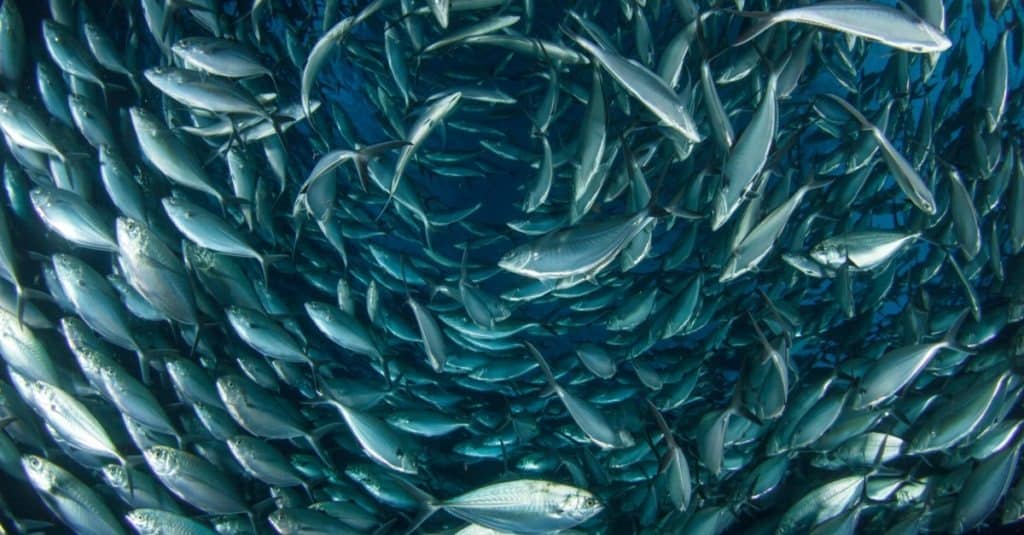
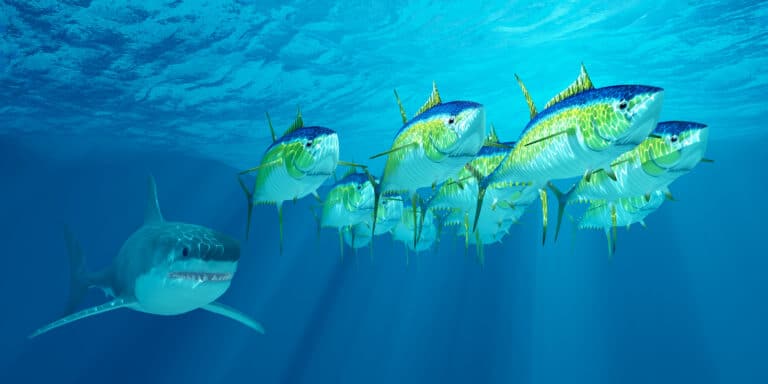
Albacore schools can reach up to 19 miles wide.
©Rich Carey/Shutterstock.com
North American albacore spawn during the spring and summer in the Atlantic and the Mediterranean Sea. Females may release as many as 2-3 million eggs in a single cycle, depending on size. The fish fry stick close to their spawning point for the first year of life, but then they move on in schools formed as they mature together. These schools can be 19 miles wide and may also include yellowfin tuna, bluefin tuna, and skipjack tuna, so you never know what you might catch in a single highly migratory tuna school.
The Importance of Albacore Tuna in Today’s Economy
Albacore is one of the two main species used in canned tuna worldwide, the other being skipjack. Marketed as premium “solid white” tuna, albacore accounts for a notable amount of global seafood imports. In 2024, albacore tuna made up 4% of the 6.4 million tons of the global tuna catch.
Nutritionally, these fish offer lean protein loaded with healthy omega-3 fats that can decrease triglycerides. Albacore tuna also contains iron, selenium, phosphorus, and essential vitamins like B12 and D. It supports immune function, heart and brain health, and tissue repair. However, it does contain higher levels of mercury, so it should be consumed in moderation.
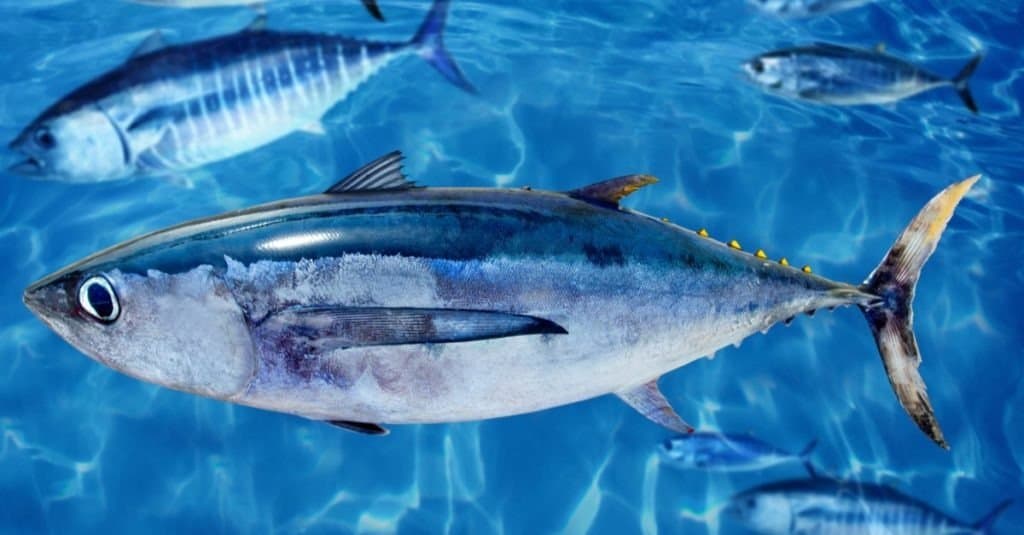
The albacore tuna is not only an important sport fish, it is also important economically.
©lunamarina/Shutterstock.com
How Big Was the Largest Albacore Tuna Ever Caught in North Carolina?
The largest albacore ever caught in North Carolina was landed by Brien L. Hamer in 2001. The fish weighed in at 62 pounds. It was caught off the Oregon Inlet, a popular fishing area along North Carolina’s Outer Banks.
The World Record Albacore Tuna
On November 19, 1977, Siegfried Dickemann set the all-tackle record for the world’s largest albacore. He was fishing at Gran Canaria, Canary Islands, Spain. The world-record albacore weighed in at 88 pounds and 2 ounces, which is over 26 pounds heavier than the North Carolina record.