
Quick Take
- Some sharks in this order are warm-blooded, a trait that changes everything about how they hunt. Warm-blooded shark details →
- One species in this order launches its jaw forward like a projectile to ambush prey in total darkness. See the protrusible jaws →
- Scientists only discovered one of these sharks existed in 1976, and many have never heard of it. Meet the 1976 discovery →
- One of the fiercest-looking sharks in the order has been filmed playing, and scientists are still puzzling over why. Porbeagle's playful behavior →
Sharks in the Lamniform order are some of the most well-known sharks in the world. Their fossil record dates back more than 120 million years, during the Early Cretaceous Epoch. The largest shark that ever lived, the Megalodon, belonged to the Lamniform order. Modern Lamniformes include apex predators such as the great white shark and giant filter feeders including the basking shark. Although species within the order can look very different, they share a few similarities.
Continue reading
About Lamniform Sharks
There are about 15 species of Lamniformes, also known as mackerel sharks, in seven families. Their habitat ranges from the shallow coastal shorelines to the ocean depths. They are found in oceans around the world, including the Atlantic, Pacific, Indian, Southern, and some Arctic waters.
The Lamniformes are incredibly diverse and range in length from around 3 to 40 feet. Despite their diversity, they share some common characteristics. These sharks have two dorsal fins and an anal fin, five gill slits, and large mouths with multiple rows of replaceable teeth. They also lack a protective third eyelid found in other shark species. Several members of the order, including great whites, makos, salmon sharks, and porbeagles, are endothermic, meaning they can maintain body temperatures above the surrounding water.
Let’s take a look at some of the most notable Lamniform shark species.
Great White Shark
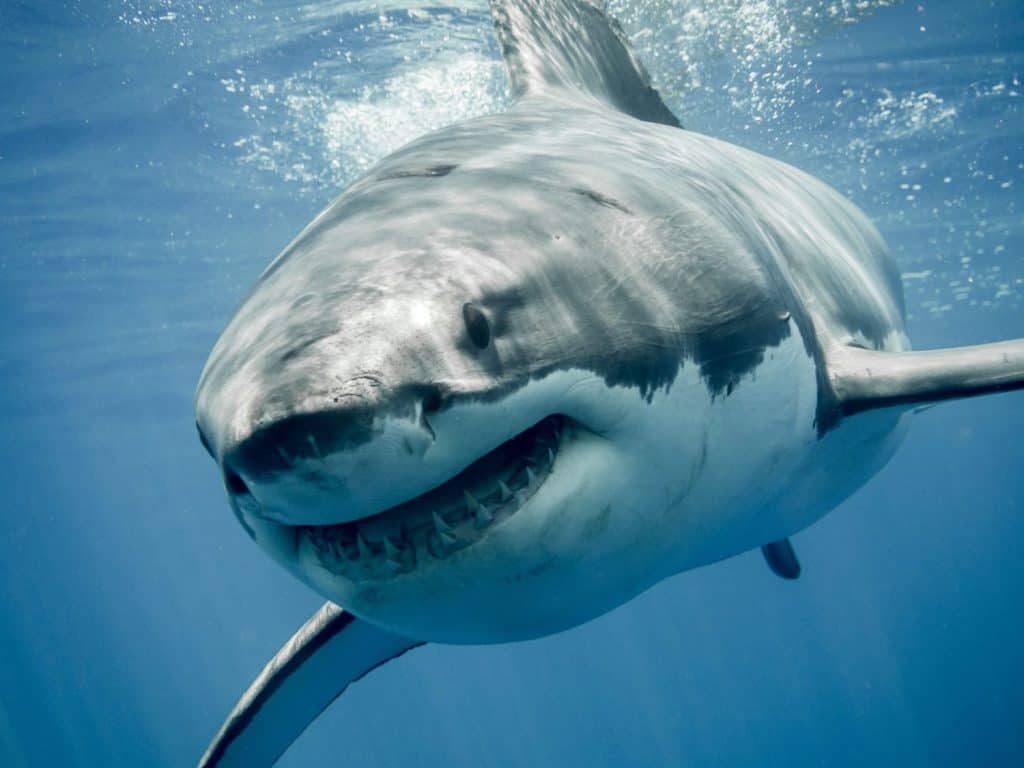
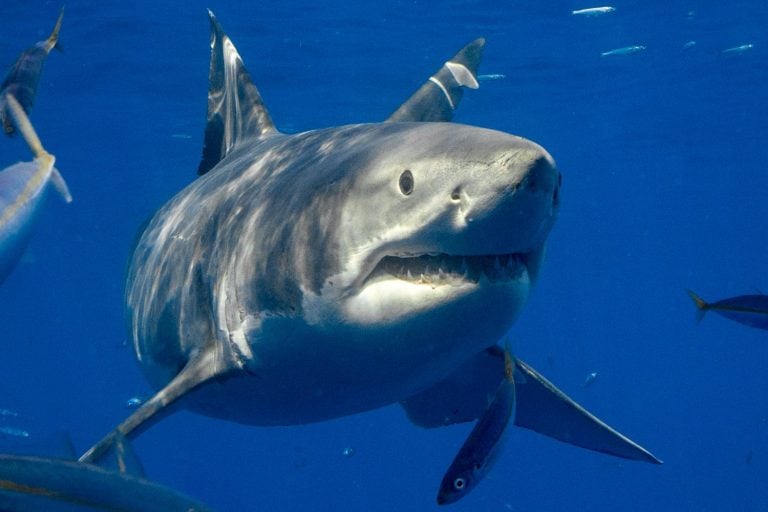
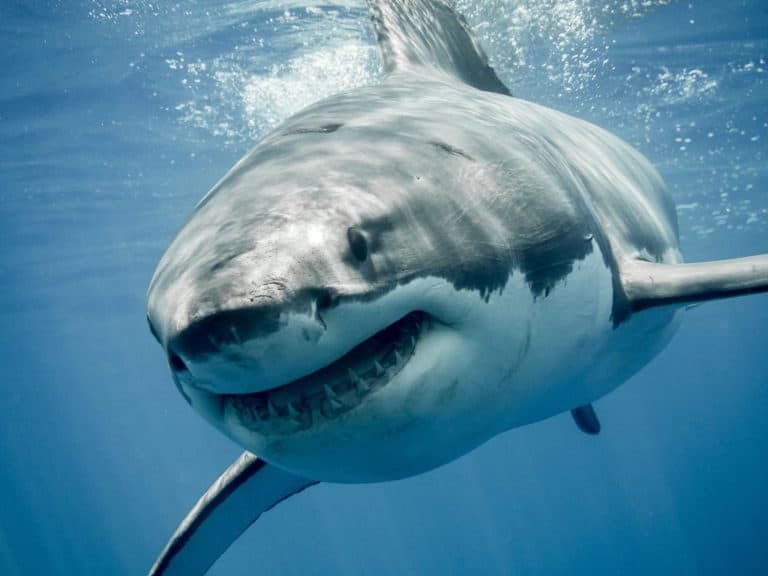
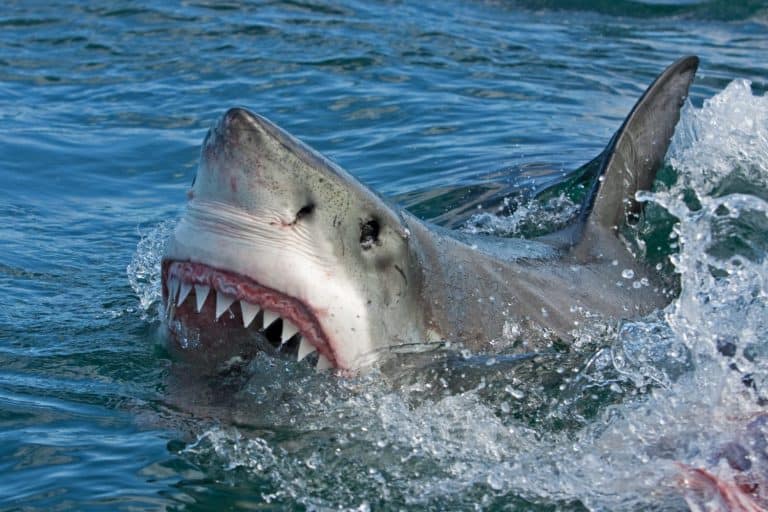
Great white sharks are one of the most well-known sharks in the world.
©Ramon Carretero/Shutterstock.com
The great white shark (Carcharodon carcharias) is probably the most famous shark, not only within the order, but among all sharks. This massive apex predator can reach about 20 feet in length and weigh up to 4,000 pounds. Great whites inhabit temperate and subtropical waters around the world. They migrate seasonally to follow their prey (seals, sea lions, and dolphins) within their preferred ocean temperatures of around 50 to 80 degrees Fahrenheit.
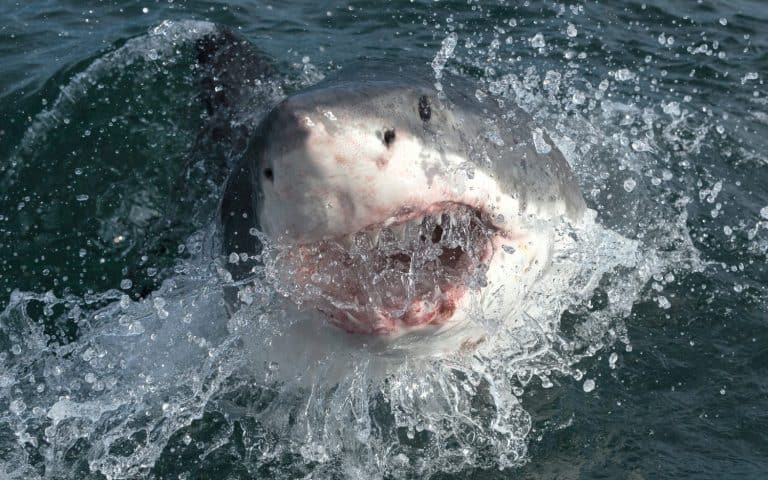
Juveniles and pups are often spotted in warm near-shore seas, while adult great whites generally stick to deeper waters. Despite their size and fearsome reputation, an attack on a human from a great white is rare. When great whites bite humans, researchers believe the sharks may release them after realizing that humans are not their preferred prey.
Shortfin Mako Shark
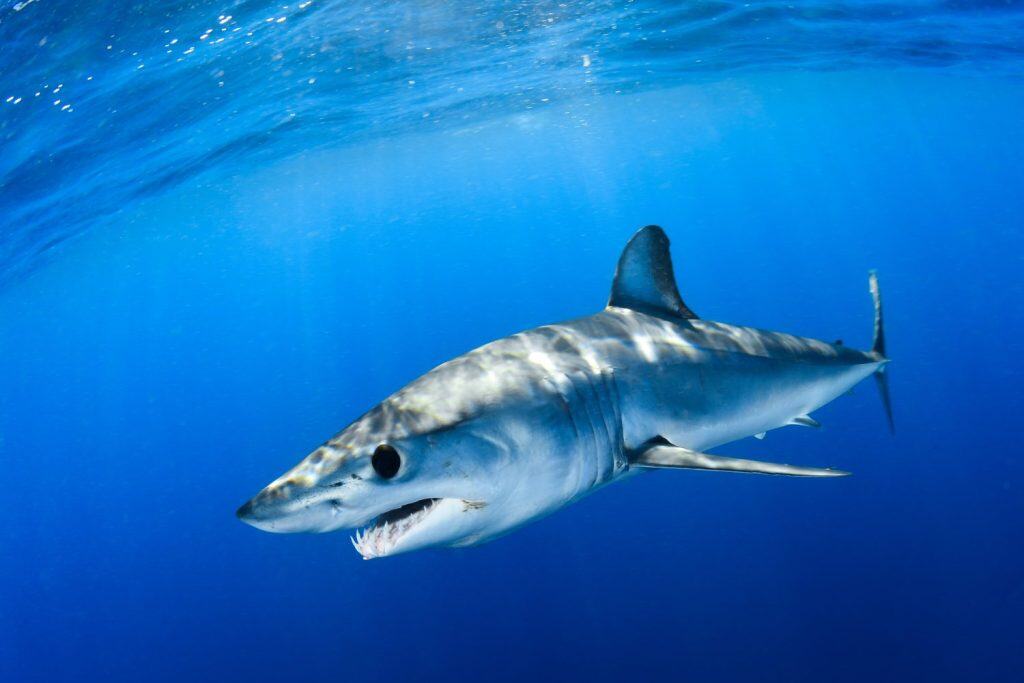
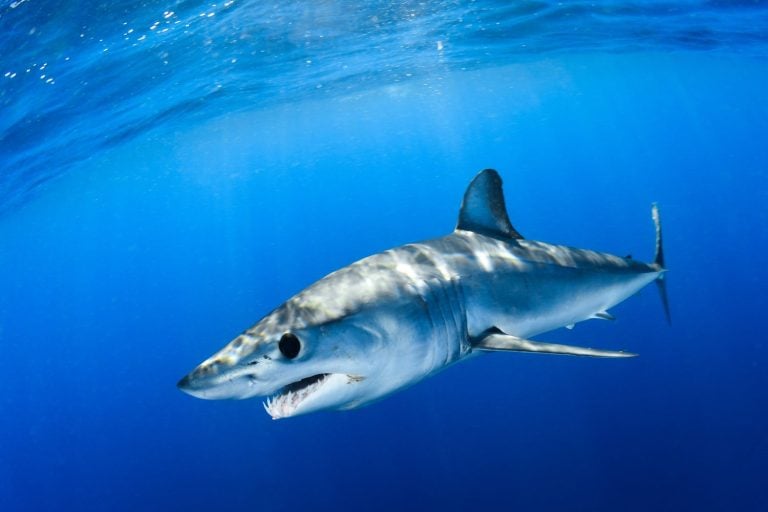
The speedy shortfin mako shark is one of the fastest sharks in the world.
©Xavier ELIAS Photography/Shutterstock.com
The shortfin mako shark (Isurus oxyrinchus) has the reputation as being the fastest shark in the world. This hydrodynamically efficient shark, with its torpedo-shaped body and pointed snout, is capable of reaching speeds of up to 46 miles per hour.
It is found in tropical and temperate waters around the world. This speedy shark is highly migratory, searching for warm waters. Females are slightly larger than males, averaging about 10.5 feet in length and weighing around 550 pounds.
This predatory shark hunts fast-moving bony fish such as mackerel and tuna. Large adults may prey on sea turtles, blue sharks, and porpoises. Despite their excellent hunting abilities, shortfin makos do not consider humans a food source. According to the Florida Museum’s International Shark Attack File, shortfin makos have only made 10 unprovoked attacks, including one fatality.
Longfin Mako Shark
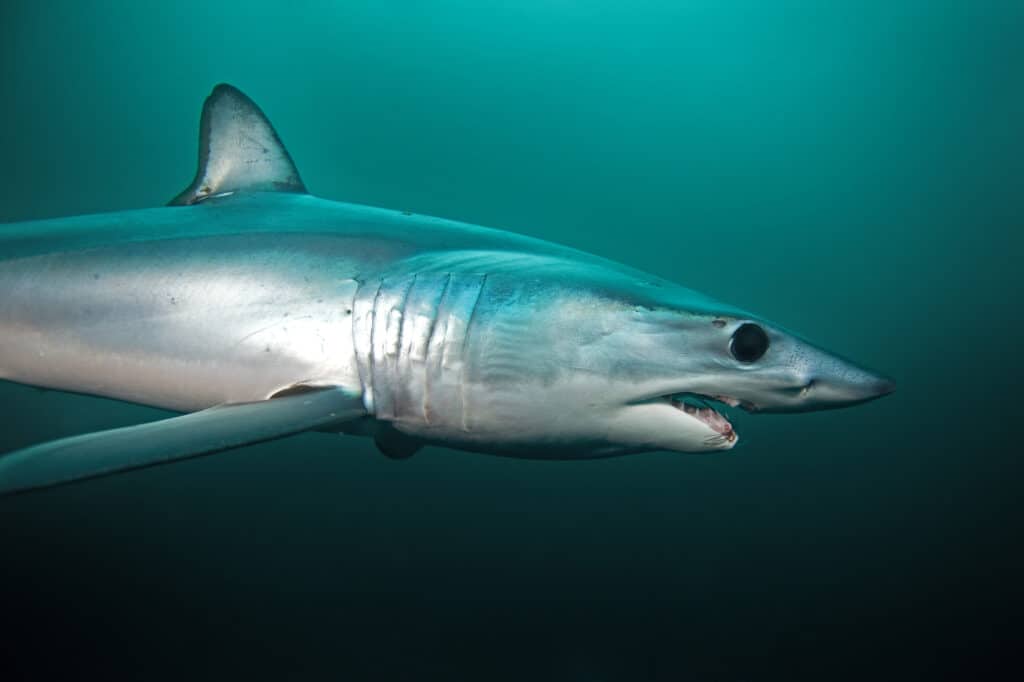
Longfin mako sharks swim in deep waters and can grow up to 14 feet in length.
©Martin Prochazkacz/Shutterstock.com
While shortfin mako sharks have a reputation for speed, the longfin mako shark (Isurus paucus) is known for its elusiveness. It is slightly larger than the shortfin mako and can grow up to 14 feet in length, making it one of the larger predatory Lamniform sharks.
Longfin mako sharks live in the deep pelagic waters of the open ocean. They are found in tropical and temperate waters and are highly migratory. Scientists know much less about the rare longfin mako than its cousin, the shortfin mako. They are thought to prey on schools of fish and pelagic squid. Because they are rarely seen and swim in deep ocean waters, there have been no confirmed attacks on humans by longfin makos.
Salmon Shark
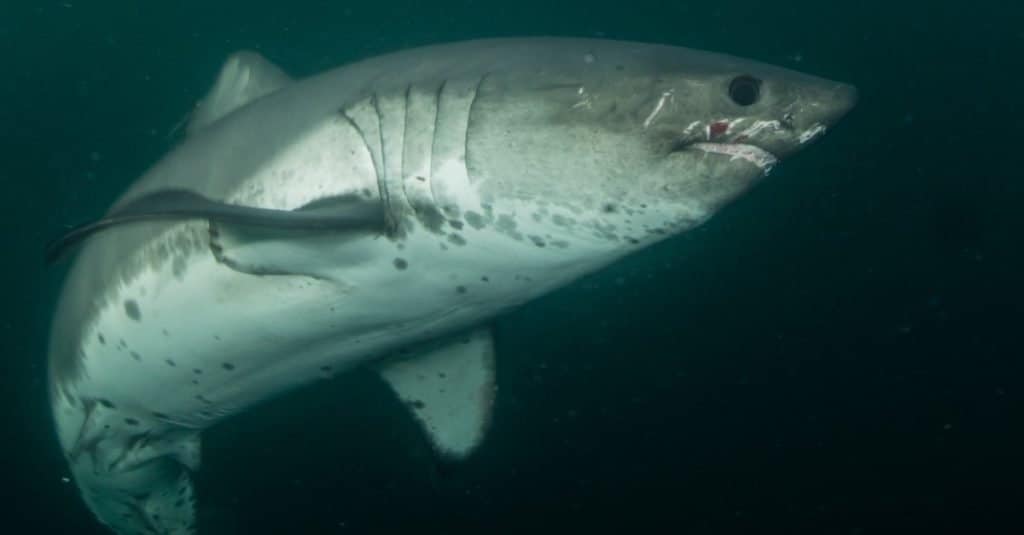
The main food source of the salmon shark is Pacific salmon, although they also eat squid, mackerel, and other fish.
©Warren Metcalf/Shutterstock.com
The salmon shark (Lamna ditropis) is named for its primary food source, Pacific salmon. Sometimes mistaken for great whites, they grow up to 10 feet long and can weigh up to 1,000 pounds. Salmon sharks are North Pacific pelagic sharks found in both coastal and oceanic waters.
Their range is the North Pacific Ocean, where they migrate seasonally to follow their prey. In addition to Pacific salmon, they also hunt other bony fish such as Alaska cod, sardines, and pollock. Despite their size and formidable hunting skills, there are no reported attacks on humans by salmon sharks.
Porbeagle Shark
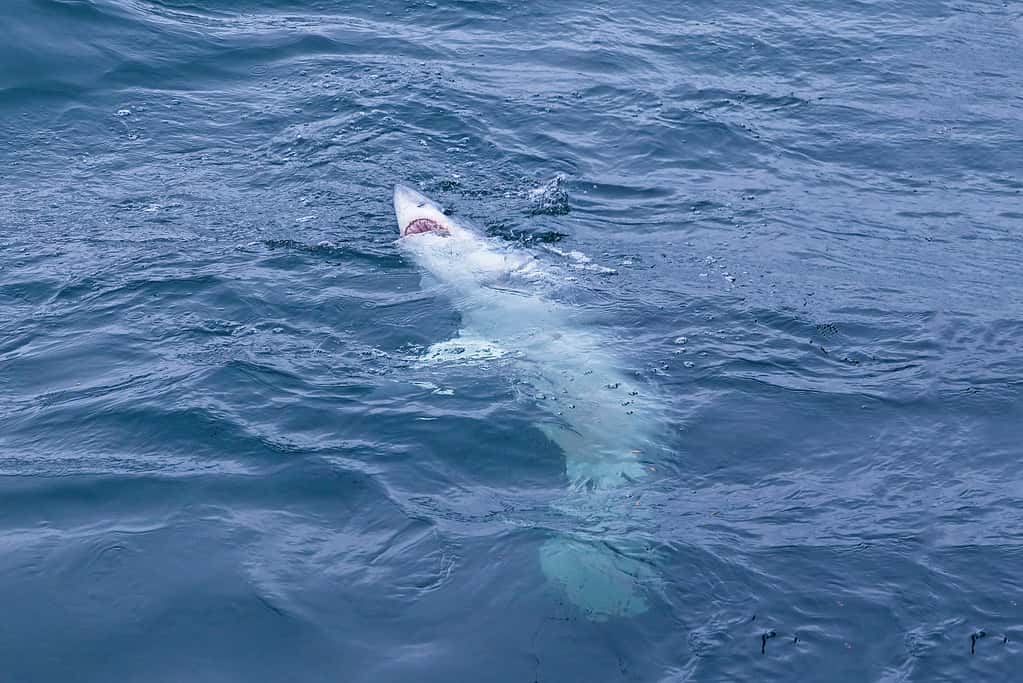
Porbeagle sharks have been observed seemingly engaging in playful behavior with other porbeagle sharks.
©birdsonline/ via Getty Images
The heavy-bodied porbeagle shark (Lamna nasus) can sometimes be mistaken for a great white shark. They live in cold-temperate waters of the North Atlantic and the Southern Hemisphere. They are highly migratory, following their food source (bony fish and squid) and moving to cooler waters seasonally.
Although they typically hunt alone, unlike most sharks, porbeagles sometimes gather in small same-sex groups to travel and mate. Porbeagles also exhibit a unique behavior: they are playful. They have been observed chasing each other, pushing around floating kelp, and even rolling at the surface.
The International Shark Attack File lists two known reported attacks by porbeagles on humans and no fatalities. Because they swim deep in the ocean, porbeagles rarely encounter humans.
Basking Shark
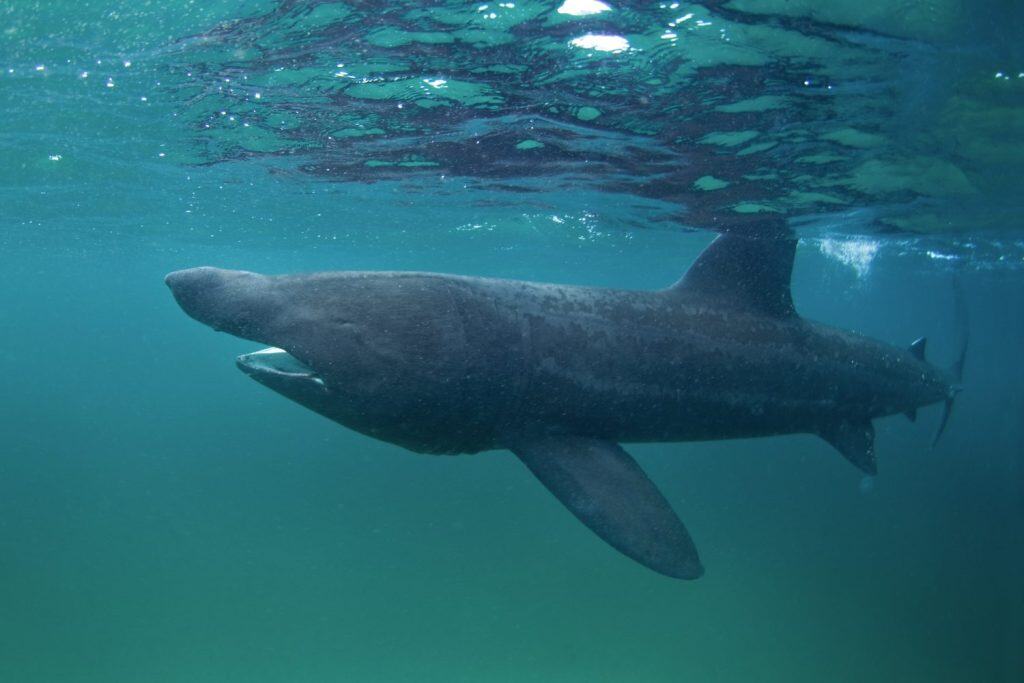
Despite its massive size, the basking shark is not a predator, but eats by filter feeding on zooplankton.
©Martin Prochazkacz/Shutterstock.com
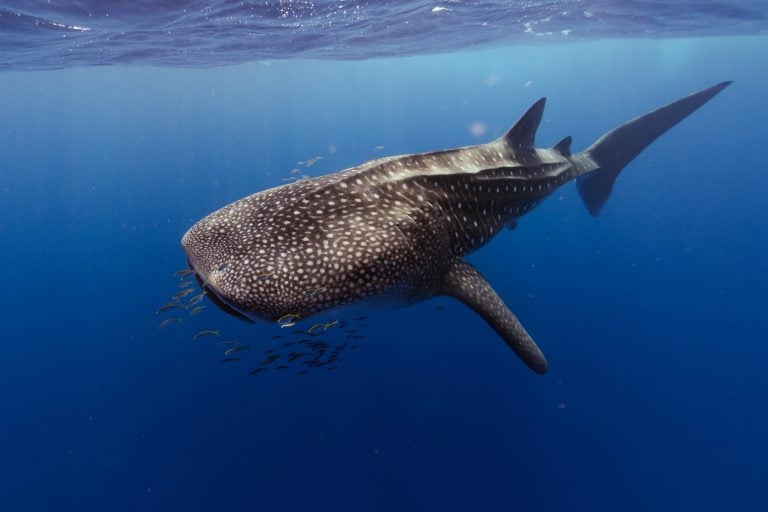
Reaching up to 40 feet long and weighing 16 tons, the basking shark (Cetorhinus maximus) is the largest of the Lamniformes and the second largest fish in the world behind the whale shark. Despite its size, the basking shark is a harmless filter feeder. Its primary diet is zooplankton that it separates from seawater using specialized gill rakers.
Basking sharks migrate seasonally to follow plankton blooms. They live in cold to temperate deep waters in the Atlantic and Pacific Oceans. They can sometimes be spotted at the ocean surface, especially in the spring and summer, feeding on plankton.
Megamouth Shark
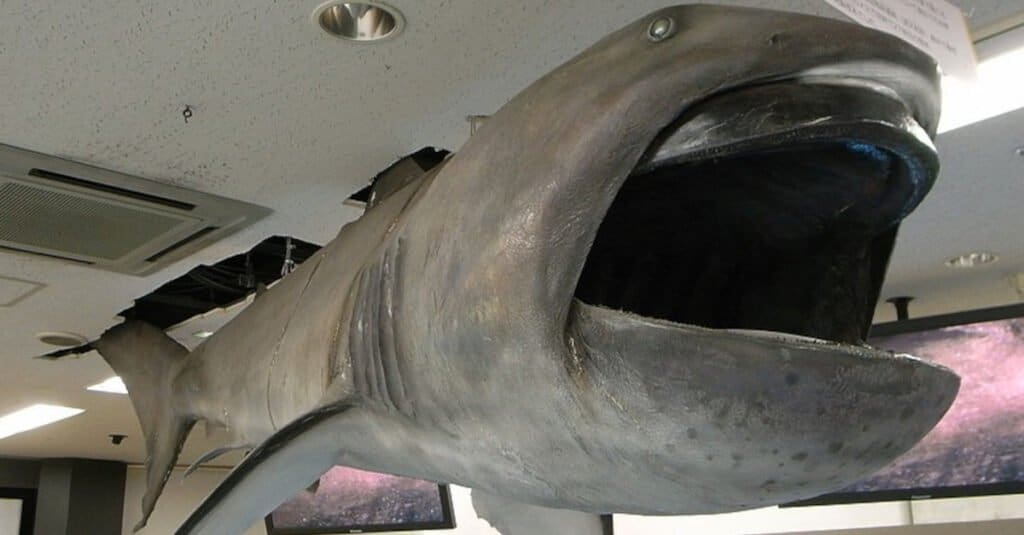
A rarely seen megamouth shark was accidentally caught in a fishing net and is now preserved at the Toba Aquarium in Japan.
Megamouth sharks (Megachasma pelagios) are named for their enormous rubbery mouths, which they can open over 4 feet wide. Despite the size of their open jaw, they are filter feeders, feasting on plankton and jellyfish that swim into their mouths. Megamouth sharks are among the largest Lamniform sharks, reaching lengths of up to 18 feet.
These unique and rare sharks have been known to science only since their discovery off the coast of Hawaii in 1976. They are found in deep temperate waters of the Pacific, Atlantic, and Indian Oceans. They migrate daily from the depths to feed closer to the surface at night. Swimming in the open ocean, megamouths are rarely encountered by humans, but when they are, they are harmless to swimmers and divers.
Goblin Shark
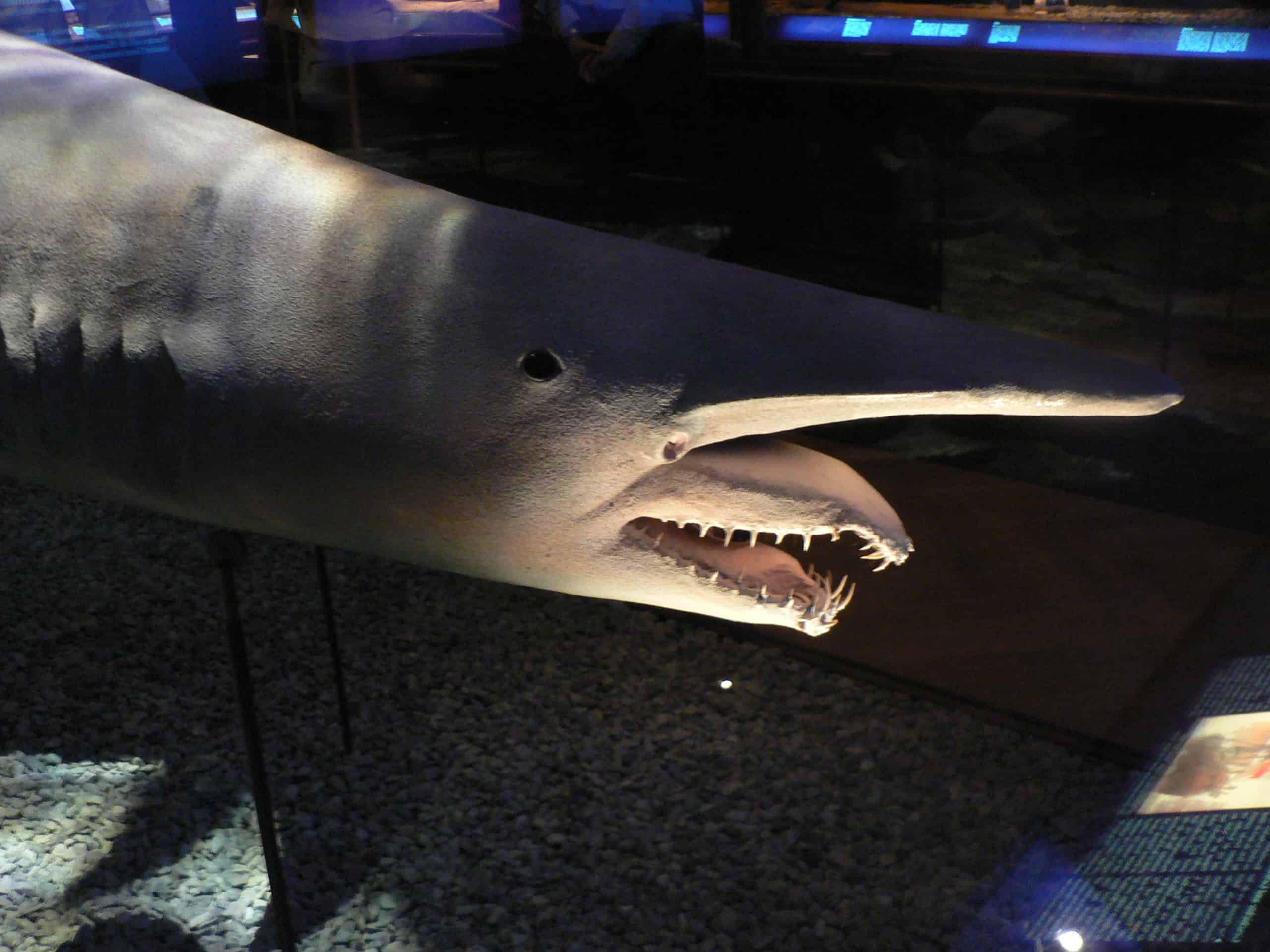
The Goblin shark lives in the deep ocean where it hunts for squid and fish.
©Peter Halasz / CC BY-SA 3.0 / Wikimedia Commons – Original / License
The rare goblin shark (Mitsukurina owstoni) primarily stays in the mesopelagic zone (twilight zone) of the Atlantic, western Indian, and Pacific Oceans. This layer sits between the sunlit upper layer and the dark depths where sunlight never reaches. The sunlight is faint here, where the goblin shark hunts for squid, crustaceans, and fish. Goblin sharks may swim even deeper than previously thought. Recently, researchers caught video footage of two goblin sharks swimming in the wild at a depth of around 6,550 feet in the midnight zone.
These unique-looking sharks have protrusible jaws, which they can extend forward at incredible speed to catch prey. The goblin shark grows an average of 8 to 11 feet long and can weigh up to 460 pounds. Because these deep-sea sharks rarely leave the ocean depths, they pose little danger to humans. Scientists still have much to learn about the behavior and ecology of the goblin shark.
Crocodile Shark
The crocodile shark is a small deep-sea shark that only reaches around 3.6 feet in length.
©http://ias.pifsc.noaa.gov/lds/obs_training/SharkAssortedNew.pdf – Original / License
The smallest member of the Lamniform sharks only grows to a maximum length of about 3.6 feet and weighs up to 10 pounds. Crocodile sharks (Pseudocarcharias kamoharai) live in tropical and subtropical waters of the Atlantic, Pacific, and Indian Oceans. Because they swim far offshore in deep waters, scientists have more to learn about these elusive sharks.
Crocodile sharks migrate vertically as they follow their food source: shrimp, small squid, and small fish. During the day, they stay in the deep water where sunlight faintly reaches. At night, they swim closer to the surface to hunt. These small sharks rarely encounter humans and pose no threat.
Bigeye Thresher Shark
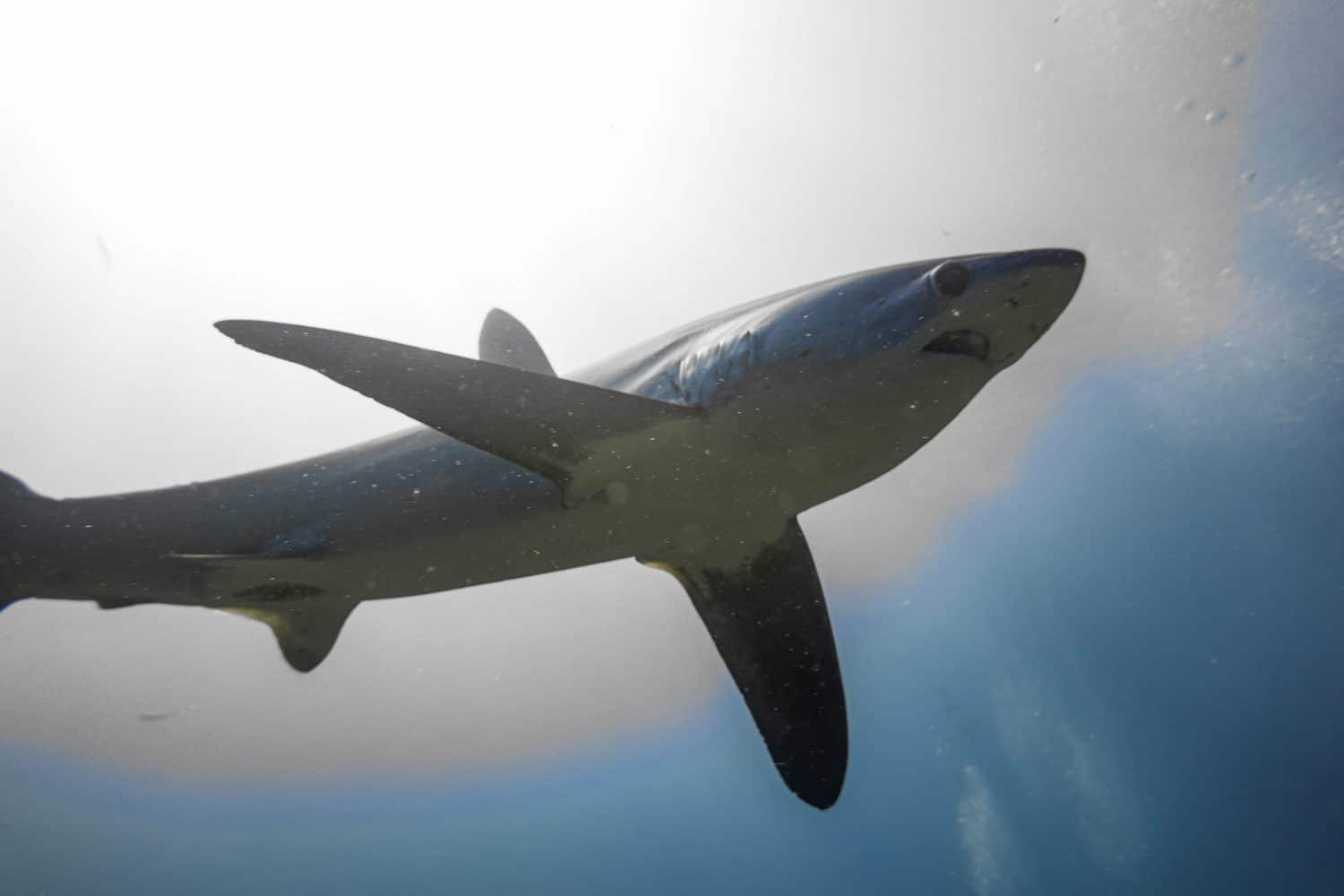
Bigeye thresher sharks swim in the deep ocean and can grow up to 14 feet in length.
©sukanya thanajaroentham/Shutterstock.com
The bigeye thresher shark (Alopias superciliosus) is a large, deep-sea shark. It averages around 14 feet in length and up to 441 pounds. They are found in warm waters of the Atlantic, Pacific, and Indian Oceans. Like other deep-sea sharks, the bigeye thresher stays in the dark depths during the day and moves closer to the surface at night to feed on schools of fish, squid, octopuses, and other open-ocean fish.